Choosing between butterfly earrings and clip-ons isn’t just about fashion—it’s a decision that touches on comfort, lifestyle, and personal identity. For many, pierced ears symbolize self-expression and ease of accessorizing. For others, especially those avoiding piercings due to pain, sensitivity, or medical concerns, clip-ons offer a practical alternative. But how do they truly compare? And is getting your ears pierced actually worth the commitment?
This guide breaks down the real differences between butterfly-back pierced earrings and traditional clip-on styles, weighing aesthetics, comfort, long-term care, and even social perception. Whether you're considering your first piercing or reevaluating your jewelry choices, this comparison delivers clarity without bias.
Understanding the Basics: Butterfly Earrings vs Clip-Ons
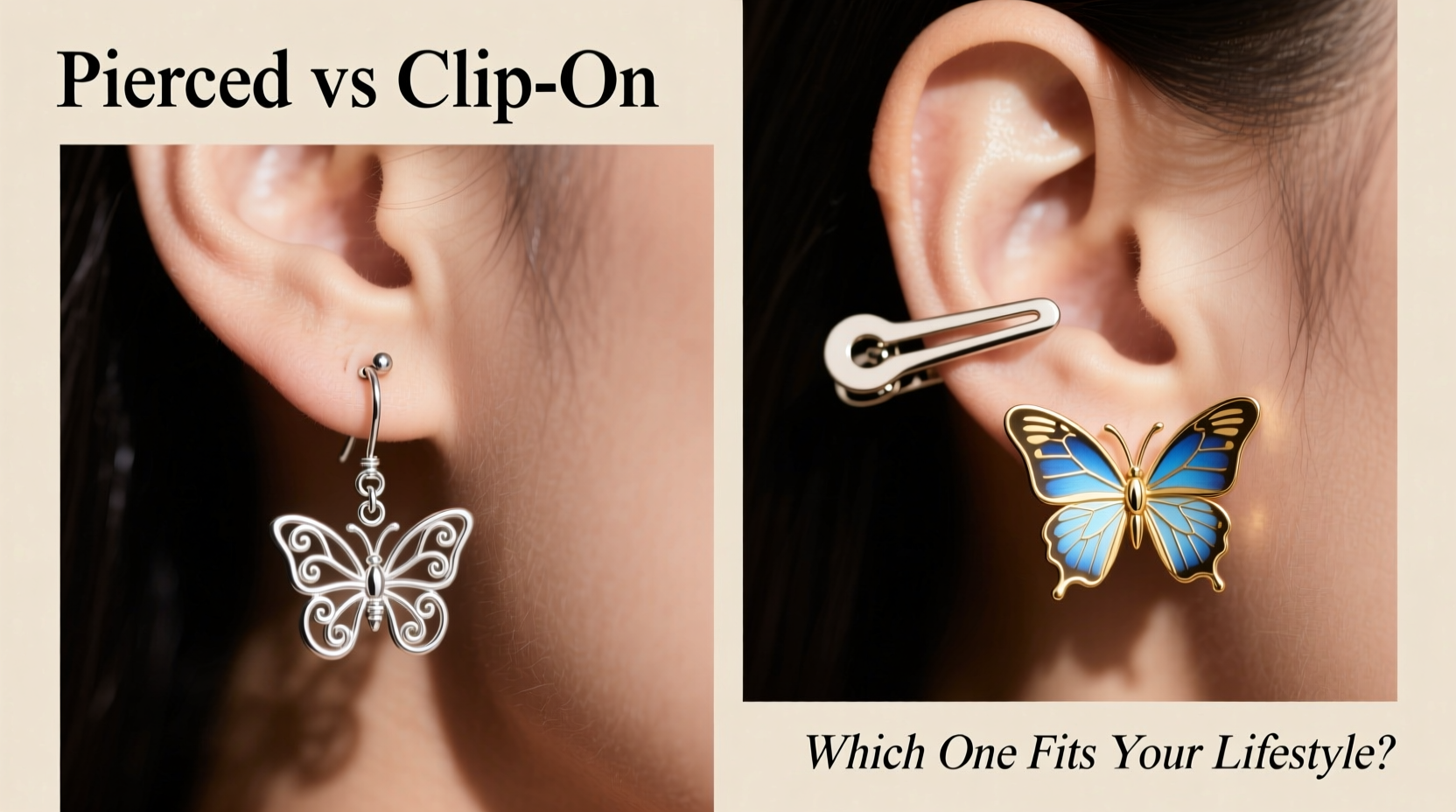
Butterfly-back earrings are designed for pierced ears. They consist of a post that passes through the earlobe, secured by a small metal or plastic back that resembles butterfly wings—hence the name. These are among the most common earring types due to their secure fit and wide availability.
Clip-on earrings, in contrast, don’t require piercings. They attach to the earlobe using spring-loaded tension or screw mechanisms. While once considered outdated, modern clip-ons have evolved with ergonomic designs and lightweight materials, making them more comfortable than ever.
The core difference lies in attachment method—but that single distinction affects everything from daily wear to style options and maintenance.
Design & Style Flexibility
Pierced earrings, including butterfly styles, dominate the fashion market. Most designer collections, limited editions, and fine jewelry pieces assume the wearer has pierced ears. This means greater access to intricate designs, gemstone settings, and delicate chains or drops that rely on secure post backs.
Clip-ons, historically limited by structural constraints, are improving. Brands like EF Collection and Claire’s now offer magnetic and cushioned clip-ons that mimic the elegance of pierced styles. However, large or heavy statement pieces remain challenging to balance without a post.
Tip: If you love bold, dangling earrings but avoid piercings, look for clip-ons with adjustable screws—these distribute pressure more evenly and reduce discomfort.Comfort and Wearability Over Time
One of the most frequent complaints about clip-on earrings is discomfort. Traditional models press tightly against the earlobe, often causing redness, soreness, or even temporary numbness after extended wear. The pressure needed to keep them in place can become unbearable during long events or workdays.
Butterfly-back earrings, when properly sized and made from hypoallergenic materials, generally cause no discomfort. Once healed, pierced ears accept posts with minimal irritation. However, low-quality butterfly backs—especially those with sharp edges or stiff springs—can snag hair or pinch skin.
A 2022 consumer survey by Jewelry Trends Today found that 78% of regular earring wearers with piercings reported “no daily discomfort,” compared to only 43% of clip-on users who said the same.
“Comfort is cumulative. Even mild pressure from clip-ons, worn daily, can lead to tissue damage or cartilage stress over time.” — Dr. Lena Torres, Dermatologist & Aesthetic Consultant
Maintenance and Hygiene Considerations
Pierced ears require routine cleaning, especially during the initial healing phase (typically 6–8 weeks). After healing, regular hygiene—cleaning posts and backs weekly—helps prevent infections and buildup. Neglect can lead to minor issues like crusting or, in rare cases, keloid scarring.
Clip-ons, while not invasive, collect dirt and oils on their gripping surfaces. Failure to clean the pads or screws can result in bacterial transfer and skin irritation. Additionally, rubber cushions degrade over time and should be replaced every few months.
| Factor | Butterfly Earrings (Pierced) | Clip-On Earrings |
|---|---|---|
| Initial Pain | Moderate (during piercing) | None |
| Daily Comfort | High (if healed and quality-made) | Low to Moderate |
| Style Options | Extensive | Limited, improving |
| Hypoallergenic Options | Widely available (surgical steel, titanium) | Fewer options; padding may irritate |
| Maintenance Frequency | Weekly cleaning recommended | Monthly pad replacement + cleaning |
Real-Life Example: Maya’s Switch from Clip-Ons to Piercings
Maya, a 29-year-old teacher, wore clip-on earrings for over a decade due to her fear of needles and workplace restrictions on piercings. She loved vintage-inspired chandelier earrings but often removed them by midday due to pain behind her ears.
After switching schools and gaining confidence, she opted for a professional lobe piercing. She chose surgical steel studs with smooth butterfly backs. Within six weeks, her ears healed completely. Now, she wears earrings daily—including long drops—for up to 10 hours without discomfort.
“I didn’t realize how much I was limiting myself,” she said. “Now I can express my style fully, and honestly, I forget I’m even wearing them.”
Her experience reflects a broader trend: once the initial hesitation is overcome, many find pierced earrings significantly enhance both comfort and confidence.
Are Pierced Ears Really Worth It? A Step-by-Step Evaluation
Deciding whether to get pierced involves more than impulse. Consider these steps before making a choice:
- Assess Your Lifestyle: Do you work in an environment that restricts visible piercings? Do you play sports or wear helmets regularly?
- Evaluate Pain Tolerance: Earlobe piercings are quick and relatively low-pain (often described as a sharp pinch). If you’re highly sensitive, start with a numbing cream or consult a dermatologist.
- Consider Long-Term Use: If you plan to wear earrings frequently, piercings likely offer better value and comfort over time.
- Research Professionals: Always choose a licensed piercer who uses sterile equipment. Avoid mall kiosks with piercing guns.
- Budget for Aftercare: Healing requires saline solution, gentle cleansers, and time. Factor this into your decision.
When Clip-Ons Make More Sense
Despite the advantages of pierced earrings, clip-ons remain a smart choice in certain situations:
- Medical Conditions: Autoimmune disorders, diabetes, or poor circulation can impair healing.
- Temporary Use: For weddings, photoshoots, or costumes where permanent modification isn’t desired.
- Allergies to Metals: Some people react to even high-quality posts. Clip-ons allow non-invasive testing of materials.
- Cultural or Religious Restrictions: In some communities, piercings are discouraged or prohibited.
Frequently Asked Questions
Can I convert my pierced ears to clip-ons if I change my mind?
Absolutely. Many people stop wearing earrings regularly, and the holes typically close within weeks to months, depending on how long they’ve had the piercing. Fully healed piercings may leave small scars but are generally unnoticeable.
Are there hypoallergenic clip-on options?
Yes. Look for clip-ons with silicone-coated grips, nickel-free metals, and cushioned backs. Brands like Zellini and Magnetica specialize in sensitive-skin designs.
Do butterfly backs damage earlobes over time?
Poorly designed or overly tight backs can cause stretching or thinning of the earlobe with prolonged use. Opt for rounded, smooth backs and avoid sleeping in heavy butterfly-style earrings.
Final Verdict: Weighing Value Beyond Fashion
The question isn’t just whether pierced ears look better—it’s whether they align with your life. For most people, yes: the combination of comfort, style freedom, and long-term convenience makes ear piercings worthwhile. Butterfly-back earrings, when chosen wisely, are secure, elegant, and easy to maintain.
That said, clip-ons have earned a legitimate place in modern fashion. Advances in design mean they’re no longer the uncomfortable relics of the past. For those avoiding piercings by choice or necessity, today’s options offer real dignity and flair.
In the end, the best choice is the one that lets you feel confident and comfortable—without compromise.
💬 Have a story about switching from clip-ons to piercings—or vice versa? Share your experience below and help others navigate this stylish dilemma.