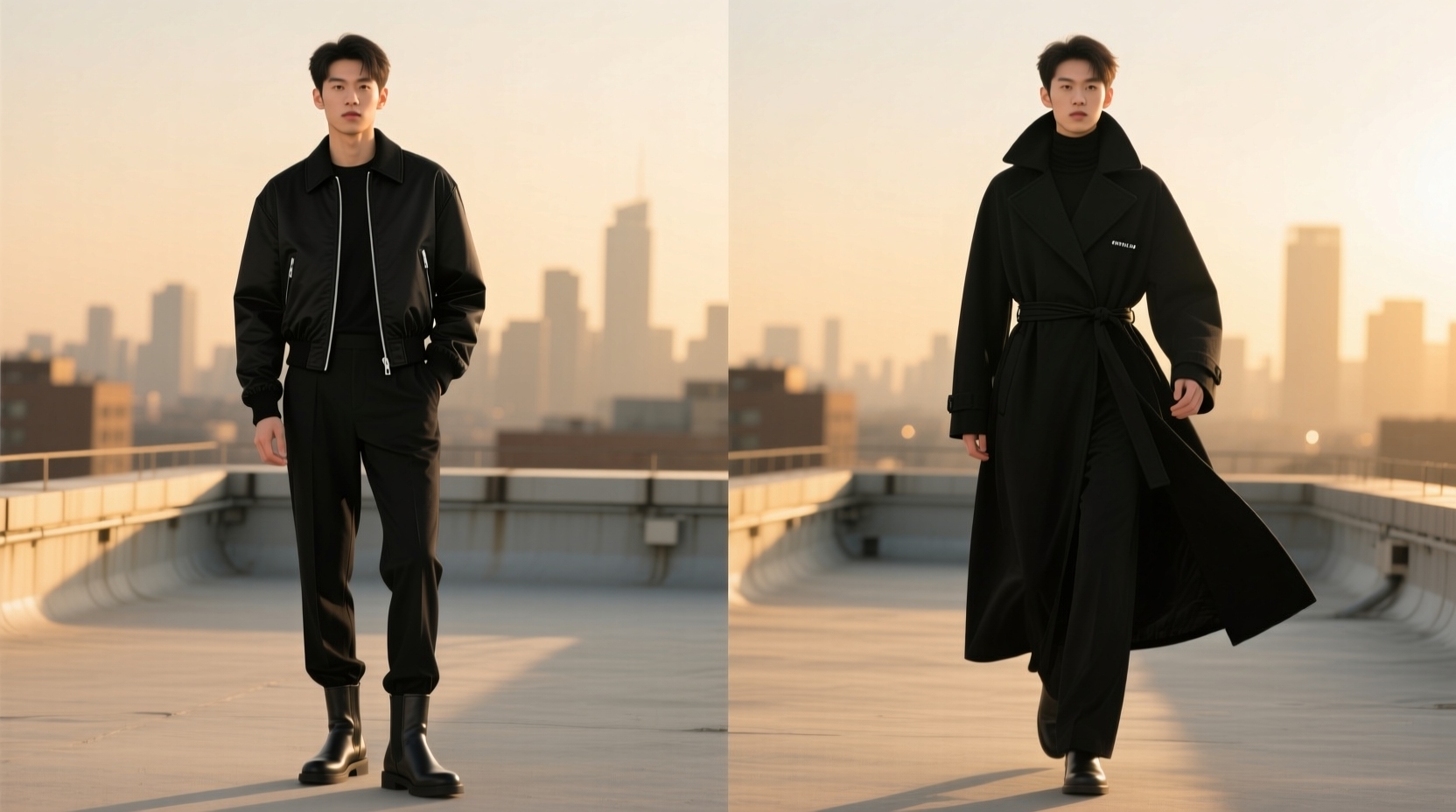
When it comes to outerwear, few choices are as impactful—or as personal—as deciding between a black short jacket and a long coat. Both are wardrobe staples, both offer protection from the elements, and both come in countless styles. But when standing in front of the mirror, wondering which silhouette truly enhances your look, the decision becomes more than practical—it becomes about proportion, presence, and personal expression.
The right outer layer doesn’t just keep you warm; it shapes your entire appearance. A well-chosen piece can elongate your frame, create balance, and project confidence. The wrong one can overwhelm your build or make you appear shorter than you are. So which option—short or long—makes you look better? The answer depends on several key factors: your body type, the occasion, your existing wardrobe, and even the season.
Understanding Proportion and Body Type
Proportion is the foundation of great style. It refers to how different parts of an outfit relate to each other and to your body. When choosing between a short jacket and a long coat, understanding your natural proportions is essential.
Taller individuals often have the flexibility to wear both lengths successfully. A long black coat can enhance their stature, creating a sleek, commanding silhouette. However, pairing it with low-heeled shoes or bulky layers underneath might disrupt the flow, making the look heavy rather than elegant.
For those under 5'6\", a floor-length coat can be tricky. It risks visually cutting the body in half, especially if the waistline isn't defined. In contrast, a well-tailored short jacket—ending at the hip or mid-waist—can emphasize leg length by preserving the natural line from waist to foot. This is particularly effective when worn with high-waisted pants or skirts.
Tip: If you're petite but love long coats, opt for a single-breasted, belted design that nips in at the waist. This creates vertical continuity and avoids overwhelming your frame.Occasion and Functionality: Where Will You Wear It?
The context matters as much as the cut. A short black jacket—like a bomber, biker, or cropped blazer—is inherently more casual and versatile for day-to-day wear. It’s easy to throw on over a sweater or dress shirt and works seamlessly with jeans, chinos, or tailored trousers.
On the other hand, a long black coat carries formality and authority. Think trench coats, wool overcoats, or tailored duffle coats. These are ideal for professional environments, evening events, or colder climates where insulation and coverage are priorities.
Consider this real-world scenario: Maya, a graphic designer, owns both a cropped moto jacket and a knee-length wool coat. For client meetings downtown, she wears the long coat over a minimalist turtleneck and tailored pants—it conveys polish and preparedness. On creative days in the studio, she swaps it for the short jacket, which allows freedom of movement and fits the relaxed vibe of her workspace.
“Outerwear should reflect not just the weather, but the role you’re stepping into.” — Julian Reed, Menswear Stylist & Consultant
Styling Strategies for Maximum Impact
How you style your outerwear determines how it influences your overall appearance. Even the best-fitting piece can fall flat without thoughtful coordination.
- Monochrome layering: Wearing black from head to toe under a black coat creates a continuous vertical line, making you appear taller and slimmer.
- Belt it: Use a belt over a long coat to define the waist and prevent a shapeless look.
- Play with textures: Pair a sleek leather short jacket with soft knits, or a structured long coat with fluid fabrics to add depth.
- Mind the hemline: Avoid having the jacket end at the widest part of your hips. Choose lengths that skim above or below problem areas.
| Style Goal | Best Choice | Why |
|---|---|---|
| Add height | Long coat (knee or below) | Creates unbroken vertical lines |
| Showcase lower body | Short jacket | Highlights legs and waist definition |
| Project authority | Long coat | Classic, formal, and commanding |
| Casual versatility | Short jacket | Easily layered and removed |
| Winter warmth | Long coat | More coverage and insulation |
Step-by-Step Guide: Choosing Your Ideal Outerwear
Follow this sequence to determine whether a short jacket or long coat will serve you best:
- Assess your height and build: Measure your torso and leg length. If your legs are shorter relative to your torso, a short jacket may preserve balance.
- Determine primary use: List your top three activities (e.g., commuting, office work, weekend outings). Match them to appropriate outerwear functions.
- Try before you buy: Always try on both lengths. Walk around, sit down, and check mirrors from multiple angles.
- Check the shoulder fit: Poor shoulder alignment ruins any coat. The seam should sit right at the edge of your shoulder.
- Layer test: Wear the coat over your typical winter layers. Ensure it closes comfortably without pulling.
- Evaluate the back view: Ask someone to take a photo from behind. Does the coat follow your natural line, or does it flare awkwardly?
Frequently Asked Questions
Can a short jacket be formal enough for business settings?
Yes—depending on the style and fabric. A tailored black blazer-style jacket in wool or twill, paired with matching trousers and polished shoes, can be perfectly appropriate for business-casual or creative office environments. However, for conservative corporate settings, a long coat remains the safer choice.
Will a long coat make me look heavier?
Not necessarily. A well-cut long coat with a defined waist or vented back can actually streamline your figure. The key is avoiding boxy silhouettes and overly thick materials unless balanced with slim-fitting layers underneath.
Is black always the best color for outerwear?
Black is timeless and versatile, but not universally flattering. Those with warm undertones in their skin may find charcoal, navy, or deep brown more complementary. That said, black remains a powerful neutral that pairs effortlessly with almost any color in your wardrobe.
Final Verdict: Which One Makes You Look Better?
There is no universal answer—only what works best for you. The goal isn’t to follow trends blindly, but to select outerwear that aligns with your body, lifestyle, and aesthetic goals.
In general:
- Choose a **short black jacket** if you want versatility, a youthful edge, or to emphasize your lower half.
- Opt for a **long black coat** if you seek elegance, need more warmth, or want to project sophistication and height.
Many people benefit from owning both. Rotate them based on season, setting, and mood. A cropped leather jacket energizes a weekend look, while a double-breasted wool coat elevates a Monday morning commute.
“The most flattering coat isn’t the longest or shortest—it’s the one that makes you stand a little taller when you put it on.” — Lila Chen, Fashion Psychologist
Take Action: Build Your Ideal Outerwear Wardrobe
Start by evaluating what you already own. Does your current jacket or coat reflect how you want to feel and be seen? If not, set a clear intention: “I want a coat that makes me feel confident during winter meetings” or “I need a lightweight jacket for transitional weather.”
Then, visit a store with a generous return policy and try on multiple lengths. Bring a friend for honest feedback. Take photos. Notice how each piece affects your posture and demeanor.
🚀 Ready to upgrade your outerwear game? Pick one change today—try a new length, adjust your layering, or invest in a better fit. Style isn’t about following rules; it’s about discovering what brings out your best self.