When it comes to styling a mini skirt, the goal isn’t just to follow trends—it’s to feel confident. For many, that means choosing pieces that flatter their shape and discreetly minimize areas they’d rather not highlight. Beaded and embroidered mini skirts are both fashion-forward choices, but they interact with the body in very different ways. One might accentuate curves where you'd prefer softness; the other could cleverly disguise common concerns like hip width, thigh fullness, or an uneven waistline. Understanding the structural and visual differences between these two embellishment styles is key to making a choice that enhances your silhouette—not fights it.
The Visual Impact of Texture and Pattern
Texture plays a powerful role in how the eye perceives the body. Smooth fabrics tend to cling and reveal every contour, while textured surfaces break up lines and create optical illusions. This is where beading and embroidery diverge significantly.
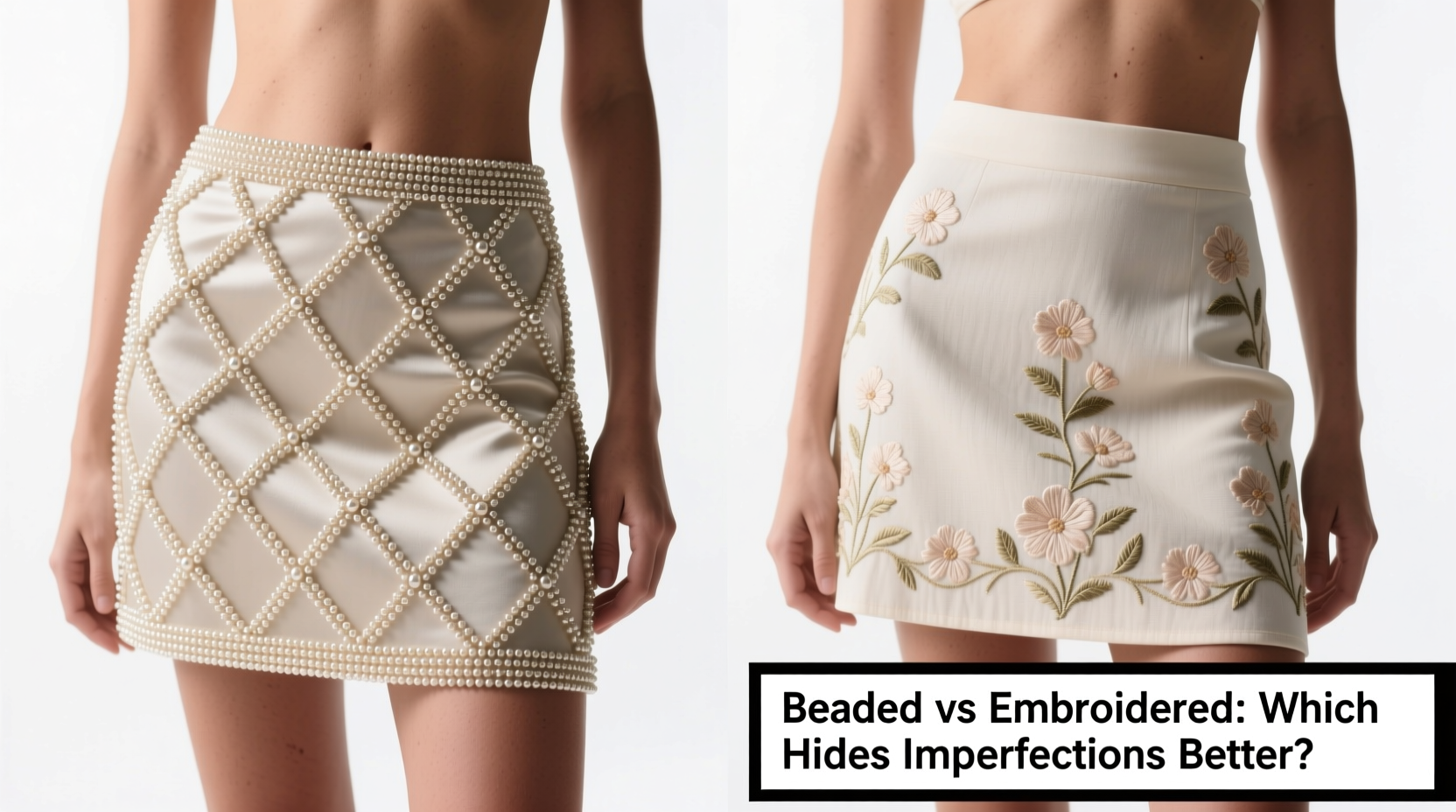
Beaded skirts are constructed with tiny, often densely placed beads sewn onto fabric. These beads catch light, add volume, and create a shimmering surface that draws attention. While beautiful, this can also emphasize movement and outline the body beneath—especially if the base fabric is tight-fitting. In contrast, embroidered skirts use stitched thread to form patterns over a fabric base. The raised designs diffuse light softly and offer a more matte, layered appearance. Because embroidery doesn’t add as much physical dimension, it tends to lie closer to the body without amplifying underlying curves.
Tip: Opt for embroidery with all-over organic motifs (like florals or vines) to blur the edges of your hips and thighs naturally.Structural Differences: How They Fit and Drape
The way a skirt is constructed influences how it interacts with your body. Beaded skirts often rely on a structured underlay—such as mesh or satin—to support the weight of the beads. This foundation fabric is typically less stretchy and more rigid, which can result in a tighter, more compressive fit. While this may smooth minor bumps, it can also create visible tension lines or bulges at the waistband or upper thighs if the sizing isn’t perfect.
Embroidered skirts, especially those using lightweight cotton, denim, or stretch blends, usually maintain the drape and flexibility of the base fabric. The embroidery sits atop the material without altering its inherent stretch or flow. This allows for a forgiving fit that moves with the body rather than against it. Skirts with openwork or lace-like embroidery also introduce negative space, further softening the visual outline of the legs and hips.
“Embellishments that add vertical interest or asymmetry can redirect focus and balance proportions.” — Lena Park, Fashion Stylist & Body Positivity Advocate
Comparative Analysis: Beaded vs Embroidered Skirts
| Feature | Beaded Mini Skirt | Embroidered Mini Skirt |
|---|---|---|
| Light Reflection | High—beads shimmer and draw attention | Low to moderate—matte finish diffuses light |
| Fit Flexibility | Limited—often stiff due to bead weight | High—fabric retains natural stretch |
| Silhouette Effect | Can emphasize curves and add volume | Softens edges with pattern disruption |
| Best For Hiding | Minimal—may highlight rather than conceal | Hips, waist imbalance, thigh fullness |
| Comfort Level | Moderate—can be heavy or restrictive | High—lightweight and breathable |
Real-World Example: Choosing for Confidence
Sophia, a 32-year-old marketing consultant, wanted a standout piece for a summer wedding. She loved the idea of a beaded mini skirt but found that most options emphasized her hip width and made sitting uncomfortable. After trying several styles, she switched to a high-waisted embroidered cotton skirt with a scattered floral design. The embroidery created visual interest across the entire surface, drawing eyes away from specific areas. More importantly, the cotton blend offered gentle compression without squeezing, and the matte finish didn’t reflect light in unflattering ways. At the event, she received compliments not on a single feature—but on her overall look. “I felt put together, not exposed,” she said. “The embroidery gave me the detail I wanted without the spotlight effect.”
Step-by-Step Guide to Choosing the Most Flattering Style
- Assess your comfort priorities: Do you value breathability and ease of movement, or are you willing to trade comfort for dramatic impact?
- Identify your fit concerns: Are you aiming to minimize hips, smooth the waist, or elongate the legs?
- Try both styles on: Wear each with similar tops and footwear. Move around—sit, walk, bend—and observe how the fabric behaves.
- Check lighting: View yourself in natural light and indoor lighting. Beading often looks softer in dim settings but harsher in daylight.
- Evaluate the pattern direction: Vertical embroidery lines can lengthen the leg; horizontal or circular beading may widen the lower body.
- Consider layering: A sheer overlay or slip can soften the appearance of beading, while a tailored jacket balances embroidered volume.
Frequently Asked Questions
Can a beaded skirt ever be figure-flattering?
Yes, but selectively. Beaded skirts with strategic placement—such as concentrated detailing at the hem or asymmetric panels—can divert attention downward, creating balance. Avoid all-over beading on stretch fabrics, as it can magnify lumps and distortions.
Does embroidery work for curvier figures?
Absolutely. Embroidery, particularly when it features flowing lines or scattered motifs, breaks up solid color blocks and softens transitions between body zones. Darker base fabrics with tonal embroidery are especially effective for creating a slimming effect.
Are there types of embroidery that don’t flatter?
Heavy, rigid stitching or large, blocky patterns (like geometric borders at the hip line) can add visual weight exactly where you might want to minimize. Opt for delicate threadwork, irregular layouts, or nature-inspired designs that mimic natural movement.
Final Recommendations and Checklist
- Choose embroidery for everyday wear and subtle elegance.
- Pick beading for special occasions where you want to command attention.
- Select darker base colors with tonal embellishments to reduce contrast and avoid highlighting flaws.
- Look for high waistlines and A-line cuts in embroidered styles—they enhance proportion without constriction.
- Avoid overly tight silhouettes with beaded skirts; even slight snugness can cause bulging.
“The right embellishment doesn’t hide your body—it harmonizes with it.” — Marcus Liu, Designer at Liora Collective
Conclusion
When deciding between a beaded and an embroidered mini skirt, the question isn’t just about aesthetics—it’s about intention. If your goal is to feel secure, balanced, and subtly stylish, embroidery generally offers superior camouflage for common figure concerns. Its ability to diffuse light, follow natural curves, and provide forgiving structure makes it a smarter choice for those prioritizing comfort and confidence. Beaded skirts have their place—particularly in editorial or nightlife contexts—but they demand a precise fit and often highlight more than they conceal.
Ultimately, the best skirt is the one that lets you forget about your imperfections because you’re too busy enjoying how good you look. Use these insights to make informed choices, prioritize fit over trend, and embrace embellishment that elevates—not exposes—your unique shape.
💬 Which style do you reach for when you want to feel your most confident? Share your go-to mini skirt type and why it works for you.