Accessories define the details. On a handbag, few elements attract attention like a well-chosen charm. Whether dangling from a zipper pull or clipped to a handle, charms personalize your bag and reflect your aesthetic. But one persistent debate divides fashion-conscious users: should you attach your charm with a metal chain or a delicate ribbon tie? While both options offer distinct visual appeal, the core concern remains—security. Is a chain truly more reliable than a ribbon? The answer isn’t as straightforward as it seems.
At first glance, metal chains appear inherently sturdier. They’re rigid, durable, and resistant to wear. Ribbons, by contrast, seem fragile—prone to fraying, slipping, or snapping. Yet in real-world use, the distinction blurs. Many users report losing charms attached by chains due to faulty clasps or jostling in crowded spaces, while others find that silk ribbons, when properly tied, remain intact for months. To resolve this dilemma, we must examine not just material strength, but also design, usage patterns, and environmental factors.
The Mechanics of Attachment: How Security Really Works
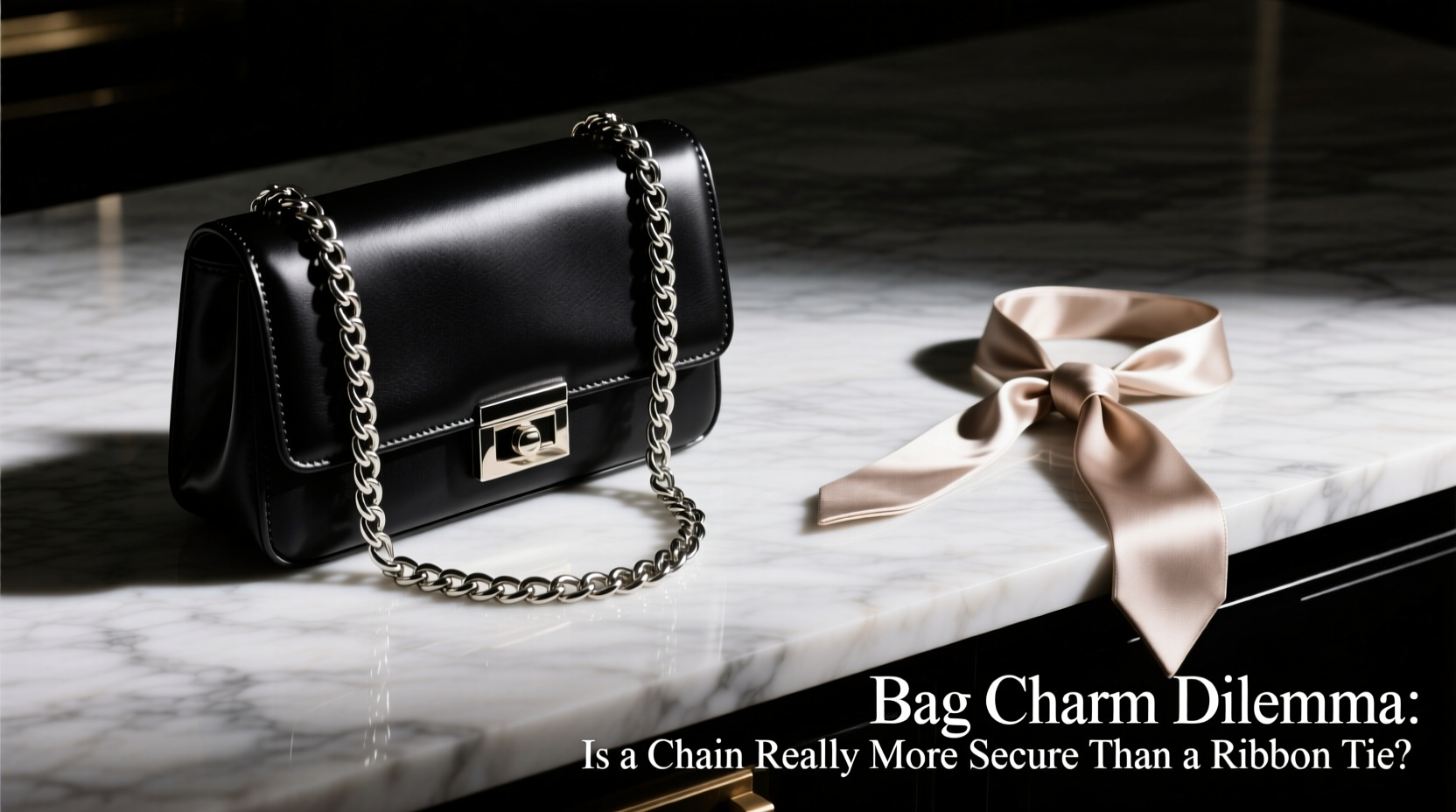
Security doesn’t depend solely on the material—it hinges on how the attachment method interacts with daily stressors. A chain typically connects via a lobster clasp or spring ring, which latches onto a D-ring or zipper pull. These mechanisms are engineered for load-bearing, but they aren't foolproof. Over time, repeated opening and closing can weaken the spring tension, causing accidental disengagement. Worse, if the clasp snags on clothing or furniture, it may pop open under sudden force.
Ribbon ties, meanwhile, rely on knot integrity. A double or surgeon’s knot in high-quality grosgrain or silk ribbon can withstand surprising strain. Unlike metal components, fabric distributes pressure evenly across the contact point, reducing localized stress. However, ribbons are vulnerable to abrasion, moisture, and UV exposure. A charm tied with ribbon left in a humid bathroom or exposed to sunlight may degrade faster than expected.
“Attachment security is less about material and more about fit and frequency of use. A poorly secured chain is riskier than a thoughtfully knotted ribbon.” — Lila Nguyen, Accessory Design Consultant at Luxe Elements Studio
Chain vs. Ribbon: A Practical Comparison
| Feature | Metal Chain | Ribbon Tie |
|---|---|---|
| Durability | High – resists tearing and stretching | Medium – susceptible to fraying and moisture damage |
| Security | Depends on clasp quality; can fail unexpectedly | Reliable if knotted correctly; fails gradually (visible wear) |
| Aesthetic Flexibility | Limited to metallic finishes; industrial or luxe look | High – wide range of colors, textures, and seasonal themes |
| Maintenance | Wipe clean; inspect clasp monthly | Replace every 3–6 months; avoid water exposure |
| Environmental Risk | Corrosion in saltwater or humidity; tarnishing | Fading, mildew, fiber breakdown |
Real-World Scenarios: When Each Option Shines
Consider Sarah, a marketing executive who commutes daily on public transit. She uses a structured leather tote with a vintage locket charm attached via a thin silver chain. After three weeks, the charm vanished—snagged on a subway door during rush hour. The clasp had opened under lateral pressure, something she hadn’t anticipated. Frustrated, she switched to a navy-blue satin ribbon with a triple knot. Six months later, the charm remains secure, though she replaces the ribbon quarterly for freshness.
In contrast, Marcus, a weekend traveler, prefers rugged crossbody bags. He attaches a compass charm with a brass chain to his outdoor pack. Despite hiking through forests and city streets, the charm hasn’t budged. The sturdy clasp and minimal movement (the bag stays on his back) reduce failure points. For him, the chain’s resilience outweighs any aesthetic drawbacks.
Tip: If using a chain, choose one with a safety catch clasp or add a silicone stopper bead to prevent slippage.Best Practices for Maximum Charm Security
No attachment method is immune to failure without proper care. Follow these steps to protect your investment:
- Inspect regularly: Check chains for bent clasps or stretched links weekly. Look for frayed edges or loose knots on ribbons.
- Match the method to the bag’s use: Reserve ribbons for occasional or indoor bags. Use chains for frequently handled or travel bags—but only with reinforced clasps.
- Double up: Combine both methods. Attach the charm to a short chain, then secure the chain to the bag with a ribbon loop. This hybrid approach adds redundancy.
- Choose quality materials: Opt for surgical-grade stainless steel chains and tightly woven silk or polyester ribbons with heat-sealed ends.
- Limit exposure: Remove charms before entering pools, saunas, or rainy environments, regardless of attachment type.
Checklist: Secure Your Bag Charm in 5 Steps
- ☐ Assess your bag’s daily use pattern (commute, work, leisure)
- ☐ Select attachment based on environment (urban, outdoor, climate)
- ☐ Test the connection: tug gently to simulate real-world stress
- ☐ Schedule replacements: every 3 months for ribbons, every 6 for chains
- ☐ Store spare charms and attachments in a dedicated pouch
Expert Insights on Longevity and Style Balance
Designers increasingly recognize the charm trend’s staying power. Brands like Montblanc and Polène now include dual attachment points—D-rings for chains and discreet fabric loops for ribbons—allowing customization without compromising structure.
“We’re designing hardware with charm security in mind. Micro-lock clasps and anti-slip ribbon channels are becoming standard in premium lines.” — Rafael Torres, Senior Product Developer at Atelier Marque
This shift acknowledges that security and style aren’t mutually exclusive. A well-integrated system allows users to switch between chain and ribbon based on occasion, without sacrificing peace of mind.
Frequently Asked Questions
Can I convert a ribbon-tie charm to a chain?
Yes. If your charm has a jump ring, you can detach the ribbon and replace it with a chain of your choice. Ensure the chain’s clasp matches the ring size to prevent slippage.
Are there hybrid solutions available?
Absolutely. Some third-party accessories combine a short chain with an elasticized ribbon sleeve, offering both stretch resistance and visual softness. Others use magnetic connectors embedded in fabric straps for quick changes.
How do I know when to replace my ribbon or chain?
Replace ribbons if you notice fading, stiffness, or thread separation. Replace chains if the clasp no longer snaps shut firmly or if links show visible bending. Proactive replacement prevents loss.
Final Thoughts: Security Is a System, Not a Single Part
The question isn’t whether a chain is more secure than a ribbon—it’s whether your entire charm setup is designed for reliability. A flimsy chain with a weak clasp is no safer than a loosely tied ribbon. Conversely, a carefully knotted silk band can outlast a corroded metal link. The most secure charm is one that aligns with your lifestyle, is made of quality materials, and is maintained consistently.
Think beyond aesthetics. Evaluate how you use your bag, where you take it, and how much you value the charm it carries. Then, choose—not just a chain or a ribbon, but a complete strategy for keeping your accessory exactly where it belongs.
🚀 Ready to upgrade your charm game? Audit your current attachments today—inspect, reinforce, and personalize with confidence. Share your favorite secure charm setup in the comments below.








