As the leaves turn and the air cools, men’s wardrobes shift toward layered elegance. The autumn blazer suit remains a cornerstone of professional and smart-casual style, but when paired with outerwear—especially the classic trench coat—questions arise. Does adding a trench elevate the look or risk making the suit appear disheveled? The answer isn’t binary; it hinges on fit, fabric, proportion, and intention. When executed well, a trench coat doesn’t just complement a blazer suit—it enhances it. When mismatched, however, even a high-end ensemble can look disjointed.
The Anatomy of a Polished Autumn Ensemble
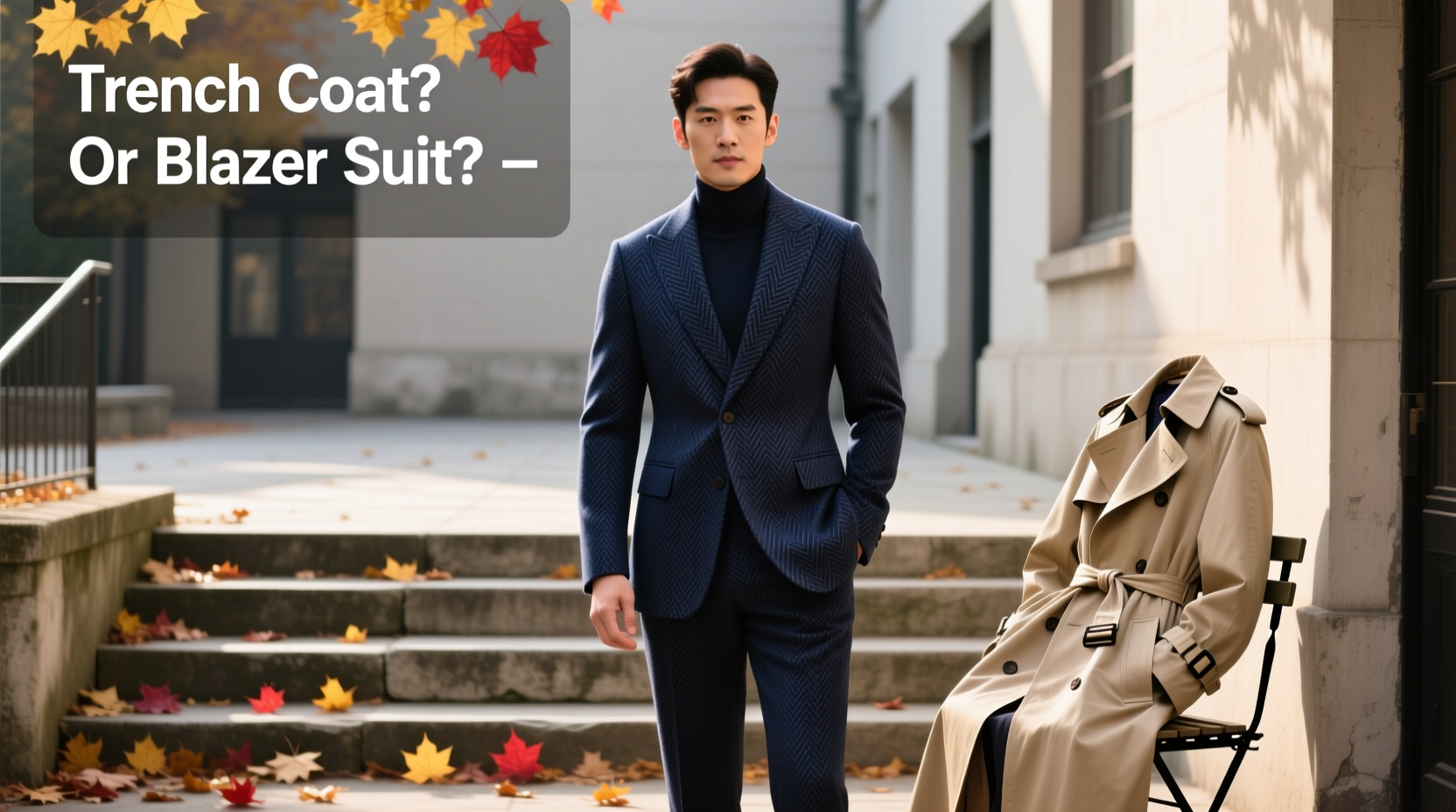
The trench coat, born from military necessity, has evolved into a symbol of timeless sophistication. Its structured shoulders, double-breasted front, and belted waist convey authority and refinement. Meanwhile, the autumn blazer suit—typically in wool, wool blends, or tweed—offers warmth and sartorial versatility. Combining these two pieces requires attention to their structural harmony.
A trench that is too long, too loose, or made from overly stiff fabric can overwhelm a tailored suit, creating visual bulk and obscuring the suit’s clean lines. Conversely, a well-fitted trench with complementary proportions preserves the suit’s silhouette while adding depth and weather protection.
“Outerwear should extend the language of the suit, not interrupt it.” — Marcus Hale, Menswear Stylist & Creative Director at *The Savile Row Review*
Key Factors That Prevent a Sloppy Appearance
To ensure your trench enhances rather than undermines your blazer suit, consider the following elements:
- Length: A trench should ideally end at or just above the ankle. If it pools around the feet, it disrupts the vertical line of the suit and creates a dragging effect.
- Fabric Weight: Lightweight cotton gabardine is ideal for layering over suits. Heavy canvas or rubberized materials add unnecessary volume.
- Fit Through Shoulders: The trench must align with the suit jacket’s shoulder line. Padding that extends beyond the suit’s natural shoulder creates a bulky, unstructured look.
- Sleeve Proportion: Trench sleeves should allow the suit cuff to peek through by about half an inch—this maintains visibility of the suit’s craftsmanship.
- Belt Definition: Fastening the trench’s belt subtly emphasizes waist suppression, echoing the suit’s tailoring and preventing a boxy silhouette.
Comparison: Blazer Suit + Trench vs. Alternative Outerwear
| Outerwear Option | Pros with Blazer Suit | Cons with Blazer Suit | Best For |
|---|---|---|---|
| Trench Coat (Classic Fit) | Timeless style, weather protection, adds authority | Risk of bulk if poorly fitted; limited breathability in rain | Business settings, transitional weather, urban environments |
| Topcoat (Wool, Single-Breasted) | Superior warmth, elegant drape, minimal layering bulk | Less effective in heavy rain; higher cost | Cold, dry autumns; formal occasions |
| Peacoat | Shorter length avoids overwhelming suit; nautical charm | Limited coverage; casual vibe may clash with formal suits | Casual Fridays, weekend wear |
| Car Coat (Long, Leather) | Durable, warm, modern edge | Stiffness can distort suit lines; harder to fold neatly | Driving, evening events, colder climates |
Step-by-Step Guide: Wearing a Trench Over a Blazer Suit Without Looking Sloppy
- Select the Right Trench Length: Choose a coat that ends between mid-calf and top of the ankle. Avoid floor-length styles unless you're exceptionally tall.
- Ensure Proper Shoulder Alignment: Stand in front of a mirror wearing your suit. Put on the trench. The shoulder seams should match or sit just inside the suit’s shoulders.
- Check Sleeve Clearance: With arms down, the trench sleeve should stop about 1–1.5 inches above your wrist, allowing the suit cuff to remain visible.
- Fasten the Belt Lightly: Cinch the belt just enough to define the waist without pulling the coat taut across the chest.
- Limit Layering Underneath: Avoid thick sweaters under the blazer. Stick to fine-gauge merino or a dress shirt only to prevent puffiness.
- Coordinate Colors Thoughtfully: Camel, stone, or charcoal trenches work best. Avoid bright colors or patterns that distract from the suit.
- Walk and Sit Test: Simulate daily movements. Ensure the coat doesn’t ride up excessively or restrict motion.
Real Example: The London Finance Executive
James, a 38-year-old investment analyst based in London, initially avoided trench coats with his navy three-piece suits, fearing they looked “like he was dressed for a spy movie.” After a wardrobe consultation, he invested in a mid-grey gabardine trench with a slightly tapered cut and moderate collar roll. He ensured it was tailored to end two inches above his shoe heel. Paired with a slim-fit suit and oxford shoes, the trench didn’t hide his outfit—it framed it. Colleagues began commenting on his polished commute look, and James now wears the combination three times a week during September and October.
The transformation wasn’t in the garments themselves, but in proportion and intent. He stopped seeing the trench as mere rain protection and started viewing it as an extension of his professional image.
Do’s and Don’ts Checklist
✅ Do:
- Match trench color to suit tone (e.g., camel with beige/tan, grey with navy)
- Opt for water-repellent finishes without plastic sheen
- Keep suit lapels visible above the trench collar
- Dry clean both suit and trench seasonally to maintain shape
- Choose matte hardware (brass or gunmetal) for subtle elegance
❌ Don’t:
- Wear an oversized trench “for room”
- Let suit jacket bunch under a tightly belted trench
- Pair a double-breasted trench with a double-breasted suit (too busy)
- Use a trench as a substitute for a topcoat in freezing weather
- Ignore sleeve adjustments—many tailors can shorten trench sleeves
FAQ
Can I wear a trench coat with a slim-fit suit?
Absolutely—but choose a trench with a streamlined cut. Avoid traditional wide silhouettes. Look for \"slim\" or \"modern fit\" labels, and ensure there's no pulling across the chest when buttoned.
Is it acceptable to leave the trench unbuttoned over a suit?
Yes, especially in milder conditions. An unbuttoned trench can project confidence and ease, provided the coat flares naturally and doesn’t gape open awkwardly. Fasten the first hook-and-eye closure for subtle structure.
What footwear works best with this combination?
Oxford shoes, derby shoes, or minimalist Chelsea boots in black, dark brown, or oxblood complete the look. Avoid chunky soles or athletic shoes, which undermine the formality of the suit.
Final Thoughts: Elevate, Don’t Conceal
The trench coat, when worn with intention, does not make a blazer suit look sloppy—it dignifies it. The key lies in respecting the suit’s architecture. A trench should act like a frame around a painting: noticeable, protective, but never overpowering. Autumn dressing isn’t about hiding layers beneath layers; it’s about curating a progression of textures and forms that speak to clarity and control.
Men who master this balance don’t just stay dry—they command presence. Whether navigating city streets or walking into a boardroom, the trench-over-suit ensemble, when done right, signals preparedness, taste, and quiet authority.
💬 Have you mastered the trench-and-suit combo? Share your go-to pairing, tailoring tips, or favorite brands in the comments below. Let’s refine autumn style together.