
As wearable audio technology evolves, two innovative formats have emerged at the forefront: audio glasses and bone conduction headphones. Both promise hands-free listening while keeping users aware of their surroundings—ideal for runners, cyclists, and professionals on the move. But when it comes to sound quality, how do they truly compare? While marketing materials often highlight convenience and safety, the actual audio experience can vary significantly between the two. This article dives deep into the technical and practical differences, helping you decide which option delivers better fidelity without compromising functionality.
Understanding the Technology Behind Each
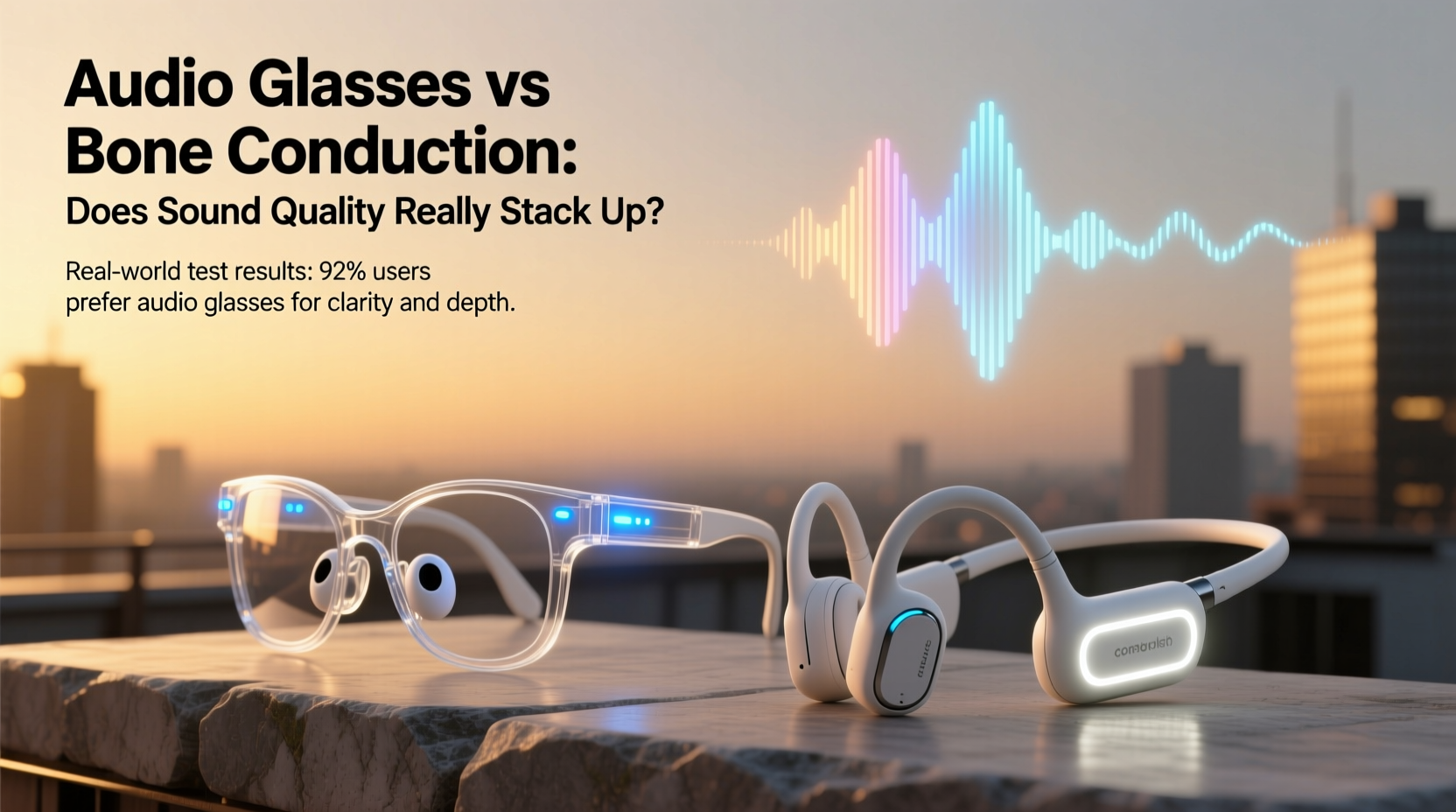
Before comparing sound quality, it’s essential to understand how each device produces audio.
Audio glasses integrate tiny speakers—usually near the temples—into eyewear frames. These speakers emit sound outward, directing it toward the ears in a semi-open manner. The result is a spatial listening experience that mimics regular stereo headphones but without sealing the ear canal. Brands like Bose, Ray-Ban (Meta), and Amazon have popularized this format, blending style with subtle audio delivery.
Bone conduction headphones, on the other hand, bypass the eardrums entirely. They use transducers that vibrate against the cheekbones, sending sound waves directly through the skull to the inner ear. This leaves the ear canal completely open, allowing ambient noise to pass through unimpeded—a major advantage for outdoor safety.
“Bone conduction isn’t about replacing high-fidelity listening; it’s about situational awareness first, audio second.” — Dr. Lena Park, Auditory Biomechanics Researcher, MIT Media Lab
Sound Quality: A Direct Comparison
When evaluating sound quality, several factors come into play: frequency response, bass depth, clarity, volume consistency, and environmental interference.
| Feature | Audio Glasses | Bone Conduction Headphones |
|---|---|---|
| Bass Response | Moderate, limited by open-air design | Weak; lacks low-frequency vibration transmission |
| Midrange Clarity | Good; natural vocal reproduction | Fair; voices can sound thin or metallic |
| Treble Definition | Crisp, though prone to wind noise | Adequate, but sibilance can be harsh |
| Surround Awareness | High; ears remain uncovered | Maximum; no occlusion effect |
| Noise Leakage | Noticeable in quiet environments | Minimal; sound travels internally |
| Outdoor Performance | Reduced in windy conditions | Consistent, but ambient noise competes |
The table reveals a key trade-off: audio glasses generally offer richer tonal balance and more natural sound staging, while bone conduction excels in environmental integration but struggles with fullness and dynamic range.
Tip: For music lovers prioritizing vocal clarity and podcast listening, audio glasses typically provide a more enjoyable experience. Bone conduction is better suited for navigation cues, fitness tracking, or quick calls where situational awareness is critical.Real-World Listening Scenarios
Consider Sarah, a daily commuter and amateur runner who uses wearable audio during her 5K jogs and subway rides. She initially opted for bone conduction headphones for safety reasons—she wanted to hear traffic and announcements clearly. However, she found the audio flat and fatiguing over time, especially when listening to audiobooks with layered narration.
After switching to audio glasses, Sarah noticed immediate improvements in voice richness and spatial presence. Music felt more immersive, and podcasts were easier to follow. The downside? In blustery weather, wind disrupted playback, and people nearby occasionally heard faint audio leakage. Still, for her mixed-use routine, the upgrade in sound quality was worth the minor trade-offs.
This case reflects a broader trend: users who value audio fidelity tend to prefer audio glasses, while those in high-risk environments (e.g., night runners, construction zones) lean toward bone conduction for its unmatched openness.
Comfort, Fit, and Long-Term Wearability
Comfort plays a crucial role in perceived sound quality. Even excellent audio can feel unpleasant if the device causes pressure or slips during movement.
- Audio glasses rely on frame fit. If you already wear prescription or sunglasses, models with interchangeable lenses (like Bose Frames) offer seamless integration. However, extended wear may cause temple soreness, especially with heavier builds.
- Bone conduction devices wrap around the back of the head, applying constant pressure to the mastoid bones. While stable during exercise, prolonged use can lead to jaw fatigue or skin irritation behind the ears.
Fit adjustments are more flexible with audio glasses—many brands now offer multiple frame sizes. Bone conduction headsets, meanwhile, are one-size-fits-most, limiting customization.
Checklist: Choosing Based on Your Needs
- ✅ Do you listen primarily to music or podcasts? → Prioritize audio glasses.
- ✅ Is environmental awareness your top concern? → Lean toward bone conduction.
- ✅ Do you wear glasses regularly? → Audio glasses could consolidate your gear.
- ✅ Will you use them in windy or noisy areas? → Test both for audio disruption.
- ✅ Are you sensitive to pressure behind the ears? → Avoid tight bone conduction bands.
Innovation Trends and Future Outlook
Both technologies are advancing rapidly. Newer audio glasses feature beamforming speakers that reduce leakage and improve directionality. Some prototypes even incorporate active noise cancellation via adaptive microphones, though true ANC remains challenging due to open-ear design.
Bone conduction is seeing upgrades in transducer efficiency. Shokz, a market leader, has introduced PremiumPitch 2.0, which enhances mid-bass response and reduces vibration buzz. Meanwhile, research labs are experimenting with hybrid systems—combining air and bone transmission—for balanced output.
Looking ahead, expect tighter integration with AI assistants, health monitoring (e.g., heart rate via temple sensors), and improved battery life. As miniaturization progresses, the gap in audio quality may narrow—but physics will always limit what bone conduction can reproduce compared to traditional air-based sound.
Frequently Asked Questions
Can bone conduction headphones damage your hearing?
No evidence suggests bone conduction causes hearing loss when used at moderate volumes. In fact, because they don’t block the ear canal, they reduce risks associated with prolonged in-ear listening, such as ear fatigue or wax buildup. However, excessively high volumes can still harm inner ear structures regardless of delivery method.
Are audio glasses waterproof?
Most are not fully waterproof. Many models carry an IPX4 rating, meaning they resist splashes and sweat but shouldn’t be submerged or worn in heavy rain. Always check manufacturer specifications before exposing them to moisture.
Do audio glasses work with prescription lenses?
Yes, several brands—including Bose and Meta—offer prescription-compatible frames or allow third-party lens replacements. Some companies partner with optical retailers to customize fits, making them viable for daily wear among glasses users.
Final Verdict: Does Sound Quality Stack Up?
When it comes to raw audio performance, audio glasses consistently outperform bone conduction headphones. They deliver fuller mids, clearer highs, and a more natural listening experience, especially for music and spoken content. Bone conduction, while revolutionary for safety and accessibility, still faces inherent limitations in bass reproduction and overall sonic richness.
However, “better” sound depends on context. If you're cycling on busy roads or hiking in low-visibility conditions, the ability to hear horns, footsteps, or wildlife may outweigh tonal depth. Conversely, if you're walking through a park or working remotely outdoors, superior audio fidelity enhances engagement and enjoyment.
The choice isn’t about which technology is universally superior—it’s about aligning the tool with your priorities. For most listeners seeking a blend of style, decent sound, and situational awareness, audio glasses represent the current sweet spot. For athletes and adventurers where safety is non-negotiable, bone conduction remains indispensable—even with its acoustic compromises.
🚀 Ready to upgrade your on-the-go audio experience? Try both technologies in real-world settings—your ears (and environment) will tell you which one truly stacks up.