
In an era dominated by sleek smartphones, smart homes, and cloud computing, it’s easy to overlook the bulky cassette players, tube radios, and CRT televisions gathering dust in basements and thrift stores. Yet a growing community of collectors, tinkerers, and retro enthusiasts is breathing new life into vintage electronics. But behind the nostalgia lies a practical question: Are these aging devices worth repairing—or are they simply relics destined for landfill?
The answer isn’t simple. For some, restoring a 1970s reel-to-reel tape deck is a labor of love. For others, it’s a financial miscalculation. The decision hinges on technical feasibility, economic logic, environmental responsibility, and emotional attachment. This article examines the real value—practical and sentimental—of repairing vintage electronics.
When Repair Makes Sense: Functional Value vs. Sentimental Worth
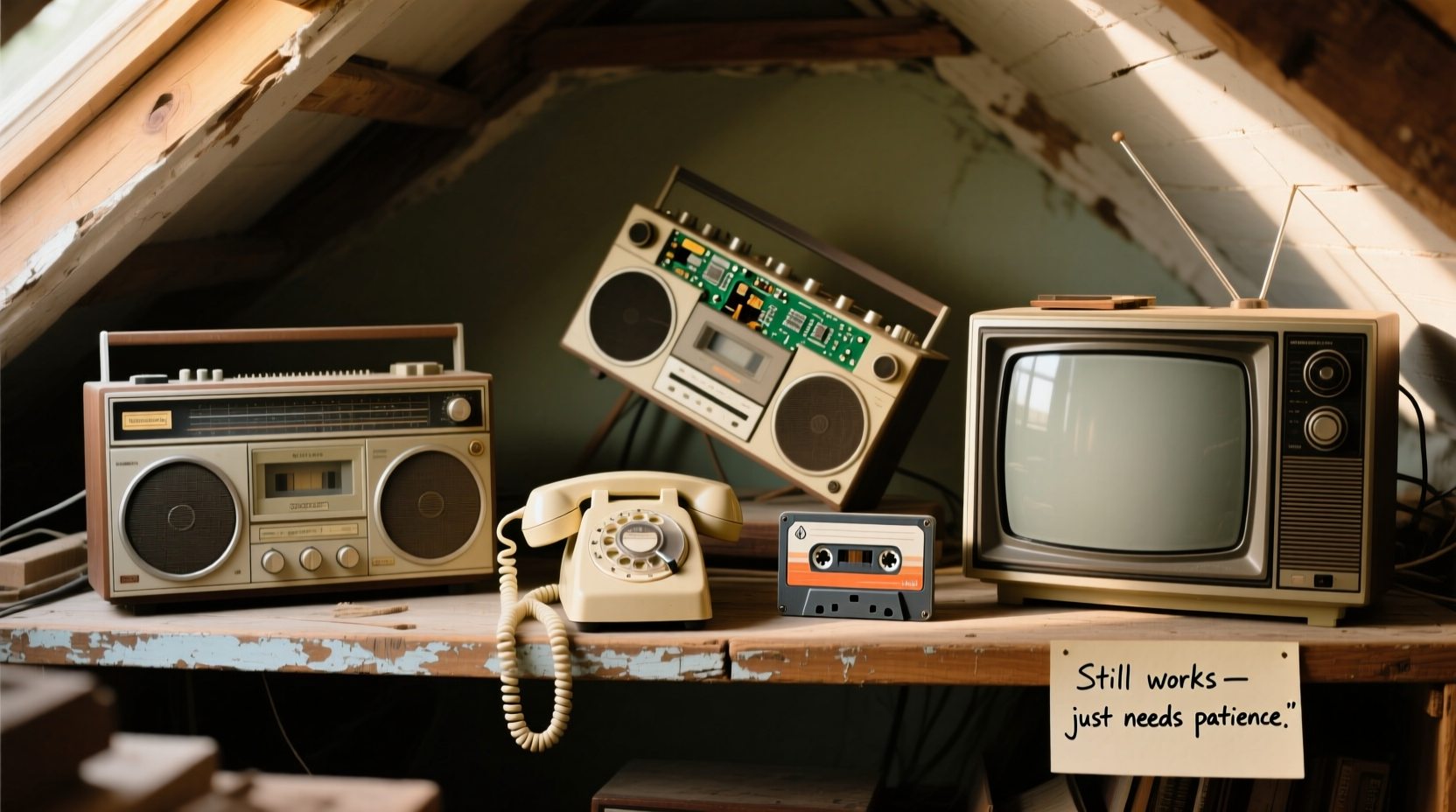
Vintage electronics occupy a unique space between utility and memory. A working turntable from the 1960s can still deliver high-fidelity sound, sometimes surpassing modern digital alternatives in warmth and depth. Similarly, classic synthesizers like the Moog Minimoog are sought after not for nostalgia alone, but because their analog circuits produce tones that remain difficult to replicate digitally.
However, functionality doesn’t always justify repair. Consider a 1980s VCR with worn-out belts and corroded circuitry. Even if restored, its primary function—playing VHS tapes—is largely obsolete. Yet someone might repair it to digitize family home videos, giving the device temporary but critical purpose.
“Restoring vintage gear isn’t about replacing modern tech—it’s about preserving options, craftsmanship, and sonic character that today’s mass production often lacks.” — Daniel Ruiz, Audio Restoration Specialist
Sentimental value can outweigh cost. A stereo system passed down from a grandparent may hold more emotional weight than monetary worth. In such cases, repair becomes an act of preservation, not economics.
Cost Breakdown: Time, Parts, and Expertise
Repairing vintage electronics is rarely a quick fix. Unlike modern devices with modular components, older electronics often require hand-soldering, point-to-point wiring, and sourcing long-discontinued parts. These factors dramatically increase time and cost.
Consider the typical expenses involved:
- Diagnostic labor: $50–$150 per hour (specialists are rare)
- Replacement parts: NOS (New Old Stock) capacitors, tubes, or ICs can cost $20–$200 each
- Shipping and handling: International sourcing adds delays and fees
- Testing equipment: Oscilloscopes, signal generators, and multimeters needed for calibration
A full restoration of a mid-tier tube amplifier can easily exceed $400 in parts and labor—more than the market value of the unit itself. Yet for audiophiles, the payoff is in performance, not price tags.
Tip: Before investing in repairs, research current resale values on platforms like eBay or Reverb to determine if restoration makes financial sense.Environmental Impact: Repair as Sustainable Practice
Electronic waste is one of the fastest-growing waste streams globally. The United Nations estimates that over 50 million metric tons of e-waste are generated annually, with less than 20% being properly recycled. Most discarded devices contain hazardous materials like lead, mercury, and cadmium.
Repairing vintage electronics aligns with circular economy principles. Extending the lifespan of existing devices reduces demand for new manufacturing, which consumes energy and raw materials. A restored 1970s receiver avoids the carbon footprint of producing a new equivalent—estimated at 80–100 kg CO₂e per unit.
Moreover, many vintage electronics were built to last. Chassis were metal, not plastic. Components were serviceable, not glued shut. Repair wasn’t an afterthought—it was part of the design.
Do’s and Don’ts of Vintage Electronics Repair
| Do | Don't |
|---|---|
| Replace aging electrolytic capacitors (they dry out over time) | Power on a long-stored device without inspection |
| Clean potentiometers and switches with contact cleaner | Use abrasive cleaners on vintage plastics or dials |
| Check for cold solder joints or cracked traces | Assume all components are still functional after decades |
| Document disassembly with photos for reassembly | Discard original parts—even non-working ones have archival value |
| Test voltages gradually using a variac or isolation transformer | Rely solely on online schematics without verifying accuracy |
Case Study: Restoring a 1978 Sony TC-D5 Pro II Reel-to-Reel Tape Deck
Mark Thompson, a music archivist from Portland, inherited a Sony TC-D5 from his father’s studio. The machine hadn’t been powered in over 25 years. His goal: digitize over 30 reels of live jazz recordings before the tapes degraded further.
Initial inspection revealed seized capstan bearings, brittle rubber pinch rollers, and leaking capacitors. Mark faced two choices: pay $600 for professional restoration or attempt it himself.
He chose DIY. Over six weekends, he replaced all electrolytic capacitors, sourced NOS pinch rollers from a Japanese supplier, cleaned the tape heads with isopropyl alcohol, and recalibrated bias and alignment using test tones. Total cost: $180 in parts and tools.
The result? A fully functional deck capable of transferring tapes at professional quality. The project took 40 hours—but preserved irreplaceable recordings. “It wasn’t about the money,” Mark said. “It was about honoring my dad’s legacy. The machine was the only thing that could read those tapes properly.”
This case illustrates a key principle: repair is justified when the device performs a unique function unavailable through modern alternatives.
Step-by-Step Guide to Evaluating a Vintage Electronics Repair
Before committing time and money, follow this logical evaluation process:
- Identify the device and its original purpose. Research model number, year, and manufacturer specs.
- Assess physical condition. Look for rust, water damage, cracked casings, or signs of previous poor repairs.
- Check for available schematics and service manuals. Sites like Archive.org, Elektrotanya, or HiFiEngine offer free downloads.
- Test for basic functionality (safely). Use an isolation transformer and variac to power up slowly, watching for smoke or unusual smells.
- Diagnose common failure points. Capacitors, belts, fuses, and connectors fail most frequently.
- Source replacement parts. Verify compatibility—modern equivalents may differ in size or tolerance.
- Estimate labor and time. Be realistic: a simple recapping job may take 5 hours; full alignment could take 20+.
- Compare total cost to replacement value. If repair exceeds 70% of market value, reconsider unless sentimental value is high.
When to Let Go: Recognizing Irreparable or Low-Value Devices
Not every vintage electronic deserves rescue. Some units suffer from:
- Obsolete proprietary parts: Custom ICs no longer manufactured
- Severe corrosion: Especially in salt-air environments or flood-damaged units
- Lack of documentation: No schematics or service history
- Planned obsolescence designs: Early consumer-grade electronics with flimsy construction
For example, many 1990s CD boomboxes used fragile plastic gears and low-quality potentiometers. Even if repaired, reliability remains poor. Resale value rarely exceeds $30. In such cases, harvesting usable parts (speakers, knobs, jacks) may be more practical than full restoration.
Additionally, consider safety. Older devices may lack grounding, use asbestos insulation (in very early models), or have deteriorated power cords. If risks outweigh benefits, responsible recycling is the better choice.
Frequently Asked Questions
Can I repair vintage electronics without prior experience?
Basic repairs like capacitor replacement or cleaning controls are learnable with online tutorials and proper tools. However, high-voltage equipment (tube amps, CRT TVs) poses serious risks. Beginners should start with low-voltage battery-powered devices and seek mentorship from experienced hobbyists.
Where can I find replacement parts for old electronics?
Reputable suppliers include Mouser, Digi-Key, and specialized vendors like Amplified Parts (for audio gear) or Just Radios (for tubes and capacitors). Forums such as Audiokarma and Reddit’s r/vintagetechnology often have members selling NOS parts.
Does restoring vintage electronics increase their value?
Not always. Purists often prefer original, unmodified condition. Over-restoration or incorrect parts can decrease collector value. For investment-grade items (e.g., rare test equipment or broadcast gear), consult experts before modifying anything.
Repair Checklist: Is Your Vintage Device Worth Saving?
Use this checklist to make an informed decision:
- ☐ Does the device perform a function that modern tech cannot replicate well?
- ☐ Are service manuals and schematics available?
- ☐ Are critical replacement parts obtainable?
- ☐ Is the chassis and casing in repairable condition?
- ☐ Does it hold personal or historical significance?
- ☐ Have you safely tested for electrical hazards?
- ☐ Does estimated repair cost exceed 70% of market value?
- ☐ Are you emotionally prepared for a long or challenging project?
If most answers are “yes” to the first six and “no” to the last two, repair is likely worthwhile.
Conclusion: Balancing Nostalgia, Utility, and Responsibility
Vintage electronics sit at the intersection of technology, memory, and sustainability. While not every old radio or tape deck deserves resurrection, many do—either for their enduring performance, cultural significance, or environmental benefit. Repairing them isn’t just about fixing circuits; it’s about reclaiming a mindset of care, longevity, and intentionality often missing in today’s disposable tech culture.
Before labeling your old gadgets as clutter, ask: What can this do that newer versions cannot? Who might benefit from its return to life? And what story does it carry?
💬 Have a vintage device you’re considering repairing? Share your story in the comments—whether you’re reviving a childhood Walkman or restoring a father’s ham radio. Your experience could inspire others to look past the dust and see the potential.








