In an era where wearable technology is no longer limited to wristbands and watches, smart rings have emerged as a sleek, minimalist alternative. Marketed as discreet health monitors with sleep tracking, activity logging, and even contactless payments, these tiny devices promise big functionality in a small package. But beneath the polished titanium shells and glowing reviews lies a pressing question: are smart rings genuinely innovative, or are they simply repackaged fitness trackers with a higher price tag?
The answer isn’t straightforward. While smart rings share core functionalities with traditional wearables—like heart rate monitoring and step counting—their form factor, data focus, and user experience introduce unique advantages and trade-offs. To determine whether they’re worth the investment, it’s essential to look beyond marketing claims and examine how they perform in real life.
What Exactly Is a Smart Ring?
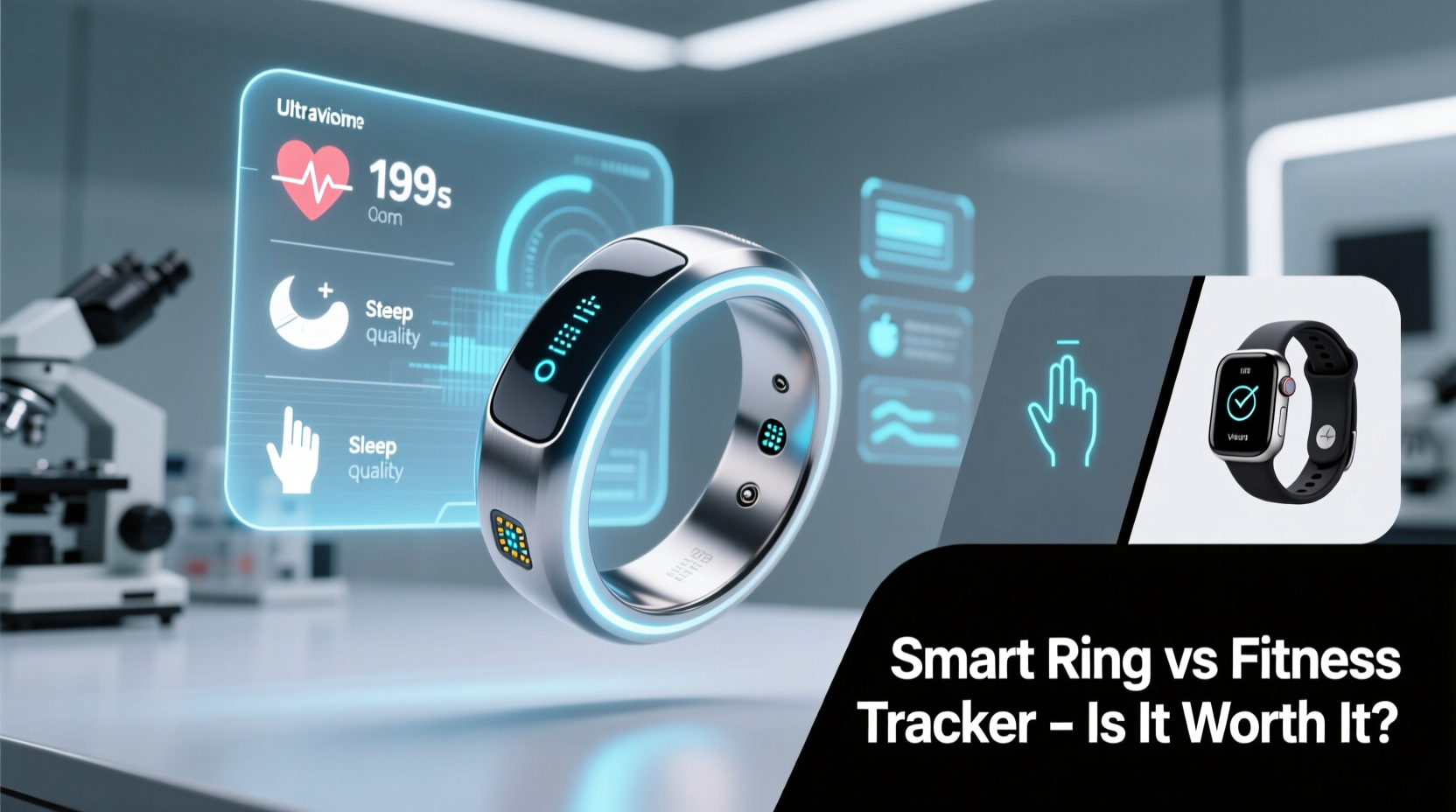
A smart ring is a wearable device designed to be worn like jewelry but equipped with sensors and connectivity features. Unlike bulky smartwatches, smart rings prioritize discretion without sacrificing all functionality. Most models include:
- Optical heart rate sensors
- Accelerometers and gyroscopes for motion tracking
- Temperature sensors (for body and ambient)
- NFC chips for payments or access control
- Battery and Bluetooth connectivity
Some advanced models, like the Oura Ring or Ultrahuman Ring Air, go further by analyzing sleep stages, recovery metrics, and even blood glucose trends using indirect biomarkers. The compact design means fewer components than a smartwatch, but manufacturers claim superior accuracy due to consistent finger placement—which offers more stable blood flow readings compared to the wrist.
Tip: For continuous biometric tracking, especially during sleep, the finger often provides more reliable signals than the wrist due to denser vascular tissue.Smart Rings vs. Fitness Trackers: A Feature-by-Feature Breakdown
To assess whether smart rings are merely rebranded fitness trackers, we need to compare them directly across key categories. Below is a comparison between leading smart rings and mainstream fitness trackers.
| Feature | Smart Rings (e.g., Oura, Ultrahuman) | Fitness Trackers (e.g., Fitbit, Garmin) |
|---|---|---|
| Size & Discreetness | Extremely compact; worn on finger, often mistaken for jewelry | Larger; visible on wrist; some models resemble watches |
| Sleep Tracking Accuracy | High—uses multiple sensors with minimal movement artifacts | Moderate to high—can be disrupted by arm movement |
| Battery Life | 5–7 days (requires frequent charging) | 5–14 days depending on model and usage |
| Notifications | Limited haptics; no screen for reading messages | Vibrations + full-screen alerts; can reply on some models |
| Activity Detection | Basic step count, calories, intensity minutes | Detailed workout modes, GPS integration, auto-detection |
| Health Insights | Advanced sleep staging, readiness scores, HRV analysis | General wellness metrics; stress tracking; SpO2 |
| Price Range | $300–$600 | $80–$300 |
The table reveals a clear distinction: smart rings excel in passive health monitoring, particularly sleep and recovery, while fitness trackers offer broader active engagement tools like GPS, workout guidance, and interactive notifications. If your priority is understanding your body’s rhythms without drawing attention, a smart ring may be ideal. But if you're training for marathons or want constant feedback during workouts, a fitness tracker remains more practical.
“Wearable innovation isn't just about adding features—it's about optimizing where and how data is collected. The fingertip offers unique physiological advantages over the wrist.” — Dr. Lena Patel, Biomedical Engineer at MIT Media Lab
Real-World Use Case: Sarah’s Journey with the Oura Ring
Sarah, a 34-year-old project manager based in Portland, struggled with chronic fatigue and poor sleep quality despite maintaining a healthy diet and regular yoga routine. She tried several fitness trackers but found them uncomfortable at night and often forgot to wear them after workouts.
After reading about circadian rhythm optimization, she invested in an Oura Ring. Within two weeks, the device flagged unusually low heart rate variability (HRV) and elevated resting heart rate—indicators of physical stress. The app recommended rest days, earlier bedtimes, and breathing exercises. Over three months, Sarah adjusted her schedule based on the insights and reported improved energy levels and deeper sleep.
What made the difference? “It wasn’t just the data,” she said. “It was wearing something so unobtrusive that I never took it off—not even in the shower or while swimming. I finally had consistent, long-term trends instead of fragmented snapshots.”
Sarah’s experience highlights a critical advantage of smart rings: compliance. Because they feel like accessories rather than gadgets, users tend to wear them more consistently, resulting in richer datasets over time.
When Smart Rings Shine—and Where They Fall Short
Smart rings aren’t one-size-fits-all solutions. Their value depends heavily on individual needs and lifestyle patterns. Here’s a breakdown of scenarios where they deliver exceptional value versus situations where they underperform.
✅ Situations Where Smart Rings Excel
- Sleep Optimization: Ideal for people struggling with insomnia, irregular sleep schedules, or recovering from illness.
- Recovery Monitoring: Athletes or high-performers using HRV and temperature trends to gauge readiness.
- Minimalist Tech Users: Those who dislike wearing watches or want tech that blends into daily life.
- Medical Research Participation: Some studies use smart ring data for longitudinal health tracking due to consistency.
❌ Limitations and Drawbacks
- No Screen Interface: Cannot read texts, emails, or control music directly.
- Limited Workout Feedback: No real-time pace, distance, or GPS tracking without pairing to a phone.
- Pricing: Often double the cost of mid-tier fitness trackers with fewer active features.
- Firmware Dependence: Many advanced features require subscription services (e.g., Oura membership).
Your Smart Ring Decision Checklist
Before purchasing a smart ring, ask yourself the following questions. Answering \"yes\" to three or more suggests it could be a worthwhile investment.
- Do I frequently remove my current fitness tracker at night?
- Am I interested in deep sleep analysis and recovery metrics?
- Do I prefer subtle, jewelry-like tech over visible wearables?
- Would I benefit from temperature trend monitoring (e.g., for fertility or illness detection)?
- Am I willing to pay a premium for smaller size and better build quality?
- Do I already own a smartphone or watch for notifications and GPS?
If most answers are “no,” a traditional fitness tracker or even a basic pedometer might serve you better. Smart rings fill a niche—they don’t replace multifunctional devices but complement lifestyles focused on holistic health and seamless integration.
Step-by-Step Guide: How to Evaluate a Smart Ring Purchase
Follow this timeline to make an informed decision without buyer’s remorse.
- Week 1: Define Your Goals
Identify what you want: better sleep? Stress reduction? General activity tracking? Write down your top three priorities. - Week 2: Compare Models
Research brands like Oura, Ultrahuman, Circular, and Samsung’s upcoming Galaxy Ring. Note battery life, required subscriptions, and compatibility with your phone. - Week 3: Test Alternatives
Try wearing a standard ring or fitness band overnight. Assess comfort and whether you’d realistically wear a smart ring 24/7. - Week 4: Read Real User Reviews
Focus on long-term users (6+ months). Look for comments about durability, accuracy drift, and customer support. - Final Step: Calculate Total Cost
Include upfront price plus any mandatory subscription fees over two years. Compare this total to alternative devices.
This methodical approach prevents impulse buys driven by aesthetics or influencer endorsements. Remember, the best wearable is the one you actually use—and trust.
Frequently Asked Questions
Can smart rings measure blood oxygen and heart rate accurately?
Yes, most use PPG (photoplethysmography) sensors similar to fitness trackers. However, due to tighter fit and reduced motion artifact on the finger, some studies suggest marginally better consistency during sleep. Accuracy varies by brand and skin tone, so results should be interpreted as trends rather than medical-grade diagnostics.
Are smart rings waterproof?
Most are water-resistant up to 100 meters (IP68 or ATM10 rating), meaning they can withstand showers, swimming, and diving. However, saltwater and chlorine may degrade finishes over time. Always rinse after exposure and avoid saunas or hot tubs unless specified.
Do I need a subscription to use a smart ring fully?
Many do. For example, Oura Ring locks advanced analytics behind a $5.99/month membership. Without it, you get only basic stats. Check each brand’s policy before buying—some offer lifetime access, others lock core features behind paywalls.
Conclusion: Beyond the Hype, Finding Your Fit
Smart rings are neither magic nor mere gimmicks. They represent a thoughtful evolution in wearable design—one that prioritizes continuous, passive health monitoring over flashy interfaces and constant interruptions. For individuals focused on sleep, recovery, and long-term wellness trends, they offer meaningful insights with unmatched comfort.
But calling them “just fitness trackers in disguise” oversimplifies their purpose. They aren’t trying to compete with Fitbit or Apple Watch on features. Instead, they occupy a different lane: silent, always-on health companions for those who value subtlety and sustained data collection.
Ultimately, whether a smart ring is worth the hype depends not on its specs, but on how well it aligns with your life. If you crave actionable health insights without the digital noise, and you’re willing to invest in both cost and commitment, then yes—it may very well be worth it.
🚀 Ready to explore smarter health tracking? Start by auditing your current habits, then match your goals to the right tool. Share your thoughts below—have you tried a smart ring? What surprised you most?








