Smart rings are quietly gaining traction in the wearable tech space. Unlike bulky smartwatches or wristbands, these sleek, discreet devices slip onto your finger and promise health tracking, sleep monitoring, and even contactless payments. But with limited display space and smaller sensors, many consumers wonder: Are smart rings truly worth buying, or are they simply underpowered fitness trackers masquerading as luxury accessories?
The answer isn’t binary. While smart rings do share core functionality with fitness trackers—like heart rate monitoring and step counting—their design philosophy, user experience, and niche applications set them apart. To evaluate their true worth, it’s essential to examine what they can do, where they fall short, and who benefits most from using one.
What Smart Rings Actually Do
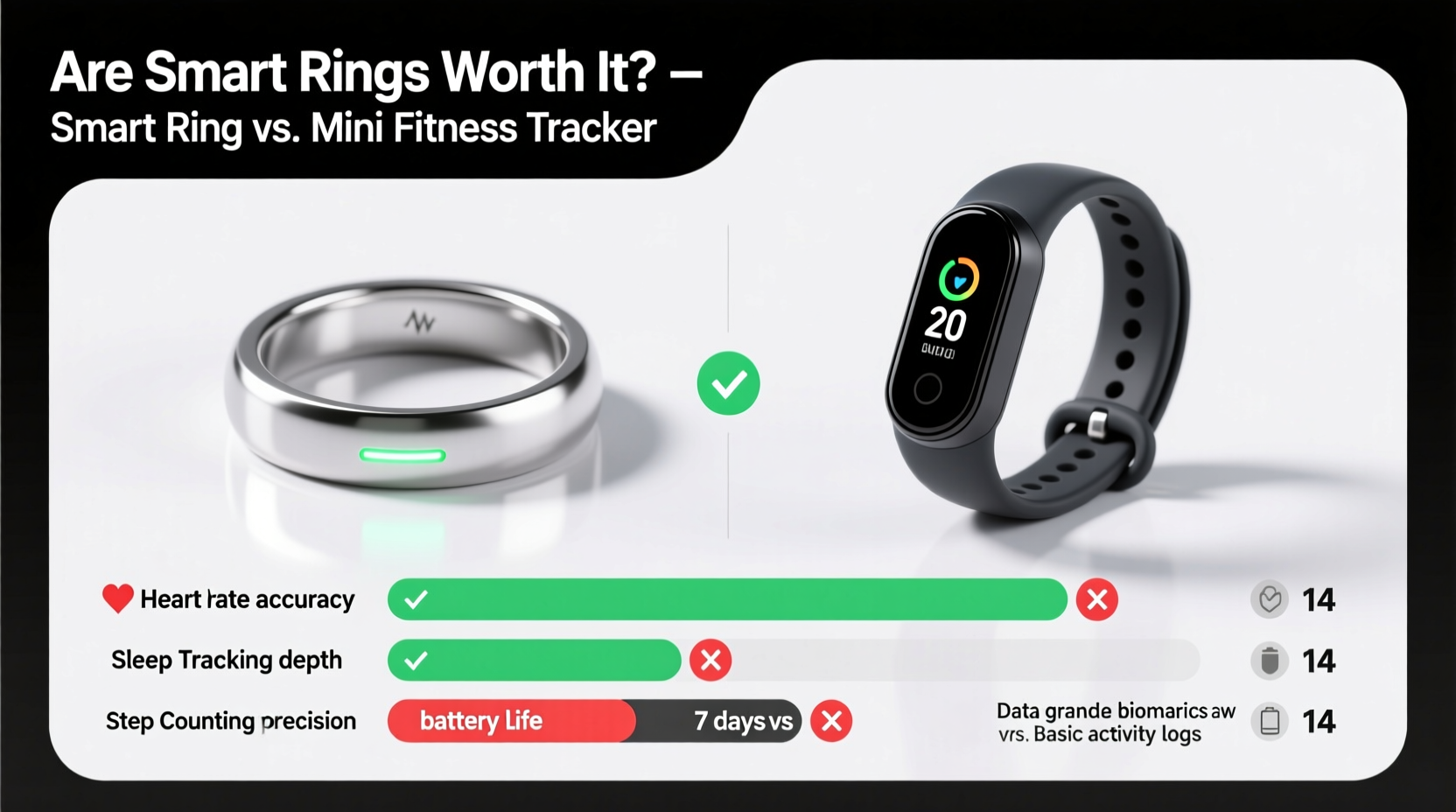
Modern smart rings go beyond basic activity tracking. Devices like the Oura Ring, Ultrahuman Ring Air, and Samsung Galaxy Ring integrate advanced biometrics and AI-driven analytics to deliver insights into physical recovery, sleep quality, stress levels, and even menstrual cycle predictions.
Unlike wrist-worn trackers that rely on optical sensors through skin on the wrist (which has less blood flow), smart rings often leverage fingertip placement—where pulse signals are stronger—for more accurate readings during rest and sleep. This makes them particularly effective for overnight monitoring.
- Sleep staging: Tracks light, deep, and REM sleep phases using movement, heart rate variability (HRV), and body temperature.
- Recovery metrics: Provides daily readiness scores based on HRV, resting heart rate, and sleep efficiency.
- Activity logging: Counts steps, estimates calories burned, and detects workouts automatically.
- Temperature trends: Monitors subtle changes in skin temperature, useful for detecting illness onset or hormonal shifts.
- Notifications & controls: Some models offer haptic alerts for calls, messages, or timers, and support NFC payments.
Limitations Compared to Full-Sized Fitness Trackers
Despite their innovation, smart rings face inherent constraints due to size. They lack screens, have minimal input methods, and carry smaller batteries—limiting both functionality and convenience.
Wrist-based devices like the Fitbit Charge 6, Garmin Venu, or Apple Watch offer larger displays, voice assistants, GPS, music storage, and broader app ecosystems. In contrast, smart rings typically offload data processing and visualization to companion smartphone apps.
This means users don’t get real-time workout stats on-device, can’t reply to messages directly, and must charge more frequently—often every 4–7 days versus a week or more for some watches.
Additionally, because smart rings focus heavily on passive monitoring, they may not appeal to athletes or fitness enthusiasts who want active coaching, route mapping, or detailed performance analytics during exercise.
“Smart rings excel at continuous, unobtrusive health monitoring but aren’t replacements for comprehensive training tools.” — Dr. Lena Patel, Digital Health Researcher at Stanford Medicine
Smart Rings vs. Fitness Trackers: A Feature Comparison
| Feature | Smart Rings | Fitness Trackers |
|---|---|---|
| Battery Life | 4–7 days | 5–14+ days |
| Display | No screen or minimal LED indicators | Touchscreen with full interface |
| Sleep Tracking Accuracy | High (due to fingertip pulse detection) | Moderate to high |
| GPS | No built-in GPS (relies on phone) | Most mid-to-high-end models include GPS |
| Workout Metrics | Limited real-time feedback | Detailed stats, pace, zones, reps |
| Comfort (All-Day Wear) | Excellent (lightweight, low-profile) | Good, but bulkier on small wrists |
| NFC Payments | Available on select models (e.g., Samsung Galaxy Ring) | Common across premium trackers |
| Data Depth | Focused on recovery, sleep, readiness | Broad: cardio, strength, stress, hydration |
Who Should Consider a Smart Ring?
Smart rings aren’t for everyone—but they shine in specific scenarios where discretion, comfort, and long-term health insights matter more than real-time interactivity.
Best suited for:
- Professionals in formal environments – Lawyers, executives, or healthcare workers who want health tracking without visible wearables.
- Poor sleepers seeking actionable insights – Those struggling with insomnia or irregular sleep patterns benefit from granular sleep analysis.
- People prioritizing recovery over performance – Individuals managing chronic fatigue, stress, or post-illness rehab gain value from readiness scores.
- Couples trying to conceive – Temperature tracking helps predict ovulation windows with clinical-grade precision.
Conversely, gym-goers, runners, cyclists, or anyone relying on GPS navigation and live workout feedback will likely find smart rings insufficient as standalone tools.
Mini Case Study: Sleep Optimization in a Busy Executive
Mark, a 42-year-old finance director, struggled with low energy despite sleeping 7–8 hours nightly. He tried a Fitbit but found it uncomfortable to wear while working late or attending client dinners. After switching to an Oura Ring, he discovered his deep sleep averaged only 48 minutes per night—well below the recommended 90.
Using the ring’s readiness score and temperature trend alerts, Mark adjusted his evening routine: cutting caffeine after 2 PM, lowering bedroom temperature, and practicing breathwork before bed. Within three weeks, his deep sleep increased to 72 minutes, and his morning fatigue dropped significantly.
“The ring didn’t change my schedule,” Mark said, “but it gave me the data I needed to make smarter choices without disrupting my lifestyle.”
Are They Worth the Price?
Priced between $300 and $700, smart rings sit at the premium end of the wearable market. That’s comparable to entry-level smartwatches—but without equivalent features like apps, calls, or music.
So is the investment justified?
For users focused on holistic wellness rather than fitness performance, yes. The value lies in consistent, passive data collection that integrates seamlessly into daily life. Because smart rings are worn nearly 24/7—even during showers and sleep—they capture more complete physiological baselines than devices taken off frequently.
Moreover, longitudinal health tracking enables early detection of anomalies. A sustained rise in resting heart rate or drop in HRV could signal illness, overtraining, or emotional stress days before symptoms appear.
Tip: Pair your smart ring with a journal or habit tracker to correlate biometric trends with diet, alcohol, or stress triggers.Checklist: Is a Smart Ring Right for You?
- Do you prioritize sleep quality and recovery over workout metrics?
- Do you dislike wearing bulky devices on your wrist?
- Are you looking for discreet, all-day health monitoring?
- Do you already use a smartphone health app ecosystem (Apple Health, Google Fit)?
- Can you commit to charging every 5–7 days?
- Are you willing to interpret data via a mobile app instead of on-device?
If you answered “yes” to most of these, a smart ring could be a worthwhile addition to your health toolkit.
Future Outlook and Emerging Features
Smart rings are still in their infancy. Future iterations are expected to introduce blood glucose estimation (non-invasive), hydration monitoring, and even early disease screening capabilities through AI pattern recognition.
Samsung’s upcoming Galaxy Ring includes enhanced thermal sensors and integration with its Samsung Health platform, aiming to compete directly with medical-grade wearables. Meanwhile, startups like Movano Health are developing rings tailored for women’s health, including menopause symptom tracking.
As sensor miniaturization advances and regulatory approvals expand, smart rings may evolve from lifestyle gadgets into legitimate preventive health tools—potentially covered by insurance plans for high-risk patients.
“The future of digital health isn’t about bigger screens—it’s about invisible, continuous monitoring. Smart rings are a step toward ambient medicine.” — Dr. Rajiv Mehta, Director of Wearable Tech, Johns Hopkins Medicine
FAQ
Can smart rings replace my fitness tracker?
Not entirely. While they track key biometrics like heart rate and sleep effectively, they lack GPS, rich displays, and robust workout modes. Most users pair them with other devices or rely on phones for active tracking.
Are smart rings accurate enough for medical use?
Current models provide clinically relevant trends but aren’t FDA-approved diagnostic tools. However, studies show strong correlation with lab-grade equipment for metrics like HRV and sleep staging. Always consult a doctor for medical concerns.
Do I need to wear the ring all the time?
For best results, yes. Consistent wear ensures uninterrupted data flow, especially for sleep and recovery insights. Removing it frequently creates gaps that reduce the reliability of long-term trends.
Conclusion: A Niche Tool With Growing Potential
Smart rings aren’t merely miniaturized fitness trackers with compromised data. They represent a different approach to personal health—one centered on subtlety, continuity, and long-term insight rather than moment-to-moment performance.
While they won’t replace smartwatches for athletes or tech enthusiasts who want full interactivity, they offer unmatched comfort and precision for those focused on sleep, recovery, and overall well-being. Their discreet nature encourages consistent use, which is half the battle in meaningful health tracking.
If you’re tired of taking off your tracker at night or annoyed by wristband chafing, a smart ring might be the upgrade you didn’t know you needed. It’s not about doing more—it’s about understanding your body better, one silent heartbeat at a time.
💬 Have you tried a smart ring? Share your experience—did it change how you view your health? Join the conversation below.