In a world saturated with wearables—smartwatches, fitness trackers, even smart clothing—it’s easy to dismiss the latest innovation as another gimmick. Enter the smart ring: a sleek, minimalist band that promises health tracking, sleep monitoring, and even contactless payments—all from your finger. But beneath the futuristic appeal lies a critical question: are smart rings actually useful, or are they just flashy tech gadgets designed for early adopters and Instagram aesthetics?
Unlike bulky watches or wristbands, smart rings offer a discreet alternative for continuous biometric monitoring. Yet their small size brings trade-offs in battery life, functionality, and price. To separate substance from style, we need to examine how these devices perform in real-life scenarios, what they can (and can’t) do better than existing wearables, and whether they deliver measurable value beyond novelty.
The Rise of the Smart Ring: From Niche to Mainstream
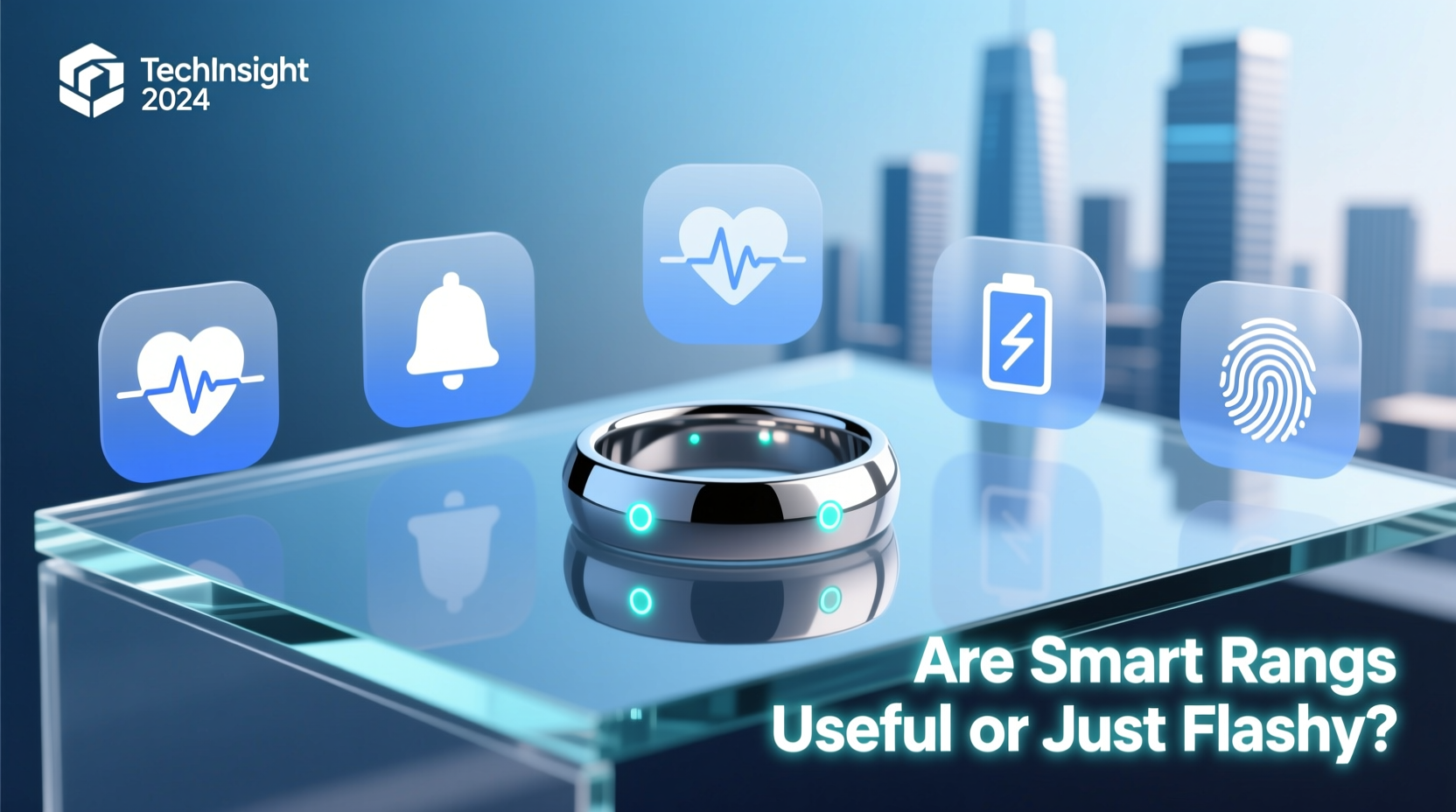
Smart rings have existed in experimental forms since the early 2010s, but only recently have they gained traction among consumers. Devices like the Oura Ring, Ultrahuman Ring Air, and Circular Ring have entered the market with bold claims: improved sleep quality, optimized recovery, stress tracking, and even early illness detection through subtle changes in body temperature and heart rate variability (HRV).
What sets them apart is form factor. Worn on the finger, they’re less obtrusive than a watch, often more comfortable for sleep tracking, and easier to keep on during workouts or showers (many are water-resistant). This has made them especially appealing to biohackers, athletes, and professionals seeking data-driven wellness without the “tech look.”
Still, adoption remains limited compared to smartwatches. Part of this is due to cost—premium models range from $300 to over $500—and part is skepticism. Can something so small really deliver accurate, actionable insights?
“Wearable accuracy isn’t just about sensors—it’s about placement, consistency, and algorithmic refinement. The finger offers unique advantages for certain metrics, particularly blood flow and thermal trends.” — Dr. Lena Torres, Biomedical Engineer & Wearable Tech Researcher, MIT Media Lab
What Smart Rings Can Actually Do: Features That Matter
To assess usefulness, let’s break down the core functionalities offered by leading smart rings and evaluate their real-world impact.
Sleep Tracking: A Game-Changer for Quality Rest
One area where smart rings consistently outperform wrist-based trackers is sleep analysis. Because finger arteries are closer to the skin surface, rings can capture more stable heart rate and HRV data throughout the night. Combined with body temperature sensors, they detect micro-arousals, REM cycles, and deep sleep phases with higher precision.
The Oura Ring, for example, provides a Sleep Score based on latency, efficiency, and restoration. Users report adjusting bedtime routines, reducing alcohol intake, and improving sleep hygiene after seeing tangible data. For people with insomnia or irregular schedules, this feedback loop can be transformative.
Tip: Wear your smart ring consistently at night—even on weekends—to build an accurate baseline for sleep trends.Recovery and Readiness Metrics
Beyond sleep, many rings calculate a daily \"Readiness Score\" by combining sleep quality, resting heart rate, HRV, and activity history. This helps users decide when to push hard in training or take a rest day. Athletes and high-performers use this to avoid overtraining and optimize performance.
A case in point: Sarah Kim, a marathon runner from Portland, used the Ultrahuman Ring Air during her training cycle. After noticing declining recovery scores despite consistent workouts, she adjusted her nutrition and added extra rest days. Her race time improved by 7%, and she reported feeling stronger throughout.
Passive Health Monitoring
Some rings detect early signs of illness by identifying deviations in resting heart rate and temperature. During flu season, users have reported alerts about elevated metrics days before symptoms appeared. While not diagnostic, this heads-up allows for earlier testing, reduced exposure to others, and proactive care.
However, it’s important to note: no smart ring is FDA-approved as a medical device. They serve best as trend indicators, not replacements for clinical tools.
Limited Smart Features
Compared to smartwatches, smart rings offer minimal interactive features. Most lack screens, limiting notifications to vibrations. Some support tap-to-pay via NFC (e.g., Mclear Ring), but app integration is narrow. You won’t reply to messages, control music, or navigate with a ring—at least not yet.
This limitation is both a drawback and a design choice. Proponents argue that less distraction leads to healthier tech habits. Critics say you’re paying premium prices for fewer functions.
Smart Rings vs. Smartwatches: A Practical Comparison
| Feature | Smart Rings | Smartwatches |
|---|---|---|
| Sleep Tracking Accuracy | ★★★★☆ (Superior due to finger sensor stability) | ★★★☆☆ (Good, but movement affects readings) |
| Battery Life | 4–7 days (requires frequent charging) | 1–3 days (Apple Watch), up to 14 days (Garmin) |
| Comfort (especially during sleep) | ★★★★★ (Lightweight, unobtrusive) | ★★★☆☆ (Bulkier; some find watches uncomfortable) |
| Smart Features (notifications, apps, payments) | ★★☆☆☆ (Limited to alerts and basic NFC) | ★★★★★ (Full ecosystem access) |
| Durability | ★★★☆☆ (Prone to scratches; not always drop-proof) | ★★★★☆ (Generally rugged, sport-ready) |
| Price Range | $299–$549 | $199–$799+ |
The table shows a clear trade-off: smart rings excel in passive health monitoring, especially sleep and recovery, but fall short in interactivity. If your priority is staying informed about your body’s internal state, a ring may be worth the investment. If you want a full-featured digital assistant on your wrist, a smartwatch remains the better choice.
Who Should Consider a Smart Ring?
Not everyone benefits equally from a smart ring. Its value depends on lifestyle, goals, and willingness to engage with data.
- Fitness enthusiasts and athletes: Those focused on recovery, performance optimization, and injury prevention gain actionable insights from HRV and readiness scores.
- People with sleep issues: Individuals struggling with poor sleep quality or inconsistent patterns benefit from detailed sleep staging and personalized recommendations.
- Professionals under chronic stress: High-pressure jobs can disrupt autonomic balance. Continuous monitoring helps identify burnout risks before they escalate.
- Tech-minimalists: Anyone seeking health data without the constant buzz of notifications may appreciate the ring’s subtlety.
On the other hand, casual users, budget-conscious buyers, or those who rely heavily on smart features may find little return on investment.
Tip: Try a 30-day free trial (if available) or rent a ring before purchasing. Many brands offer rental programs to test long-term comfort and utility.Limitations and Realistic Expectations
No wearable is perfect, and smart rings come with notable drawbacks:
- Battery life: Most require charging every 4–7 days. Unlike watches, they can’t be topped up quickly during a shower or commute.
- Finger swelling: Rings may become tight or uncomfortable in heat, humidity, or after exercise, requiring removal.
- Data overload: Without context, metrics like HRV can cause unnecessary anxiety. Not every fluctuation indicates a problem.
- Cost vs. longevity: At $300+, these are expensive accessories with no guarantee of multi-year durability. Firmware updates and support vary by brand.
- Fit and sizing: Incorrect sizing leads to inaccurate readings. Fingers change size throughout the day, complicating fit.
Additionally, while companies tout privacy, most still collect sensitive biometric data. Always review the privacy policy and understand how your data is stored, shared, or monetized.
Mini Case Study: A Week with the Oura Ring Gen 3
James R., a 38-year-old software developer from Austin, wore the Oura Ring for seven days to assess its impact. He typically sleeps 6–6.5 hours, drinks coffee late, and experiences afternoon fatigue.
Day 1–2: Ring detected low HRV and poor deep sleep (only 48 minutes). Alerted him to elevated resting heart rate.
Day 3: After reading sleep tips in the app, he avoided screens after 10 PM and lowered bedroom temperature. Deep sleep increased to 62 minutes.
Day 5: Skipped evening coffee. Sleep latency dropped from 38 to 19 minutes.
Day 7: Readiness Score improved from 67 to 82. Reported feeling more alert during work hours.
Verdict: James decided to keep the ring. “It didn’t change my life overnight, but it gave me concrete reasons to adjust habits I knew were bad but never prioritized fixing.”
Checklist: Is a Smart Ring Right for You?
Before buying, ask yourself the following:
- ☐ Do I prioritize sleep quality and recovery over smart notifications?
- ☐ Am I willing to charge the device every few days?
- ☐ Do I trust myself to act on data, not obsess over numbers?
- ☐ Have I tried cheaper alternatives (like a Fitbit) and found them lacking in accuracy?
- ☐ Can I afford $300+ for a non-essential wellness tool?
- ☐ Do I already wear rings comfortably, or will this feel foreign?
If you answered “yes” to most, a smart ring could add meaningful value. If not, consider waiting for broader adoption, lower prices, or improved features.
Frequently Asked Questions
Can smart rings replace my fitness tracker?
For sleep and recovery tracking, yes—they often outperform wrist devices. But for step counting, GPS tracking, or workout logging, smartwatches or chest straps are still superior. Most users don’t replace their fitness tracker entirely but use the ring as a complementary tool.
Are smart rings accurate enough for health decisions?
They provide reliable trend data but aren’t medical-grade. Use them to spot patterns, not diagnose conditions. Always consult a healthcare provider for persistent abnormalities.
Do all smart rings fit the same way?
No. Sizing varies by brand. Some recommend measuring your finger at the end of the day when it’s slightly swollen. A too-tight ring cuts off circulation; a loose one gives false readings. When in doubt, order multiple sizes or use a sizing kit.
Conclusion: Utility Over Hype
Smart rings are not magic. They won’t transform your health overnight, nor will they make sense for everyone. But for the right user—someone invested in long-term wellness, sleep optimization, and data-informed lifestyle changes—they offer a uniquely unobtrusive way to stay connected to their body.
Their usefulness hinges on intent. If you buy one because it looks cool or sounds futuristic, you’ll likely see it as overpriced jewelry. But if you approach it as a precision instrument for self-awareness—one that quietly collects insights while you live your life—it can become an indispensable part of your routine.
Technology doesn’t have to be flashy to be valuable. Sometimes, the most powerful tools are the ones you forget you’re wearing.
🚀 Ready to explore smarter wellness? Share your thoughts on smart rings—have you tried one? Would you wear one for better sleep? Join the conversation below.