For decades, traditional elastic hair ties have been a go-to for securing ponytails and buns. But in recent years, satin scrunchies have surged in popularity—touted as a gentler alternative for hair. Influencers, stylists, and dermatologists often claim they reduce breakage, prevent creasing, and preserve hair health. But is this just marketing hype, or is there real science behind the claims?
The answer lies in understanding how different materials interact with hair texture, strength, and cuticle integrity. While both satin scrunchies and standard elastic bands serve the same basic function—holding hair in place—their impact on hair health can differ significantly depending on design, material, and usage habits.
How Hair Gets Damaged by Hair Ties
Hair damage from hair accessories typically occurs through mechanical stress. When a band grips strands too tightly or has a rough surface, it creates friction that can lead to:
- Friction-induced cuticle abrasion: The outer layer of the hair shaft (cuticle) gets scraped or lifted, leading to dryness and split ends.
- Tension breakage: Excessive pulling, especially when hair is wet or fragile, causes strands to snap at the root or mid-shaft.
- Kinking and creasing: Tight elastics leave deep folds in hair, weakening the cortex over time and increasing vulnerability to snapping.
- Increased tangling: Rough textures snag individual hairs, making removal difficult and increasing combing damage afterward.
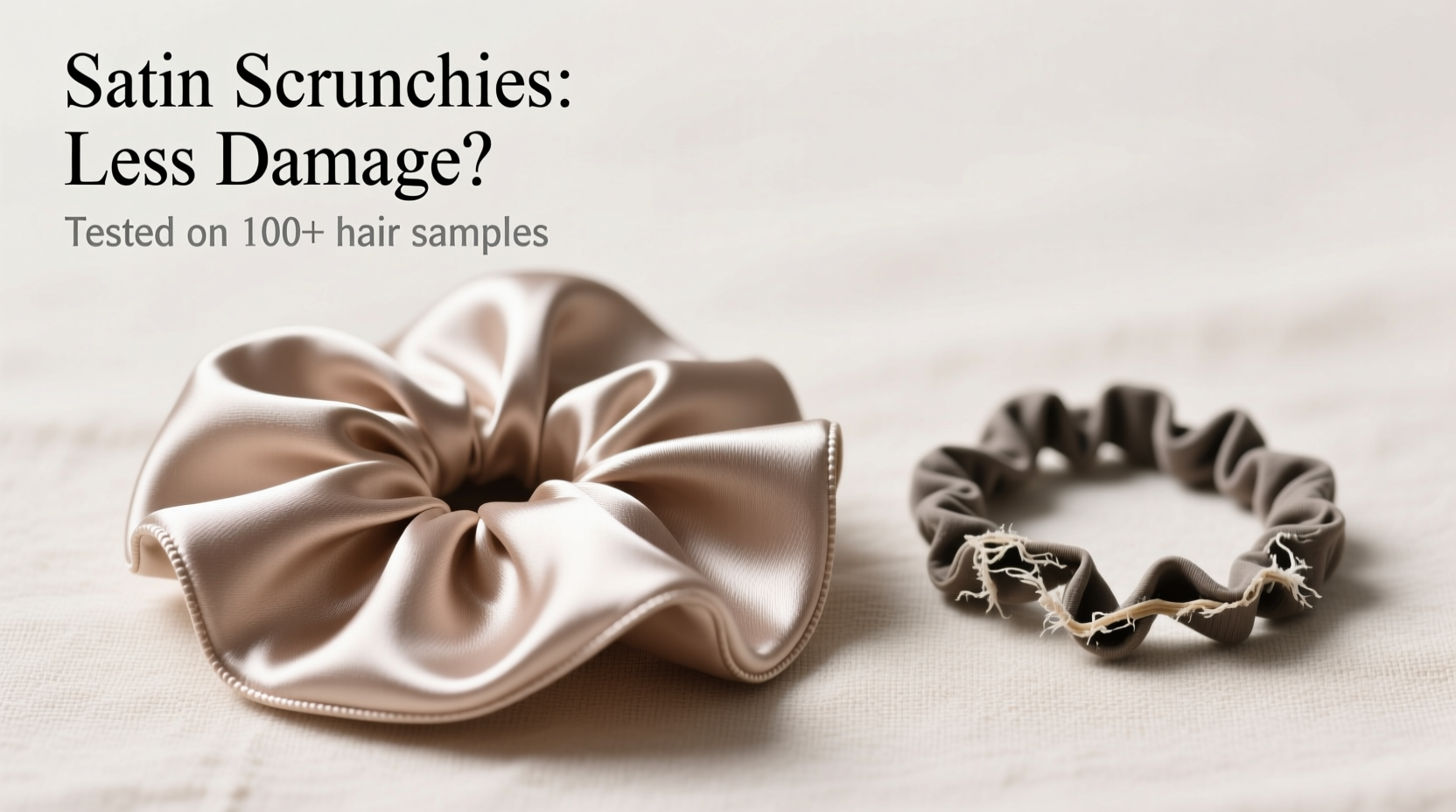
Traditional rubber-based elastics are often thin, non-slip, and highly elastic. This combination makes them effective at holding hair but also prone to causing micro-tears. In contrast, satin scrunchies are wider, smoother, and made from silk-like fabric wrapped around a soft inner band, which changes how force is distributed across the hair bundle.
Tip: Avoid pulling hair ties over your head like a headband—it increases friction and tension on delicate front sections.Material Science: Satin vs. Rubber Elastic
The core difference between satin scrunchies and regular elastics lies in their surface texture and elasticity profile.
Satin is a smooth, tightly woven fabric that reflects light and reduces surface drag. Most satin scrunchies use polyester-based satin, though some premium versions use silk. Either way, the glossy finish minimizes grip resistance against hair strands.
Rubber elastics, even when coated in fabric or plastic, tend to have higher friction coefficients. They’re designed to grip and hold without slipping, which means they cling aggressively to hair—especially curly, coily, or textured types that are more prone to snagging.
A 2020 study published in the *International Journal of Trichology* found that hair tied with low-friction accessories showed up to 37% less cuticle disruption after repeated styling compared to those using standard elastics. The researchers concluded that \"surface smoothness plays a critical role in minimizing mechanical trauma during everyday wear.\"
“Switching to a satin scrunchie isn’t a miracle cure, but it’s one of the simplest changes someone can make to reduce preventable hair damage.” — Dr. Lena Torres, Board-Certified Trichologist
Design Differences That Matter
Beyond material, the physical design of hair ties influences how gently they treat hair:
| Feature | Satin Scrunchies | Standard Elastic Bands |
|---|---|---|
| Width | Wider (typically 2–4 inches) | Narrow (usually under 1 inch) |
| Surface Texture | Smooth, low-friction | Rougher, high-grip |
| Elastic Tension | Softer, more forgiving | Strong, tight hold |
| Distribution of Pressure | Evenly spread across hair section | Concentrated in small area |
| Likelihood of Creasing | Low | High |
The wider diameter of satin scrunchies spreads tension over a larger surface area, reducing pressure points. This is particularly beneficial for people with fine, fragile, or long hair, where concentrated force can easily cause snapping. Additionally, because satin doesn’t absorb moisture, it won’t wick natural oils away from hair like cotton-covered elastics might.
Real-World Example: A Week of Switching
Consider Sarah, a 32-year-old teacher with shoulder-length, color-treated hair. She used thin black elastics daily for five years, often pulling her hair back tightly during class. Over time, she noticed increased shedding, frequent breakage near the nape, and persistent frizz.
On her stylist’s recommendation, she switched exclusively to satin scrunchies for two weeks. She kept her routine identical otherwise—same shampoo, brushing habits, and frequency of updos. After 14 days, she reported:
- Less tugging when removing the tie
- Fewer loose strands in the morning
- Reduced kinks and flat spots at the base of her ponytail
- Improved shine due to less cuticle disruption
While not a clinical trial, Sarah’s experience mirrors what many users report: an immediate reduction in discomfort and visible signs of strain. It’s a subtle shift, but one that compounds over months and years.
When Satin Scrunchies Still Cause Damage
It’s important to note that not all satin scrunchies are created equal. Some cheaper versions use stiff inner bands or overly tight wraps that negate the benefits of the smooth exterior. Additionally, misuse can still lead to harm:
- Over-tightening: Even a satin scrunchie can damage hair if pulled too tightly.
- Using on wet hair: Wet hair is up to 50% weaker than dry hair. Securing damp strands—even with a soft tie—increases breakage risk.
- Poor quality construction: If the inner elastic snaps or bunches, it creates uneven pressure points.
- Infrequent washing: Buildup of oils, product residue, and bacteria can irritate the scalp over time.
To maximize benefits, choose scrunchies with soft, flexible inner bands and avoid metal closures or rigid seams. Silk versions, while more expensive, offer superior smoothness and breathability compared to synthetic satins.
Tip: Hand-wash satin scrunchies every 2–3 weeks with mild shampoo to maintain hygiene and fabric integrity.Step-by-Step Guide to Safer Hair Tying
Switching to satin scrunchies is only part of the solution. To truly minimize damage, follow this routine:
- Wait until hair is mostly dry: Never secure soaking wet hair. If you must, use a very loose style with a wide, soft tie.
- Choose the right size: Use larger scrunchies for thick or long hair to distribute tension evenly.
- Loosen the first loop: When putting in a ponytail, create the first loop loosely before tightening the rest. This prevents excessive scalp tension.
- Avoid daily tight styles: Opt for loose buns, braids, or half-up styles to give roots a break.
- Rotate positions: Don’t pull hair back in the exact same spot every day to prevent localized weakening.
- Remove gently: Unwrap the scrunchie slowly instead of yanking it off.
- Store properly: Keep scrunchies in a drawer or pouch to avoid dust and deformation.
Checklist: Choosing a Truly Hair-Friendly Scrunchie
Before buying, ask yourself these questions:
- ✅ Is the inner band soft and flexible, not stiff or cracked?
- ✅ Does the fabric lie flat without sharp seams or tags?
- ✅ Is it wide enough to distribute pressure (at least 2 inches)?
- ✅ Is it free of metal components or zippers?
- ✅ Can it be hand-washed without losing shape?
- ✅ Is it labeled “silk” or “charmeuse” for maximum smoothness?
Premium silk scrunchies may cost more upfront, but their durability and gentleness often justify the investment—especially for those dealing with thinning, textured, or chemically treated hair.
FAQ: Common Questions About Satin Scrunchies
Do satin scrunchies prevent hair loss?
No hair accessory can stop medical or genetic hair loss. However, satin scrunchies can reduce *mechanical* hair fall caused by breakage and friction. By minimizing unnecessary stress, they help retain existing hair length and strength.
Can I sleep with a satin scrunchie in my hair?
Yes—this is actually recommended. Satin scrunchies are ideal for nighttime styles like loose braids or pineapple updos. Paired with a satin pillowcase, they drastically reduce overnight friction, helping to prevent tangles and bedhead.
Are silk scrunchies better than polyester satin ones?
In most cases, yes. Natural silk has a smoother molecular structure, lower friction coefficient, and better moisture regulation than synthetic satin. However, high-quality polyester satin scrunchies still outperform rubber elastics and are more affordable.
Final Verdict: Are They Really Less Damaging?
The evidence strongly supports that satin scrunchies are less damaging than traditional elastic bands—when used correctly. Their smooth texture, wider design, and reduced grip minimize the primary causes of hair breakage: friction, tension, and kinking.
That said, no accessory is completely risk-free. The key is combining the right tool with healthy habits. A satin scrunchie used too tightly or on wet hair can still do harm. But as part of a mindful hair care routine, it’s one of the easiest and most effective upgrades you can make.
Think of it like footwear: wearing sneakers reduces foot strain compared to high heels, but poor lacing or overuse can still lead to issues. Similarly, satin scrunchies are a protective upgrade—not a cure-all, but a meaningful step toward healthier hair.
“Small changes compound. Replacing one damaging habit—like using a tight elastic—with a gentler alternative can preserve inches of hair over years.” — Jamila Williams, Celebrity Hairstylist & Textured Hair Specialist
Take Action Today
You don’t need to overhaul your entire hair routine to see benefits. Start by replacing your three most-used elastics with high-quality satin scrunchies. Pay attention to how your hair feels when you take them out—less tug, fewer flyaways, and reduced morning tangles are early signs of success.
Track changes over four weeks. Note any improvements in breakage, ease of detangling, or overall manageability. Share your experience with others; sometimes the simplest switches inspire the most lasting change.
💬 Have you made the switch to satin scrunchies? What difference did you notice? Join the conversation and help others discover smarter ways to protect their hair—one gentle tie at a time.