Smartphone cameras have evolved dramatically over the past decade. Today’s flagship models capture stunning detail, dynamic range, and low-light performance that once required professional DSLRs. Yet, a growing market of external clip-on lenses promises even greater capabilities—ultra-wide angles, macro close-ups, and telephoto reach. But do these accessories deliver meaningful improvements, or are they just gimmicks capitalizing on consumer desire for better photos?
The answer isn’t simple. While some users see real benefits from external lenses, others find them bulky, inconsistent, or unnecessary given modern built-in multi-lens systems. To determine whether phone camera lenses are worth their price, we need to examine image quality, practicality, use cases, and alternatives.
The Evolution of Mobile Photography: Why Add-Ons Exist
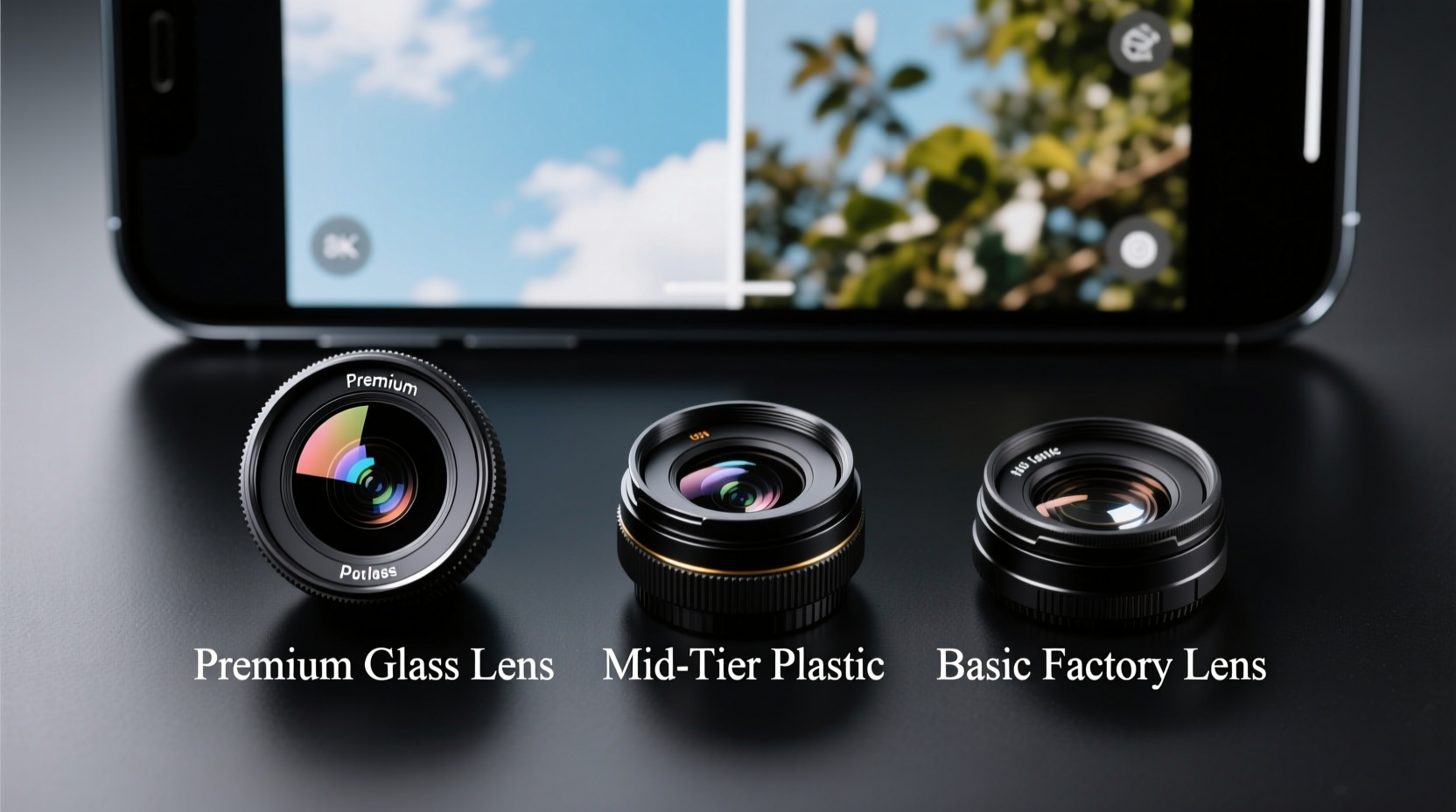
Early smartphones had single rear cameras with fixed focal lengths and minimal zoom. Enthusiasts quickly sought ways to expand creative possibilities, leading to the rise of third-party lens attachments. These small, clip-on optics promised wider perspectives, closer macro shots, and modest optical zoom—all at a fraction of the cost of dedicated cameras.
Manufacturers like Moment, Sirui, and ShiftCam entered the space with premium glass and rugged builds, positioning their products as tools for serious creators. At the same time, budget brands flooded online marketplaces with inexpensive plastic lenses touting “HD” clarity and “professional results.” This created a wide spectrum of quality—and expectations.
Today, most high-end phones come equipped with multiple rear cameras: ultra-wide, standard, telephoto, and sometimes periscope-style zoom. Many also offer advanced computational photography features like Night Mode, Portrait Mode, and AI-enhanced HDR. In this context, the role of external lenses has shifted. They’re no longer about filling gaps in hardware but enhancing specific niches where built-in systems fall short.
“External lenses can be valuable when you need an extreme perspective not covered by your phone’s native array—like a 12mm fisheye or true 10x optical macro.” — Daniel Kim, Mobile Photographer & Tech Reviewer
Where External Lenses Excel (and Where They Don’t)
Not all add-on lenses perform equally. Their value depends heavily on design, glass quality, alignment, and intended use. Understanding the strengths and limitations of each type helps clarify whether they justify the investment.
Macro Lenses: The Most Practical Upgrade
Dedicated macro lenses on smartphones often struggle beyond 2–4cm focus distance. True macro photography requires 1:1 magnification—the ability to render a subject life-size on the sensor. Few phone cameras achieve this optically; most rely on digital cropping and software tricks.
A high-quality external macro lens (such as those from Moment or Apexel) allows focusing within millimeters of a subject while maintaining sharpness across the frame. Photographers capturing insects, textures, or product details often find these indispensable.
Tip: For best macro results, use manual focus mode and stabilize your phone with a mini tripod or clamp.Ultra-Wide & Fisheye Attachments: Expanding Perspective
While many phones include ultra-wide cameras, their fields of view typically max out around 120°. Premium external lenses can push this to 180° or more, creating dramatic architectural shots or immersive landscape perspectives.
However, edge distortion, vignetting, and chromatic aberration are common with lower-tier models. Glass elements matter: multi-coated optics reduce flare and improve contrast. Poorly aligned clips can cause blurring or double images along the edges.
Telephoto Lenses: Limited Real-World Benefit
Clip-on telephoto lenses rarely deliver true optical zoom. Most are simply magnifying glasses that enlarge the center portion of the image circle—effectively doing what digital zoom already does, but with added risk of blur and loss of light.
In contrast, modern phones use hybrid zoom combining optical input from dedicated telephoto sensors with AI upscaling. A $200 external lens offering “12x zoom” usually cannot compete with a phone using a 3x optical lens plus intelligent super-resolution algorithms.
Comparing Value: Cost vs. Performance
Premium external lenses range from $60 to over $150 per unit. Entry-level kits sell for under $30 but often degrade image quality due to soft glass, poor coatings, and misalignment. Below is a comparison of different tiers based on real-world usability.
| Lens Type | Budget Tier ($10–$30) | Premium Tier ($80–$150) |
|---|---|---|
| Macro | Moderate magnification; blurry edges; prone to glare | Sharp focus at 1cm; minimal distortion; multi-coated glass |
| Ultra-Wide | Noticeable barrel distortion; dark corners; soft center | True 150°+ FOV; reduced vignetting; excellent edge-to-edge clarity |
| Telephoto | Effectively digital zoom; loses sharpness and brightness | Slight improvement in reach; still limited by physics |
| Durability | Plastic housing; loose clips; scratches easily | Aluminum body; secure mounting; scratch-resistant coating |
The data shows a clear trend: macro and ultra-wide lenses benefit most from premium construction. Telephoto add-ons, regardless of price, offer marginal gains. If expanding photographic capability is the goal, investing in macro or specialized wide-angle optics makes sense. Spending on telephoto attachments generally does not.
Real-World Example: Travel Photographer in Iceland
Lena Tran, a freelance travel photographer, traveled across Iceland’s volcanic terrain last winter. Her gear included a recent-model smartphone, a lightweight mirrorless camera, and a Moment Wide Lens.
During a visit to a narrow lava tube cave, her mirrorless setup was too large to maneuver safely. She switched to her phone with the external wide lens attached. The combination allowed her to capture expansive interior shots without motion blur, thanks to the phone’s computational stabilization and the lens’s 14mm equivalent field of view.
Later, while photographing frost patterns on moss-covered rocks, she used the same phone with a macro attachment. The resulting images revealed intricate ice crystal formations invisible to the naked eye—details she couldn’t capture with her phone’s native camera due to minimum focus distance limits.
“There were moments when pulling out the full rig wasn’t practical,” Lena said. “The external lenses gave me flexibility without sacrificing too much quality. For niche situations, they paid for themselves.”
Her experience underscores a key truth: external lenses aren’t replacements for better cameras—they’re situational tools. When portability, speed, or access are constraints, they fill critical roles.
Step-by-Step Guide: Choosing the Right Lens (If Any)
Before purchasing an external lens, assess your needs and workflow. Follow this sequence to make an informed decision:
- Evaluate your current phone’s camera system. Does it already include ultra-wide, macro, or telephoto lenses? Use them first in various lighting conditions.
- Identify missing capabilities. Are there subjects you consistently fail to capture? Examples: tiny objects, tight interiors, distant wildlife.
- Test sample images online. Search for reviews of specific lenses paired with your phone model. Pay attention to corner sharpness and color fidelity.
- Consider build and compatibility. Ensure the lens mounts securely and doesn’t block microphones, flash, or sensors. Check if it works with your case (or requires removal).
- Start with one lens. Invest in a single high-quality macro or wide-angle optic instead of a cheap multi-pack. Assess its real-world utility over two weeks.
- Compare results side-by-side. Shoot the same scene with and without the lens. Zoom in on details to check for softness or artifacts.
If after testing you find consistent improvements in creativity or image quality, the lens may be worth keeping. Otherwise, you might conclude that software enhancements or better technique offer higher returns.
Frequently Asked Questions
Can external lenses beat my phone’s built-in cameras?
Rarely. Modern multi-camera arrays combined with computational photography outperform clip-on lenses in most scenarios. However, certain specialized lenses—like true macro or extreme wide-angle—can exceed native capabilities in specific contexts.
Do I need a special app to use external lenses?
Most work directly with your phone’s default camera app. However, manual control apps like ProCamera (iOS) or Open Camera (Android) allow adjustment of focus, shutter speed, and ISO, which can improve results—especially in macro or low light.
Are magnetic lens systems reliable?
Magnetic mounts offer convenience but risk misalignment over time. Even slight shifts can degrade image quality at the edges. Screw-on or rigid clip systems from reputable brands tend to maintain better optical alignment.
Tips for Maximizing Results (If You Own External Lenses)
Tip: Always clean the lens surface before shooting. Smudges and dust are magnified more noticeably with add-on optics.- Use natural light whenever possible. External lenses often reduce incoming light, increasing noise in low-light conditions.
- Avoid mixing filters or protective cases that create internal reflections.
- Shoot in RAW format if your phone supports it. This preserves more detail for post-processing corrections like distortion removal.
- Carry a microfiber cloth and lens cap. Portable lenses pick up fingerprints and debris quickly.
- Practice handheld stability. Longer exposures may be needed in dim settings; brace your arms against a surface when possible.
Alternatives to External Lenses
Before buying additional hardware, consider non-hardware upgrades that often yield better results:
- Improve lighting: A small LED panel or reflector costs less than a premium lens and dramatically enhances photo quality.
- Learn composition: Rule of thirds, leading lines, and negative space make stronger images than any lens can provide.
- Upgrade editing skills: Apps like Lightroom Mobile or Snapseed allow precise adjustments to exposure, contrast, and perspective.
- Use a tripod: Even a flexible GorillaPod improves sharpness, especially in macro or night photography.
- Consider a new phone: If your device lacks multiple cameras or modern processing, upgrading may offer broader benefits than adding lenses.
Final Verdict: Who Should Buy External Lenses?
For casual photographers snapping food pics or family moments, external lenses are rarely worth the price. The inconvenience of carrying extra gear, aligning clips, and managing glare outweighs marginal gains.
But for creators operating in constrained environments—underwater housings, action sports, documentary work, or tight indoor spaces—high-end external lenses can unlock unique perspectives. When chosen selectively and used deliberately, they become legitimate tools rather than novelties.
The key is intentionality. Buying a $120 lens because “it might be useful someday” is poor ROI. But purchasing one to solve a recurring creative limitation—like inability to capture fine botanical details—is a strategic investment.
Conclusion
Phone camera lenses sit at the intersection of innovation and impracticality. While technological progress has diminished their necessity, they still serve niche roles for dedicated mobile photographers. Premium macro and ultra-wide options deliver tangible benefits when matched to the right use case. Budget models, however, often degrade image quality and frustrate users.
Rather than chasing hardware fixes, most people will gain more by mastering existing tools, improving lighting, and refining technique. But for those pushing the boundaries of what smartphones can do—especially in macro, architecture, or adventure photography—a well-chosen external lens can be the difference between a good shot and a great one.
🚀 Ready to test the limits of your phone’s camera? Try one high-quality external lens for a month. Document your results, compare them to native shots, and decide for yourself: are they worth it? Share your findings with the community and help others navigate the evolving world of mobile photography.