Flask tattoos—inked depictions of vintage-style metal flasks, often personalized with names, dates, monograms, or liquor motifs—have reemerged with quiet intensity across Instagram feeds, tattoo conventions, and even editorial features. Unlike the flashier, more literal “whiskey bottle” sleeves of the early 2010s, today’s iterations lean into subtlety: minimalist line work, hidden symbolism (a single olive branch for sobriety, a cracked seal for renewal), or integration into larger botanical or nautical compositions. Yet their resurgence has sparked genuine debate—not just among tattoo enthusiasts, but within studios, art schools, and recovery communities. Is this a thoughtful evolution of personal iconography, or a nostalgic shortcut that risks trivializing deeper narratives around identity, ritual, and resilience? The answer lies not in blanket judgment, but in how intention, execution, and context converge.
The Cultural Shift Behind the Flask Revival
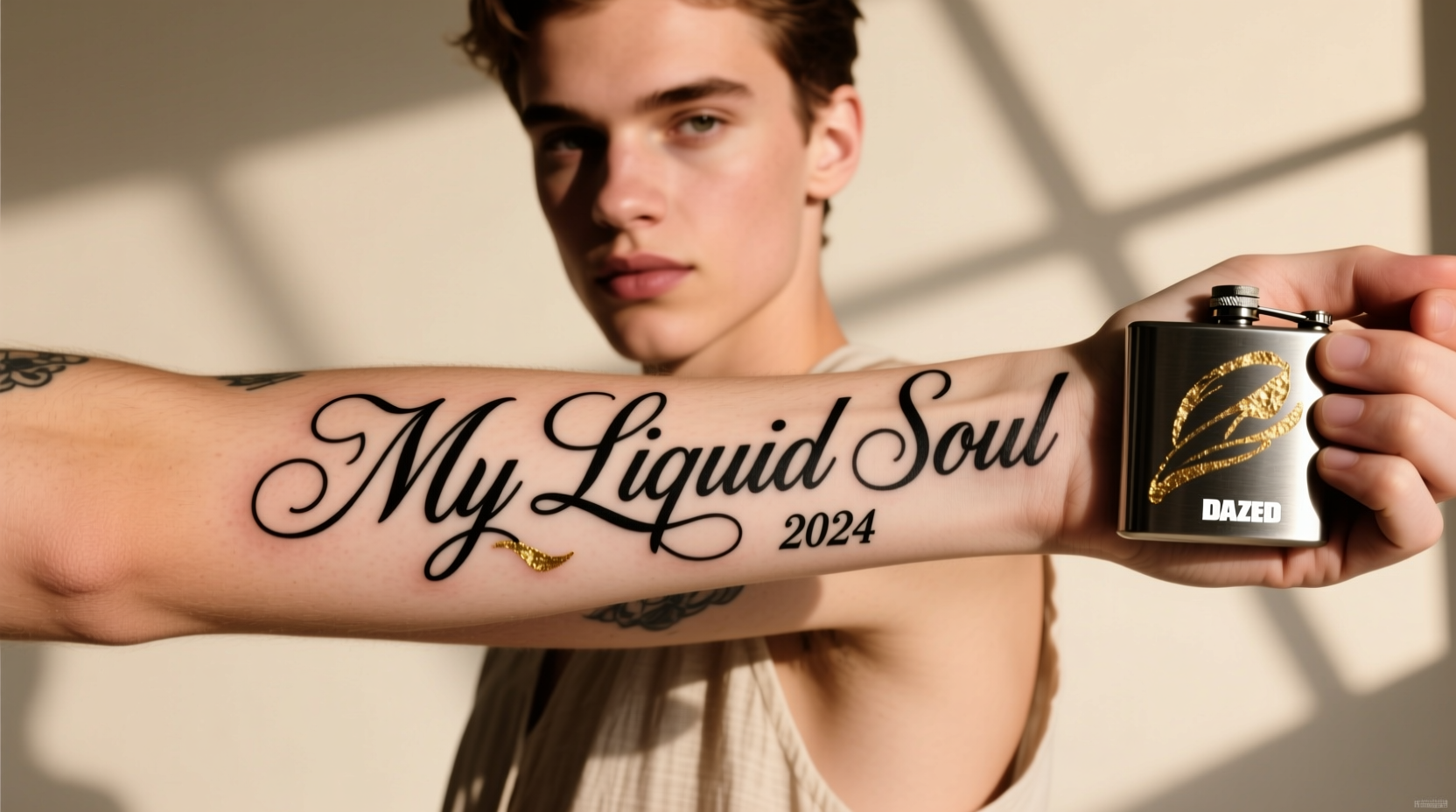
Flask tattoos didn’t vanish—they evolved. In the 2010s, they were frequently paired with slogans like “Drink Responsibly” or “Liquid Courage,” often inked on biceps or forearms as bold, illustrative statements. Today’s versions reflect broader societal recalibrations: the normalization of sober-curious lifestyles, the rise of craft distilling as cultural heritage, and a growing appetite for symbols that hold layered, non-binary meaning. A flask no longer signals only revelry; it can represent ancestral tradition (e.g., a Scottish quaich-inspired design honoring family emigration), personal milestones (“First sober year, 2023”), or even quiet rebellion against performative wellness culture.
This shift is validated by industry data. According to the 2024 Tattoo Trends Report from InkWell Analytics, flask-related designs increased 37% year-over-year—but 68% of those searches included modifiers like “minimalist,” “hidden meaning,” “sober,” or “family crest.” Meanwhile, studio consultations show a marked decline in requests for “full-color whiskey flask with flames,” replaced by phrases like “subtle flask outline behind my grandmother’s initials” or “flask shape holding a single sprig of rosemary (for remembrance).” The symbol hasn’t changed—the semantics have deepened.
When Flask Tattoos Land as Trendy (Not Tacky)
Trendiness in tattooing isn’t about novelty—it’s about resonance. A flask tattoo reads as intentional, sophisticated, and contemporary when it meets three criteria: conceptual cohesion, technical restraint, and narrative authenticity.
- Conceptual Cohesion: The flask serves as an anchor within a larger visual language—e.g., integrated into a pocket watch sleeve where gears flow into the flask’s hinge, or nested inside a vintage map motif tracing a family’s migration route.
- Technical Restraint: Clean linework, balanced negative space, and subtle texture (like etched metal grain rendered in fine dotwork) signal craftsmanship over cliché. Avoid overly ornate scrollwork or cartoonish liquid drips.
- Narrative Authenticity: The wearer can articulate *why* this symbol—not a compass, not a book, not a key—holds singular weight. It’s not “I like whiskey”; it’s “This flask belonged to my father, who carried it through his first year of sobriety after losing his brother. I carry its shape, not its function.”
Why Some Flask Tattoos Still Feel Tacky—And How to Avoid It
Tackiness in tattooing rarely stems from subject matter alone. It arises from dissonance: between intent and execution, between personal significance and public readability, or between cultural respect and aesthetic appropriation. Flask tattoos cross into problematic territory when they:
- Reinforce harmful stereotypes (e.g., “Irish drinking” tropes rendered with leprechaun hats or shamrock-laced liquor labels);
- Use culturally sacred forms without understanding (e.g., replicating a Navajo water jug as a “cool flask” design);
- Rely on ironic detachment (“I got this because I hate whiskey”) without visual irony—resulting in a sincere-looking piece that confuses viewers;
- Are placed or scaled purely for shock value (e.g., a hyper-realistic 5-inch flask on the center of the chest, mimicking a wound or medical device).
Crucially, tackiness is often amplified by poor placement relative to body topography. A flask tattoo wrapping awkwardly around a knuckle or stretching across a collarbone’s natural dip loses structural integrity. As Brooklyn-based tattoo artist Lena Torres notes: “A flask is a rigid, symmetrical object. When forced onto curved, dynamic anatomy without adaptation—like compressing its silhouette to fit a bicep’s bulge—it looks like a sticker slapped on skin, not ink grown into it.”
“The most enduring flask tattoos I’ve done aren’t ‘about’ alcohol at all. They’re about containment—what we hold, what we release, what we protect. That’s why the best ones use negative space like a sealed lid, or incorporate a hinge that opens only in certain light. Technique serves metaphor, not the other way around.” — Lena Torres, award-winning fine-line tattoo artist and educator at School of Visual Arts
Design Ethics & Longevity: A Practical Decision Framework
Choosing a flask tattoo isn’t just aesthetic—it’s an ethical and practical commitment. Below is a decision framework used by ethical studios to guide clients toward sustainable, meaningful outcomes.
| Factor | What Makes It Trendy | What Makes It Tacky |
|---|---|---|
| Placement | Wrist (inner or outer), forearm (inner curve), ribcage (vertical alignment with sternum), or behind the ear (micro-flask) | Center of forehead, full palm, tongue, or directly over joints where ink fades rapidly |
| Personalization | Monogram using historical typeface from family’s country of origin; date encoded in Roman numerals; contents represented symbolically (e.g., honeycomb for mead, oak leaves for aging) | Brand logos (Jack Daniel’s, Hennessy), generic “1800s” text, or alcohol percentages (40% ABV) without contextual meaning |
| Long-Term Viability | Black-and-gray or single-needle line work; avoids thin outlines prone to blurring; designed for 10+ year legibility | Bright yellow gold foil effects, ultra-thin script, or gradients that require frequent touch-ups |
| Cultural Alignment | Collaboration with a cultural consultant for heritage motifs; attribution in portfolio notes | Using Indigenous patterns as “decorative borders” or Celtic knots as “generic old-timey filler” |
Mini Case Study: Maya’s “Dry Creek” Flask
Maya, 34, a trauma therapist in Portland, requested a flask tattoo after completing five years of sobriety. Her initial idea—a silver flask with “Dry Creek, OR 2019” engraved—was technically sound but emotionally flat. Working with her artist, she revisited her story: Dry Creek was where she’d scattered her late partner’s ashes beside a creek that ran clear only in spring. Her therapist had gifted her a small, hand-blown glass vial shaped like a flask during early recovery—“to hold what matters, not what numbs.”
The final piece: a 2.5-inch matte-black flask silhouette on her left inner forearm, its surface textured like river-smoothed basalt. Inside the flask, instead of liquid, flows a single, continuous line of willow branches—mirroring the creek’s path on her county map. The cap bears a tiny, recessed engraving of her partner’s birth year. No text. No alcohol references. When asked, Maya says: “It’s not about abstinence. It’s about carrying memory with reverence—not filling voids, but honoring fullness.” Studio follow-up at 18 months shows zero fading, and clients consistently describe it as “calm, grounded, deeply personal.”
Your Actionable Checklist: Before You Ink
Use this checklist to audit your flask tattoo concept *before* scheduling a consultation. Tick every box—or revisit your idea.
- ✅ I can explain, in one sentence, why *this specific symbol* (not a cup, not a key, not a book) represents my core intention.
- ✅ My chosen placement complements the flask’s geometry—not fighting anatomical curves or high-friction zones.
- ✅ I’ve researched the cultural origins of any decorative elements (e.g., Art Deco borders, Scottish thistle motifs) and confirmed respectful usage.
- ✅ My artist specializes in the technique I want (e.g., single-needle realism, geometric minimalism) and has 3+ healed examples matching my vision.
- ✅ I’ve reviewed the studio’s aftercare protocol and committed to 3–4 weeks of strict sun avoidance and fragrance-free moisturizing.
- ✅ I’ve considered long-term visibility: Will this align with future career goals? Does it honor, rather than obscure, my other tattoos?
FAQ: Real Questions From Real Consultations
Can a flask tattoo be appropriate for someone in recovery—or does it risk triggering associations?
Yes—when intentionally recontextualized. Leading recovery-informed tattoo artists now use “reclamation frameworks”: replacing liquid with soil (for grounding), replacing alcohol with native seeds (for growth), or depicting the flask as open and empty—symbolizing release, not retention. The key is co-creating with a practitioner trained in trauma-informed design.
Is it outdated to pair a flask with a compass or pocket watch?
Not inherently—but it depends on integration. A compass *inside* the flask’s chamber, pointing toward a star constellation significant to the wearer, feels fresh. A compass *next to* a flask with no visual or symbolic link reads as a stock “vintage man” combo. Modern trendsetters are deconstructing these pairings: using the flask’s hinge as the compass’s pivot point, or etching the watch’s gear teeth onto the flask’s base.
How do I know if my “personalized” idea is actually generic?
Search Instagram and Pinterest for your exact phrase (e.g., “monogram flask tattoo,” “sobriety flask design”). If >10 identical-looking pieces appear on the first two pages, it’s saturated. Then ask: Does my version include one irreplicable detail only *I* could provide? (e.g., the exact angle of light hitting your grandfather’s flask in his 1947 wedding photo). If not, dig deeper.
Conclusion: Choose Meaning Over Moment
Flask tattoos in 2024 aren’t trending because they’re nostalgic—they’re trending because they’ve become vessels for something far more urgent: the human need to mark transformation with tangible, beautiful permanence. Whether it’s a tribute to resilience, a quiet nod to lineage, or a declaration of reclaimed agency, the flask endures because it speaks to containment, choice, and quiet ceremony. But ink is forever—and trends fade faster than poorly placed lines. What remains is the integrity of your intention, the skill of your artist, and the courage to let symbolism breathe beyond cliché. Don’t settle for a flask that merely looks cool. Choose one that feels like truth, worn close to the skin.
💬 Your story matters more than the symbol. Share how you’ve reimagined tradition in your own ink journey—comment below with one word that defines your tattoo’s true meaning.