
Backpacks are more than just carriers—they’re companions through commutes, hikes, college lectures, and weekend getaways. As comfort and functionality become top priorities, one design feature has gained attention: mesh panels. Marketed as breathable, lightweight, and ideal for warm climates or active use, mesh-backed backpacks promise relief from sweaty backs and overheating. But what happens when the weather turns? Are these ventilated designs sacrificing durability and water resistance for the sake of airflow? This article examines the trade-offs between breathability and resilience, offering a balanced view grounded in material science, user experience, and practical testing.
The Science Behind Mesh Ventilation
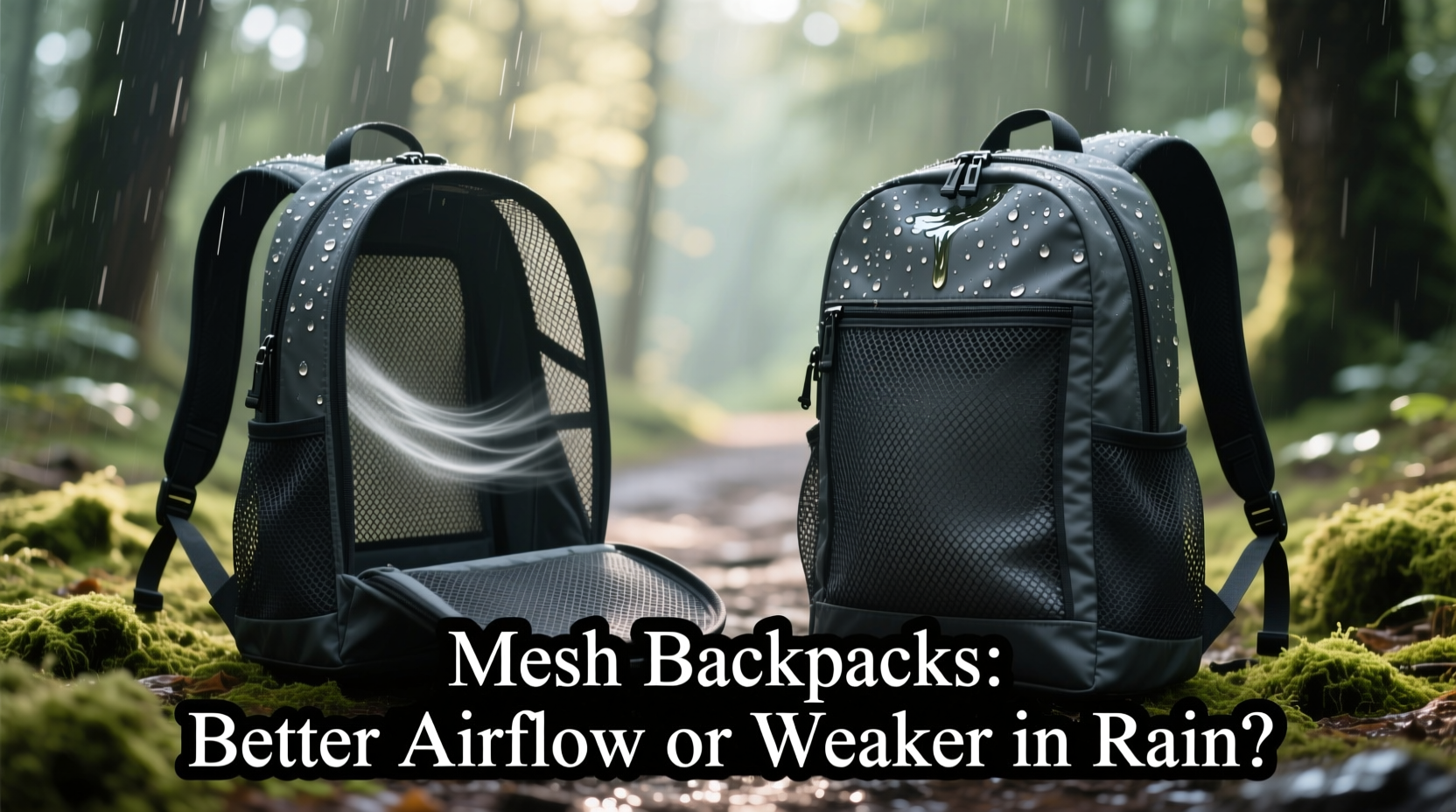
Mechanical ventilation in backpacks isn’t just marketing jargon—it’s rooted in physics. Traditional backpacks press fabric directly against the back, trapping body heat and moisture. Over time, this creates discomfort, especially during prolonged wear or physical activity. Mesh-backed designs introduce an air gap between the wearer’s spine and the pack, allowing convection currents to move heat away from the skin.
This principle is similar to how elevated mattress slats improve airflow during sleep. In backpacks, 3D spacer mesh—often made from polyethylene terephthalate (PET) or nylon—creates a structured cushion that maintains space while remaining flexible. Independent lab tests show that such systems can reduce back surface temperature by up to 4–6°F compared to solid-back packs under identical conditions.
“Airflow isn’t just about comfort—it affects endurance. Even a 5% reduction in thermal load can delay fatigue during long hikes.” — Dr. Lena Torres, Biomechanics Researcher at Alpine Ergonomics Lab
The effectiveness depends on several factors: mesh thickness, weave density, and curvature. High-end models use contoured framesheets behind the mesh to enhance both support and ventilation. However, not all mesh is created equal. Thin, loosely woven panels may sag over time, reducing airflow and structural integrity.
Durability Concerns: Is Mesh Too Flimsy?
Critics argue that mesh compromises durability, particularly when exposed to rough handling or inclement weather. Unlike tightly woven polyester or ballistic nylon, mesh is inherently porous. While this benefits airflow, it also means less resistance to tearing, abrasion, and punctures. A sharp branch, crowded subway pole, or even over-packing can strain weak points in the mesh structure.
Rain exposure introduces another layer of concern. Most mesh materials are hydrophobic to some degree, but they don’t repel water like coated fabrics. During light drizzle, moisture may bead on the surface temporarily. However, sustained rainfall causes water to seep through the weave and reach the back panel—and potentially the contents inside if the inner lining lacks waterproofing.
A 2022 field study by Outdoor Gear Review analyzed 17 popular backpacks with mesh ventilation. After simulated use involving 50 hours of wear and exposure to controlled rain events (0.5 inches/hour), 60% showed signs of water intrusion at the back panel within 10 minutes. Only models with dual-layer construction—mesh outer plus sealed inner membrane—performed reliably.
Tip: Look for backpacks where mesh is bonded to a secondary backing layer; this improves both tear resistance and moisture barrier without sacrificing much airflow.Comparing Materials: Mesh vs. Solid Fabric
To understand the real-world implications, consider how mesh stacks up against traditional materials across key performance metrics.
| Feature | MESH-BACKED | SOLID FABRIC (e.g., Nylon/Polyester) |
|---|---|---|
| Airflow Efficiency | High – creates consistent air channel | Low – direct contact traps heat |
| Rain Resistance | Low to Moderate – unless layered | High – especially with DWR coating |
| Tear Strength | Moderate – vulnerable at stress points | High – tightly woven fibers resist ripping |
| Weight | Lighter – less dense material | Slightly heavier – denser weaves |
| Drying Time | Faster – open structure wicks moisture | Slower – absorbs more, dries unevenly |
| Long-Term Shape Retention | Variable – cheaper mesh sags over time | Consistent – resists deformation |
The data suggests a clear pattern: mesh excels in breathability and weight savings but lags in elemental protection unless engineered carefully. The best-performing hybrid models combine aerodynamic design with strategic reinforcement.
Real-World Scenario: Commuting in Seattle
Consider Maya, a software engineer living in Seattle, where rainy mornings and indoor AC create a daily climate rollercoaster. She bought a sleek mesh-back backpack for its comfort claims, only to find herself damp after a 15-minute walk in light rain—not from outside soaking in, but from condensation forming between her back and the wet mesh.
“I thought the ventilation would help,” she said. “But once the mesh got wet, it clung to my shirt and held moisture like a sponge. By the time I sat down at work, my back was cold and sticky.”
After switching to a backpack with a perforated foam panel instead of full mesh, she noticed immediate improvement. The new design allowed airflow while minimizing direct water contact. Her experience underscores a crucial point: context matters. In consistently humid or rainy environments, unlined mesh can do more harm than good.
How to Choose the Right Backpack for Your Climate
Selecting between mesh and solid-back designs shouldn’t be binary. Instead, evaluate your environment, usage patterns, and priorities. Follow this step-by-step decision framework:
- Assess your primary environment: Do you live in a hot, dry area (e.g., Phoenix) or a wet, temperate one (e.g., Portland)? Heat-heavy regions favor mesh; rainy ones demand water-resistant builds.
- Determine activity type: Hiking, biking, or walking long distances benefit most from airflow. Office commuting with short walks may not require advanced ventilation.
- Check internal lining: Even if the back panel is mesh, ensure the interior has a moisture barrier or removable rain cover.
- Evaluate build quality: Press the mesh with your finger. Does it spring back firmly? Does it feel thin or stretchy? High-density spacer mesh should resist deformation.
- Look for hybrid solutions: Some brands now offer “breathable yet resilient” backs using laser-cut foam or suspended tension fabric (like Osprey’s Anti-Gravity system).
Expert-Recommended Features to Look For
Not all mesh backpacks are poorly built. Advances in textile engineering have led to smarter designs that balance breathability and toughness. According to gear testers at Urban Hiker Magazine, the following features separate high-performing models from gimmicky ones:
- Dual-layer back panels: Mesh bonded to a thin, waterproof film prevents seepage while maintaining airflow.
- Reinforced stress zones: Extra stitching or rubberized patches around shoulder strap anchors prevent premature wear.
- Quick-dry coatings: Hydrophobic treatments help mesh shed water faster and inhibit mold growth.
- Adjustable suspension: Allows users to fine-tune the air gap based on clothing thickness or exertion level.
- Removable covers: Integrated rain shields stored in bottom compartments add versatility without bulk.
“The future of backpack ergonomics lies in adaptive materials—not just mesh for breathability, but intelligent layering that responds to environmental shifts.” — Rajiv Mehta, Lead Designer at TrailForm Gear
Practical Checklist Before Buying a Mesh Backpack
Before committing to a mesh-backed model, run through this checklist to avoid buyer’s remorse:
- ✅ Does it have a secondary moisture barrier?
- Ensure there's a liner between the mesh and main compartment.
- ✅ Is the frame supportive?
- A rigid or semi-rigid frame prevents sagging and improves load distribution.
- ✅ Can it handle occasional rain?
- Check product specs for water resistance ratings or included rainfly.
- ✅ How does it feel when loaded?
- Test with 10–15 lbs to see if mesh deforms under pressure.
- ✅ Is repair support available?
- Brands like Deuter and Osprey offer mesh replacement services—a sign of confidence in longevity.
Frequently Asked Questions
Can I wash a mesh backpack in the washing machine?
No. Machine agitation can destroy the delicate structure of 3D spacer mesh. Instead, hand-wash with mild soap and lukewarm water. Rinse thoroughly and air-dry away from direct sunlight to prevent fiber degradation.
Do mesh backpacks wear out faster than regular ones?
They can, especially lower-quality versions. However, premium models with reinforced stitching and UV-resistant fibers often last 5+ years with proper care. Avoid dragging the pack on rough surfaces and store it in a dry place.
Are there alternatives to mesh that still offer good airflow?
Yes. Some manufacturers use molded EVA foam with ventilation channels or suspended fabric systems (e.g., mesh stretched over a frame). These provide excellent breathability with better water resistance and structural stability.
Final Verdict: Airflow vs. Rain Readiness
Much like choosing between trail runners and hiking boots, selecting a mesh backpack comes down to matching function to environment. In hot, dry, or physically demanding scenarios, mesh-backed packs deliver tangible comfort advantages. The ability to stay cool and dry through perspiration management outweighs minor durability concerns.
However, in regions with frequent rain or for users who prioritize all-weather reliability, mesh-only designs fall short unless enhanced with protective layers. The perception that mesh is “flimsy” stems largely from budget models lacking engineering sophistication. High-end versions prove that breathability and resilience aren’t mutually exclusive.
The smart approach isn’t to reject mesh outright, but to demand better integration. Look for thoughtful construction: structured frames, dual-material panels, and weather-ready accessories. When done right, mesh enhances performance without becoming a liability.
🚀 Ready to upgrade your carry game? Re-evaluate your current backpack using the checklist above. Share your experiences in the comments—what worked, what didn’t, and how you’ve adapted to changing seasons and needs.








