In regions where temperatures soar and humidity clings to the skin, choosing the right clothing isn't just a matter of style—it's a necessity. Among natural fabrics, linen stands out for its breathability and cooling properties. Yet, its reputation for relentless wrinkling often gives wearers pause. Is the comfort worth the creases? For those living in or traveling to hot climates, this question isn’t trivial. The answer lies not in absolutes but in understanding how linen behaves, how to manage its quirks, and whether its benefits align with your lifestyle and environment.
The Science Behind Linen’s Cooling Effect
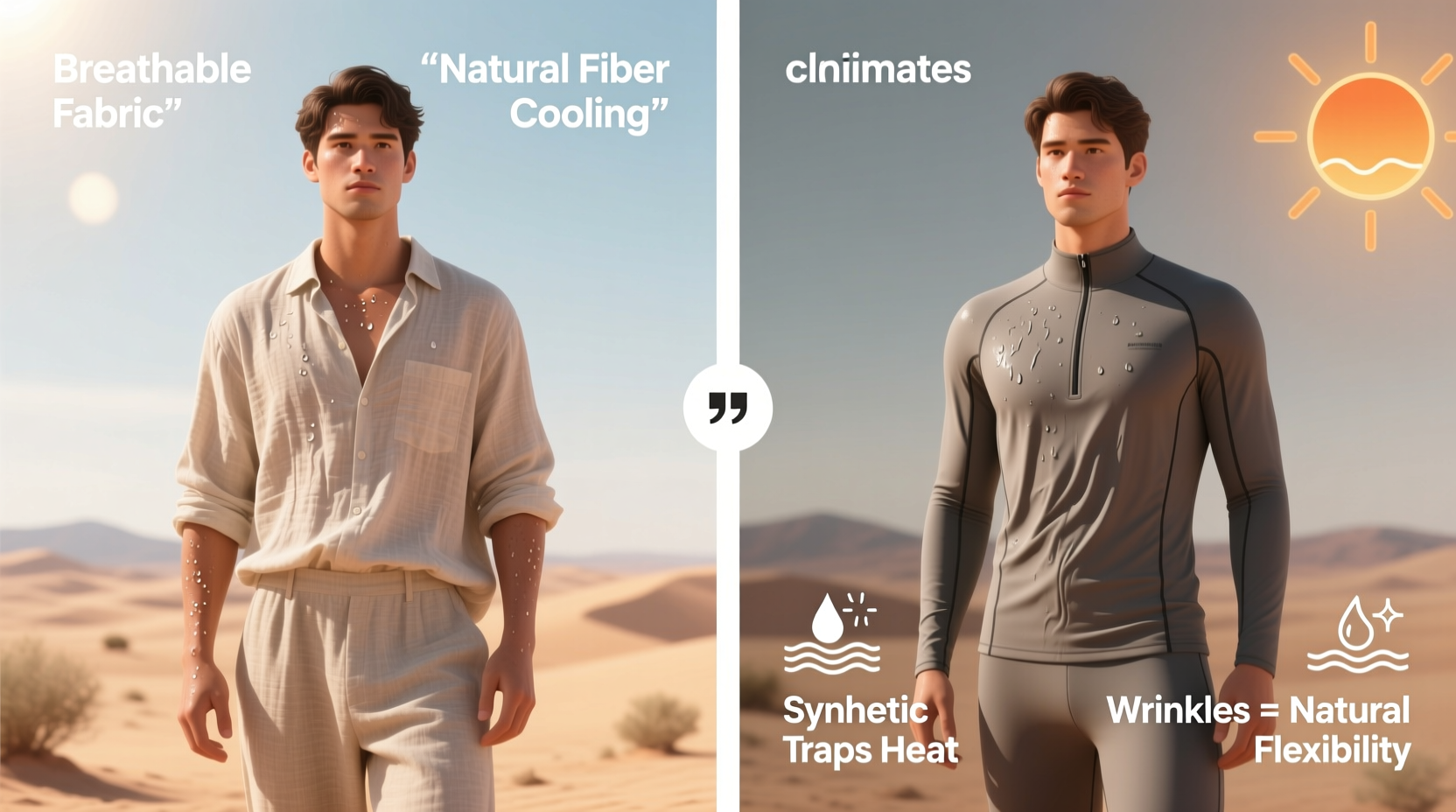
Linen is made from the fibers of the flax plant, one of the strongest natural fibers known. What makes it uniquely suited to hot weather is its structure. The hollow core of flax fibers allows for superior air circulation, promoting rapid evaporation of sweat and helping regulate body temperature. Unlike cotton, which retains moisture longer, linen wicks moisture away quickly and dries fast—sometimes up to 30% faster than cotton, according to textile studies.
This thermoregulatory ability means that even in 95°F (35°C) heat with high humidity, linen garments can keep the wearer feeling significantly cooler. Its low elasticity also contributes to a looser weave, enhancing airflow. In traditional Mediterranean, Middle Eastern, and Southeast Asian cultures, linen and similar loose-weave fabrics have been worn for centuries as part of climate-adaptive dressing.
“Linen is nature’s air conditioner. It doesn’t just feel light—it actively reduces heat retention through micro-circulation.” — Dr. Lena Moreau, Textile Scientist, ETH Zurich
The Wrinkling Dilemma: Myth vs. Reality
No discussion about linen is complete without addressing its most notorious trait: wrinkling. Linen wrinkles easily because flax fibers lack the natural elasticity found in cotton or synthetic blends. Once bent or folded, they tend to hold the crease. This has led many to label linen as “high-maintenance” or “unprofessional” in formal settings.
However, this perception is shifting. In recent years, the fashion world has embraced what some call the “lived-in elegance” of linen. Creases are no longer seen as flaws but as markers of authenticity and relaxed sophistication. Brands from Mallorca to Mumbai now market slightly rumpled linen shirts and dresses as intentional design features.
That said, the degree of wrinkling depends on several factors:
- Weave tightness: Looser weaves wrinkle more but breathe better.
- Fabric weight: Lightweight linens (under 160 gsm) crease faster than heavier, structured ones.
- Blends: Linen-cotton or linen-viscose mixes reduce wrinkling at the cost of some breathability.
- Care habits: How you wash, dry, and store linen dramatically affects its appearance.
Comparative Analysis: Linen vs. Alternatives in Heat
To assess whether linen is truly worth it, compare it directly with other common fabrics used in hot environments.
| Fabric | Breathability | Wrinkle Resistance | Maintenance | Ideal for Humidity? |
|---|---|---|---|---|
| Linen | Excellent | Poor | Moderate (hand wash or gentle machine) | Yes – dries quickly, stays cool |
| Cotton | Good | Fair | Easy (machine washable) | Sometimes – absorbs moisture but dries slowly |
| Rayon/Viscose | Good | Poor | High (often requires dry cleaning) | No – weakens when wet, poor durability |
| Polyester | Poor | Excellent | Very Easy | No – traps heat and sweat |
| Hemp | Excellent | Fair | Moderate | Yes – similar to linen, more durable |
While polyester resists wrinkles and cotton is easier to maintain, neither matches linen’s ability to keep the body cool under intense sun. Rayon may feel soft but deteriorates quickly in humid conditions. Hemp comes close but is less widely available and often stiffer initially.
Real-World Example: A Month in Chennai
Consider the experience of Priya, a marketing consultant based in Chennai, India, where summer temperatures average 38°C with 75% humidity. Last May, she decided to test linen against her usual cotton wardrobe during a four-week trial.
She wore a rotation of linen shirts, trousers, and dresses for work and casual outings, comparing them daily with her cotton equivalents. Her notes revealed a clear pattern: while her cotton clothes felt damp by midday and required changing, her linen outfits stayed dry and comfortable. However, she noticed visible wrinkles after just two hours of sitting in meetings.
Her solution? She began steaming her linen pieces with a handheld steamer each morning. She also switched to darker, textured weaves that masked creases better. By week three, she had adapted her routine and concluded that the minor aesthetic trade-off was far outweighed by the physical comfort.
“I used to dread afternoon commutes,” she said. “Now I walk into air-conditioned rooms feeling fresh, not sticky. The wrinkles? Honestly, no one else seems to notice.”
Practical Care Guide: Minimizing Wrinkles Without Sacrificing Benefits
You don’t have to surrender to chaos to enjoy linen. With the right habits, you can significantly reduce wrinkling while preserving the fabric’s integrity.
- Wash with care: Use cold water and a gentle cycle—or hand wash. Avoid harsh detergents. Add a splash of white vinegar to soften fibers naturally.
- Remove promptly: Take clothes out of the washer immediately after the cycle ends. Leaving them bunched up guarantees deep creases.
- Dry wisely: Line-dry in the shade, preferably while still slightly damp. Hang items vertically and smooth out folds with your hands.
- Iron or steam: Iron while damp using medium heat and a pressing cloth. Alternatively, use a garment steamer—much faster and less damaging.
- Store properly: Fold neatly or hang on padded hangers. Avoid plastic covers; use breathable cotton garment bags instead.
- Travel smart: Roll linen clothes rather than fold them. Pack them on top of other items to minimize pressure.
Action Checklist: Getting the Most Out of Your Linen Wardrobe
Follow this simple checklist to maximize comfort and minimize frustration:
- ✅ Choose pre-washed linen for softer texture and reduced shrinkage.
- ✅ Opt for blended fabrics if you need more wrinkle resistance (e.g., 70% linen / 30% cotton).
- ✅ Invest in a compact garment steamer for quick touch-ups.
- ✅ Wear darker or textured linens (like seersucker or slub weave) to hide wrinkles.
- ✅ Wash only when necessary—linen doesn’t trap odors like synthetics.
- ✅ Rotate pieces to extend lifespan and reduce wear.
When Linen Might Not Be the Best Choice
Despite its strengths, linen isn’t ideal for every situation or individual. Consider alternatives if:
- You require a crisp, polished look for client meetings or formal events.
- You live in a dusty or windy area where static cling attracts particles (linen can be prone to this).
- You’re on a tight budget—high-quality linen is expensive upfront, though it lasts longer if cared for.
- You dislike any form of garment maintenance beyond tossing clothes in the washer.
In such cases, a cotton-linen blend or high-thread-count cotton might offer a middle ground. Some technical performance fabrics now mimic breathability while resisting wrinkles, though they rarely match linen’s natural sustainability.
Frequently Asked Questions
Does all linen wrinkle equally?
No. Heavier weaves, tighter constructions, and blended fabrics wrinkle less than lightweight, loosely woven pure linen. Finishes like mercerization can also improve smoothness.
Can I wear linen to work in a hot climate?
Absolutely—if your workplace culture accepts casual or smart-casual attire. Pair linen trousers with a well-fitted cotton shirt or a blazer in a wrinkle-resistant blend. Choose neutral colors and clean lines to maintain professionalism.
Is linen sustainable despite its upkeep?
Yes. Flax requires less water and pesticides than cotton and is fully biodegradable. Even with frequent washing, its environmental footprint remains lower than most synthetics. Proper care extends its life to 5–10 years or more.
Final Verdict: Worth It? Yes—With Conditions
Linen clothes are absolutely worth it for hot climates, provided you adjust your expectations and adopt smart care practices. The discomfort of occasional wrinkles pales in comparison to the relief of staying cool, dry, and comfortable during sweltering days. It’s a fabric that rewards patience and intentionality.
Its drawbacks are manageable, especially when weighed against its unmatched breathability, durability, and eco-friendly profile. For anyone spending significant time in tropical or desert environments, linen isn’t just a fashion choice—it’s a functional upgrade.
The key is to stop fighting the wrinkle and start embracing the essence of what linen represents: ease, simplicity, and harmony with the environment. In a world increasingly focused on sustainable living and mindful consumption, that philosophy matters as much as performance.
💬 Have you made the switch to linen in a hot climate? Share your experiences, hacks, or favorite brands in the comments below—your insight could help others stay cool and confident all summer long.