Children's footwear choices have become a growing concern among parents, especially as fashion trends increasingly influence even young wardrobes. From miniature stilettos at birthday parties to glittery platform sandals worn on special occasions, it’s not uncommon to see toddlers and pre-teens stepping into high heels. But are these stylish shoes harmless fun—or do they pose real risks to developing feet? Pediatricians, podiatrists, and orthopedic specialists have weighed in with clear guidance: early exposure to high heels can interfere with natural foot growth, posture, and long-term musculoskeletal health. Meanwhile, supportive sneakers remain the gold standard for daily wear. This article breaks down the medical evidence, compares expert recommendations, and offers practical advice for making smarter footwear choices.
The Anatomy of a Developing Foot
A child’s foot is not simply a smaller version of an adult’s—it undergoes significant changes from infancy through adolescence. At birth, much of the foot is made up of soft cartilage, which gradually ossifies into bone over time. The arch typically doesn’t fully form until age 6–8, and the bones in the feet don’t fully harden until late teens. During this critical window, external pressures—like those from poorly designed shoes—can alter alignment, gait patterns, and joint development.
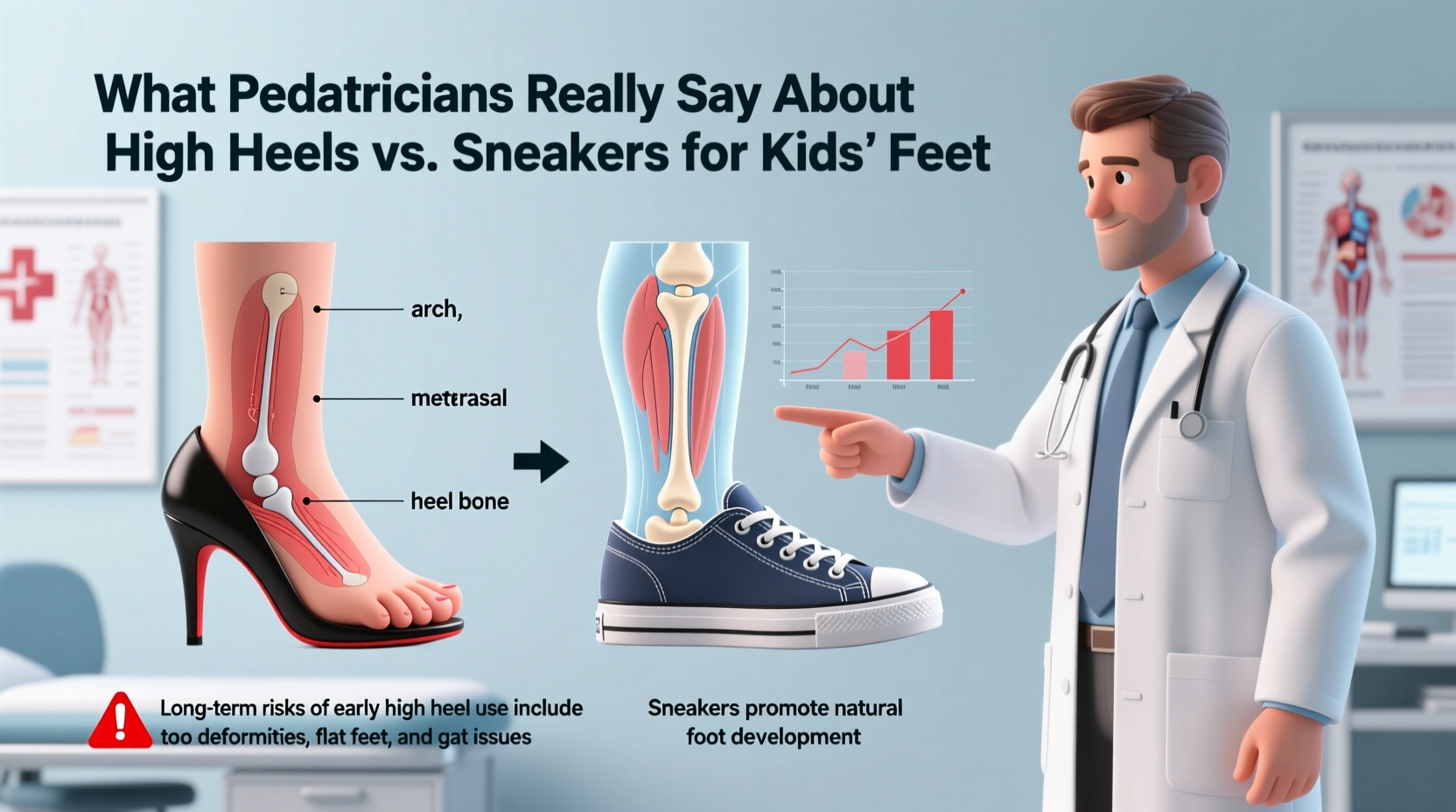
High heels shift body weight forward, increasing pressure on the forefoot by up to 75% compared to flat shoes. For adults, this can lead to bunions, hammertoes, or plantar fasciitis over time. In children, whose feet are still malleable, such forces may contribute to premature structural issues. Pediatric podiatrists emphasize that while occasional wear might not cause immediate harm, repeated use during key developmental years increases risk.
“Children’s feet are designed to grow naturally and symmetrically. Any shoe that distorts the natural shape or alters gait mechanics—especially high heels—can disrupt that process.” — Dr. Linda Chen, Pediatric Podiatrist, Children’s Orthopedic Center
Pediatricians’ Stance on High Heels for Kids
Most pediatricians advise against allowing children under 14 to wear high heels regularly. The American Academy of Pediatrics (AAP) states that footwear should be flexible, lightweight, and provide proper heel support without elevating the heel significantly. Their guidelines highlight three primary concerns:
- Altered Gait Mechanics: Heels force children to walk on their toes or ball of the foot, leading to shortened calf muscles and Achilles tendon tightness.
- Balance & Fall Risk: Elevated heels reduce stability, increasing the likelihood of ankle sprains or falls—especially in active children.
- Long-Term Structural Changes: Chronic heel wear may encourage early development of bunions, misaligned toes, or flat feet due to uneven weight distribution.
Dr. Marcus Reed, a pediatrician at Boston General Hospital, explains: “We’re seeing more kids come in with foot pain at younger ages. While genetics play a role, inappropriate footwear—including fashion heels—is a modifiable factor we can address early.”
Tip: If your child wants to dress up, opt for low-heeled shoes (under 1 inch) with wide toe boxes and secure straps for better support.Sneakers: The Gold Standard for Daily Wear
In contrast to high heels, well-designed sneakers are widely endorsed by pediatricians for everyday use. They offer cushioning, arch support, and shock absorption—critical for active children who run, jump, and play for hours. Modern athletic shoes are engineered to align with natural foot motion, promoting healthy biomechanics.
Key features of ideal children’s sneakers include:
- Firm heel counters for stability
- Flexible soles that bend at the ball of the foot
- Ample room in the toe box
- Breathable materials to prevent moisture buildup
Studies show that children wearing supportive footwear demonstrate improved balance, reduced fatigue, and fewer lower-limb injuries. A 2022 study published in Pediatrics found that elementary school children wearing properly fitted sneakers had 30% fewer reported foot complaints than peers in unsupportive footwear.
High Heels vs. Sneakers: A Comparative Overview
| Feature | High Heels (for kids) | Sneakers (recommended) |
|---|---|---|
| Heel Height | Elevated (1–4 inches) | Flat or minimal drop (0–0.5 inches) |
| Toe Box Space | Narrow, pointed | Wide, rounded |
| Arch Support | Limited or absent | Contoured, supportive |
| Stability | Low (increased fall risk) | High (secure fit) |
| Impact on Gait | Forces unnatural stride | Promotes natural movement |
| Recommended Use | Rarely, if ever | Daily, especially during activity |
Real-Life Scenario: Emma’s Story
Emma, age 9, began wearing her older sister’s dressy heels to family events and dance recitals. Within six months, she started complaining of foot pain after school and developed a habit of walking on her toes. Her pediatrician referred her to a pediatric podiatrist, who diagnosed early signs of metatarsalgia—a condition caused by excessive pressure on the ball of the foot—and mild Achilles tendon shortening.
After discontinuing heel wear and switching to supportive sneakers with custom orthotics, Emma’s symptoms improved within three months. Her doctor emphasized that catching the issue early prevented permanent changes. “She didn’t need surgery or long-term therapy,” said her mother, “but it was a wake-up call about how something as simple as shoes could affect her health.”
When, If Ever, Are Heels Acceptable?
Pediatricians aren’t entirely opposed to fashion—they recognize that dressing up can boost confidence and self-expression. However, they stress moderation and smart compromises. Some experts suggest that girls aged 14 and older may begin experimenting with modest heels (under 1.5 inches) for limited durations, provided the shoes fit well and don’t cause discomfort.
Even then, duration matters. Wearing heels for more than two hours at a time during adolescence can still strain developing joints. The AAP recommends capping heel wear at special events only and pairing it with stretching exercises to maintain calf flexibility.
Step-by-Step Guide to Choosing Healthy Footwear
- Measure Feet Regularly: Children’s feet grow quickly—check size every 3–4 months.
- Shop in the Evening: Feet swell throughout the day; fitting shoes later ensures adequate space.
- Test Flexibility: Bend the shoe—flex point should match the base of the toes.
- Check Heel Firmness: Press the back of the shoe; it should resist compression for stability.
- Observe Walking Patterns: Watch your child walk in the shoes—no limping, toe-walking, or slipping.
- Prioritize Function Over Fashion: Save narrow or elevated styles for rare occasions, if at all.
Frequently Asked Questions
Can wearing high heels stunt foot growth?
No evidence suggests heels directly stop growth, but they can distort foot shape and alignment during development. Chronic pressure may lead to deformities like bunions or hammertoes, which can appear earlier and progress faster in children.
Are ballet flats a good alternative to heels?
Not always. Many ballet flats lack arch support and have thin soles, leading to similar issues as heels—though without elevation. Look for versions with cushioned insoles and some structure. For daily wear, sneakers are still superior.
What if my child insists on wearing heels?
Set boundaries. Allow symbolic choices—like sparkly sneakers or embellished flats—that give a fashionable feel without compromising health. Explain the reasons using age-appropriate language: “These shoes help your feet grow strong and keep you from getting hurt.”
Final Recommendations and Action Steps
The consensus among pediatric professionals is clear: high heels are inappropriate for regular wear in children and early teens. While the desire to emulate adult fashion is understandable, protecting foot health during development should take precedence. Supportive sneakers remain the best choice for promoting natural gait, preventing injury, and supporting overall musculoskeletal wellness.
Tip: Involve your child in choosing stylish yet supportive shoes—many brands now offer colorful, trendy sneakers that feel “cool” without sacrificing safety.Footwear Checklist for Parents
- ✅ Shoes fit properly (thumb’s width past longest toe)
- ✅ Heel counter is firm and doesn’t collapse
- ✅ Sole bends where the foot bends
- ✅ No pinching, rubbing, or pressure points
- ✅ Child walks comfortably and naturally
- ❌ Avoid heels, pointed toes, and slip-on styles without support
“Let kids be kids in shoes that let them run, jump, and explore freely. Their feet will thank you when they’re adults.” — Dr. Anita Patel, AAP Spokesperson on Child Development
Conclusion
Choosing the right footwear for children isn’t just about comfort—it’s an investment in lifelong mobility and health. While high heels may seem like a harmless indulgence, pediatricians warn they carry real risks during critical growth phases. Sneakers, on the other hand, offer proven benefits for active, developing bodies. By prioritizing function, fit, and foot-friendly design, parents can support natural development without sacrificing style. Make informed choices today to help your child step confidently into a healthier future.
💬 Have questions about your child’s footwear? Share your experience or ask for advice in the comments—let’s build a community of informed parents supporting healthy little feet!