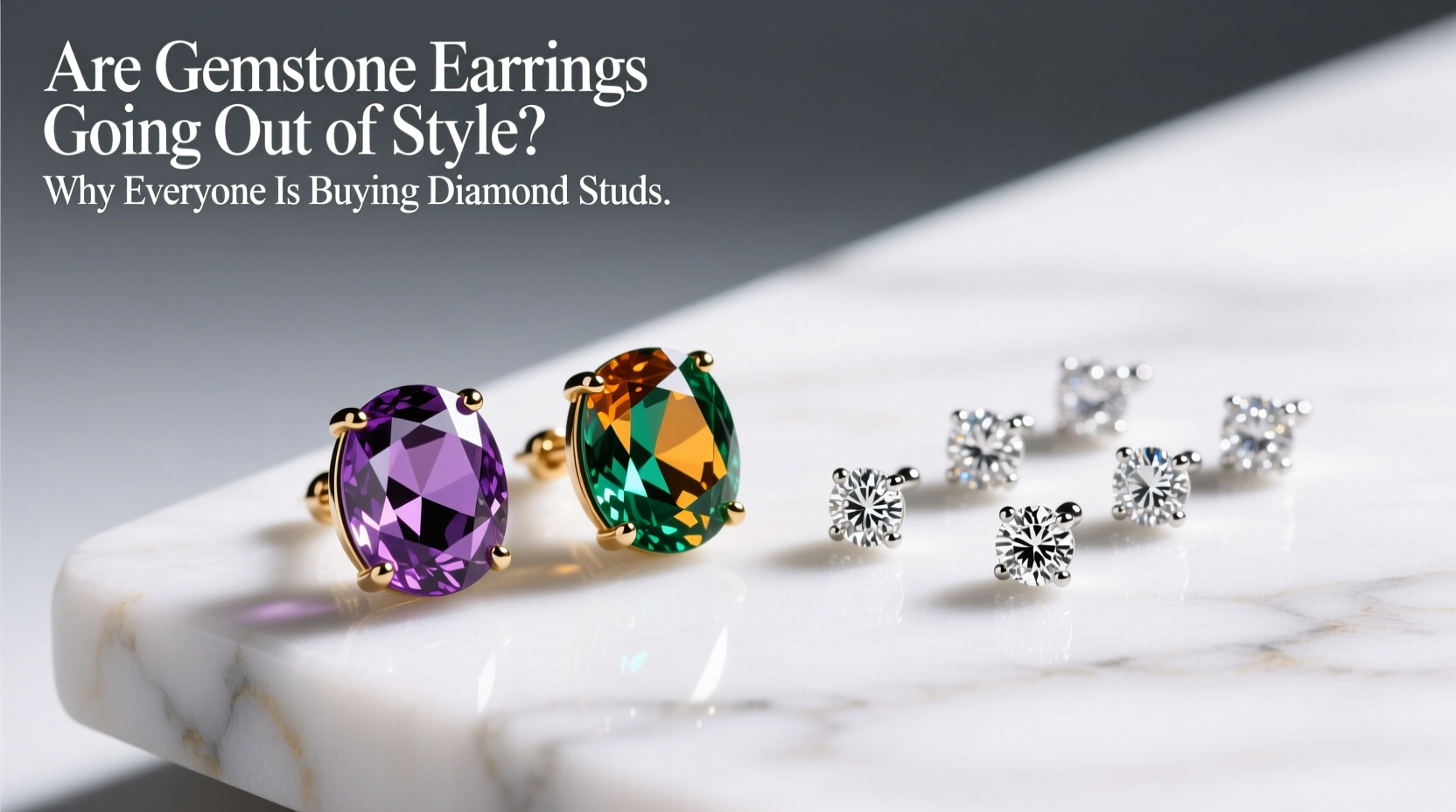
In recent years, a quiet but unmistakable shift has taken place in the world of fine jewelry. While vibrant gemstone earrings once ruled red carpets and everyday elegance alike, a growing number of consumers are turning toward classic diamond stud earrings. From minimalist influencers to seasoned collectors, the demand for diamond studs has surged—prompting many to ask: Are gemstone earrings going out of style? The answer isn’t quite that simple. Rather than disappearing, gemstones are being repositioned by a cultural pivot toward timelessness, versatility, and investment value—qualities that diamond studs embody with unmatched clarity.
The Rise of the Diamond Stud: A Quiet Revolution
Diamond stud earrings have long been a staple in jewelry boxes, but their current popularity reflects more than tradition. They’ve become symbols of understated luxury and enduring taste. Unlike trend-driven pieces, diamond studs transcend seasons. Their appeal lies in their ability to elevate both casual and formal wear without competing for attention.
This resurgence is fueled by several factors: increased consumer focus on quality over quantity, the rise of “quiet luxury” aesthetics, and social media’s influence in promoting timeless elegance. Platforms like Instagram and TikTok showcase influencers pairing diamond studs with silk blouses, turtlenecks, or even gym attire—proving their adaptability across lifestyles.
“Diamond studs are the little black dress of jewelry. They never date, never clash, and always add polish.” — Lydia Chen, Jewelry Curator at The Metropolitan Style Archive
Why Gemstone Earrings Are Being Reassessed
Gemstone earrings remain beautiful and expressive, but they face challenges in today’s evolving fashion climate. Colored stones—sapphires, emeralds, amethysts, rubies—carry strong visual identities. While this makes them ideal for statement moments, it also limits their daily wearability. A pair of emerald drops may feel too bold for a Zoom meeting; ruby hoops might seem excessive for brunch.
Additionally, gemstones vary widely in durability. While diamonds rank 10 on the Mohs hardness scale, many popular gemstones fall between 6 and 8. This makes them more prone to scratches, chipping, and fading—especially when worn daily. Consumers increasingly prioritize longevity, especially as jewelry purchases become more intentional and less impulse-driven.
Tip: If you own gemstone earrings, reserve them for special occasions and store them separately to prevent scratching.Investment Value: Diamonds vs. Colored Gemstones
One of the most compelling reasons behind the diamond stud surge is investment potential. High-quality diamonds retain value better than most colored gemstones. While rare stones like Burmese rubies or Kashmir sapphires can appreciate, they require expert authentication and niche markets to resell. In contrast, well-cut, GIA-certified diamond studs maintain consistent demand in resale markets—from pawn shops to luxury consignment boutiques.
Consider this: a 1-carat, VS1 clarity, G-color round brilliant diamond stud from a reputable jeweler holds approximately 60–70% of its original retail value after five years. The same cannot be said for most commercial-grade gemstone earrings, which often depreciate significantly post-purchase.
| Jewelry Type | Avg. Resale Value (5 yrs) | Durability (Mohs Scale) | Daily Wear Suitability |
|---|---|---|---|
| Diamond Studs | 60–70% | 10 | Excellent |
| Emerald Earrings | 30–50% | 7.5–8 | Fair (prone to cracking) |
| Sapphire Earrings | 50–65% | 9 | Good |
| Amethyst Earrings | 20–35% | 7 | Poor (fades in sunlight) |
Cultural Shift: The Quiet Luxury Movement
The broader fashion industry has embraced “quiet luxury”—a preference for subtle, high-quality pieces over flashy logos or bold colors. This movement values craftsmanship, material integrity, and discretion. Diamond studs align perfectly with these ideals. They signal taste rather than trend-chasing.
In contrast, brightly colored gemstones—while stunning—can appear ostentatious in minimalist settings. As workplaces become more hybrid and wardrobes lean neutral, jewelry must adapt. A CEO wearing diamond studs to a board meeting projects confidence and refinement. The same executive in oversized turquoise earrings might unintentionally distract from her message.
This doesn’t mean gemstones are obsolete. They thrive in creative industries, artistic circles, and personal expressions of identity. But for mainstream consumers seeking wardrobe staples, diamond studs offer unmatched neutrality and sophistication.
Real-World Example: The Modern Bride’s Dilemma
Taylor, a 29-year-old marketing director from Austin, recently got engaged. She inherited a pair of vintage amethyst earrings from her grandmother—beautiful, but deeply purple and ornate. While she loves them, she realized they didn’t suit her modern wardrobe or professional life. Instead of wearing them, they sat in her safe.
She decided to invest in a pair of 0.75-carat diamond studs for her engagement photos. “I wanted something I could wear every day—not just on anniversaries,” she said. “The diamonds felt like an extension of me, not a costume.” Her decision mirrors a growing sentiment: jewelry should integrate seamlessly into life, not interrupt it.
How to Choose What’s Right for You
The question isn’t whether gemstone earrings are “out,” but whether they serve your lifestyle. Here’s a practical checklist to help decide:
- Do you wear jewelry daily? Opt for durable, low-profile pieces like diamond studs.
- Do you attend many formal events? Gemstone earrings can shine as occasion-specific accessories.
- Is resale value important? Diamonds generally hold value better than most colored stones.
- Do you prefer bold self-expression? Gemstones allow personality to take center stage.
- Are you building a capsule jewelry collection? Start with versatile staples like diamond studs, then layer in color later.
Frequently Asked Questions
Can I still wear gemstone earrings if I own diamond studs?
Absolutely. Many stylish women maintain both. Diamond studs serve as everyday essentials, while gemstone earrings are reserved for events, seasonal wear, or mood-based styling. Think of them as complements, not competitors.
Are lab-grown diamonds affecting this trend?
Yes. Lab-grown diamond studs offer the same brilliance and durability as mined diamonds at 30–50% lower cost. This affordability makes high-quality studs accessible to younger buyers, accelerating their adoption as go-to choices over pricier, less durable gemstones.
Will gemstone earrings ever come back in style?
Fashion is cyclical. Bold colors and maximalist designs will return—perhaps sooner than expected. However, even in peak gemstone trends, diamond studs remain relevant due to their foundational role in jewelry wardrobes.
Conclusion: Building a Timeless Jewelry Wardrobe
The popularity of diamond studs doesn’t signal the end of gemstone earrings—it signals a maturation in how we think about jewelry. We’re moving away from disposable fashion and toward curated collections built on longevity, utility, and emotional resonance. Diamond studs meet those criteria with precision.
That said, beauty remains subjective. If gemstone earrings spark joy, express your heritage, or reflect your artistry, they deserve a place in your life. But for those building a functional, future-proof jewelry collection, starting with a pair of well-chosen diamond studs is one of the smartest decisions you can make.
💬 What’s in your earring rotation? Share your favorite pair and why it works for your lifestyle—we’d love to hear your story.








