
Rooftop lounges have evolved from novelty venues into cultural anchors of urban nightlife—spaces where skyline views meet curated soundscapes, craft cocktails flow at sunset, and personal style is both observed and absorbed. Against that backdrop, the question isn’t just about fashion; it’s about intentionality. Is slipping into a $1,200 silk-blend cocktail dress for a 90-minute reservation on a breezy, concrete terrace a meaningful sartorial choice—or an outdated performance? The answer depends less on price tags and more on context, care, and quiet confidence. This isn’t about “dressing up” as a reflex—it’s about dressing *with purpose*, in harmony with where you are, who you are, and what the moment asks of you.
Why Rooftop Lounges Demand a New Kind of Dress Code
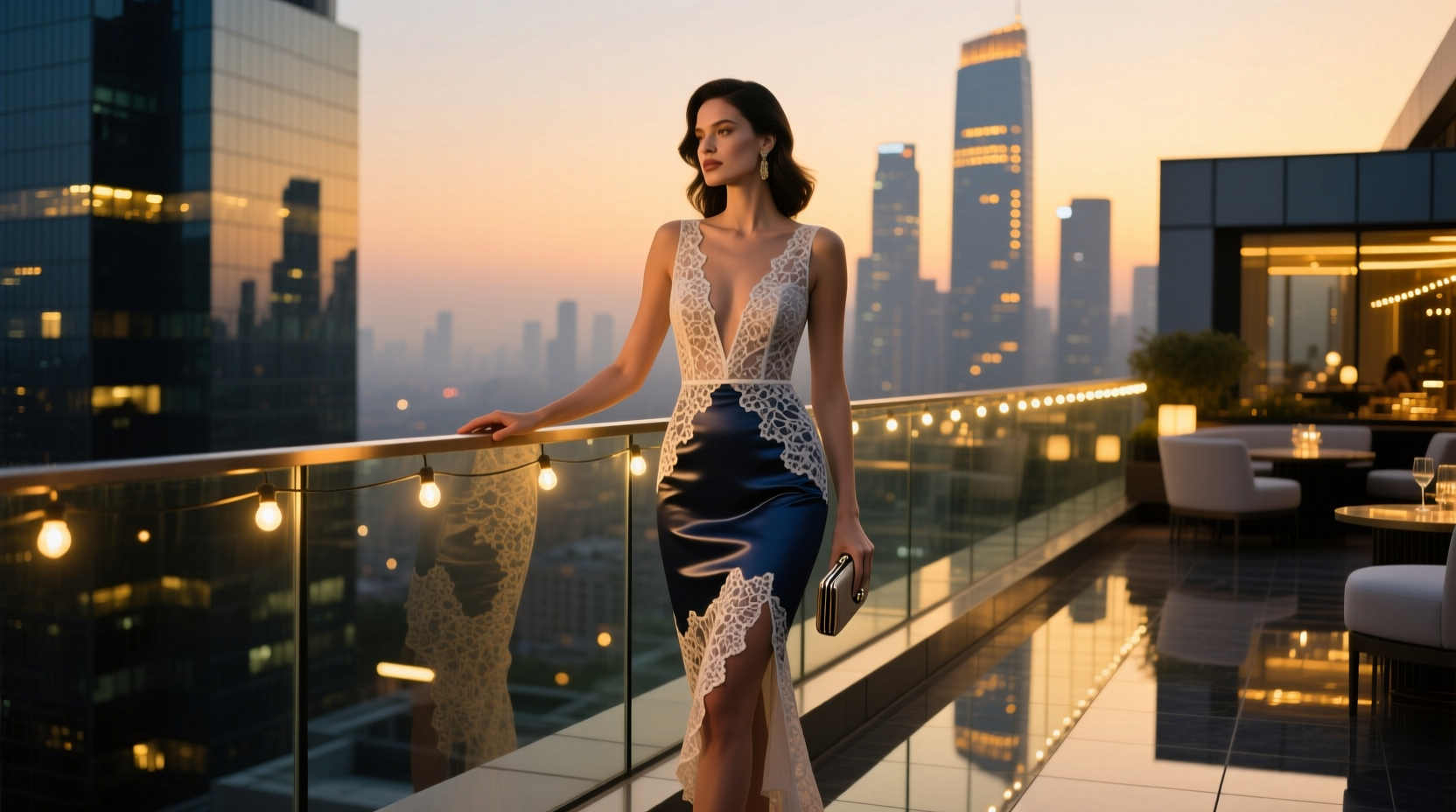
Unlike formal galas or black-tie dinners, rooftop lounges operate under a fluid, almost democratic dress code—one shaped by geography, season, time of day, and even wind speed. A dress that reads “effortless elegance” in Miami at 7 p.m. may feel overwrought in Portland at 9 p.m., when fog rolls in and temperatures dip 15°F in 20 minutes. Designers have responded not with rigid silhouettes, but with hybrid pieces: structured yet breathable fabrics, elevated separates that mimic dress energy without full-length commitment, and details—like convertible straps, hidden stretch panels, or removable linings—that anticipate movement, microclimates, and mood shifts.
This evolution reflects a broader cultural pivot: luxury is no longer signaled solely by conspicuous construction, but by intelligent design and contextual awareness. As stylist and former Vogue contributing editor Lena Torres observes:
“Today’s most compelling rooftop looks aren’t the ones that scream ‘I spent a fortune’—they’re the ones that whisper ‘I understand this space, this hour, and myself.’ A well-chosen designer cocktail dress works because it *listens*—to the breeze, the light, the rhythm of the crowd.” — Lena Torres, Stylist & Cultural Consultant
The Real-World Value Equation: Cost vs. Context vs. Care
A $950 designer cocktail dress isn’t inherently “worth it” simply because it bears a recognizable label. Its value crystallizes only when three variables align: contextual appropriateness, material intelligence, and long-term wearability. Below is a practical framework for evaluating whether a specific dress earns its place on your rooftop rotation.
| Factor | What to Assess | Red Flag | Green Flag |
|---|---|---|---|
| Climate Fit | Does the fabric breathe? Does it resist wind cling or static? Is it lined appropriately for evening chill? | Heavy satin lining in humid summer heat; unlined wool crepe in 45°F coastal evenings | Double-layered silk georgette with interior mesh; lightweight jacquard with built-in UV protection |
| Venue Vibe Match | Does the silhouette complement the lounge’s aesthetic—minimalist concrete, tropical garden, industrial-chic, or retro-modern? | Overly ornate beading at a stripped-down, acoustic-focused terrace; ultra-cropped hem at a lounge with low railings and high foot traffic | Clean column shape at a monochrome architectural space; asymmetrical hem with subtle metallic thread at a vintage-inspired bar with brass fixtures |
| Wearability ROI | Can this dress transition beyond one rooftop? To dinner dates, gallery openings, or even daytime events with layering? | Single-use design (e.g., extreme cutouts, non-adjustable fit, delicate embellishments prone to snagging on metal railings) | Modular elements (detachable sleeves, reversible lining, convertible neckline); neutral base color with distinctive texture or drape |
A Mini Case Study: How One Dress Earned Its Rooftop Rotation
Maya R., 32, creative director in Chicago, bought a navy halter-neck cocktail dress by emerging designer Elara Voss ($895) last spring. She’d hesitated—was it too “serious” for her favorite rooftop, The Overlook, known for its laid-back DJs and communal seating? Her first visit confirmed her doubts: the dress felt stiff, the halter strap dug in during windy gusts, and she kept adjusting it mid-conversation. Rather than retire it, Maya re-evaluated—not the dress, but her approach.
She added a lightweight, oversized linen shawl (in charcoal, not navy) for wind protection and shoulder coverage. She swapped stilettos for block-heel mules with grippy soles—critical on the lounge’s textured concrete floor. Most importantly, she wore it again two weeks later at golden hour, paired with minimalist gold hoops and a low-slung leather crossbody. This time, the dress moved *with* her—not against her. Over six months, she’s worn it to four rooftop visits, two art gallery openings, and once to a daytime wedding brunch (with a cropped white blazer). Its value wasn’t in the label—it was in Maya’s willingness to treat it as a living piece of her wardrobe, not a static trophy.
Your Rooftop Dress Checklist: 7 Non-Negotiables
Before stepping onto any rooftop, run through this actionable checklist. It applies whether you’re wearing a vintage YSL piece or a contemporary indie label’s debut collection.
- Fabric Integrity Test: Rub the fabric between your fingers for 10 seconds. If it pills, loses sheen, or feels brittle, skip it—even if it’s new.
- Wind Resistance Check: Stand and gently lift the hem. Does it flare dramatically or cling predictably? Excessive flaring = impracticality; total clinging = potential discomfort.
- Seat Compatibility: Sit fully in a chair with armrests, then stand. Does the dress ride up, gap, or require constant smoothing? If yes, it fails the functional test.
- Accessory Anchoring: Try your usual earrings, necklace, and bag. Do chains catch on seams or embellishments? Does the bag strap slip off narrow shoulders? Adjust before you go.
- Light Responsiveness: View the dress under warm LED lighting (like most rooftops use). Does the color shift unnaturally? Does sequins blind you or others? Subtlety often wins.
- Exit Readiness: Can you comfortably walk down narrow stairs, hail a rideshare, and navigate uneven pavement in it? If not, plan a coat or jacket swap for departure.
- Emotional Alignment: When you look in the mirror, do you feel like *yourself*—just heightened—or like you’re playing a role? Trust that instinct.
How to Style a Designer Cocktail Dress for Rooftop Longevity (Not Just One Night)
Investing in a designer cocktail dress shouldn’t mean locking it away for rare occasions. Its longevity hinges on strategic styling—not just storage. Follow this step-by-step guide to extend its relevance across seasons and settings.
- Deconstruct the Silhouette (Week 1): Wear it exactly as intended—no layers, no accessories beyond basics. Observe how it performs: where it pulls, where it breathes, where it shines. Take notes.
- Add One Functional Layer (Week 2–3): Introduce a single adaptive piece: a cropped utility jacket, a silk scarf tied as a belt, or a structured mini-bag with adjustable strap. Note how it changes proportion and comfort.
- Shift the Palette (Week 4): Pair it with unexpected textures—matte black tights in fall, raw-edged denim shorts in late summer, or a rust-colored knit vest in early spring. This tests versatility beyond “cocktail mode.”
- Recontextualize the Occasion (Week 5–6): Wear it to a non-rooftop event with similar energy: a wine bar with outdoor seating, a museum courtyard café, or a friend’s elevated backyard gathering. Document reactions and your own comfort level.
- Document & Refine (Ongoing): Keep a simple log: date, venue, weather, footwear, layering, and one-word emotional descriptor (“confident,” “restricted,” “effortless”). After five wears, patterns will emerge—and so will your true rooftop uniform.
FAQ: Real Questions from Rooftop Regulars
Can I wear a designer cocktail dress to a rooftop lounge in winter?
Absolutely—if the dress supports it. Look for styles with long sleeves, higher necklines, or integrated structure (e.g., sculptural collars, bonded fabrics). Pair with opaque thermal tights, knee-high boots, and a tailored wool-blend coat you can remove indoors. Avoid delicate silks or thin knits unless layered aggressively. Bonus: Many designers now offer “rooftop-ready” winter capsules featuring thermal-lined silks and wind-resistant tech-weaves.
Is it pretentious to wear designer on a casual rooftop?
Only if the intent is to impress rather than express. Pretension lives in posture, not price. A woman in a $1,500 Proenza Schouler dress laughing freely with friends reads as joyful, not performative. A woman in fast-fashion separates scrolling silently while clutching her phone reads as disconnected—not “humble.” Authenticity, not affordability, determines tone. As stylist Lena Torres reminds us: “Luxury without levity is just luggage.”
How do I justify the cost if I’ll only wear it a few times a year?
Calculate per-wear value differently. Instead of “$895 ÷ 4 wears = $224/wear,” consider: What did each wear deliver? Confidence at a pivotal networking event? A memorable first date? A photo that became your professional headshot? A moment of pure, unselfconscious joy? Those returns aren’t quantifiable—but they’re real. Also, factor in resale: well-maintained designer cocktail dresses retain 55–70% of value on platforms like Vestiaire Collective or The RealReal, especially from brands with strong secondary-market demand (e.g., Simone Rocha, Khaite, Stella McCartney).
Conclusion: Wear It Like You Mean It—Not Like You Must
Designer cocktail dresses are worth wearing to rooftop lounges now—not because they’re status symbols, but because they can be vessels for presence. When chosen with attention to material honesty, climatic logic, and personal resonance, they don’t shout “look at me”—they invite connection through quiet intention. They say, “I chose this moment. I prepared for this light, this air, this company.” That kind of sartorial mindfulness is rare, valuable, and increasingly necessary in a world of rushed transitions and algorithmic aesthetics.
So the next time you reach for that dress, pause—not to question its price, but to ask: Does it reflect where I am, right now? Does it move with me, not against me? Does it leave room for laughter, for leaning into conversation, for feeling the city hum beneath my feet? If the answer is yes, then it’s not just worth wearing. It’s essential.
💬 Your rooftop style story matters. Share one sentence about the designer dress that changed how you experience city nights—what it taught you, where it took you, or how it made you feel. Your insight might be the nudge someone else needs to wear theirs with courage.