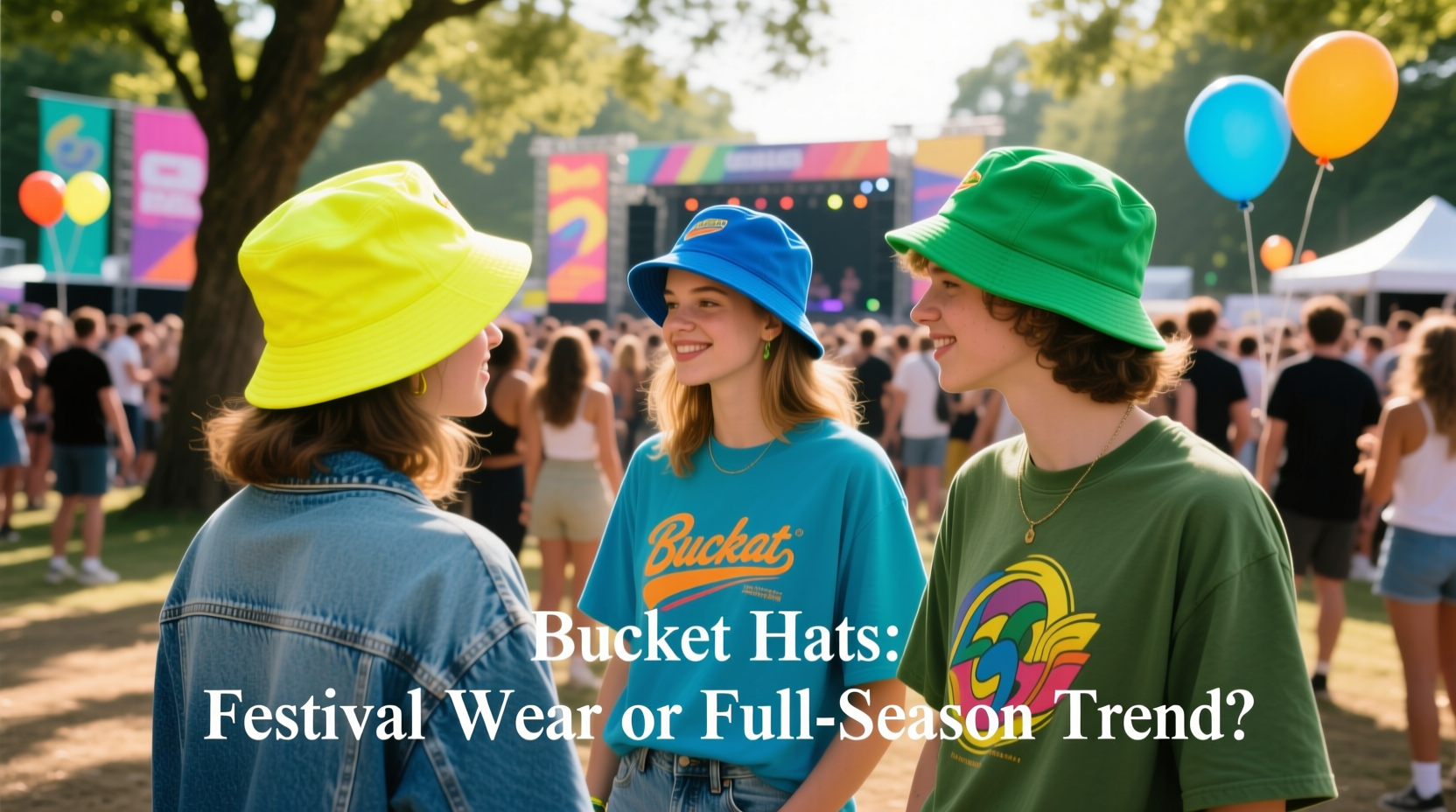
Bucket hats have long occupied a curious space in fashion—alternating between cult favorite and seasonal fad. Once dismissed as relics of the '90s or niche accessories for music festivals, they’ve resurfaced on city streets, runways, and social media feeds. But is this resurgence a fleeting trend or a genuine wardrobe staple reborn? The answer lies beyond aesthetics; it's rooted in cultural shifts, celebrity influence, and evolving definitions of casual style.
Today’s bucket hat isn’t just about sun protection or blending into a crowd at Coachella. It’s become a canvas for self-expression, merging utility with bold design. From luxury reinterpretations by high-end designers to DIY customizations by Gen Z creators, the bucket hat has evolved far beyond its origins. To understand whether it's truly back in vogue or merely confined to festival culture, we need to examine its journey, current context, and real-world versatility.
The Evolution of the Bucket Hat: From Utility to Icon
Invented in the early 20th century for Irish fishermen, the original bucket hat—also known as an \"angler’s cap\"—was designed for function. Made from wool or waxed cotton, it featured a wide, downward-sloping brim that effectively shielded wearers from rain and wind. By mid-century, it had crossed into mainstream British rural fashion before gaining global attention through pop culture.
The 1980s and 1990s marked the hat’s first major fashion breakthrough. Hip-hop artists like LL Cool J and Run-D.M.C. adopted the look, pairing it with tracksuits and gold chains. Simultaneously, rave and electronic music scenes embraced brightly colored, logo-covered versions. This dual identity—urban cool meets underground subculture—laid the foundation for its modern appeal.
Fast forward to the 2020s: streetwear dominance, nostalgia-driven fashion cycles, and digital virality have reignited interest. Designers such as Jacquemus, Marine Serre, and Wales Bonner have reimagined the silhouette with premium materials and avant-garde shapes, elevating it from thrift-store find to runway statement.
“Fashion doesn’t repeat—it evolves. The bucket hat’s return reflects a broader shift toward functional yet expressive pieces.” — Naomi Chen, Senior Editor at *StyleScope Magazine*
Signs It’s More Than Just Festival Wear
While the image of a glitter-adorned bucket hat bouncing through a mosh pit remains iconic, several indicators suggest the accessory has broken free from seasonal associations:
- Year-Round Retail Presence: Major retailers like & Other Stories, COS, and Urban Outfitters now stock bucket hats across seasons—not just summer drops.
- Diverse Materials: Beyond nylon and mesh, you’ll find options in corduroy, felt, linen, and even recycled textiles, signaling adaptability to different climates and occasions.
- Celebrity Endorsement Off-Stage: Stars like Harry Styles, Bella Hadid, and Bad Bunny are regularly photographed wearing bucket hats during casual outings, not just performances.
- Gender-Neutral Appeal: Unlike many headwear trends, the bucket hat transcends gender norms, frequently appearing in unisex collections.
- Corporate Crossover: Tech startups and creative agencies have subtly normalized the look in semi-professional environments where dress codes lean relaxed.
Festival Roots: Why the Association Persists
Despite broader adoption, the festival connection remains strong—and for good reason. Music festivals have acted as incubators for experimental fashion, offering a judgment-free zone where bold choices thrive. Bucket hats fit perfectly within this ecosystem: practical for sun exposure, lightweight for dancing, and highly customizable.
Brands like Rokit, Junky Styling, and independent Etsy sellers cater specifically to this market, producing limited-run designs covered in psychedelic prints, embroidered slogans, or reflective trims. These versions prioritize personality over polish, reinforcing the idea that bucket hats belong in spaces of celebration and rebellion.
Moreover, TikTok and Instagram Reels amplify this perception. Hashtags like #FestivalOutfit and #CoachellaStyle consistently feature bucket hats in curated looks, often styled with crop tops, body chains, and platform boots. While visually compelling, this repetition skews public perception, making it harder for more understated iterations to gain recognition.
A Real Example: From Glastonbury to the Office
Take Sarah Kim, a 28-year-old graphic designer from Manchester. She bought her first bucket hat—a black denim version with red stitching—for Glastonbury 2022. Initially hesitant to wear it outside the festival grounds, she experimented after seeing a colleague pair a beige linen one with a trench coat.
Within months, Sarah integrated hers into daily rotation: navy for rainy commutes, straw for weekend markets, and a patchwork vintage piece for gallery visits. “It started as a costume,” she says, “but now it feels like part of my uniform. People even compliment me on rainy days when everyone else is squinting under hoods.”
Sarah’s experience illustrates how personal styling can redefine an item’s purpose. With intention, the bucket hat transitions from event-specific gear to a functional fashion layer.
How to Style Bucket Hats Beyond the Festival Grounds
To move past the stereotype, consider how material, color, and coordination affect perception. A neon sequined hat sends a very different message than a structured olive cotton version. The key is alignment with context.
| Occasion | Recommended Material | Styling Tips |
|---|---|---|
| Urban Commute | Cotton twill, Corduroy | Pair with oversized blazer, minimalist sneakers, and tote bag |
| Summer Errands | Straw, Linen | Wear with sleeveless knit top, wide-leg pants, and sandals |
| Casual Weekend | Nylon, Recycled Fabric | Match with cargo pants, graphic tee, and chunky boots |
| Outdoor Dining | Felt, Wool Blend | Combine with button-down shirt, chinos, and loafers |
Color selection also plays a critical role. Earth tones (khaki, charcoal, rust) blend seamlessly into everyday ensembles, while bright hues or patterns should be used strategically—as accent pieces rather than focal points unless confidence allows otherwise.
Step-by-Step Guide: Transitioning Your Bucket Hat Into Daily Wear
- Start Subtle: Choose a solid-color hat in a natural fabric that complements your existing wardrobe.
- Test in Low-Stakes Settings: Wear it to coffee runs or walks before trying it at work or social gatherings.
- Balance Proportions: If the hat has a deep crown, avoid bulky hairstyles or oversized outerwear that overwhelms the frame.
- Coordinate, Don’t Match: Echo one color from the hat elsewhere in your outfit (shoes, bag, socks), but avoid full monochrome unless intentional.
- Adjust Confidence Gradually: As compliments accumulate, experiment with bolder styles or combinations.
Checklist: Is Your Bucket Hat Ready for Everyday Rotation?
- ✅ Made from durable, seasonally appropriate fabric
- ✅ Free of excessive logos, rhinestones, or novelty graphics
- ✅ Complements at least three core items in your closet
- ✅ Fits comfortably without sliding or pinching
- ✅ Can be worn with both casual and semi-dressed-up outfits
- ✅ Doesn’t require special hair prep or accessories to style
Common Misconceptions Holding Back the Trend
Several myths still limit the bucket hat’s acceptance in mainstream wardrobes:
- “It’s only for hot weather.” False—felt and wool versions provide warmth and wind resistance in cooler months.
- “It makes you look lazy.” Context matters. A well-chosen hat adds intentionality; a sloppy one reinforces stereotypes.
- “It doesn’t suit all face shapes.” Most people can find a flattering version by adjusting crown depth and brim width.
- “Only young people can pull it off.” Ageless icons like Pharrell Williams and Tilda Swinton prove otherwise.
The truth is, any garment risks looking costumey if worn without consideration. The bucket hat demands no more effort than a beanie or baseball cap—it simply requires thoughtful integration.
FAQ: Addressing Common Questions
Can I wear a bucket hat to work?
Yes, depending on your workplace culture. In creative industries or casual offices, a refined bucket hat in neutral tones can complement a modern uniform. Avoid flashy prints or overly slouchy fits in formal settings.
How do I clean my bucket hat?
Care depends on material. Cotton and nylon hats can often be hand-washed with mild detergent and air-dried. Straw hats should be spot-cleaned with a damp cloth. Always check manufacturer labels to prevent damage.
Are bucket hats suitable for all genders?
Absolutely. The bucket hat has long been celebrated for its gender-neutral design. Its simplicity and coverage make it universally wearable, with increasing representation in unisex and non-binary fashion lines.
Conclusion: A Staple Reclaimed, Not Just Revived
The bucket hat is neither trapped in festival nostalgia nor riding a short-lived hype wave. Instead, it represents a larger movement toward versatile, expressive, and functional fashion. Its return isn’t about reliving the '90s or chasing clout—it’s about reclaiming an overlooked tool that bridges comfort and style.
Like the trench coat, the white sneaker, or the leather jacket, the bucket hat earns its place not through rarity, but through reliability. When chosen with care and styled with purpose, it becomes less of a statement and more of a signature.
🚀 Ready to rethink your hat game? Pull that dusty bucket hat from your drawer—or invest in a new one—and test it in an unexpected setting this week. Share your look online with #BeyondTheFestival and help redefine what this classic piece can be.