The Apple Watch lineup has evolved into two distinct branches: the sleek, everyday-focused Series 9 and the rugged, adventure-ready Ultra 2. While both run the same operating system and offer identical core functionality—heart rate monitoring, sleep tracking, notifications, and fitness features—they cater to very different lifestyles. For the average user who walks the dog, checks emails, and occasionally hits the gym, the question arises: is the premium price and bulkier design of the Ultra 2 justified? Or does the Series 9 deliver everything a casual user needs without compromise?
This isn’t just about specs or aesthetics—it’s about value alignment. Choosing between these models means understanding how your daily habits intersect with what each device offers. Let’s break down the key differences and evaluate whether the Ultra 2’s rugged capabilities are essential or overkill for non-extreme users.
Design and Build: Rugged vs Refined
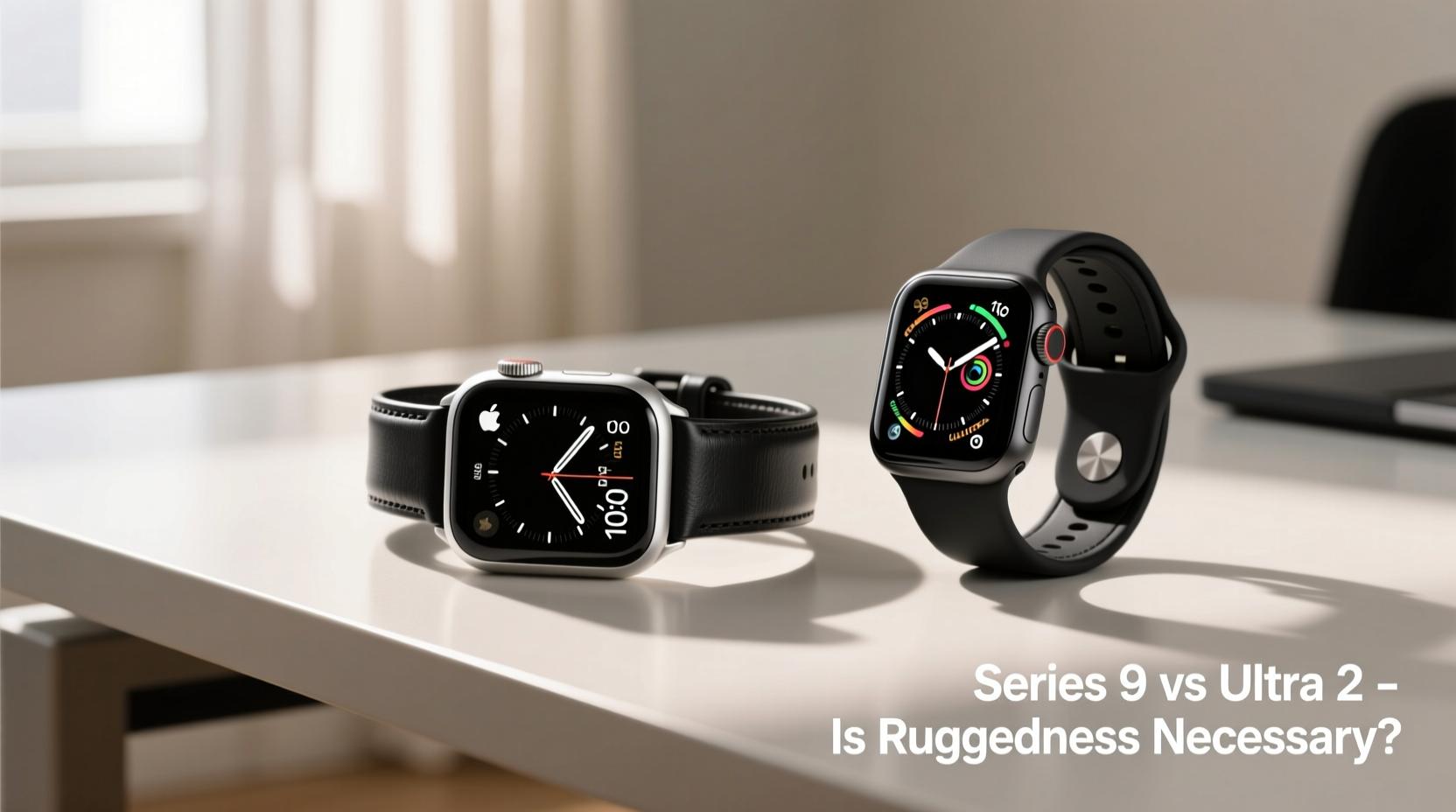
The most immediate difference between the Series 9 and Ultra 2 lies in their physical presence. The Series 9 maintains Apple’s minimalist aesthetic: aluminum or stainless steel casing, a rounded titanium back, and a compact footprint. It comes in 41mm and 45mm sizes, making it suitable for smaller wrists and formal attire.
In contrast, the Ultra 2 is built like a tool watch. Encased in aerospace-grade titanium, it measures 49mm across and features a flat, rotating action button on the side, a thicker bezel, and deeper lugs designed to withstand harsh environments. It’s nearly 20% heavier than the Series 9 and commands attention—not always in a subtle way.
Tip: If you wear dress shirts regularly or prefer discreet tech, the Series 9 blends seamlessly; the Ultra 2 may feel out of place in professional or formal settings.Both watches are water-resistant—up to 50 meters—but the Ultra 2 goes further with EN 13319 dive certification, allowing scuba use up to 40 meters. It also includes a built-in depth sensor and an accompanying Compass app feature that logs your descent and ascent rates. For swimmers, this is impressive. For someone who showers with their watch, it’s irrelevant.
Battery Life: Where the Ultra 2 Shines
One of the Ultra 2’s standout advantages is battery life. Apple claims up to 36 hours under normal use, extendable to 72 hours in Low Power Mode. In real-world testing, many users report getting 2–3 full days depending on usage intensity. This makes it ideal for weekend trips, hiking excursions, or situations where charging isn’t convenient.
The Series 9, by comparison, lasts about 18–36 hours and requires nightly charging for most users. While fast charging helps (reaching 80% in around 45 minutes), the need to plug in daily can be inconvenient for travelers or those with inconsistent routines.
For casual users, this gap matters less if you already have a charging routine at night. But consider scenarios: attending a conference, going camping, or simply forgetting your charger on vacation. The Ultra 2’s endurance becomes a genuine quality-of-life upgrade—even if you’re not climbing mountains.
“Battery anxiety is one of the top reasons smartwatch users revert to analog timepieces. The Ultra 2 reduces that friction significantly.” — David Lin, Wearable Tech Analyst at GadgetInsight
Performance and Features: Nearly Identical Core Experience
Under the hood, both watches run on Apple’s S9 chip with on-device Siri processing and improved voice recognition. They support all major health sensors: ECG, blood oxygen monitoring, fall detection, temperature sensing (for cycle tracking), and advanced heart rate algorithms.
Workout tracking is comprehensive on both. Whether you're walking, cycling, swimming, or doing yoga, the experience is virtually indistinguishable. GPS accuracy is excellent on the Ultra 2 thanks to dual-frequency support, which improves location lock in dense urban areas or forested trails. The Series 9 uses single-frequency GPS, which works well but may lag slightly in challenging conditions.
The Ultra 2 adds a few niche tools: an altimeter with barometric calibration, a brighter 3,000-nit display (vs. 2,000 nits on Series 9), and a precision compass with waypoint navigation. These are invaluable for hikers, climbers, or sailors—but rarely used by office workers or parents managing school drop-offs.
Feature Comparison Table
| Feature | Apple Watch Series 9 | Apple Watch Ultra 2 |
|---|---|---|
| Display Brightness | 2,000 nits peak | 3,000 nits peak |
| Battery Life | Up to 18–36 hours | Up to 36–72 hours |
| GPS Type | Single-frequency | Dual-frequency |
| Water Resistance | 50 meters (WR50) | EN 13319 certified (dive-rated) |
| Case Material | Aluminum / Stainless Steel | Aerospace Titanium |
| Special Buttons | None | Action Button (customizable) |
| Compass Features | Basic heading | Waypoint navigation, backtrack |
| Price (Starting) | $399 | $799 |
Real-World Use Case: Sarah’s Commute vs. Mark’s Weekend Hikes
Sarah, a marketing manager in Chicago, uses her watch primarily for calendar alerts, step tracking, and receiving messages during her commute. She wears it from morning coffee to evening dinner, often pairing it with business attire. Her routine involves walking to the train, sitting at a desk, and checking notifications throughout the day. She charges her watch every night while brushing her teeth.
She upgraded from a Series 6 to a Series 9 and noticed faster response times and better sleep tracking—but nothing transformative. When she tried a friend’s Ultra 2, she found it too bulky under her sleeve and unnecessary for her lifestyle. “It felt like wearing a mini flashlight on my wrist,” she said.
Mark, a landscape photographer based in Colorado, uses his Ultra 2 during multi-day backpacking trips. He relies on the long battery life, precise GPS for geotagging shots, and the ability to mark waypoints when exploring remote areas. During a recent trip to the Rockies, his Ultra 2 guided him back to camp after losing the trail—something he doesn’t believe the Series 9 could’ve handled as reliably.
Their experiences highlight a critical insight: the Ultra 2 isn’t inherently “better” across the board. It’s *optimized* for specific demands. For casual users like Sarah, its strengths go largely unused. For adventurers like Mark, they’re indispensable.
Cost-Benefit Analysis for Casual Users
The Ultra 2 starts at $799—double the entry price of the Series 9. That extra $400 buys you enhanced durability, longer battery, brighter screen, and outdoor-specific tools. But if you don’t hike, dive, ski, or travel off-grid, most of these remain dormant features.
Consider what you’d actually use:
- Do you leave your house without reliable access to power for more than a day?
- Are you frequently in direct sunlight where screen visibility matters?
- Do you engage in activities requiring precise elevation or directional tracking?
- Have you damaged previous watches due to drops or impacts?
If most answers are no, the Series 9 delivers equal performance in health, communication, and fitness tracking at half the cost. You’re paying a premium for capabilities you won’t leverage.
Tip: If budget-conscious, consider the Series 9 with cellular—it gives you freedom from your phone without the Ultra’s size or price.When the Ultra 2 Makes Sense for Non-Extremists
There are edge cases where even casual users benefit from the Ultra 2:
- Frequent travelers: Those who fly often appreciate the extended battery during layovers or international trips where outlets are scarce.
- Outdoor enthusiasts: Even weekend kayakers or trail walkers gain from the compass and GPS accuracy.
- Users with larger wrists: Some find the Ultra 2’s size more proportional and comfortable than the Series 9.
- Those prioritizing durability: If you’ve cracked screens before, the sapphire crystal and reinforced case offer peace of mind.
However, these are exceptions rather than norms. Most people don’t need military-grade toughness for grocery runs or Zoom meetings.
Checklist: Should You Choose the Ultra 2?
- ✅ Do you spend multiple days away from chargers regularly?
- ✅ Will you use hiking, diving, or skiing modes weekly?
- ✅ Do you work or exercise in extreme environments (heat, cold, water)?
- ✅ Is screen visibility in bright sunlight a frequent issue?
- ✅ Are you willing to pay double for features you might rarely use?
If three or more apply, the Ultra 2 may be worth it. Otherwise, the Series 9 remains the smarter choice.
Frequently Asked Questions
Can I use the Ultra 2 as a daily driver if I’m not athletic?
Absolutely. The Ultra 2 functions perfectly as a primary smartwatch. However, its size and weight may feel excessive for some, and its design leans sporty. If subtlety matters, the Series 9 is more versatile.
Does the Series 9 lack any key health features compared to the Ultra 2?
No. Both include ECG, blood oxygen, temperature sensing, fall detection, and crash detection. The only difference is structural resilience and environmental sensors, not medical monitoring.
Is the Action Button useful for everyday tasks?
Possibly. You can customize it to start workouts, launch a timer, or trigger shortcuts. Some users assign it to activate meditation or begin a podcast. It’s convenient but not essential—easily replicated via voice or tap controls on the Series 9.
Final Verdict: Rugged Isn���t Required for Routine
The Apple Watch Ultra 2 is an exceptional device—one of the most capable smartwatches ever made. But excellence doesn’t always equate to necessity. For casual users, the Series 9 provides the full Apple Watch experience: seamless integration with iPhone, robust health tracking, elegant design, and sufficient battery for daily rhythms.
The Ultra 2’s ruggedness solves problems most people don’t face. Its value emerges only when pushed beyond typical urban or suburban routines. Unless you routinely venture into environments where durability, navigation, and endurance are critical, the Series 9 is not just adequate—it’s optimal.
Choosing the right watch isn’t about having the most advanced model. It’s about matching technology to lifestyle. The Series 9 does that brilliantly for everyday users. The Ultra 2 excels in extremes. Knowing the difference ensures you invest wisely—in both money and comfort.
💬 Still unsure which Apple Watch fits your life? Reflect on your last week: did you need a dive computer, GPS waypoints, or three-day battery? If not, the Series 9 likely covers all your needs—without the bulk or price tag.