
Dancing in heels can be empowering, elegant, and stylish—but only if your shoes stay securely on your feet. Nothing disrupts a night out faster than constantly adjusting slipping footwear. When it comes to choosing between ankle strap heels and slingbacks, many people assume they’re interchangeable. In reality, their structural differences significantly impact stability, especially during movement. This guide breaks down how each style performs under dynamic conditions, helping you make an informed decision based on function, not just fashion.
Understanding the Structural Differences
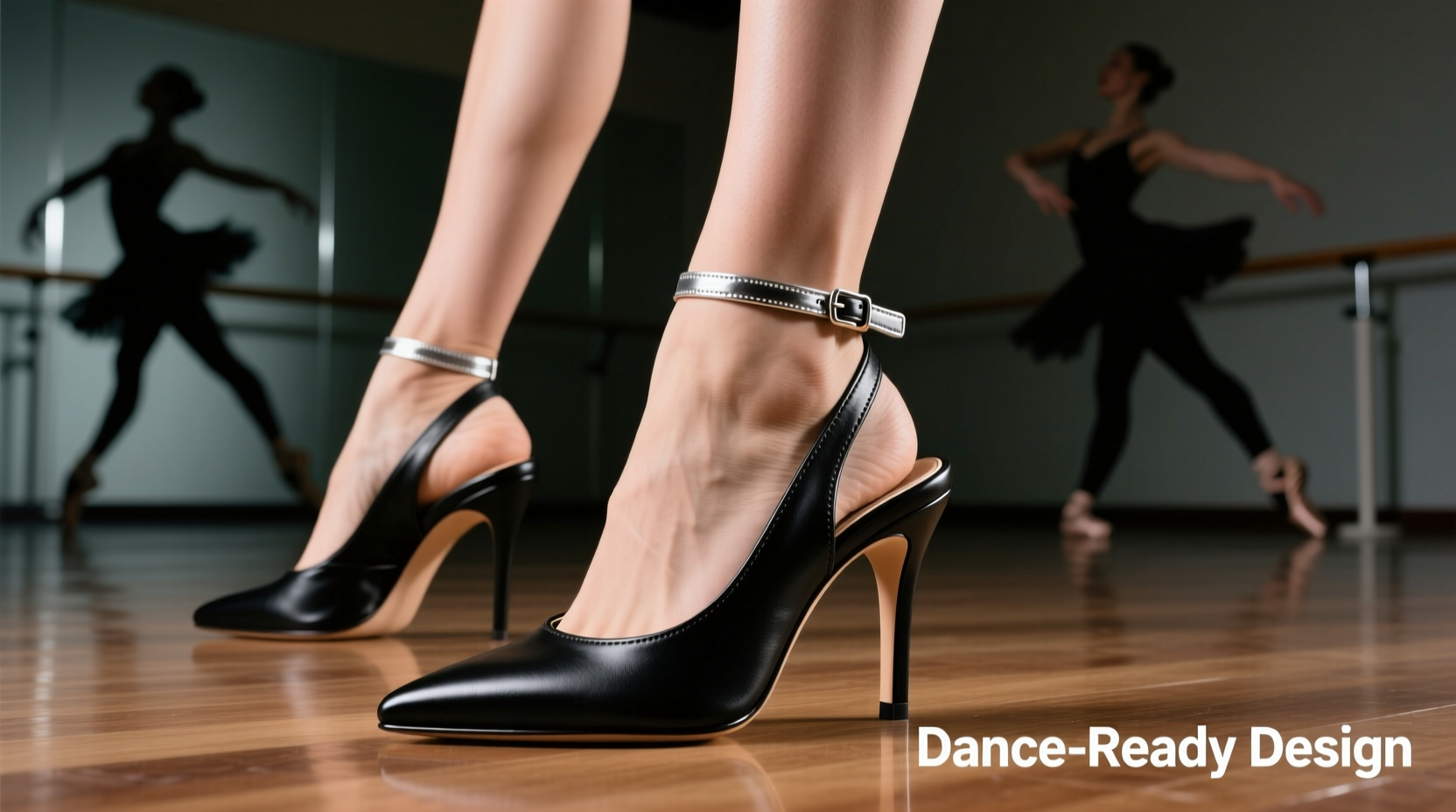
The distinction between ankle strap heels and slingbacks lies in where and how they secure the foot. Ankle strap heels feature a band that wraps around the ankle, typically fastened with a buckle or elastic closure just above the heel. Slingbacks, by contrast, have a narrow strap that loops over the back of the heel and connects to the shoe’s upper, usually secured by tension or a small buckle at the instep.
Ankle straps provide external anchoring, creating a fixed point around the lower leg. This design limits vertical lift and lateral slippage. Slingbacks rely more on pressure from the Achilles tendon and the natural shape of the heel to hold the shoe in place. While sleek and minimal, this makes them inherently less stable during high-motion activities like dancing.
Tip: If your heel lifts even slightly when walking, a slingback will likely slip during dancing—opt for an ankle strap instead.Performance Comparison: Stability During Movement
To assess which shoe type stays on better while dancing, consider three key factors: grip, range of motion, and resistance to dislodging forces.
- Grip: Ankle straps offer superior grip because they encircle the ankle bone (the malleolus), a bony prominence that acts as a natural anchor. The strap doesn’t rely solely on friction—it mechanically locks the foot into position.
- Range of Motion: Slingbacks allow greater freedom of movement at the ankle joint, which may feel comfortable during casual wear but increases the risk of the heel escaping during pivots, twirls, or quick steps.
- Dislodging Forces: Dancing involves repeated upward force as the ball of the foot pushes off the ground. This motion naturally tries to eject the heel from the shoe. Ankle straps counteract this by distributing force across the strap and leg, whereas slingbacks depend entirely on the tension of the back strap, which can stretch or loosen over time.
“During choreographed routines, dancers consistently choose ankle-secured footwear over open-back styles. The mechanical advantage is undeniable.” — Lena Torres, Professional Dance Instructor & Footwear Consultant
Fit and Foot Shape Considerations
No shoe performs well if it doesn’t fit properly. However, certain foot types are more compatible with one style than the other.
Narrow heels or low-volume feet often struggle with slingbacks because there isn't enough flesh to create friction against the strap. The shoe tends to \"swim\" off the heel with every step. Ankle straps solve this by cinching snugly around the narrower circumference of the ankle rather than relying on heel width.
Conversely, people with wider ankles or high insteps might find ankle straps uncomfortable or difficult to adjust. In such cases, a well-fitted slingback with a padded heel cup and non-slip insole can offer a viable alternative—provided the activity isn’t too vigorous.
| Foot Type | Best Shoe Choice | Rationale |
|---|---|---|
| Narrow Heel | Ankle Strap Heel | Prevents heel lift; strap secures at ankle, not heel |
| High Instep | Slingback (with stretch panel) | Avoids tightness across top of foot |
| Wide Ankle | Slingback or T-Strap | Ankle straps may pinch or gap |
| Low Arch | Ankle Strap (with cushioned sole) | Extra support reduces fatigue during prolonged standing/dancing |
Real-World Test: A Night Out on the Dance Floor
Maria, a 32-year-old event planner, regularly attends weddings and club events where dancing is inevitable. At a recent outdoor summer wedding, she wore her favorite black slingback stilettos—elegant, mid-height, with a delicate silver buckle. By the third song, she noticed her right shoe slipping with each spin. After stepping on loose gravel during a dip, the heel fully detached, forcing her to sit out the rest of the evening.
The following weekend, she switched to a pair of nude ankle strap block heels. Though slightly bulkier in design, they stayed firmly in place throughout hours of salsa and line dancing. “I didn’t touch my shoes once,” she said. “Even when I kicked up my heels—literally—I never worried about losing them.”
This experience highlights a recurring theme: aesthetic appeal often overrides functional testing until it's too late. Maria now keeps both styles in her wardrobe but reserves slingbacks for seated events or short walks. For any occasion involving extended movement, she defaults to ankle straps.
Step-by-Step Guide to Choosing the Right Heel for Dancing
Selecting the ideal heel isn’t just about style or height—it’s about engineering your comfort and confidence into the design. Follow these steps to ensure your shoes stay on all night:
- Assess the Event Type: Will you be standing for long periods? Dancing? Walking on uneven surfaces? High-intensity environments demand secure closures.
- Measure Your Heel Width: Trace your foot on paper and measure the narrowest part of your heel. If it’s less than 3 inches, slingbacks are high-risk.
- Test the Closure Mechanism: Try on both styles. Walk, pivot, and rise onto your toes. Does the heel lift? Does the strap dig or slide?
- Check Material Flexibility: Leather slingbacks mold slightly over time, improving fit. Synthetic materials offer no give and increase slippage.
- Consider Heel Height and Base: Lower, wider heels (like blocks or wedges) paired with ankle straps offer maximum stability. Avoid needle heels with slingbacks unless wearing for very brief periods.
- Add Non-Slip Enhancements: Use gel heel grips or adhesive pads inside slingbacks to reduce movement—even if switching to ankle straps long-term.
Expert Recommendations and Industry Insights
Fashion designers and podiatrists alike emphasize that security should precede style when selecting footwear for active use. Dr. Rebecca Lin, a certified pedorthist, explains: “The ankle is a hinge joint designed for controlled motion. Open-back shoes disrupt proprioception—the body’s sense of foot positioning—which increases fall risk during rhythm changes.”
She recommends ankle straps for anyone engaging in repetitive foot movement, noting that the added support reduces strain on the plantar fascia and calf muscles. “It’s not just about staying on the foot,” she says. “It’s about maintaining alignment and reducing fatigue.”
Shoe designers have responded to this need. Many modern ankle strap styles now incorporate elasticized bands, memory foam padding, and adjustable hardware to combine security with comfort. Some brands even market “dance-proof” heels explicitly engineered for weddings and nightlife.
“The future of evening footwear is functional elegance. We’re seeing more hybrid designs—like hidden ankle supports in slingback silhouettes—that blend aesthetics with performance.” — Marco Delvecchio, Footwear Designer at Lume & Co.
Do’s and Don’ts: Quick Reference Table
| Action | Do | Don’t |
|---|---|---|
| Choosing for dancing | Pick ankle straps with adjustable buckles | Wear flat slingbacks with no heel retention |
| Finding the right fit | Ensure snugness at ankle without cutting circulation | Size up to accommodate swelling—use inserts instead |
| Enhancing grip | Apply silicone heel grips or double-sided tape | Use duct tape or makeshift adhesives that damage shoes |
| Breaking in shoes | Wear them around the house with similar socks/hosiery | Wait until the event day to wear them for the first time |
| Long-term care | Store with shoe trees to maintain shape | Leave in hot cars or damp areas where materials degrade |
Frequently Asked Questions
Can I modify slingbacks to stay on better while dancing?
Yes, though with limitations. You can add adhesive heel grips, apply double-sided fashion tape, or install a clear elastic “secret strap” that stretches under the arch. These improve retention but don’t match the mechanical security of a true ankle strap. They’re best used as temporary fixes for occasional wear.
Are ankle strap heels less fashionable than slingbacks?
Not anymore. Once seen as clunky or dated, ankle strap heels have undergone a major design renaissance. Contemporary versions feature minimalist bands, metallic finishes, cut-out details, and transparent materials that maintain elegance while enhancing function. Many red carpet and runway looks now showcase ankle straps as statement pieces.
What heel height is safest for dancing?
For most people, a heel between 2 and 3 inches offers the best balance of style and stability. Heights above 3.5 inches shift weight excessively onto the forefoot, increasing pressure and instability. Block heels or stacked wood/metal bases provide more surface area than stilettos, reducing sinking on soft floors and improving balance during turns.
Final Thoughts: Prioritize Function Without Sacrificing Style
The choice between ankle strap heels and slingbacks ultimately hinges on what you value most: fleeting elegance or enduring performance. While slingbacks exude vintage glamour and work beautifully for seated dinners or short outings, they simply cannot compete with the reliable hold of an ankle strap when movement is involved.
Dancing requires coordination, energy, and presence of mind. The last thing you should worry about is whether your shoe will survive the next spin. Modern ankle strap designs prove that safety and sophistication aren’t mutually exclusive. With thoughtful selection, proper fit, and a few smart enhancements, you can glide across the dance floor with confidence—both in your steps and your shoes.
💬 Have a go-to dance heel that never fails you? Share your favorite brand, style, or hack in the comments—your tip could help someone avoid a shoe disaster tonight!








