Limited edition sneaker collaborations have become cultural phenomena—especially those tied to anime franchises like *Dragon Ball Z*, *Naruto*, or *Demon Slayer*. These releases often sell out in seconds, resell for hundreds or thousands above retail, and dominate social media timelines. But beneath the hype lies a practical question: Are these shoes actually wearable? Or are they just collectible art pieces disguised as functional footwear?
This isn’t just about fashion—it’s about function. For many consumers, a sneaker must serve dual roles: it should look good *and* feel good after hours on their feet. While regular sneaker collaborations (like Nike x Off-White or Adidas x Pharrell) already walk the line between aesthetics and performance, anime-themed editions often prioritize visual storytelling over ergonomics. So what happens when fandom meets footwear engineering?
The Hype Economy vs. Real-World Wearability
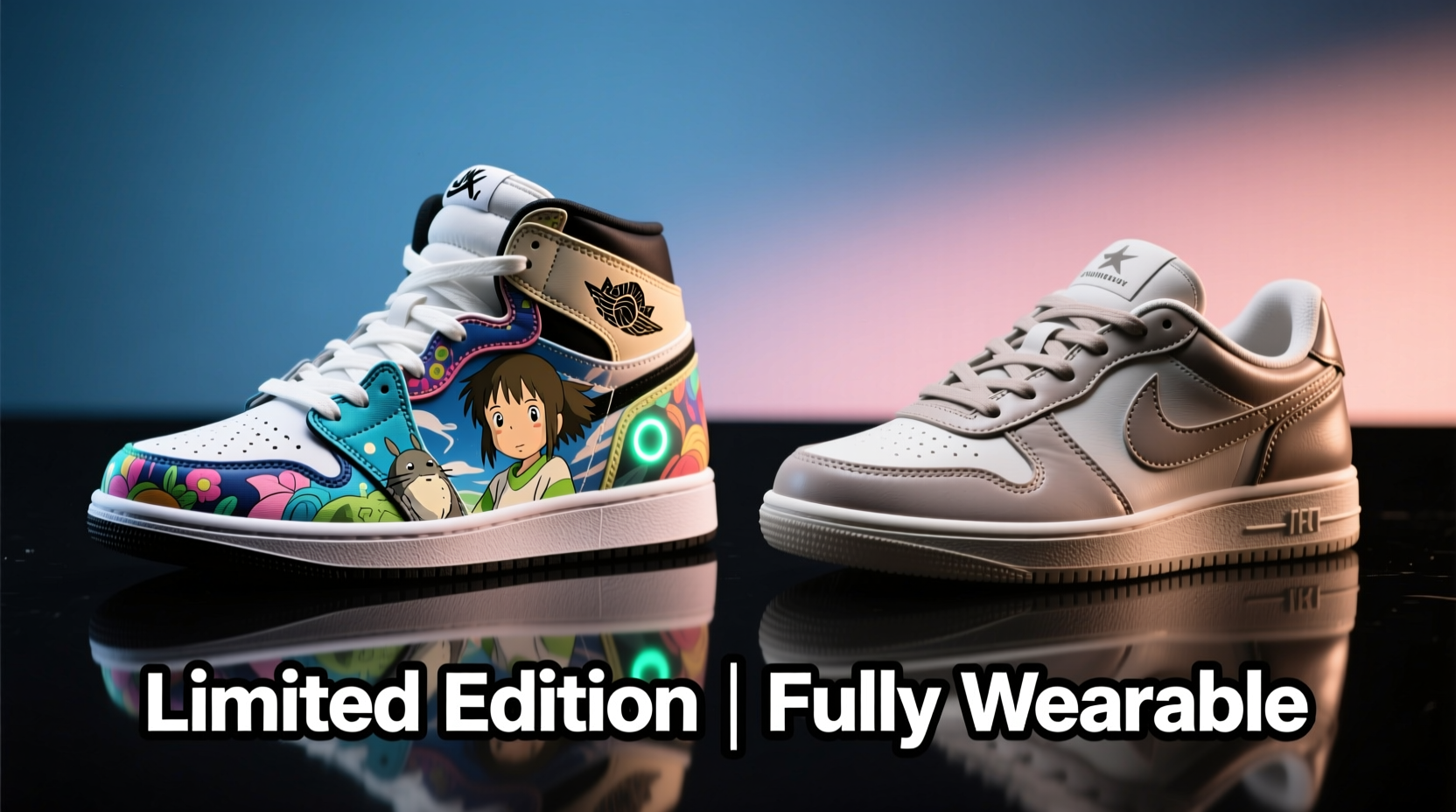
Anime sneaker collabs thrive in the hype economy. Limited runs, exclusive distribution channels, and deep emotional ties to beloved characters create perfect conditions for viral demand. Brands like Puma, Converse, and even New Balance have partnered with studios such as Toei Animation and Shueisha to produce detailed designs that replicate iconic scenes, character colorways, or even dialogue text.
But scarcity doesn’t guarantee comfort. In fact, some of the most sought-after anime sneakers sacrifice cushioning, breathability, and sole flexibility for design fidelity. A pair might feature embroidered flames from *Naruto’s* Rasengan attack or translucent soles showing tiny illustrations—but at the cost of structural support.
“Collectors often treat these drops like trading cards with laces. The moment they step outside wearing them, they risk damage that impacts resale value.” — Marcus Lin, Streetwear Analyst at TrendSignal
This mindset creates a paradox: the more desirable a shoe is, the less likely it is to be worn regularly. Instead, many end up preserved in display boxes, rotated seasonally, or stored in climate-controlled units—more akin to museum artifacts than daily drivers.
Design Priorities: Storytelling Over Support
Anime collaborations lean heavily into narrative elements. Take the Nike SB Dunk Low “Sasuke Uchiha” from *Naruto*. The shoe features purple suede reminiscent of Sasuke’s outfit, Sharingan symbols on the heel, and a fire motif on the midsole representing his clan’s destruction. Visually, it’s stunning. Functionally, however, it uses standard SB foam without modern impact protection systems found in performance models.
Compare this to a non-anime collaboration like the Nike Air Zoom Alphafly NEXT%, designed with elite runners in mind. Even lifestyle-focused collabs such as Adidas x Gucci integrate premium materials not just for looks, but also improved lining, footbeds, and arch construction.
In anime sneakers, design choices often override biomechanical considerations:
- Stiff overlays: Embellishments like metallic prints or thick embroidery reduce upper flexibility.
- Non-breathable materials: Synthetic leathers dominate for print durability, increasing heat retention.
- Flat insoles: Many lack removable or cushioned footbeds, making long-term wear uncomfortable.
- Narrow fits: Some Japanese-inspired sizing runs small, leading to toe-box pressure.
Comparative Analysis: Anime Collabs vs. Regular Collaborations
| Feature | Anime-Themed Sneakers | Regular Fashion/Designer Collabs |
|---|---|---|
| Primary Goal | Fandom celebration, visual storytelling | Style innovation, brand synergy |
| Production Quantity | Extremely limited (often under 10k pairs) | Limited to mid-tier runs (10k–50k) |
| Comfort Technology | Rarely includes advanced cushioning | Often integrates latest foams, Flyknit, Boost, etc. |
| Upper Materials | Suede, synthetic leather, printed textiles | Technical knits, recycled fabrics, premium leathers |
| Average Resale Markup | 200%–800% above retail | 50%–300% above retail |
| Daily Wear Viability | Moderate to low (due to fragility/design focus) | High (designed for visibility + wearability) |
The data shows a clear divergence: anime sneakers are optimized for emotional resonance and exclusivity, while regular designer collabs balance aesthetic ambition with wear-tested functionality.
Real-World Example: Wearing the Puma x Jujutsu Kaisen Collection
Jayden Tan, a 28-year-old graphic designer from Los Angeles, copped the Puma x *Jujutsu Kaisen* Future Rider pack during its 2023 release. Excited to rep his favorite series, he wore the Gojo Satoru–inspired white-and-blue model to work the next day.
By noon, he was experiencing discomfort. “The tongue was stiff, almost cardboard-like,” he said. ���And the rubber sole didn’t absorb any shock walking from the metro station. I had to switch to my backup shoes by lunch.”
He still loves the design—the glowing blue accents under UV light, the ‘Infinity’ symbol on the heel—but now reserves them for short outings or photo shoots. “They’re conversation starters, not commuters,” he concluded.
This case illustrates a growing trend: fans want to express identity through footwear, but physical limitations prevent all-day use. It raises an important question—should we judge these sneakers by athletic standards, or accept them as wearable art?
When Limited Editions Work as Daily Footwear
Not all anime collabs fail the wearability test. Some brands are beginning to bridge the gap between fandom and function. The Asics x *Sailor Moon* GT-2160, for instance, leverages a proven running silhouette known for its GEL cushioning and breathable mesh. Though adorned with moon motifs and pastel hues, it maintains structural integrity and supportive geometry.
Likewise, Vans has maintained strong wearability across its *One Piece* and *My Hero Academia* lines by sticking to classic skate shoe platforms. The canvas uppers may fade or scuff, but the vulcanized soles and padded collars provide reliable comfort for urban environments.
The key differentiator? Using established, performance-proven silhouettes as the base. When brands retrofit existing comfortable models instead of creating one-off fashion statements, wearers get both style and substance.
Actionable Checklist: Evaluating Wearability Before Copping
- Research the base model: Is it built on a known comfortable platform (e.g., GT-2160, Ultraboost, Air Force 1)?
- Check material composition: Look for mesh panels, memory foam insoles, or flexible outsoles.
- Read wearer reviews: Search forums like Reddit’s r/streetwear or YouTube for long-term feedback.
- Assess your usage: Will you walk more than 5,000 steps per day in them?
- Consider maintenance: Can the materials handle rain, dirt, or frequent cleaning?
- Evaluate fit consistency: Does the brand run true to size, or do you need to size up?
The Collector’s Dilemma: Preserve or Use?
For many buyers, the decision isn’t whether a shoe is wearable—it’s whether it *should* be worn at all. A mint-condition anime sneaker can appreciate significantly over time, especially if linked to a culturally pivotal moment (e.g., the final arc of a popular series).
Platforms like StockX and GOAT show consistent growth in resale value for select anime pairs, particularly those tied to global hits like *Demon Slayer* or *Attack on Titan*. This financial incentive discourages actual use. After all, every crease, scuff, or stain reduces potential profit.
Yet there’s a counter-movement gaining traction: “wear-the-drop” culture. Enthusiasts argue that sneakers are meant to be lived in, not locked away. Social media accounts like @weartoeverything showcase fans styling rare anime kicks with streetwear, hiking trails, or even gym sessions.
There’s no right answer. But understanding your intent—collector, enthusiast, or daily wearer—helps determine which releases align with your goals.
FAQ: Your Questions Answered
Can I wash anime sneakers without damaging the artwork?
Proceed with caution. Most specialty prints and embroideries aren’t machine-wash safe. Use a soft brush, mild soap, and spot-clean only. Avoid soaking, as water can bleed dyes or weaken adhesives beneath graphic layers.
Do anime collabs ever get re-released?
Rarely. Due to licensing agreements with anime studios, most collaborations are one-time-only. Reissues require renegotiating rights, which many brands avoid due to complexity and cost. This permanence fuels urgency at launch.
Are there any anime sneakers with good arch support?
Yes, but they’re exceptions. The Asics x *Sailor Moon* and certain New Balance x *Evangelion* models include molded footbeds and medial posts for stability. Always verify specs before purchase—don’t assume support based on brand reputation alone.
Final Verdict: Wearable Art or Functional Gear?
Anime sneakers occupy a unique space between devotion and design. They celebrate stories that shaped a generation, turning personal nostalgia into tangible expression. But as fashion objects, they often fall short of the ergonomic standards set by both athletic and high-end collaborative footwear.
That doesn’t make them unworthy. It simply means they serve a different purpose. For collectors, they’re trophies. For stylists, they’re statement pieces. And for the rare few who find a well-cushioned, durable anime model? They’re the holy grail—a shoe that honors passion without punishing the feet.
The truth is, “wearable” depends on context. If wearing means stepping out for coffee and snapping photos, many anime sneakers pass the test. If it means commuting, standing for hours, or traveling, most will disappoint without modifications like aftermarket insoles or protective sprays.
Meanwhile, regular sneaker collaborations continue to refine the blend of form and function. Their appeal isn’t rooted in nostalgia, but in innovation—materials science, inclusive sizing, sustainable production. They’re built to be seen *and* used.
Conclusion: Choose With Intention
Before copping your next anime sneaker drop, ask yourself: Am I buying this to wear, or to own? There’s no shame in either choice. But clarity prevents disappointment.
If comfort matters, prioritize models built on proven platforms. If preservation is key, invest in odor absorbers, shoe trees, and UV-protective cases. And if you’re caught between fandom and function, consider rotating your anime kicks—wear them occasionally, savor the connection, then store them properly.
💬 What’s your take? Do you wear your anime sneakers or keep them boxed? Share your experience and help others navigate the line between hype and habit.