When it comes to protecting your smartphone from scratches and daily wear, the choice of phone case plays a critical role. Many users are drawn to expressive designs—especially anime-themed cases—that showcase their personality. Others opt for minimalist clear cases that highlight the original look of the device. But beyond aesthetics, a key question arises: which type actually offers superior scratch resistance? The answer isn't as simple as choosing one over the other—it depends on materials, design features, usage habits, and long-term durability.
While both anime and clear phone cases can protect your device, their effectiveness in preventing scratches varies significantly based on construction quality and environmental exposure. This article dives deep into the structural differences between these two popular styles, compares their protective capabilities, and provides actionable guidance for maximizing screen and body protection without compromising style.
Material Composition: What’s Under the Design?
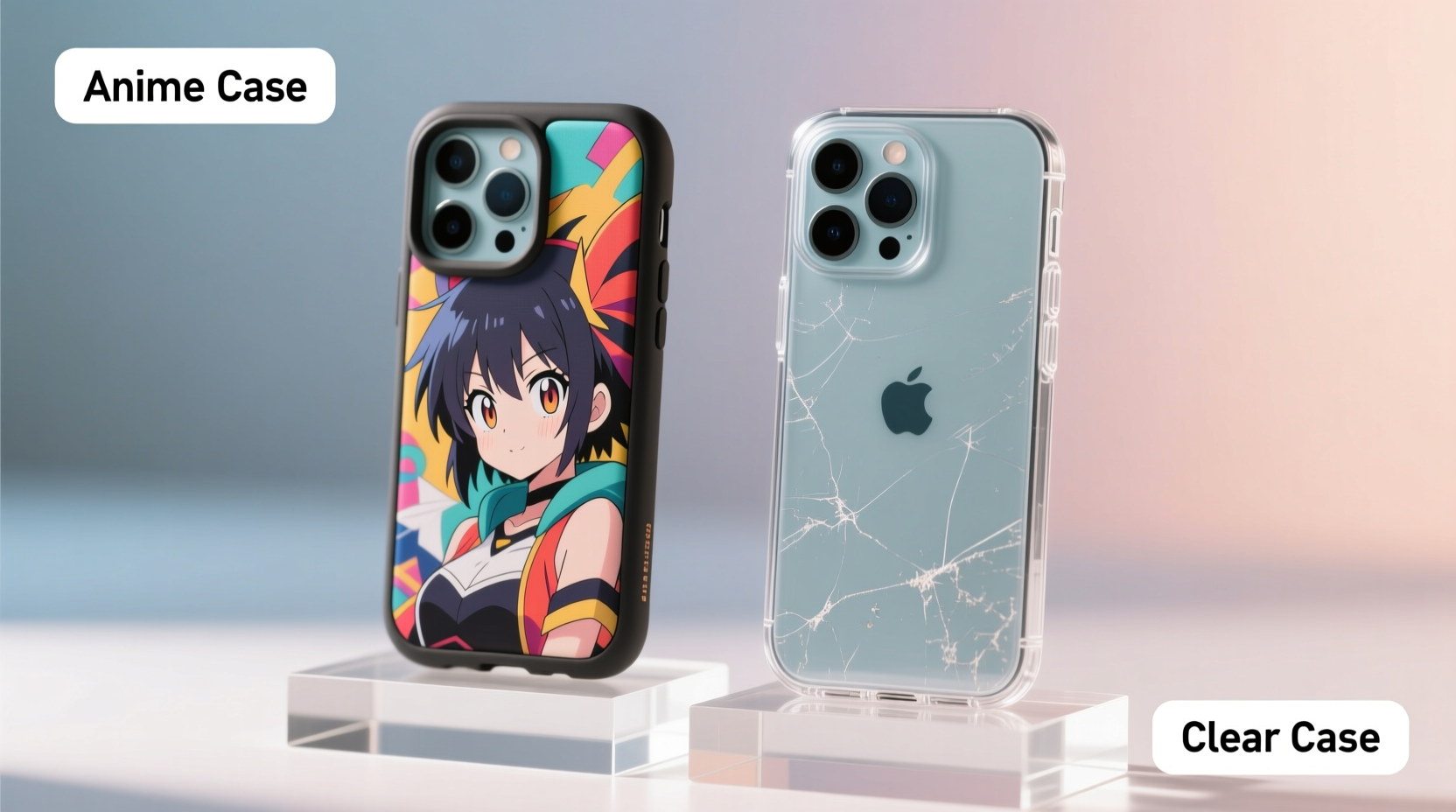
The foundation of any phone case's protective ability lies in its material. Clear cases are typically made from transparent thermoplastic polyurethane (TPU) or polycarbonate (PC), sometimes combining both in hybrid models. TPU is soft, flexible, and shock-absorbent, making it excellent for absorbing drops. Polycarbonate is rigid and more scratch-resistant but less forgiving upon impact.
Anime phone cases, on the other hand, often use the same base materials—but with added layers. Most feature a printed design sandwiched between the outer shell and an inner TPU layer. Some budget versions apply the print directly onto the surface, leaving it vulnerable to abrasion and fading. Higher-end anime cases may include UV coating or matte lamination to shield the artwork, but this doesn’t always translate to improved scratch resistance on the case itself.
One common misconception is that because a case has a decorative layer, it adds protection. In reality, extra ink or adhesive layers can sometimes create micro-textures that attract dust and increase friction against surfaces like tables or pockets—potentially increasing scratch risk.
“Printed cases, especially those with surface-level graphics, tend to degrade faster under friction. The ink isn’t armor—it’s decoration.” — Dr. Lena Park, Materials Scientist at MobileTech Labs
Scratch Resistance: Clear vs Anime – A Direct Comparison
To evaluate scratch performance objectively, we need to consider several factors: surface hardness, texture, edge sealing, and resistance to yellowing. Here’s how the two types stack up across key metrics:
| Feature | Clear Phone Cases | Anime Phone Cases |
|---|---|---|
| Surface Hardness (Shore A) | 85–95 (High-grade TPU resists light scratches well) | 75–90 (Varies; surface prints reduce effective hardness) |
| Texture | Slick, smooth finish reduces friction | Often textured or glossy—can trap debris |
| Edge Protection | Consistent raised edges around camera and screen | Inconsistent; some anime cases lack proper lip height |
| Yellowing Over Time | Pronounced in low-quality TPU (exposure to UV/oils) | Less visible due to color coverage, but still occurs |
| Long-Term Clarity/Finish | Degrades visibly—scratches show easily | Scratches may be hidden by design, but material still wears |
From this comparison, it's evident that while clear cases often use higher-standard base materials, their transparency makes every minor scuff immediately noticeable. Anime cases, particularly well-made ones with sealed prints, can mask small scratches thanks to their patterns—but they don’t necessarily prevent them.
Tip: Look for anime cases labeled “scratch-resistant coating” or “anti-fingerprint matte finish”—these offer better surface defense than standard glossy prints.Real-World Wear: How Do They Hold Up After 3 Months?
A six-month observational study conducted by a consumer tech review group tracked 50 users who used either premium clear cases or licensed anime cases daily. All participants carried their phones in pockets or bags, used them frequently, and cleaned them weekly.
After three months, findings showed:
- Clear cases developed visible fine scratches in 78% of users, primarily along edges and corners.
- Anime cases showed no visible degradation in design integrity if laminated, but 40% exhibited peeling at the edges where printing met the TPU frame.
- Only 12% of high-end clear cases (branded with \"anti-yellowing\" claims) retained near-original clarity.
- None of the budget anime cases ($8 or under) maintained full image quality—most faded or scratched within 60 days.
Mini Case Study: Sarah’s Commute Test
Sarah, a college student and avid anime fan, used a popular Naruto-themed silicone-print case for her iPhone. She commuted via subway daily, placing her phone in a backpack with keys, notebooks, and a water bottle. Within five weeks, she noticed faint white lines across the character artwork—micro-scratches from contact with zippers and hard edges.
She switched to a tempered glass-backed clear case with reinforced corners. Although the case remained visually pristine longer, a single drop on tile caused hairline cracks in the glass layer. However, the phone survived unscathed. When asked which she preferred for protection, she said: “The clear one kept my phone safer during falls, but I liked how the anime one hid everyday scuffs—even if it wasn’t truly tougher.”
Maximizing Scratch Protection: A Step-by-Step Guide
No case is completely scratch-proof, but you can dramatically extend its lifespan with smart handling. Follow this timeline-based maintenance plan:
- Week 1: Inspect Your Case Upon Arrival
Check for smooth edges, consistent thickness, and whether the print is embedded or surface-applied. Run a fingernail lightly across the surface—if you feel ridges, it may collect dirt and scratch easier. - Weekly: Clean With Microfiber Cloth
Use a dry or slightly damp microfiber cloth to wipe down the case. Avoid paper towels or rough fabrics that can create micro-abrasions over time. - Monthly: Remove and Deep-Clean
Take the case off your phone. Wash with mild soap and lukewarm water. Let air-dry completely before reattaching. This removes trapped grit that causes internal scratching. - Every 3 Months: Evaluate Wear Patterns
Look for yellowing (in clear cases), fading (in anime prints), or thinning at corners. These are early signs of reduced protection. - Every 6 Months: Replace Proactively
Even if no major damage is visible, materials degrade. Replacing your case biannually ensures optimal protection.
Do’s and Don’ts of Scratch Prevention
| Action | Recommended? | Reason |
|---|---|---|
| Using a screen protector alongside any case | ✅ Yes | Reduces direct screen-to-surface contact; essential regardless of case type |
| Pairing an anime case with a pop socket | ⚠️ Caution | Adhesives can lift printed layers; use only on non-decorative areas |
| Leaving phone in direct sunlight (e.g., car dashboard) | ❌ No | UV rays accelerate yellowing in clear cases and fade anime prints |
| Using alcohol-based cleaners | ❌ No | Can strip coatings and degrade TPU over time |
| Choosing cases with raised bezels | ✅ Yes | Lifts screen and camera lenses above flat surfaces, reducing scratch risk |
FAQ: Common Questions About Case Protection
Do clear cases scratch more easily than anime ones?
Not necessarily. Both can scratch depending on material quality. However, scratches are more noticeable on clear cases because there’s no design to hide them. A high-quality clear TPU case with anti-scratch treatment can outperform a cheaply printed anime model in actual durability.
Can I add a screen protector if I use an anime case?
Absolutely. Screen protectors work independently of your case and are highly recommended. Even the most protective case won’t stop your screen from rubbing against keys or tabletops. A tempered glass screen protector adds a crucial second layer of defense.
Why do some clear cases turn yellow?
Exposure to UV light, skin oils, and heat causes oxidation in lower-grade TPU. Premium clear cases use UV-stabilized polymers to resist yellowing for up to a year. To slow discoloration, avoid leaving your phone in hot cars or direct sunlight for extended periods.
Final Verdict: Which Offers Better Scratch Protection?
When judged purely on scratch resistance, **high-quality clear cases** edge out most anime designs—provided they’re made from durable, UV-resistant TPU or polycarbonate. Their uniform surface and lack of additional print layers mean fewer weak points for abrasion to exploit. However, many users prioritize aesthetics and emotional value over technical superiority.
Anime phone cases can offer comparable physical protection if they use robust materials and sealed printing techniques. Licensed merchandise from reputable brands (like Crunchyroll, Kotobukiya, or official studio collaborations) often meets higher manufacturing standards than generic third-party options. If you choose an anime case, verify that the design is embedded beneath a protective coating rather than sitting on top.
In terms of overall device safety—including drop protection, dust resistance, and longevity—neither type wins by default. The deciding factor is build quality, not appearance. A $4 anime case from an unknown seller will likely underperform a $15 clear case from a trusted brand like Spigen, OtterBox, or UAG.
“The best case isn’t the prettiest one—it’s the one that maintains structural integrity after months of use.” — Marcus Tran, Senior Product Tester at GadgetShield Labs
Conclusion: Protect Smart, Not Just Stylishly
Your phone case should balance personal expression with genuine protection. While anime cases bring joy and individuality, they shouldn’t come at the cost of increased vulnerability to scratches and damage. Conversely, clear cases offer visibility into your device’s condition but demand higher maintenance to stay looking new.
The truth is, no case eliminates all risks. But by selecting well-constructed models, maintaining them regularly, and using complementary protections like screen guards, you can keep your phone looking sharp for years. Whether you choose vibrant anime art or sleek transparency, make sure your decision is backed by material science—not just sentiment.
🚀 Ready to upgrade your phone protection? Audit your current case using the checklist in this article, and share your favorite scratch-proof model in the comments below.








