In the modern world, where technology blends seamlessly into daily life, choosing the right watch for a formal event has become more nuanced than ever. While smartwatches offer convenience, health tracking, and connectivity, analog watches remain symbols of tradition, craftsmanship, and refined taste. When attending a black-tie dinner, wedding, job interview, or boardroom meeting, your wristwear subtly communicates your priorities—whether it’s punctuality and elegance or efficiency and innovation.
This article breaks down the key differences between analog and smartwatches in formal settings, evaluates their social acceptability, explores real-world scenarios, and provides practical guidance to help you make a confident decision based on occasion, dress code, and personal brand.
The Role of Watches in Formal Settings
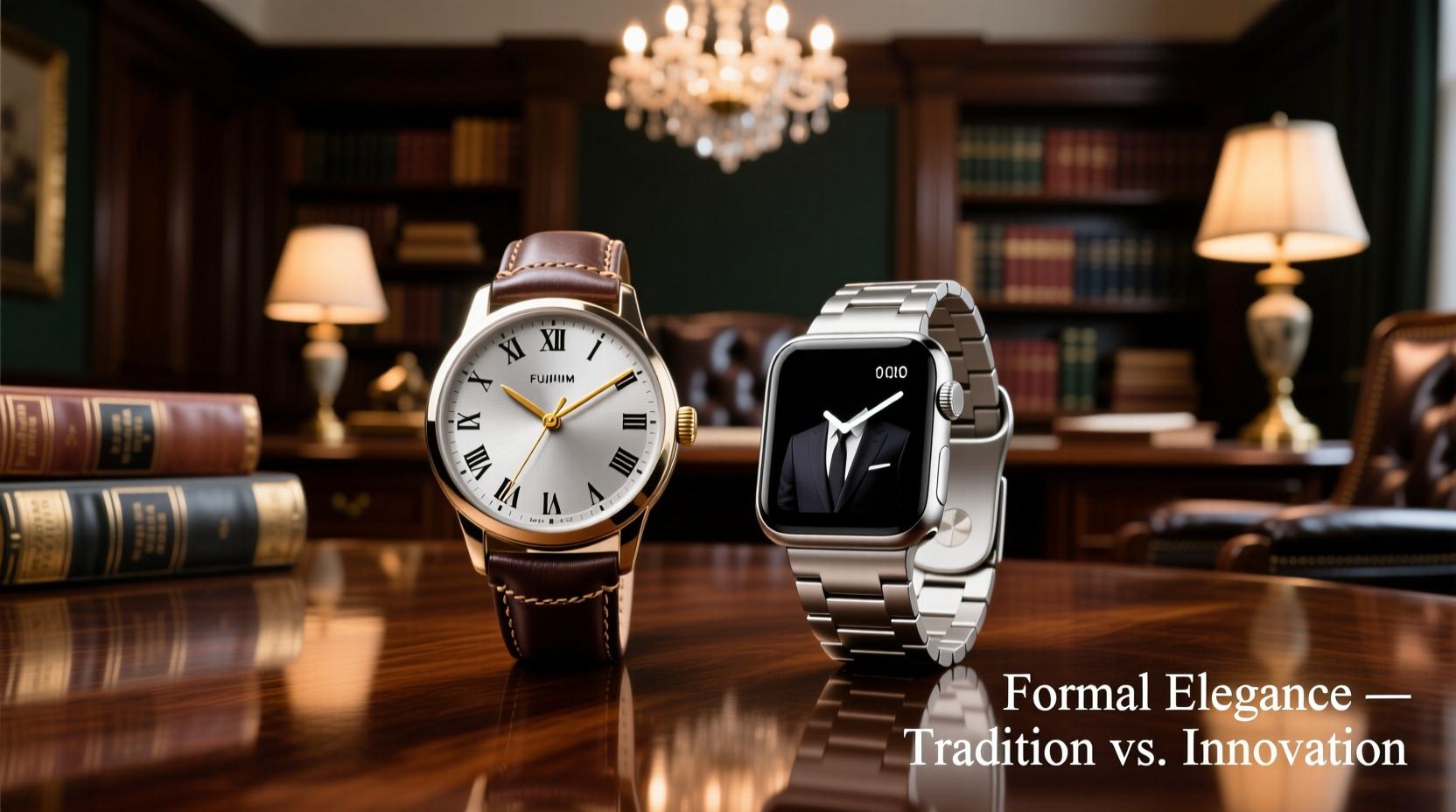
A watch is more than a tool for telling time—it's an accessory that complements your attire and reflects your personality. In formal environments, accessories are scrutinized not just for aesthetics but for appropriateness. A well-chosen watch can elevate a suit, convey professionalism, and demonstrate attention to detail.
Analog watches have long been associated with sophistication. Their minimalist dials, metal bracelets, and mechanical movements evoke heritage and precision. Brands like Rolex, Patek Philippe, and Omega are staples at galas, diplomatic functions, and executive suites—not because they're the most functional, but because they carry symbolic weight.
Smartwatches, by contrast, are designed for utility. They deliver notifications, track heart rate, and sync with smartphones. While models like the Apple Watch Ultra or Samsung Galaxy Watch 6 Classic have adopted sleeker designs, their digital nature and frequent vibrations can clash with the subdued tone expected in formal spaces.
“Timepieces are silent ambassadors of character. In formal contexts, subtlety speaks louder than functionality.” — Daniel Reeves, Luxury Watch Curator at The Horological Review
Key Differences: Analog vs Smartwatch in Formal Use
To understand which watch serves best in formal situations, consider these five core aspects:
- Aesthetics and Design: Analog watches often feature clean dials, leather straps, and polished finishes. Smartwatches typically have larger, backlit screens and interchangeable bands that may look sporty or casual.
- Functionality vs Discretion: Smartwatches buzz, light up, and display messages—potentially disruptive during speeches or ceremonies. Analog watches operate silently.
- Dress Code Alignment: Black-tie events demand minimalism. A thin, silver-cased analog watch fits naturally; a smartwatch might appear out of place unless disguised in \"classic\" mode.
- Perceived Professionalism: Studies show professionals wearing traditional watches are perceived as more reliable and detail-oriented. A 2023 Harvard Business School survey noted that executives wearing analog timepieces were rated 23% higher in “executive presence” during client meetings.
- Battery & Reliability: Nothing undermines formality like a dead battery. Smartwatches require daily charging; analog watches (especially automatics) run indefinitely with wear.
Comparison Table: Analog vs Smartwatch for Formal Events
| Feature | Analog Watch | Smartwatch |
|---|---|---|
| Visual Elegance | High – minimalist design, premium materials | Moderate – screen-centric, tech-focused look |
| Noise/Interruptions | None – silent operation | High – alerts, vibrations, sounds |
| Battery Life | Months to years (mechanical/quartz) | 1–2 days (requires nightly charging) |
| Dress Code Suitability | Ideal for black-tie, business formal | Limited – acceptable only if discreet |
| Customization | Straps, limited dial changes | Watch faces, apps, bands – highly customizable |
| Status Perception | High – associated with tradition and success | Mixed – seen as practical, less prestigious |
| Maintenance | Occasional cleaning, servicing every 5+ years | Daily charging, software updates, screen care |
When a Smartwatch Might Be Acceptable
While analog reigns supreme in strict formal settings, smartwatches aren't universally inappropriate. Certain hybrid models blur the line between classic and connected. For example, the Withings ScanWatch and Garmin Venu 3 blend analog-style faces with subtle smart features.
Acceptable use cases include:
- Business Casual Meetings: When the environment is professional but relaxed, a smartwatch in “elegant” mode may pass without issue.
- Health Monitoring Needs: Individuals managing diabetes, arrhythmia, or stress may need continuous monitoring, making a medical-grade smartwatch a necessity rather than a fashion choice.
- Hybrid Models: Some smartwatches mimic analog dials so closely they’re mistaken for mechanical ones. These can be strategic choices when functionality matters.
Even then, discretion is critical. Turn off haptics, avoid animated watch faces, and remove fitness bands. A leather strap and muted interface go a long way toward blending in.
Real Example: The Wedding Dilemma
Consider James, a 32-year-old marketing director invited to a high-society wedding. The dress code: black tie optional. He owns a stainless steel Apple Watch Series 9 and a vintage Hamilton Khaki Field Auto.
He initially plans to wear the Apple Watch—he uses it for calendar alerts and wants to capture photos via wrist control. But during rehearsal dinner, he notices several guests glancing at his wrist when a notification buzzes mid-conversation. Later, during the ceremony, his watch lights up with a work email.
At the reception, he switches to the Hamilton. Instantly, he feels more aligned with the atmosphere. No distractions. No stares. Just a simple, elegant timepiece that matches his cufflinks and oxfords. Multiple guests compliment his watch, sparking conversations about craftsmanship and heritage.
James learns a valuable lesson: in emotionally significant, socially charged events, the quiet dignity of an analog watch enhances presence—both yours and others’.
Step-by-Step Guide: Choosing the Right Watch for Formal Events
Follow this sequence to ensure your timepiece supports, rather than undermines, your formal appearance:
- Assess the Event Type: Is it a funeral, wedding, gala, or corporate dinner? The stricter the formality, the stronger the case for analog.
- Review the Dress Code: Black tie? Morning coat? Business formal? Match your watch to the level of elegance required.
- Evaluate Your Needs: Do you need health tracking, flight alerts, or calendar reminders? If yes, consider a hybrid or secondary device (like a phone in pocket).
- Select Based on Material: Metal bracelets or leather straps in black, brown, or navy work best. Avoid rubber, silicone, or brightly colored bands.
- Test for Distractions: Wear the watch for an hour in silence. Does it beep? Flash? Vibrate unnecessarily? Disable non-essential alerts.
- Check Proportions: The watch face should not extend beyond your wrist. Oversized smartwatches often dominate the arm visually.
- Final Inspection: Hold your wrist next to a mirror in full outfit. Does the watch feel like part of the ensemble—or an afterthought?
Checklist: Is Your Watch Formal-Ready?
Before leaving for a formal occasion, verify the following:
- ✅ Watch face is clean and scratch-free
- ✅ Strap or bracelet is appropriate (leather/metal, not sport band)
- ✅ No visible charging cable or low-battery warning
- ✅ Notifications silenced or disabled entirely
- ✅ Time set accurately and synchronized with venue clocks
- ✅ Size is proportional to wrist and outfit
- ✅ No fitness stats, step counts, or digital clutter visible
Frequently Asked Questions
Can I wear an Apple Watch to a job interview?
You can, but it’s not advisable for senior-level or conservative industry roles (law, finance, diplomacy). If worn, use a classic watch face, disable vibrations, and keep it on mute. For maximum professionalism, opt for an analog watch.
Are hybrid smartwatches suitable for formal events?
Yes—models like the Fossil Hybrid HR or Garmin Approach S62 offer smart features with analog appearances. They function like traditional watches while delivering subtle notifications through haptic pulses. These strike a balance for tech professionals who still value decorum.
Does wearing a luxury smartwatch change perceptions?
Slightly. A gold-tone Apple Watch Edition on a Milanese loop looks more refined than a silicone-banded base model. However, even premium smartwatches lack the emotional resonance of a mechanical timepiece. As one Wall Street banker put it: “No one ever inherited a smartwatch.”
“A watch should enhance the moment, not interrupt it. In formal life, silence is golden—and so is the tick of a fine movement.” — Clara Nguyen, Style Editor at *The Gentleman’s Quarterly*
Conclusion: Make Your Statement with Intention
The debate between analog and smartwatch for formal occasions isn’t about which is objectively better—it’s about context, intention, and awareness. Technology belongs in our lives, but its visibility should align with the setting. In moments that call for grace, respect, and timeless presentation, the analog watch remains unmatched.
That doesn’t mean abandoning smartwatches altogether. Use them wisely—during travel, workouts, or casual networking. But when you walk into a room where first impressions matter, where elegance is expected, let your wrist reflect that standard.
Choose the watch that honors the occasion. Whether it’s a century-old timepiece passed down from your grandfather or a carefully selected modern classic, let it say that you care not just about time, but about how you spend it—and how you present yourself within it.
💬 What’s your go-to watch for formal events? Share your thoughts and experiences—help others navigate the evolving etiquette of wristwear in a digital age.