When it comes to timeless casual footwear, few silhouettes rival the enduring appeal of the adidas Samba and the Gazelle. Both have roots in sport but have evolved into wardrobe staples favored by fashion enthusiasts, creatives, and everyday wearers. While they share a heritage and minimalist aesthetic, their performance in real-world use—particularly regarding comfort and width—can differ significantly. Choosing between them isn’t just about style; it’s about how they feel after hours on your feet, whether you're walking through the city, standing at work, or meeting friends for coffee.
This article breaks down the differences between the Samba and the Gazelle with a focus on comfort, fit, and width—three critical factors that determine how suitable each shoe is for daily wear. We’ll examine materials, construction, insole support, and real-user experiences to help you make an informed decision based on your foot shape and lifestyle needs.
Design Origins and Evolution
The adidas Samba was originally designed in the 1950s as a football boot for playing on frozen pitches. Its rubber toe cap, grippy outsole, and low-profile silhouette made it functional in harsh conditions. Over time, it transitioned into a casual favorite, especially in subcultures like punk and skateboarding. The modern Samba retains much of its original design: a suede upper, gum sole, and three-stripe branding.
In contrast, the Gazelle debuted in 1966 as a training shoe for athletes. It featured a soft suede upper and a vulcanized rubber sole, optimized for flexibility and lightweight movement. Unlike the Samba, the Gazelle has a slightly lower collar and a more streamlined look, which contributed to its popularity among runners and later, streetwear aficionados.
Despite their different origins, both models are now marketed as lifestyle sneakers. However, their structural DNA still influences how they perform during extended wear. The Samba’s sturdier build offers more protection and durability, while the Gazelle prioritizes a sock-like, flexible fit. These foundational differences set the stage for variations in comfort and width.
Comfort Comparison: Cushioning, Support, and Long-Term Wear
Comfort is subjective, but certain measurable elements—cushioning, arch support, heel lockdown, and breathability—help assess how a shoe performs over time.
The Samba features a slightly thicker EVA midsole and a padded tongue, contributing to better shock absorption. This makes it more forgiving on hard surfaces like concrete or tile. Many users report that the Samba feels “solid” underfoot, offering a sense of stability during all-day wear. However, the cushioning is still minimal compared to modern running shoes, so those expecting plush support may find it lacking.
The Gazelle, on the other hand, uses a thinner foam insole and a flatter profile. While this enhances ground feel and agility, it also means less padding. As a result, prolonged standing or walking can lead to fatigue, particularly for individuals with plantar fasciitis or flat feet. The lack of structured arch support is a common critique among long-term Gazelle wearers.
Tip: If you plan to wear either shoe for extended periods, consider adding aftermarket insoles for improved arch support and cushioning.Another factor is break-in time. The Samba’s suede upper is stiff at first but gradually molds to the foot after a few wears. The Gazelle, being softer from the outset, requires little to no break-in, making it immediately comfortable—but potentially at the cost of long-term structure.
Width and Fit: How Do They Accommodate Different Foot Shapes?
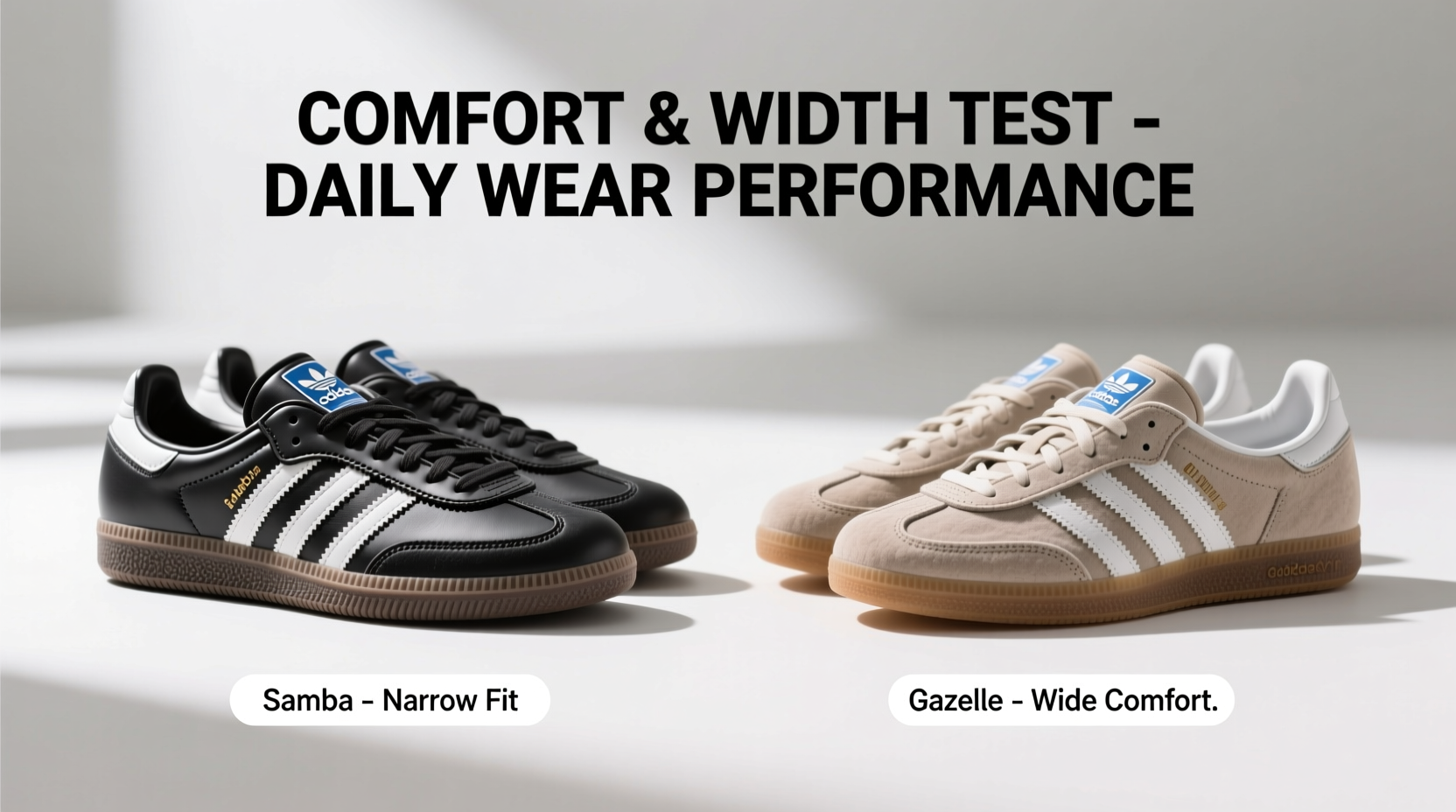
Foot width is one of the most overlooked aspects of sneaker selection, yet it plays a crucial role in comfort and injury prevention. Both the Samba and Gazelle run narrow by modern standards, but there are subtle differences worth noting.
The Samba tends to be slightly roomier in the toe box, allowing for natural toe splay. This is especially beneficial for people with medium to wide forefeet. However, the heel and midfoot areas are snug, which helps prevent slippage. Some users with very wide feet still report tightness across the ball of the foot, particularly in non-wide versions.
The Gazelle, in contrast, maintains a consistently narrow profile from heel to toe. Its slim silhouette is part of its aesthetic charm but can be restrictive for wider feet. Even those with average-width feet sometimes experience pressure on the lateral side of the foot after several hours of wear.
“Footwear that doesn’t accommodate natural foot width can lead to issues like bunions or neuromas over time,” says Dr. Lena Torres, podiatrist and biomechanics specialist. “It’s not just about immediate comfort—it’s about long-term foot health.”
Adidas does not offer official wide widths for either model in most regions, though some limited releases and regional variants (such as UK-made pairs) may vary slightly. Sizing up is a common workaround, but it risks heel slippage, especially in the Gazelle.
Fit Summary Table
| Feature | Adidas Samba | Adidas Gazelle |
|---|---|---|
| Toe Box Width | Moderate to slightly wide | Narrow |
| Midfoot Fit | Snug | Tight |
| Heel Lockdown | Excellent | Fair (may slip when sized up) |
| Arch Support | Low to moderate | Low |
| Break-In Period | 3–5 wears | Minimal |
| Best For Foot Type | Medium to slightly wide, normal arches | Narrow, high arches |
Real-World Daily Wear Performance
To understand how these shoes hold up outside of controlled environments, consider a real-life scenario: Sarah, a graphic designer based in Berlin, wears sneakers daily for commuting, studio visits, and client meetings. She owns both the Samba OG and the classic Gazelle in core black.
Sarah initially preferred the Gazelle for its sleek look and soft suede. However, after wearing them for a full workday involving two hours of walking, she noticed discomfort along the outer edge of her right foot. “They looked great, but by afternoon, I could feel pressure building near my pinky toe,” she said. Switching to the Samba, she found the extra space in the forefoot made a noticeable difference, even though the break-in period required patience.
She now rotates between the two depending on her schedule. “If I’m mostly sitting, I go for the Gazelle. If I know I’ll be on my feet, it’s Samba all the way.” Her experience reflects a broader trend: the Samba often wins in practicality, while the Gazelle excels in aesthetics for low-activity days.
Another consideration is climate. The Samba’s slightly thicker construction provides modest insulation, making it more suitable for cooler weather. The Gazelle, with its thin lining and breathable suede, performs better in mild to warm conditions but offers little warmth in winter.
Actionable Tips for Choosing the Right Model
Selecting between the Samba and Gazelle shouldn’t be based solely on trends or social media hype. Consider your daily routine, foot anatomy, and personal priorities. Here’s a checklist to guide your decision:
- Evaluate your foot width: Trace your foot on paper and compare it to size charts or try on both models if possible.
- Assess your activity level: High walking/standing? Lean toward Samba. Mostly seated or light movement? Gazelle may suffice.
- Try before you buy: Visit a store to test fit, paying attention to toe box pressure and heel slip.
- Consider insoles: Add orthotic or cushioned inserts to improve support in either model.
- Check regional variations: Some European-made pairs run slightly larger or wider than Asian or US productions.
- Wear appropriate socks: Thin, seamless socks reduce friction and help achieve a truer fit.
Step-by-Step Guide to Testing Comfort at Home
If you’ve already purchased a pair or are testing them post-purchase, follow this timeline to accurately assess comfort:
- Day 1: Wear for 1–2 hours indoors. Walk on hard floors and carpet to gauge initial feel.
- Day 2–3: Extend to 3–4 hours. Pay attention to pressure points, heel slippage, or creasing.
- Day 4–5: Take them outside for short walks (15–20 minutes). Note any surface-related discomfort.
- Day 6–7: Simulate a full day of wear. Combine sitting, standing, and walking.
- After Week 1: Decide whether to keep, size up/down, or modify with insoles.
This method prevents premature judgment based on first impressions and allows the materials to adapt to your foot.
Frequently Asked Questions
Are Adidas Sambas wider than Gazelles?
Yes, generally. The Samba has a slightly broader toe box and more room in the forefoot, while the Gazelle maintains a consistently narrow fit throughout. This makes the Samba a better option for those with medium to wide feet.
Can I stretch my Gazelles if they feel too tight?
Some stretching is possible due to the suede upper. Using a shoe stretcher or wearing them with thick socks around the house can help expand the width slightly. However, significant widening is unlikely without risking material damage.
Which shoe is better for walking all day?
The Samba is typically better suited for extended walking due to its sturdier construction, slightly better cushioning, and improved heel support. The Gazelle’s flatter sole and tighter fit make it less ideal for high-mileage days.
Final Recommendation and Call to Action
The choice between adidas Sambas and Gazelles ultimately depends on your individual needs. If comfort, width, and daily functionality are top priorities, the Samba emerges as the more versatile and accommodating option. Its thoughtful balance of structure and flexibility makes it a reliable companion for urban life. The Gazelle, while undeniably stylish and comfortable in short bursts, falls short for those requiring roomier fits or all-day support.
That said, personal preference matters. Some prioritize aesthetics and a sleek profile over spaciousness—and for them, the Gazelle remains a compelling choice. The key is understanding your own foot type and lifestyle demands before committing.
Don’t let marketing or influencer trends dictate your footwear decisions. Try both, test them rigorously, and choose based on how they feel—not just how they look. Your feet will thank you in the long run.
🚀 Ready to make a confident choice? Share your experience with Sambas or Gazelles in the comments below—your insights could help others find their perfect fit.