
Traveling should be about relaxation, adventure, or purpose—not stress over lost bags. One of the most overlooked yet critical steps in air travel is properly registering your checked luggage. While airlines assign a tracking tag at check-in, true registration goes beyond that. It means creating a verifiable digital footprint of your bag’s details, contents, and journey—so if it doesn’t arrive with you, recovery is fast and certain.
Every year, millions of bags are mishandled globally. The Air Transport Association estimates that one in every 123 passengers experiences delayed, lost, or damaged luggage. But those who take proactive steps to register their luggage reduce resolution time by up to 70%. This guide walks you through the complete process—from pre-trip preparation to post-flight follow-up—to ensure your suitcase travels as smoothly as you do.
Why Luggage Registration Matters Beyond the Airport Tag
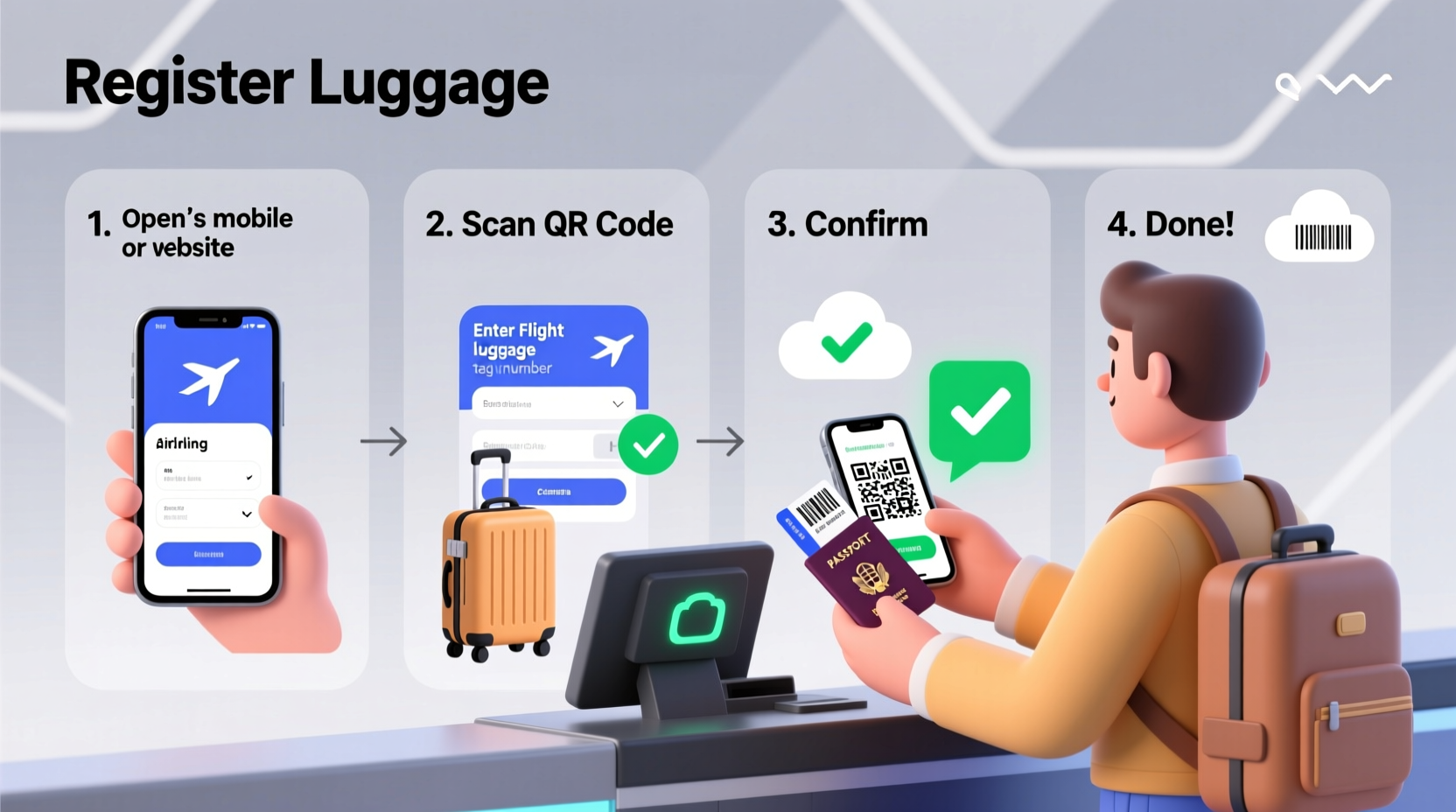
The barcode tag attached at check-in is temporary and often falls off, gets damaged, or fails to scan. True luggage registration involves linking your personal contact information and bag details to a persistent, accessible record. Airlines rely on this data when locating misplaced items, but they can only act if they have accurate information.
Without proper registration, your bag may end up in a warehouse in another country while you’re left guessing. With it, you provide a clear chain of identification that accelerates reunification. Think of it as insuring your belongings—not financially, but logistically.
“Passengers who register their bags digitally before departure are 3.5 times more likely to recover them within 24 hours.” — International Air Transport Association (IATA) Baggage Report, 2023
Step-by-Step: How to Register Your Checked Luggage
Follow this timeline-based approach to ensure no detail is missed. Start early and update information as needed.
- 7 Days Before Departure: Record Bag Details
Take clear photos of each side of your luggage. Note brand, color, size, unique identifiers (scratches, stickers), and model number. Save these in a cloud folder labeled with your flight number. - Attach a Permanent ID Tag
Use a durable luggage tag with your name, email, and a backup phone number. Avoid putting your home address. Consider embedding a QR code that links to a secure luggage profile page. - Register with Your Airline’s Digital System
Many major carriers—such as Delta, United, and British Airways—offer online baggage registration via their app or website. Enter your bag’s description and link it to your PNR (Passenger Name Record). - At Check-In: Verify the Baggage Tag Data
Confirm the airline tag includes the correct flight number, destination, and date. Cross-check the 10-digit barcode number with your receipt. Take a photo of the tag and your boarding pass together. - After Check-In: Activate Tracking (If Available)
Some smart luggage brands (e.g., Away, Samsonite GeoTracer) offer GPS or Bluetooth tracking. Enable location sharing and sync it to your mobile device. Even non-smart bags benefit from third-party services like Baggage Tags Direct or WorldTracer. - Post-Flight: Monitor Arrival Status
If your bag doesn’t appear on the carousel, proceed immediately to the airline’s baggage service office. Provide your registration details, photos, and tag number. File a Property Irregularity Report (PIR) and request a case number.
Luggage Registration Checklist
Use this checklist to ensure full compliance and preparedness before every trip:
- ✅ Photograph all sides of each checked bag
- ✅ Fill out a permanent luggage ID tag with email and phone
- ✅ Register bag details in airline’s mobile app or website
- ✅ Confirm baggage tag matches flight itinerary
- ✅ Save baggage tag number and PIR reference (if applicable)
- ✅ Enable tracking on smart luggage (if equipped)
- ✅ Carry printed and digital copies of bag photos and registration
Do’s and Don’ts of Luggage Registration
| Do’s | Don’ts |
|---|---|
| Use a digital luggage profile with real-time updates | Don’t rely solely on the paper tag provided at check-in |
| Include an alternate contact method (e.g., hotel phone) | Don’t list your full home address on external tags |
| Save tag numbers in your phone notes or travel app | Don’t discard your baggage receipt until arrival |
| Use a bright ribbon or unique sticker for quick identification | Don’t pack valuables like jewelry, passports, or electronics |
| Link your frequent flyer account to baggage records | Don’t assume your bag will be automatically tracked across connecting flights |
Real Example: Recovering a Lost Bag in 18 Hours
Sophie Chen flew from San Francisco to Paris with a layover in New York. Her checked suitcase—a black Rimowa with a red ribbon—didn’t arrive in Charles de Gaulle. Instead of panicking, she followed her pre-planned registration protocol.
She had already uploaded photos and entered her bag’s details into Air France’s online baggage portal before departure. At the airport, she presented the agent with her boarding pass, baggage tag photo, and a link to her digital luggage profile. Within two hours, the airline confirmed the bag was rerouted to Amsterdam.
Thanks to her registered contact info and persistent tracking, the bag was flown back to Paris and delivered to her hotel the next morning. Total downtime: 18 hours. Without registration, recovery could have taken days—or never happened.
Frequently Asked Questions
Can I register my luggage if I’m flying budget airlines?
Yes, though low-cost carriers often lack integrated digital systems. In such cases, use third-party platforms like WorldTracer.org, which is used by over 400 airlines to locate missing bags. Manually enter your bag’s description and tag number after check-in.
Is it safe to put my email on a luggage tag?
Using your primary email is acceptable, but consider creating a dedicated travel email (e.g., travel.smith@gmail.com) to avoid spam or phishing risks. Avoid public social media handles or personal addresses.
What should I do if my bag is damaged upon arrival?
Report it immediately at the baggage service desk before leaving the airport. Take timestamped photos of the damage and keep all original packaging. Most airlines require claims within 24 hours for damage and 7 days for delayed bags.
Final Steps for Stress-Free Travel
Registering your checked luggage isn’t just a precaution—it’s a necessity in modern air travel. The few minutes spent documenting your bag before departure can save hours, even days, of frustration later. Airlines are improving tracking with RFID technology, but passenger involvement remains the strongest link in the chain.
By combining physical identification, digital registration, and proactive monitoring, you turn a vulnerable object into a traceable asset. Whether you're traveling for business, leisure, or relocation, your peace of mind starts with a simple, systematic process.
💬 Ready to travel smarter? Download a printable luggage registration checklist from our resources page, or share your own tip in the comments below. Help fellow travelers avoid the hassle of lost bags—one registered suitcase at a time.








