
Investing doesn’t have to be complicated or risky. For most people, especially those just starting out, index funds offer a smart, straightforward way to grow wealth over time. These funds track broad market benchmarks like the S&P 500, providing instant diversification and historically strong returns with minimal effort. Unlike picking individual stocks, index fund investing reduces risk and eliminates the need for constant monitoring. This guide walks you through each stage of the process—from understanding what index funds are to placing your first trade—with practical advice tailored for beginners.
What Are Index Funds and Why They Work
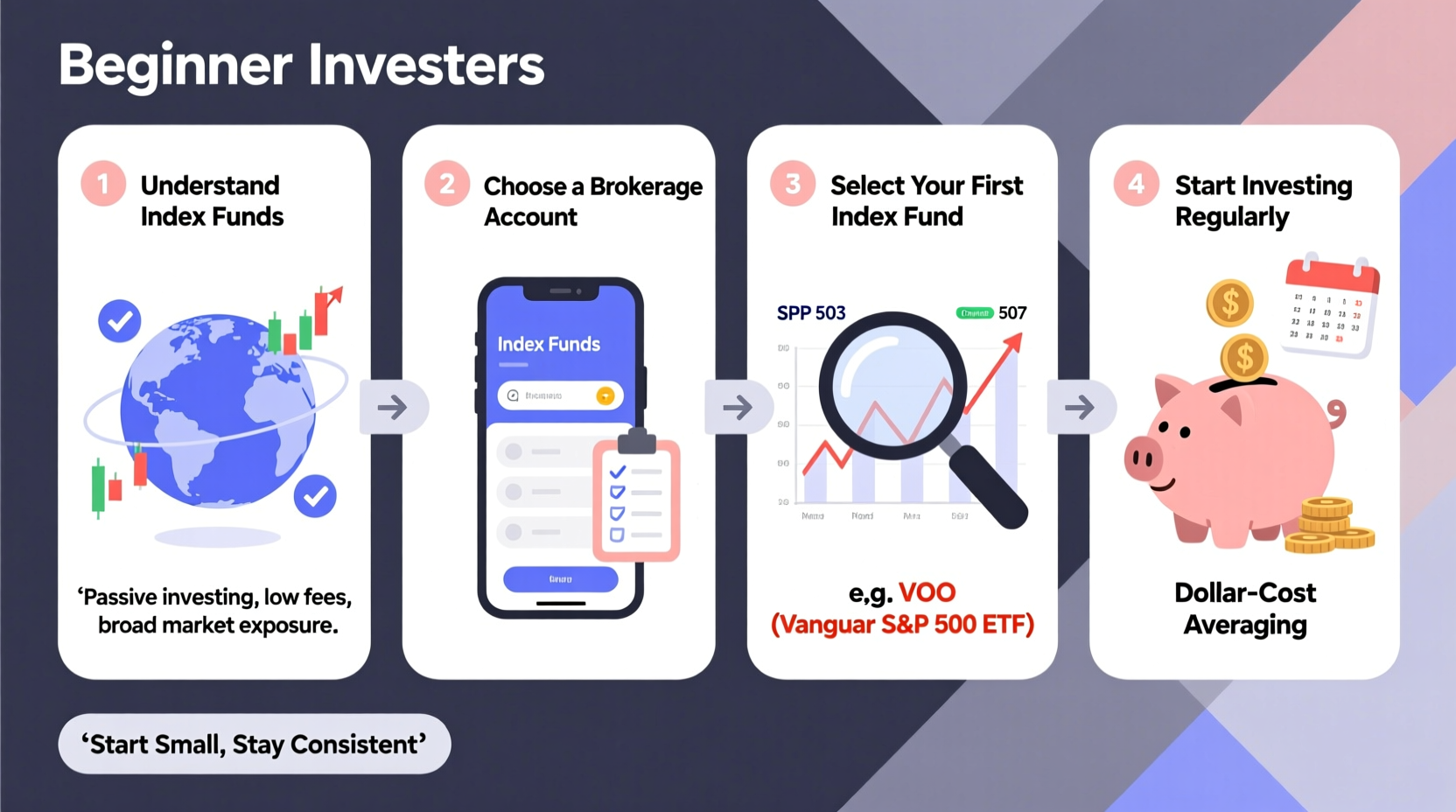
An index fund is a type of mutual fund or exchange-traded fund (ETF) designed to mirror the performance of a specific financial market index. The most popular example is the S&P 500, which includes 500 of the largest publicly traded U.S. companies. When you invest in an S&P 500 index fund, you're effectively buying tiny pieces of all 500 companies at once.
The power of index funds lies in their simplicity and efficiency. Because they are passively managed—meaning they simply follow an index rather than relying on active stock-picking—they charge lower fees than actively managed funds. Over decades, these cost savings compound significantly. Research consistently shows that most actively managed funds fail to beat their benchmark indexes after fees.
“Broad diversification is the only free lunch in investing.” — Burton Malkiel, Economist and Author of *A Random Walk Down Wall Street*
Index funds also reduce emotional decision-making. Instead of reacting to market swings or chasing hot stocks, investors stay aligned with long-term economic growth. Historically, the U.S. stock market has returned about 7–10% annually over the long term, adjusted for inflation. Index funds allow everyday investors to capture that return without needing expertise or time to manage investments.
Step-by-Step: How to Buy Your First Index Fund
Buying an index fund is easier than many assume. With online brokerages and mobile apps, the entire process can be completed in under an hour. Follow this clear sequence to get started confidently.
- Determine your investment goal and timeline. Are you saving for retirement in 30 years? A down payment in 5? Long-term goals suit stock-based index funds; short-term needs may require safer options like bonds.
- Choose a brokerage account. Look for platforms with no account minimums, low fees, and easy access to top index funds. Recommended providers include Fidelity, Vanguard, Charles Schwab, and E*TRADE.
- Open and verify your account. Provide personal details, Social Security number, and employment information. Most verifications take less than 24 hours.
- Fund your account. Link your bank account and transfer money via ACH transfer. Initial deposits can be as low as $1, depending on the provider.
- Select your index fund. Search for well-known, low-cost options such as:
- Vanguard S&P 500 ETF (VOO)
- iShares Core S&P 500 ETF (IVV)
- Schwab S&P 500 Index Fund (SWPPX)
- Place your order. Choose between a market order (executed immediately at current price) or a limit order (set a specific price). For index funds, market orders are typically sufficient.
- Confirm and review. After purchase, check your portfolio to ensure the transaction went through. Set up automatic contributions if available.
Choosing the Right Index Fund: Key Factors
Not all index funds are created equal. While most track major indexes, differences in expense ratios, tracking accuracy, and fund structure can impact returns over time.
| Fund Name | Ticker | Expense Ratio | Minimum Investment | Index Tracked |
|---|---|---|---|---|
| Vanguard S&P 500 ETF | VOO | 0.03% | $1 (via fractional shares) | S&P 500 |
| iShares Core S&P 500 ETF | IVV | 0.03% | $1 | S&P 500 |
| Schwab Total Stock Market Index Fund | SWTSX | 0.03% | $1 | Dow Jones U.S. Total Stock Market |
| Fidelity ZERO Total Market Index Fund | FZROX | 0.00% | $0 | Fidelity U.S. Total Stock Index |
When comparing funds, prioritize low expense ratios—the annual fee charged as a percentage of assets. A 0.03% fee means you pay $3 per year for every $10,000 invested. Over 30 years, even a 0.5% difference can cost thousands in lost returns.
Do’s and Don’ts When Selecting Funds
| Do | Don't |
|---|---|
| Choose funds with expense ratios below 0.10% | Pick funds based solely on past performance |
| Prefer broad-market funds for diversification | Overcomplicate your portfolio with too many funds |
| Use tax-advantaged accounts like IRAs when possible | Ignore tax implications of frequent trading |
Real Example: How Sarah Started Investing at 25
Sarah, a graphic designer earning $55,000 a year, wanted to begin building long-term wealth but felt overwhelmed by investment jargon. She committed to investing $100 per month. After researching, she opened a Roth IRA with Fidelity and selected FZROX, a zero-expense-ratio total stock market index fund. She set up automatic transfers from her checking account on payday.
Over five years, despite market ups and downs, her disciplined approach grew her portfolio to over $7,800, including dividends reinvested. More importantly, she gained confidence. “I used to think investing was for finance experts,” she said. “Now I realize it’s just about consistency and choosing simple, low-cost tools.”
Sarah’s story reflects a broader truth: successful investing isn’t about timing the market or finding hidden gems. It’s about getting into the market early, staying in, and minimizing costs.
Essential Tips for Long-Term Success
- Automate your investments. Set up recurring purchases to build discipline and benefit from dollar-cost averaging—buying more shares when prices are low and fewer when high.
- Reinvest dividends. Most brokerages let you automatically reinvest payouts, accelerating compound growth.
- Avoid checking your account daily. Short-term fluctuations are normal. Focus on progress over years, not days.
- Keep learning. Read books like *The Little Book of Common Sense Investing* by John C. Bogle, founder of Vanguard.
Frequently Asked Questions
Are index funds safe for beginners?
Yes. While no investment is risk-free, index funds are among the safest choices for new investors due to their diversification and low costs. They spread risk across hundreds of companies, reducing the impact of any single company failing.
Can I lose money in an index fund?
You can experience temporary losses during market downturns. However, historically, broad-market index funds have recovered and delivered positive returns over periods of 10 years or more. Staying invested through volatility is key.
How much should I invest each month?
Start with what you can afford—even $25 or $50 helps build the habit. Many financial advisors recommend saving 10–15% of income for retirement. Increase contributions as your income grows.
Take Action Today
Starting to invest doesn’t require large sums or special knowledge. By choosing a low-cost index fund and committing to regular contributions, you align yourself with decades of proven market growth. The most important step is the first one: opening your account and making your initial purchase. Time in the market beats timing the market. Every month you wait is a missed opportunity for compounding to work in your favor.
🚀 Ready to begin? Pick a brokerage, open an account, and buy your first index fund this week. Your future self will thank you.








