Dog clothing isn’t just about fashion—it can serve practical purposes like warmth in cold climates, protection from allergens, or even sun safety. However, ill-fitting dog apparel leads to discomfort, chafing, restricted movement, and quick wardrobe rejection. The key to avoiding these issues lies in accurate measurement. Unlike humans, dogs come in a vast range of body types—even within breeds—and standard size charts often fall short. Taking the time to measure your dog correctly ensures comfort, mobility, and durability in every piece they wear.
Why Proper Measurement Matters
Dogs vary dramatically in proportion. A Chihuahua may have a long back relative to its height, while a Bulldog carries most of its weight in the chest and shoulders. Off-the-rack dog clothes frequently assume uniform proportions, leading to sleeves that cut into armpits, necklines that choke, or bodies too short to cover vital areas. Poor fit doesn’t just cause irritation—it can impact your dog’s gait and breathing during extended wear.
According to Dr. Lena Torres, a veterinary behaviorist at the Canine Wellness Institute: “Clothing that pinches or binds can trigger anxiety in dogs, especially if worn for long periods. Accurate sizing is not just about comfort—it’s part of responsible pet care.”
“Clothing that pinches or binds can trigger anxiety in dogs, especially if worn for long periods. Accurate sizing is not just about comfort—it’s part of responsible pet care.” — Dr. Lena Torres, Veterinary Behaviorist
Essential Tools for Measuring Your Dog
You don’t need specialized equipment—just a few household items:
- Flexible tape measure (sewing or tailor’s tape, not rigid ruler)
- Pen and paper to record measurements
- Treats to keep your dog calm and cooperative
- A helper (optional but helpful for wiggly dogs)
Step-by-Step Measurement Process
Follow this sequence to ensure accuracy and consistency:
- Choose the right time. Measure when your dog is relaxed—after a walk or nap—to avoid fidgeting.
- Position your dog standing naturally. Place them on a flat surface with all four paws evenly spaced. Avoid slouching or stretching.
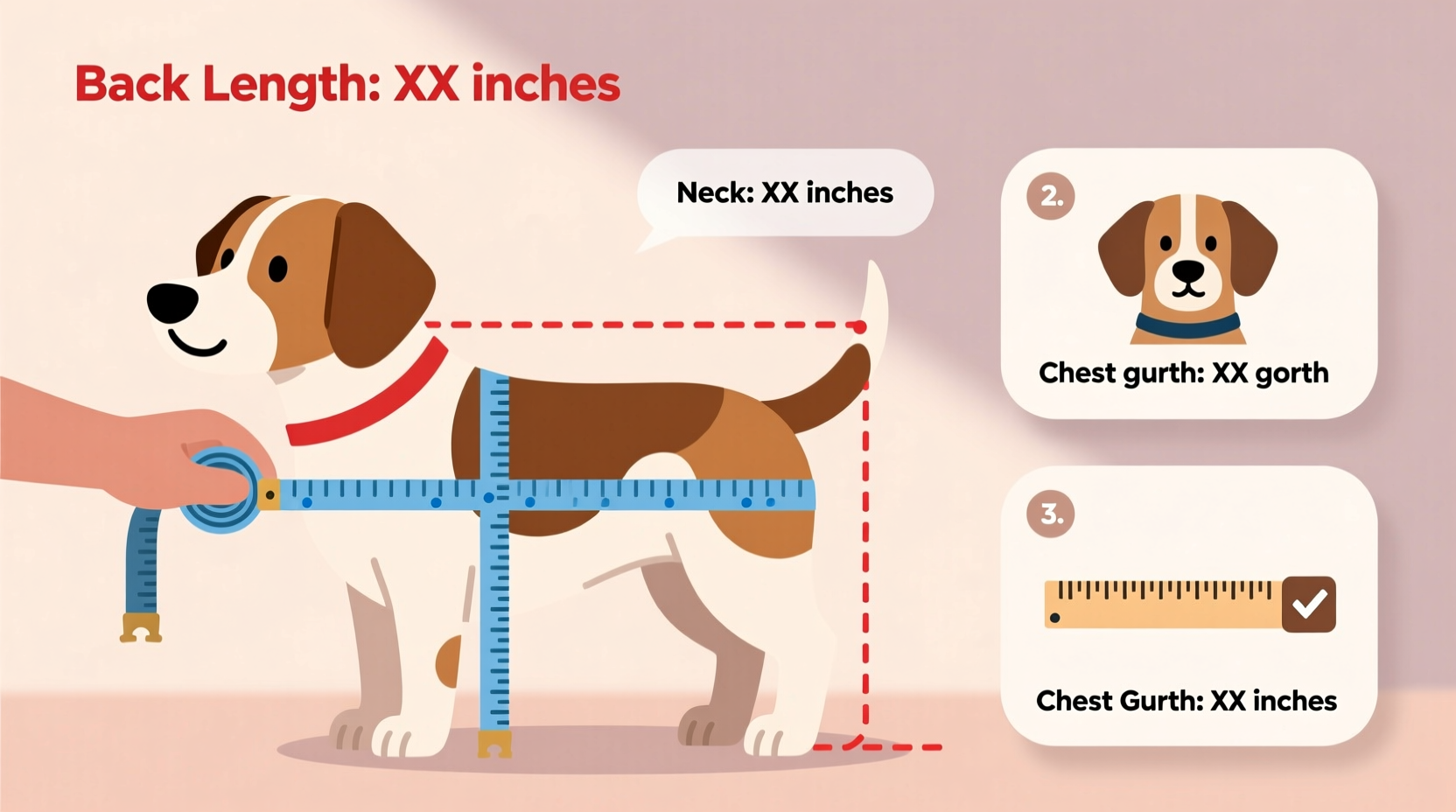
- Measure the neck girth. Wrap the tape around the base of the neck where the collar sits. Leave enough room for two fingers to fit beneath the tape. This prevents chafing and allows for layering in winter coats.
- Measure the chest girth. This is usually the largest and most critical dimension. Wrap the tape around the widest part of the chest, just behind the front legs. Ensure the tape goes under the armpits and across the shoulder blades. This area determines whether the garment will open wide enough to fit over the chest.
- Measure the length from base of neck to tail. Start at the top of the shoulders (where the neck meets the back) and run the tape straight along the spine to the base of the tail. This determines how far the garment extends down the back.
- Check the leg height (for full-body suits). From the armpit down to where the front leg bends (the elbow), measure vertically. This helps determine sleeve or leg hole placement.
- Note the weight. While not a direct measurement, weight supports size selection—especially when shopping online.
Record each number immediately. Double-check any measurement that seems off.
Tip: Measure twice, order once. Small variations between brands mean even a half-inch difference can affect fit.Understanding Size Charts: Do’s and Don’ts
Not all brands use the same standards. Some prioritize chest size; others emphasize back length. Use the table below as a reference when interpreting brand-specific charts.
| Do | Don’t |
|---|---|
| Always refer to the brand’s exact measurement guidelines before ordering. | Assume a small in one brand equals a small in another. |
| Use your dog’s actual measurements—not breed averages. | Rely solely on breed recommendations listed online. |
| Select size based on the largest measurement (usually chest). | Size down hoping the garment will “stretch” over time. |
| Contact customer service if measurements fall between sizes. | Guess which size to choose without checking return policies. |
Real-World Example: Measuring Bella the Beagle
Bella, a three-year-old Beagle, needed a raincoat for her daily walks. Her owner initially ordered a medium based on breed suggestions. The coat fit well in length but couldn’t close over her deep chest. After measuring properly, Bella’s chest girth was 26 inches—larger than average for her breed. Her back length was 15 inches, and neck girth was 14 inches. Using these numbers, her owner selected a large in a different brand known for broader chest cuts. The new coat zipped smoothly, allowed full range of motion, and stayed dry during rainy outings. The initial inconvenience of reordering was outweighed by long-term comfort and usability.
Clothing-Specific Considerations
Not all garments require the same focus. Adjust your priorities based on the type of clothing:
- Sweaters & Hoodies: Prioritize chest girth and back length. Ensure armholes are high enough to prevent rubbing under the shoulders.
- Raincoats & Jackets: Check coverage from neck to tail. Look for adjustable straps at neck and belly for secure fit.
- Costumes: Often less flexible. Measure meticulously and consider ordering one size up for ease of movement and layering.
- Full-body suits or UV-protective shirts: Pay attention to leg height and seam placement. Seams should not sit directly over joints.
Checklist: Pre-Measurement Preparation
Before you begin measuring, go through this checklist:
- ✅ Gather your tools: soft tape, notebook, treats
- ✅ Choose a quiet, distraction-free area
- ✅ Wait until your dog is calm and still
- ✅ Have a helper ready if your dog is energetic
- ✅ Review the brand’s size chart format ahead of time
- ✅ Confirm whether the brand uses inches or centimeters
Frequently Asked Questions
How often should I remeasure my dog?
Puppies grow quickly—remeasure every 4–6 weeks until they reach adulthood. Adult dogs should be measured annually or whenever you notice changes in body shape due to age, activity level, or health conditions.
What if my dog’s measurements fall between two sizes?
Choose the larger size, especially if the garment has limited stretch. Focus on chest girth as the deciding factor. Many brands offer semi-adjustable designs with Velcro or elastic panels to fine-tune the fit.
Can I use human clothing for my dog?
Generally not recommended. Human clothes aren’t shaped for canine anatomy—they restrict movement, expose vital areas, and often have buttons or zippers in uncomfortable places. Purpose-built dog apparel ensures proper alignment and freedom of motion.
Final Tips for Long-Term Success
Accurate measurement is only the beginning. Once clothing arrives, monitor your dog during the first few wears. Watch for signs of discomfort: excessive scratching, reluctance to move, or attempts to remove the garment. Always supervise initial use. Wash clothes according to label instructions to maintain elasticity and fit over time.
Keep a permanent record of your dog’s measurements in a digital note or pet care app. That way, future purchases become faster and more reliable—no need to measure from scratch every time.
Conclusion
Finding the perfect fit for your dog’s clothes starts with precision, patience, and a little practice. By taking the time to measure correctly, you ensure your dog stays comfortable, safe, and stylish—whether braving winter winds or turning heads at the park. Don’t guess, don’t estimate, and don’t rely on generic labels. Measure with care, choose with confidence, and give your dog the comfort they deserve.
💬 Have a measuring tip or fitting story to share? Join the conversation—your experience could help another pet parent avoid a wardrobe mishap!