Diamond fashion jewelry blends elegance with everyday wearability, making it a favorite for personal collections and thoughtful gifting. Unlike fine jewelry designed for special occasions, fashion pieces are meant to be worn regularly and reflect current trends. However, not all diamond-studded necklaces, earrings, or bracelets are created equal. With rising demand comes an influx of lower-quality imitations and misleading marketing. Knowing how to distinguish true craftsmanship from superficial sparkle is essential for making informed, confident purchases.
This guide equips you with the knowledge to evaluate diamond fashion jewelry like a seasoned buyer—focusing on authenticity, craftsmanship, durability, and value. Whether you're shopping online or in-store, these insights will help you avoid costly mistakes and invest in pieces that last.
Understanding the 4Cs in Fashion Jewelry Context
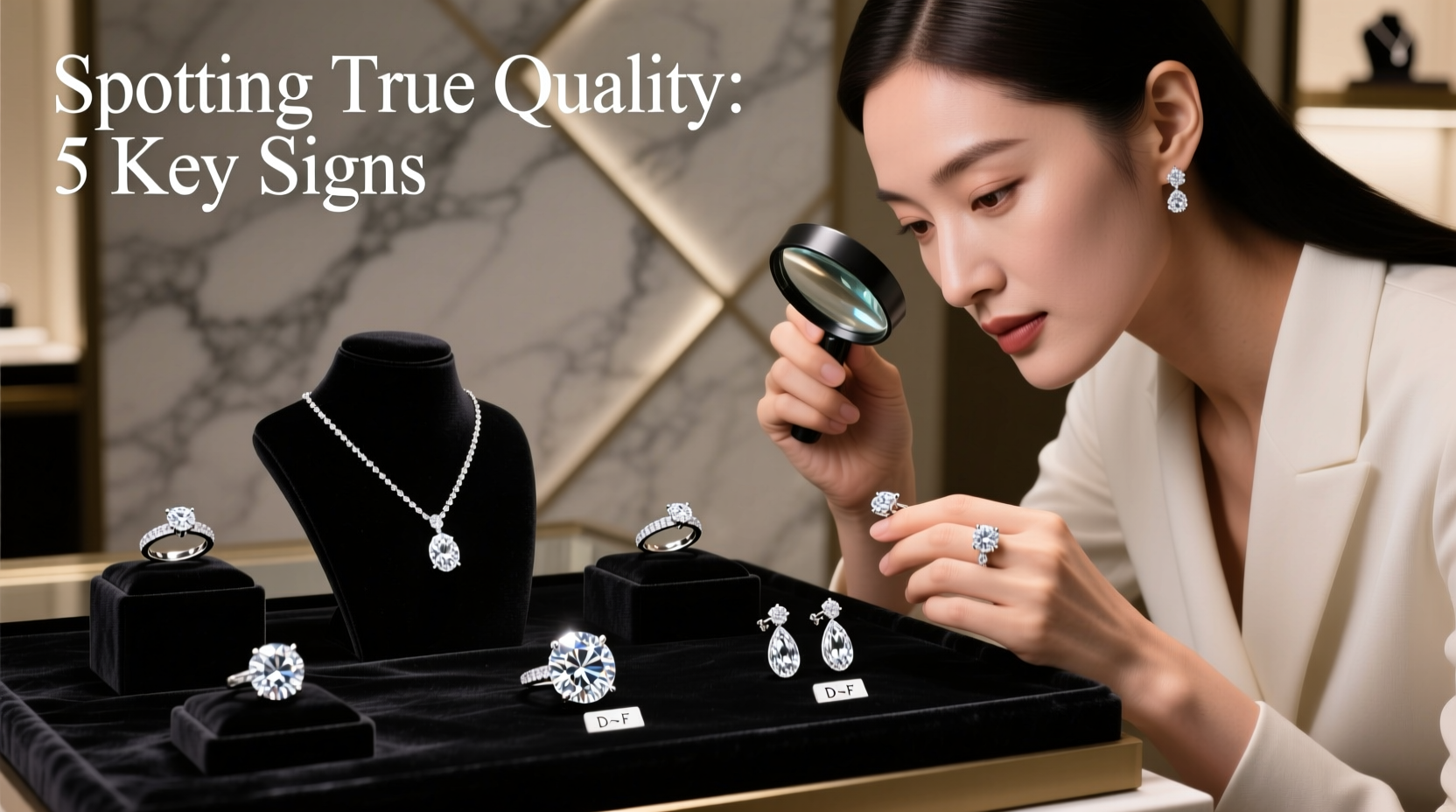
The 4Cs—cut, color, clarity, and carat weight—are traditionally used to assess solitaire engagement rings, but they remain relevant when evaluating diamond fashion jewelry. The key difference lies in scale: fashion pieces often use multiple small diamonds rather than one center stone, so the criteria must be applied collectively.
- Cut: Even in smaller stones, a well-cut diamond reflects light beautifully. Look for consistent brilliance across all stones in a piece. Poorly cut diamonds appear dull or grayish.
- Color: Most diamond fashion jewelry uses near-colorless (G–H) or colorless (D–F) grades. Stones below I grade may show faint yellow tints, especially under natural light.
- Clarity: Since stones are small, inclusions are harder to see. However, reputable brands still aim for SI1 or better clarity to ensure visual cleanliness.
- Carat Total Weight (CTW): Fashion pieces list total carat weight, not individual stone weight. Be cautious if CTW is emphasized without details about stone count or quality.
Inspecting Craftsmanship and Metal Quality
The metal setting is just as important as the diamonds themselves. A poorly made mounting can lead to loose stones, tarnishing, or breakage—even if the diamonds are genuine.
Premium fashion jewelry typically uses 14k or 18k gold (white, yellow, or rose) or platinum. Avoid pieces labeled “gold-plated” or “vermeil” if you intend daily wear; these coatings wear off over time, exposing base metals that may cause discoloration or allergic reactions.
Sterling silver is acceptable for occasional wear but requires more maintenance and is prone to tarnish. Ensure any silver piece is rhodium-plated for added luster and protection.
| Metal Type | Durability | Best For | Avoid If |
|---|---|---|---|
| 14k Gold | High | Daily wear, sensitive skin | You prefer very lightweight pieces |
| 18k Gold | Moderate | Luxury fashion pieces | You work with hands frequently |
| Sterling Silver | Low-Moderate | Occasional wear, budget-friendly | You live in humid climates |
| Platinum | Very High | Long-term investment pieces | Budget is tight |
How to Verify Authenticity and Certification
Reputable jewelers provide documentation confirming diamond authenticity and metal purity. While full GIA certification is rare for fashion jewelry due to cost, many brands offer in-house grading reports or third-party lab verification for larger pieces.
Look for hallmarks stamped inside rings, on earring backs, or at the clasp of necklaces. Common stamps include:
- Gold: 585 (14k), 750 (18k)
- Silver: 925
- Platinum: 850, 900, 950
Avoid items with vague markings like “CZ,” “GP,” or no stamp at all. These are red flags for simulated stones or unverified metal content.
“Transparency in sourcing and clear labeling separate trustworthy brands from those cutting corners.” — Lena Torres, Gemologist & Jewelry Appraiser
Step-by-Step Guide to Evaluating a Piece In-Person or Online
Whether browsing a boutique or shopping online, follow this sequence to make a confident decision:
- Check the lighting: Examine the piece under natural daylight. Fluorescent or overly bright store lights can mask imperfections.
- Assess symmetry: Diamonds should be evenly spaced and aligned. Misaligned settings suggest rushed craftsmanship.
- Test prong security: Gently nudge each stone with a wooden toothpick. No movement should occur. Loose stones indicate poor setting.
- Inspect the finish: Look for smooth edges, polished surfaces, and consistent shine. Rough seams or pitting signal low-quality manufacturing.
- Review return policy and warranty: Reputable sellers offer at least a 30-day return window and a 1-year warranty on craftsmanship.
Real Example: Choosing Between Two Pendant Necklaces
Sophia was drawn to two similar-looking diamond pendants priced $300 apart. Both featured a halo design with ~0.75 CTW diamonds. The cheaper option sparkled brightly in photos, but upon closer inspection, key differences emerged.
The $495 pendant listed 14k white gold, had a “750” stamp, and came with a grading summary noting VS clarity and G color. The prongs were uniform, and the chain thickness matched the pendant’s weight.
The $195 option claimed “real diamonds” but only specified “gold finish.” No clarity or color data was provided. The prongs looked uneven under magnification, and customer reviews mentioned darkening within weeks.
Sophia chose the higher-priced piece. After six months of weekly wear, it retained its shine and secure settings. The cheaper alternative, purchased by a friend, began showing tarnish and lost a side stone after three months.
This case illustrates how subtle details impact longevity and value.
Checklist: What to Confirm Before Buying
Use this checklist before finalizing any purchase:
- ✅ Are the diamonds natural or lab-grown? (Both are valid, but price and care differ)
- ✅ Is the metal type clearly stated with a matching hallmark?
- ✅ Are the 4Cs specified for the stone collection?
- ✅ Are the prongs secure and evenly shaped?
- ✅ Does the piece feel balanced and comfortable to wear?
- ✅ Is there a return policy and warranty?
- ✅ Has the brand received third-party reviews or industry recognition?
Frequently Asked Questions
Are lab-created diamonds considered high quality in fashion jewelry?
Yes. Lab-grown diamonds have the same physical and optical properties as mined diamonds. They’re often offered at lower prices with greater ethical transparency, making them an excellent choice for fashion pieces where frequent replacement may occur.
How can I tell if a diamond is real at home?
While no home test is foolproof, you can perform a few checks: breathe on the stone—if it fogs and clears in 1–2 seconds, it’s likely real (due to high thermal conductivity). Also, examine under a jeweler’s loupe for natural inclusions. Cubic zirconia tends to be flawless and overly sparkly with rainbow flashes.
Is it safe to buy diamond fashion jewelry online?
Yes, if you shop from established retailers with clear return policies, verified customer reviews, and detailed product specifications. Stick to brands that provide magnified images, videos, and gemological summaries.
Final Thoughts: Invest in Confidence, Not Just Sparkle
High-quality diamond fashion jewelry doesn’t have to be expensive, but it does require attention to detail. By understanding what defines true quality—beyond surface-level glitter—you protect your investment and enjoy pieces that maintain their beauty over time. Confidence in your choices comes not from spending more, but from knowing what to look for.
💬 Have a favorite tip for spotting quality jewelry? Share your experience in the comments and help others shop smarter.