When shopping for silver earrings, two terms often appear: \"925 sterling silver\" and \"fine silver.\" While both are forms of silver, their composition, durability, and suitability for everyday wear vary significantly. Understanding these differences isn’t just about making an informed purchase—it’s about protecting your investment, ensuring comfort, and choosing jewelry that aligns with your lifestyle.
Silver has long been a favorite in jewelry due to its lustrous shine and affordability compared to gold or platinum. However, pure silver is too soft for most wearable designs. That’s where alloying comes in—and it’s the key reason why sterling silver and fine silver behave so differently on your ears.
What Is Fine Silver?
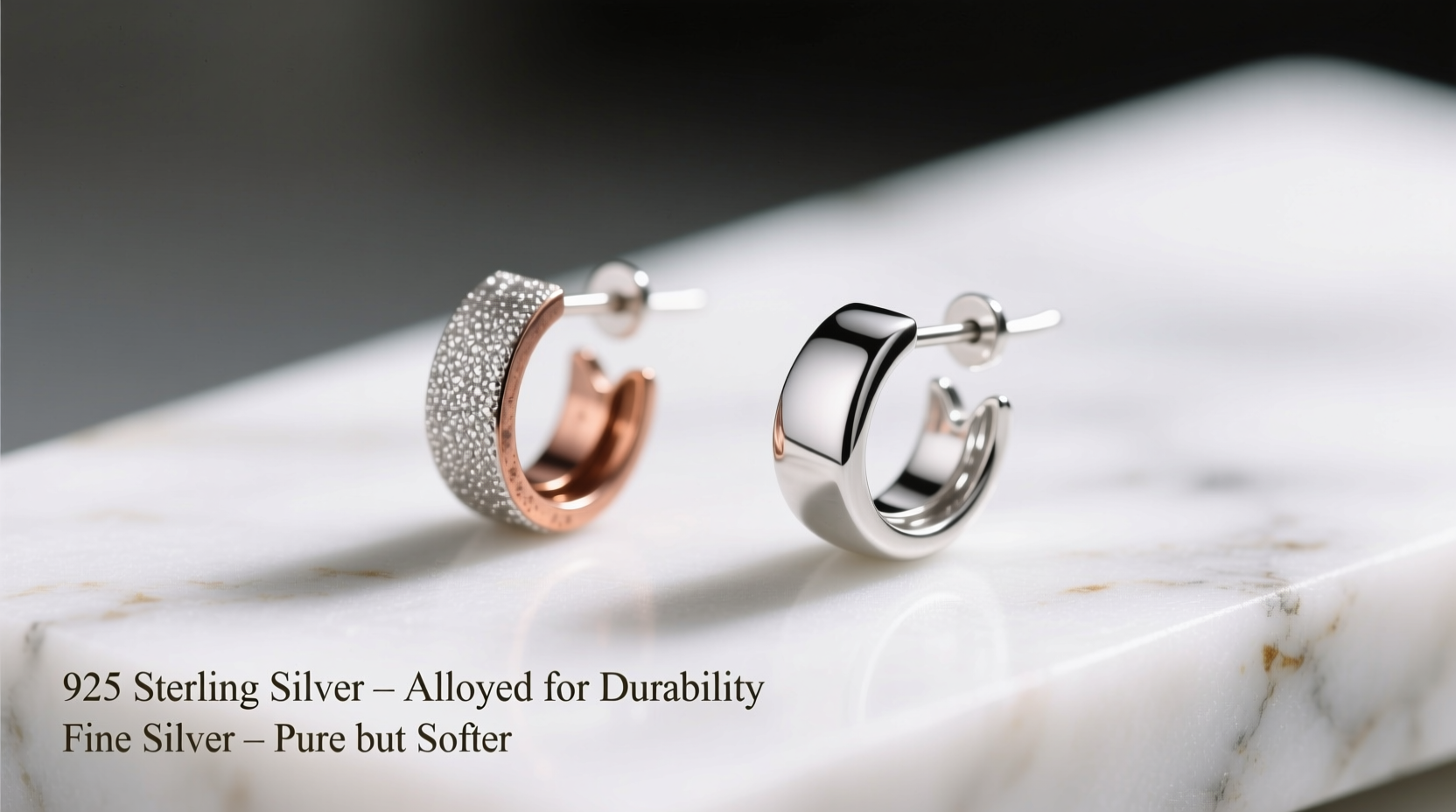
Fine silver refers to silver that is at least 99.9% pure, often labeled as \"three nines fine\" (999). It contains minimal impurities and exhibits a bright, reflective finish prized by artisans and collectors. Because of its high purity, fine silver has a softer, more delicate appearance and feel.
While fine silver is chemically stable and resistant to tarnishing compared to lower-grade alloys, its physical softness makes it unsuitable for settings with gemstones or pieces subjected to daily friction—like earrings. It dents easily and loses shape under pressure, which limits its use in stud backs, hooks, or intricate earring designs.
“Fine silver is ideal for decorative items and pendants, but rarely practical for functional earring components.” — Lena Torres, Master Jeweler & GIA Certified Artisan
Understanding 925 Sterling Silver
925 sterling silver is an alloy composed of 92.5% silver and 7.5% other metals, typically copper. This blend was standardized in the 12th century and remains the global benchmark for quality silver jewelry. The addition of copper increases hardness and structural integrity, making it far more suitable for earrings, rings, and bracelets.
The “925” stamp found on most silver earrings indicates compliance with this standard. Reputable manufacturers laser-stamp or hallmark each piece to verify authenticity. Unlike fine silver, sterling can hold detailed engravings, maintain secure prongs, and withstand regular wear without deforming.
Tip: Always check for the “925” hallmark when purchasing silver earrings—especially online—to avoid counterfeit or base-metal imitations.Comparing Key Differences: A Practical Breakdown
The distinction between 925 sterling and fine silver goes beyond percentages. Real-world performance matters most when you're wearing earrings every day. Below is a detailed comparison across critical factors:
| Feature | 925 Sterling Silver | Fine Silver (999) |
|---|---|---|
| Purity | 92.5% silver | 99.9% silver |
| Durability | High – resists bending and scratching | Low – easily dented or warped |
| Tarnish Resistance | Moderate – may oxidize over time | High – less reactive due to purity |
| Hypoallergenic Quality | Varies – copper may irritate sensitive skin | Better – fewer alloy metals to cause reactions |
| Cost | Affordable, widely available | Higher per gram, limited availability |
| Best For | Daily wear, pierced earrings, active lifestyles | Occasional wear, decorative pieces, sensitive ears |
This table highlights a crucial trade-off: while fine silver is purer and less likely to tarnish, its fragility makes it impractical for most earring applications. Sterling silver sacrifices a small amount of purity for vastly improved resilience.
Which Is Better for Sensitive Ears?
Many people assume higher silver purity means better compatibility with sensitive skin. While fine silver does eliminate copper exposure, sensitivity isn't solely about metal content. Other factors include surface finish, plating, and individual biochemistry.
Sterling silver is generally safe for most ear types, especially when rhodium-plated—a common practice that adds a protective, shiny layer and reduces oxidation. However, some individuals react to copper, experiencing redness or itching after prolonged contact.
In contrast, fine silver’s lack of alloyed metals makes it inherently gentler, but its softness means it can’t support secure backings or posts without reinforcement. As a result, even if the front of the earring is fine silver, the post might be made from surgical steel or titanium to ensure safety and stability.
Tip: If you have metal sensitivities, look for earrings labeled “nickel-free” and “lead-free,” regardless of whether they’re sterling or fine silver.Real-World Example: Choosing the Right Pair
Consider Maria, a nurse who wears her earrings 12 hours a day. She initially bought a pair of fine silver studs because she read they were “purer” and assumed that meant safer. Within three weeks, one post bent slightly, and the back wouldn’t close properly. The earring became loose and eventually got lost during a shift.
She switched to 925 sterling silver earrings with a rhodium finish. Though slightly heavier, they held their shape, stayed secure, and didn’t irritate her ears. After six months, they still looked nearly new with only light polishing. Her experience underscores a simple truth: suitability depends on usage, not just material purity.
Caring for Your Silver Earrings: A Step-by-Step Guide
Proper maintenance extends the life and brilliance of any silver earring, regardless of type. Follow this routine to keep them looking pristine:
- Remove Before Activities: Take off earrings before showering, swimming, or applying lotions and perfumes.
- Wipe Daily: Use a soft, lint-free cloth to gently remove oils and moisture after wear.
- Deep Clean Monthly: Soak in warm water with mild dish soap for 5–10 minutes. Use a soft toothbrush to clean crevices.
- Dry Thoroughly: Pat dry with a clean cloth; never air-dry, which can leave water spots.
- Polish Occasionally: Use a silver polishing cloth (not liquid polish unless necessary) to restore shine.
- Store Properly: Keep in an airtight bag with anti-tarnish strips or silica gel packets.
“Silver doesn’t degrade—it reacts. Preventing exposure to sulfur and moisture is half the battle.” — Dr. Alan Zhou, Materials Scientist & Jewelry Conservator
FAQ: Common Questions About Silver Earrings
Can I wear sterling silver in the shower?
No. Water, especially chlorinated or hard water, accelerates tarnishing. Soap residue can dull the surface and clog intricate details. Always remove sterling silver earrings before bathing.
Does fine silver tarnish?
Less than sterling silver, yes—but it can still oxidize when exposed to air pollutants, sweat, or sulfur-containing environments. Its resistance is better, but not absolute.
Is sterling silver worth investing in?
Absolutely. High-quality 925 sterling silver retains value, can be passed down, and often features craftsmanship comparable to precious metal pieces. Just ensure proper care and buy from trusted sources.
Final Thoughts: Making the Smart Choice
The choice between 925 sterling silver and fine silver earrings ultimately comes down to purpose. If you want earrings for daily wear—something durable, secure, and resilient—sterling silver is the clear winner. Its balance of beauty, strength, and affordability makes it the standard for a reason.
Fine silver has its place, particularly in artisanal or heirloom pieces, but its limitations make it a poor fit for functional earrings. Unless you’re collecting display-only jewelry or have specific sensitivities that rule out all alloys, sterling offers superior real-world performance.
Don’t let marketing terms like “pure” or “premium” cloud your judgment. Look beyond labels. Check hallmarks, assess construction quality, and consider how you’ll wear the earrings. When you do, you’ll find that 925 sterling silver isn’t just different—it’s designed for life.
💬 Have a favorite pair of silver earrings? Share your care tips or experiences in the comments below—your insight could help others choose wisely!