When two flagship smartphones launch within weeks of each other—especially from brands with vastly different global footprints—it’s natural for speculation to flare up. The Xiaomi 14 and Samsung Galaxy S24 have both been hailed as technological marvels in their respective launches. But beneath the glossy ads and influencer unboxings, a critical question remains: is the excitement around these devices rooted in genuine innovation, or are consumers being swayed by masterful marketing?
This isn’t just about megapixels or processor speeds. It’s about real-world usability, long-term software support, ecosystem integration, and whether the premium price tag delivers proportional value. Let’s dissect both phones beyond the headlines.
Design and Build: Substance Over Style?
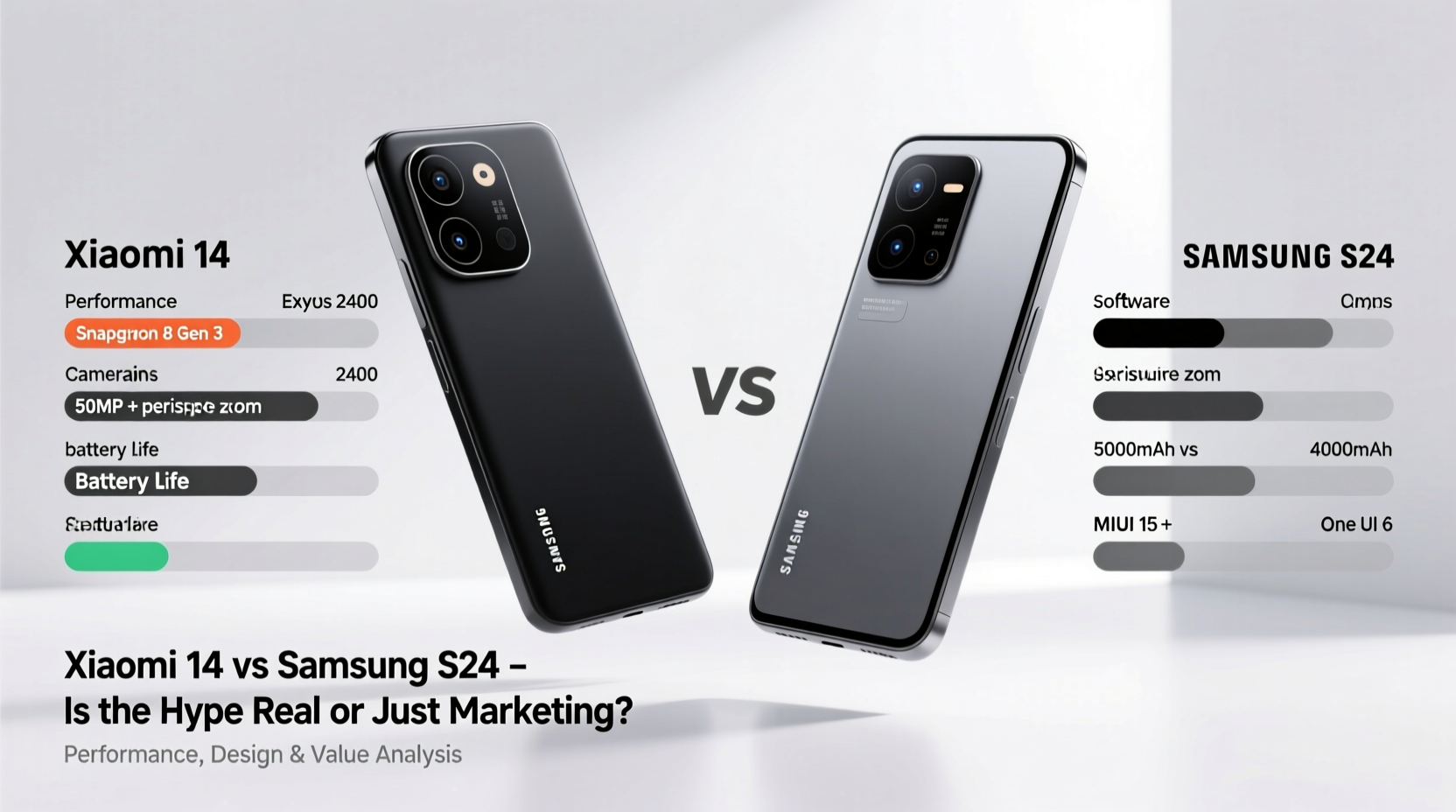
The Samsung Galaxy S24 opts for a refined evolution of its predecessor’s design language—minimal bezels, Gorilla Glass Victus 2, and an aluminum frame that feels familiar yet premium. Available in Phantom Black, Gray, Violet, and Pink Gold, it maintains Samsung’s polished aesthetic. What stands out is the IP68 rating and seamless integration with the broader Samsung ecosystem, including DeX and SmartThings.
In contrast, the Xiaomi 14 embraces bolder choices. With a curved 6.36-inch OLED display and a compact form factor (152.3 x 71.6 x 8.2 mm), it targets users who prioritize one-handed usability. Xiaomi uses a mix of aluminum and Gorilla Glass Armor, offering durability with slightly more fingerprint retention. The matte finish variants resist smudges better than Samsung’s glossy options.
Tip: If you frequently use your phone outdoors, consider the Xiaomi 14’s higher peak brightness (3000 nits) over the S24’s 2600 nits for better visibility.Performance: Snapdragon 8 Gen 3 Benchmarks Tell Only Half the Story
Both phones run on Qualcomm’s latest Snapdragon 8 Gen 3 chipset, paired with 8GB or 12GB of LPDDR5X RAM. In synthetic benchmarks like AnTuTu or Geekbench, scores are nearly identical. However, real-world performance diverges due to thermal management and software optimization.
Samsung’s approach prioritizes sustained performance. Thanks to a vapor chamber cooling system, the S24 handles extended gaming sessions without throttling. In contrast, Xiaomi relies on graphite-based cooling, which works well for short bursts but shows slight degradation after 30 minutes of intensive use.
That said, Xiaomi ships with HyperOS—a rebranded MIUI overhaul that feels snappier in daily navigation. App launches are marginally faster, and animations are smoother. Samsung’s One UI 6.1, while feature-rich, can feel bloated to users who prefer minimalism.
“Flagship hardware is now commoditized. The real differentiator lies in how software leverages that power.” — David Lin, Mobile Systems Analyst at TechPulse Asia
Camera Comparison: Marketing Specs vs. Real Photos
This is where marketing narratives often overshadow reality. Samsung promotes its 50MP main sensor with “AI-enhanced computational photography,” while Xiaomi highlights its Leica-tuned triple camera system. On paper, both look impressive. In practice, results vary based on lighting and user intent.
| Feature | Xiaomi 14 | Samsung S24 |
|---|---|---|
| Main Sensor | 50MP, f/1.6, Leica Summilux | 50MP, f/1.8, Dual Pixel AF |
| Ultra-Wide | 50MP, 115° FoV | 12MP, 120° FoV |
| Telephoto | 50MP, 3.2x periscope zoom | 10MP, 3x optical zoom |
| Low-Light Performance | Excellent detail, warmer tones | Balanced exposure, cooler white balance |
| Video Recording | 8K@30fps, Dolby Vision HDR | 8K@30fps, Super Steady mode |
In daylight, Xiaomi’s Leica tuning produces richer colors and better dynamic range, particularly in landscapes. Samsung leans toward natural tones, which some photographers prefer for accuracy. In low light, Xiaomi captures more detail but occasionally oversaturates reds. Samsung applies heavier noise reduction, preserving skin tones but losing fine texture.
For video, both offer stabilization, but Samsung’s AI-powered Super Steady mode excels in action shots. Xiaomi counters with Dolby Vision support, ideal for creators using compatible editing software.
Software and Updates: Longevity Matters More Than Launch Hype
Samsung has made significant promises with the S24: seven years of OS and security updates. This is unprecedented in Android and positions the S24 as a long-term investment. Coupled with Samsung’s Knox security platform, it appeals to enterprise users and privacy-conscious individuals.
Xiaomi, on the other hand, guarantees only four years of major Android updates. While this aligns with most OEMs, it falls short against Samsung’s commitment. HyperOS receives frequent feature drops, but update rollouts remain regionally inconsistent, especially outside China and Europe.
Additionally, Samsung integrates generative AI tools directly into the OS—such as Circle to Search and Note Assist—without requiring third-party apps. Xiaomi offers similar AI features, but they’re siloed within specific apps and lack deep OS integration.
Tip: If you plan to keep your phone for 4+ years, the S24’s longer update policy significantly reduces obsolescence risk.Real-World Example: Travel Photographer’s Dilemma
Consider Maria, a freelance travel photographer who needed a new phone for her Southeast Asia tour. She chose the Xiaomi 14 over the S24 primarily for its superior ultra-wide sensor and brighter display. During golden hour shoots in Bali, she appreciated the Leica color science and manual Pro mode controls. However, when uploading large files via mobile data in rural Laos, she noticed slower Wi-Fi 6E performance compared to the S24’s adaptive connectivity algorithms. She also missed Samsung’s private share encryption when sending client proofs.
Her experience underscores a key point: the “best” phone depends on context. For content creation, Xiaomi delivers. For secure, reliable communication and ecosystem synergy, Samsung wins.
Checklist: Choosing Between Xiaomi 14 and S24
- ✅ Need long-term software support? → Choose Samsung S24
- ✅ Prioritize camera versatility and color depth? → Choose Xiaomi 14
- ✅ Use other Samsung devices (Watch, Tab, PC)? → S24 ensures seamless sync
- ✅ Prefer clean, fast interface with fewer pre-installed apps? → Xiaomi HyperOS may suit you better
- ✅ Concerned about resale value in Western markets? → S24 holds value longer
- ✅ Want cutting-edge AI features built into the OS? → S24 leads here
Frequently Asked Questions
Is the Xiaomi 14 available globally with full warranty?
Yes, but availability varies. Official distribution covers Germany, France, Italy, and Spain. In the U.S., it’s not sold through carriers, limiting warranty service access.
Does the Samsung S24 justify its higher price?
For users invested in the Samsung ecosystem or planning to keep the device beyond three years, yes. The seven-year update promise adds tangible long-term value absent in most competitors.
Can Xiaomi compete with Samsung in build quality?
Physically, yes. Both use premium materials. However, Samsung’s rigorous testing standards (military-grade durability, water resistance verification) give it an edge in reliability under extreme conditions.
Final Verdict: Hype or Substance?
The hype surrounding both phones is partially justified—but not equally. The Samsung Galaxy S24 delivers substance through longevity, ecosystem cohesion, and thoughtful AI integration. Its marketing emphasizes real engineering milestones, like extended software support and on-device processing.
The Xiaomi 14, while technically impressive, leans more heavily on marketing flair—Leica branding, aggressive benchmark claims, and bold design choices. It offers excellent value, particularly in regions where it’s officially supported. However, its shorter update cycle and fragmented global presence limit its appeal as a long-term flagship.
In essence, Samsung’s hype is backed by ecosystem depth and future-proofing. Xiaomi’s is fueled by raw specs and photographic excellence—at least for now.
💬 Which phone aligns with your priorities: long-term reliability or cutting-edge features? Share your thoughts and experiences—we’d love to hear what matters most to you in a flagship smartphone.