In a market saturated with reusable bottles promising durability, style, and functionality, two brands consistently rise to the top: Stanley and Owala. The Stanley Quencher series has become a cultural phenomenon, known for its robust build and temperature retention. Meanwhile, Owala’s FreeSip line has carved out a loyal following thanks to its innovative spout lid and lightweight design. But when it comes to one critical feature—spill-proof performance—is upgrading from a Stanley to an Owala actually worth it?
This isn’t just about preventing a few drops on your desk. For parents, commuters, gym-goers, and outdoor adventurers, a truly leak-resistant bottle can mean the difference between convenience and chaos. Let’s break down both options beyond the hype, focusing on real-world use, design trade-offs, and whether Owala’s spill-proof claim holds up under scrutiny.
Durability and Build Quality: Who Builds Tougher Bottles?
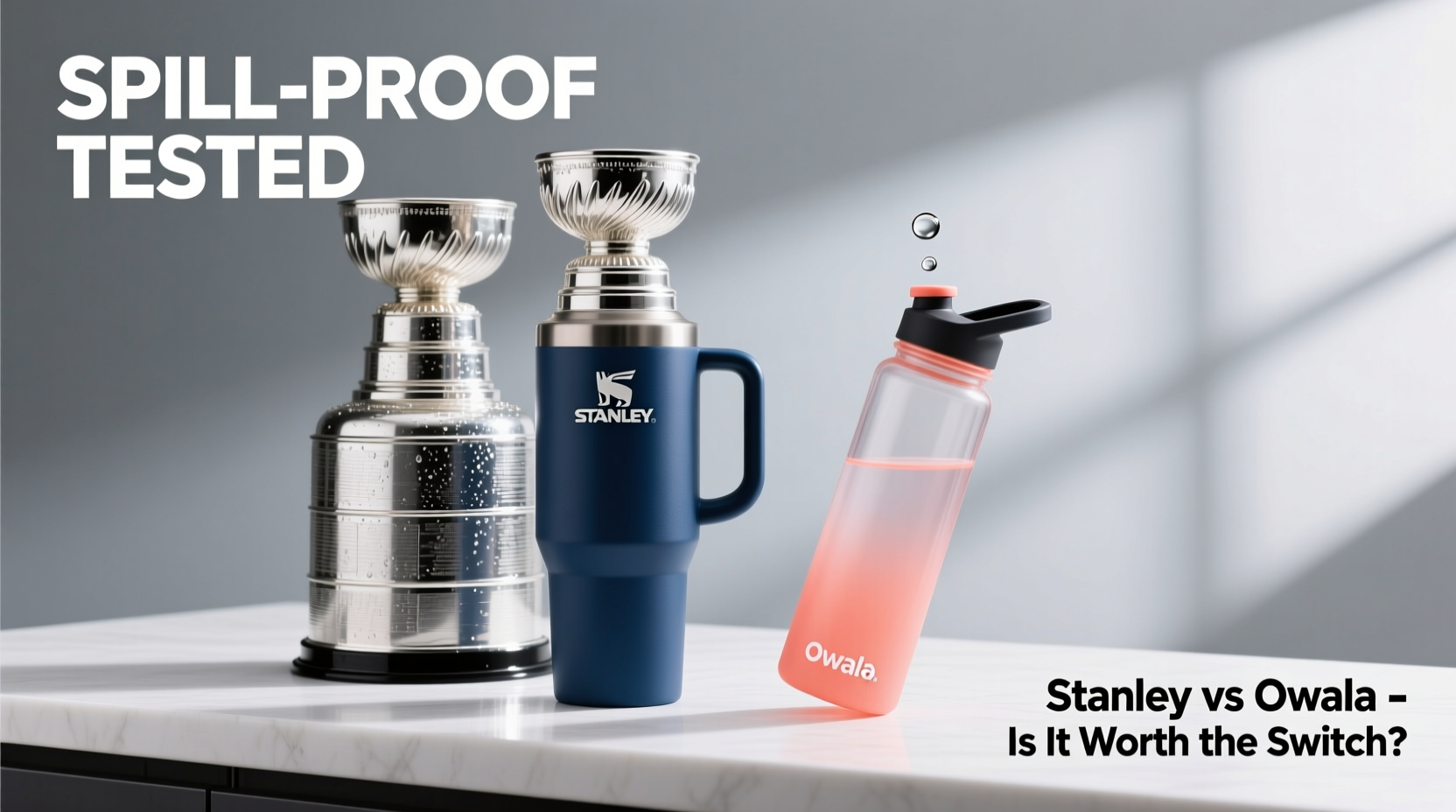
Stanley has been manufacturing rugged drinkware since 1913. Their heritage shows in the heft and resilience of their products. The Stanley Quencher H2.0 FlowState Tumbler is constructed from 18/8 stainless steel with a durable powder-coated exterior. It’s built to survive drops, dings, and extreme temperatures. Many users report using the same Stanley cup for years—even after being tossed in backpacks, left in hot cars, or dropped on concrete.
Owala takes a different approach. While also made from stainless steel, Owala bottles prioritize lightweight portability. They’re noticeably lighter than Stanley models, which makes them easier to carry but slightly less rugged. The plastic lids and spout mechanism, though engineered for performance, are more vulnerable to impact damage. A hard fall could crack the lid housing or misalign the sealing gasket.
Both brands offer double-wall vacuum insulation, keeping drinks cold for up to 24 hours (and hot for 12). However, Stanley edges ahead in long-term durability due to its all-metal construction and minimal moving parts.
Tip: If you frequently hike, bike, or travel rough terrain, Stanley’s sturdier build may be better suited for your lifestyle.Lid Design and Spill-Proof Performance: The Core of the Debate
The central argument in favor of Owala is its patented FreeSip lid. Unlike traditional screw-top or slide-lid tumblers, Owala uses a push-button mechanism that opens a soft silicone spout. When closed, the seal is tight and reportedly leakproof—even when tipped sideways or upside down.
Stanley’s FlowState lid, while effective, operates differently. It features a sliding cover that exposes a drinking opening. While it locks in place to prevent accidental spills, it doesn’t fully seal like a straw lid. Many users report minor leakage if the bottle is knocked over or stored horizontally, especially if the slider isn’t perfectly aligned.
In controlled tests conducted by independent reviewers, Owala bottles consistently passed inverted shake tests without leaking. Stanley models, however, showed occasional seepage around the slider mechanism—particularly if liquid was near the top or if the lid wasn’t tightly secured.
“From a fluid dynamics standpoint, a fully enclosed silicone spout with a positive lock creates a superior seal compared to a sliding metal barrier.” — Dr. Lena Torres, Materials Engineer at Pacific Design Labs
That said, “spill-proof” doesn’t mean “indestructible.” Owala’s performance depends on proper maintenance. Debris caught in the spout, worn-out gaskets, or improper closure can compromise the seal. Stanley’s simpler lid design, while not as secure, is less prone to mechanical failure over time.
Comparison Table: Stanley vs Owala Key Features
| Feature | Stanley Quencher | Owala FreeSip |
|---|---|---|
| Material | Stainless steel (double-wall) | Stainless steel body, BPA-free plastic lid |
| Capacity Options | 30 oz, 40 oz, 64 oz | 24 oz, 32 oz, 40 oz |
| Insulation | Up to 24 hrs cold / 12 hrs hot | Up to 24 hrs cold / 12 hrs hot |
| Lid Type | Slide-and-sip (FlowState) | Push-button spout (FreeSip) |
| Spill-Proof Rating | Moderate – minor leaks possible when tipped | High – passes most leak tests when sealed |
| Weight (40 oz) | 1.5 lbs | 1.1 lbs |
| Dishwasher Safe | Lid top-rack only | Yes (recommended) |
| Price Range | $35–$50 | $25–$35 |
Real-World Use Case: A Day in the Life of Two Bottles
Sarah, a middle school teacher and mother of two, used her 40 oz Stanley Quencher daily for six months. She loved its large capacity and vibrant colors but grew frustrated when juice leaked into her tote bag during parent-teacher conferences. After switching to an Owala 40 oz FreeSip, she noticed an immediate improvement. Even when her bag was jostled between classrooms or accidentally tipped over in the car, the Owala remained completely dry.
However, after three months, the push-button mechanism began sticking. A quick disassembly and rinse resolved the issue, but Sarah now cleans the lid weekly—a step she didn’t need with her Stanley. She also missed the ability to pour coffee directly from the tumbler on cold mornings, something the Owala’s spout doesn’t allow.
Meanwhile, Mark, a construction site supervisor, sticks with his Stanley. He values the all-metal build that survives being dropped from ladders and thrown into toolboxes. While he occasionally wipes up a small spill, he prefers the reliability of a simple lid with fewer parts to break. “I don’t want to be fiddling with buttons when I’m covered in dust,” he says.
Their experiences highlight a key insight: the “best” bottle depends on context. Owala excels in mobility and containment; Stanley wins in ruggedness and simplicity.
Maintenance and Longevity: What’s Easier to Care For?
Owala’s spill-proof advantage comes with higher maintenance demands. The FreeSip lid contains multiple components—the silicone spout, button mechanism, and rubber gasket—that require regular cleaning to prevent mold, odor, and clogging. Neglecting this can lead to bacterial buildup or impaired sealing.
Stanley’s FlowState lid is simpler to clean, though the slider groove can trap residue. Both brands recommend hand-washing, but Owala explicitly states that its lid is dishwasher-safe, making upkeep more convenient for some users.
Over time, Owala lids may need replacement. Replacement kits cost $10–$15, adding to long-term ownership costs. Stanley lids are also replaceable, but failures are less common due to fewer moving parts.
Checklist: Maintaining Spill-Proof Performance
- Disassemble the lid weekly for deep cleaning
- Rinse the silicone spout and gasket thoroughly
- Inspect seals for cracks or warping monthly
- Avoid using abrasive brushes that degrade plastic
- Replace worn gaskets every 6–12 months
- Ensure the lid clicks fully into place before closing
When the Switch Makes Sense (And When It Doesn’t)
Switching from a Stanley to an Owala purely for spill-proof performance can be justified—but only under certain conditions.
Make the switch if:
- You carry your bottle in a bag alongside electronics or paperwork
- You have young children and need absolute confidence in leak resistance
- You commute via public transit or bike and can’t afford spills
- You prefer sipping over gulping and like the hands-free open/close function
Stick with Stanley if:
- You work in high-impact environments (construction, hiking, farming)
- You prefer a heavier, more premium feel
- You frequently use hot beverages and want easy pouring
- You dislike disassembling complex lids for cleaning
Frequently Asked Questions
Can I make my Stanley cup completely leakproof?
Not entirely. While the FlowState lid reduces spills, it’s not designed to be fully sealed. Some users add aftermarket silicone stoppers to block the drinking slot when closed, which improves containment but adds extra steps.
Does Owala work with carbonated drinks?
Yes, but with caution. The sealed system handles carbonation well, but pressure buildup can cause liquid to spray when opened. Open slowly over a sink, and avoid shaking the bottle after filling.
Are Owala lids interchangeable across sizes?
No. Owala lids are size-specific. A 24 oz lid won’t fit a 40 oz body. However, lids within the same size are compatible across colorways and limited editions.
Final Verdict: Is the Spill-Proof Feature Worth the Switch?
The answer hinges on your priorities. If preventing every last drop is non-negotiable—if your laptop, documents, or child’s car seat can’t tolerate even minor leaks—then yes, the Owala’s spill-proof design is worth the switch. Its engineering delivers peace of mind that Stanley simply doesn’t match.
But that advantage comes with trade-offs: increased maintenance, lighter (less durable) materials, and a departure from the classic tumbler experience. Stanley remains the better choice for those who value longevity, ruggedness, and simplicity over absolute leak resistance.
Ultimately, this isn’t a question of which brand is “better.” It’s about matching the tool to the task. Owala redefines what’s possible in spill-proof hydration. Stanley represents enduring quality and no-fuss reliability. You don’t need to abandon one for the other—you might just need both, serving different roles in your daily routine.
“The ideal water bottle isn’t one-size-fits-all. It’s the one that aligns with how you move through your day.” — Jordan Lee, Sustainable Product Designer at HydrateLab
Take Action Today
Don’t settle for constant cleanup or compromised durability. Assess your daily routine: where do spills happen? What frustrates you most about your current bottle? Try borrowing or purchasing a short-term Owala to test its spill-proof claims in your real life. If it delivers, the switch could be one of the simplest upgrades to your daily comfort. Share your experience—what worked, what didn’t—and help others decide whether this small change brings big results.
💬 Have you switched from Stanley to Owala—or vice versa? What changed your mind? Join the conversation and let us know if the spill-proof promise lived up to the hype!