The era of foldable smartphones has arrived with bold promises: seamless multitasking, tablet-like productivity in your pocket, and futuristic design that turns heads. But as the Samsung Galaxy Z Fold 3 and Huawei Mate X2 dominate headlines, a growing number of users are asking: Is this innovation worth it, or are we just experiencing foldable fatigue?
With prices often exceeding $1,500 and concerns about long-term durability, these devices sit at the intersection of ambition and practicality. This isn’t just about specs—it’s about how they perform in daily life, whether the benefits outweigh the compromises, and if the foldable dream is sustainable beyond the initial wow factor.
Design Philosophy: Inward vs Outward Folding
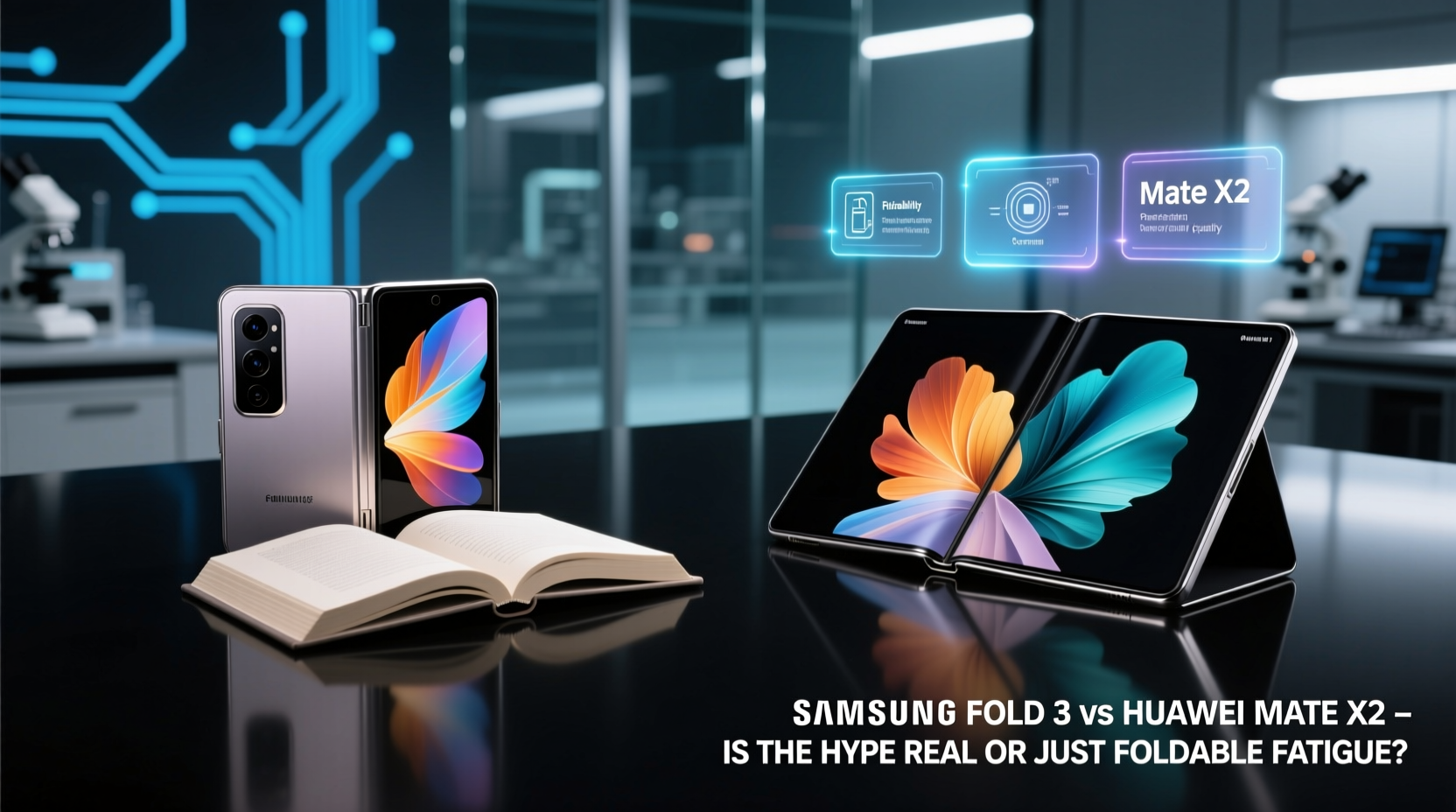
The most fundamental difference between the Fold 3 and Mate X2 lies in their folding mechanisms. The Galaxy Z Fold 3 uses an inward-folding design—its main display tucks inside when closed, protected by a sturdy outer screen. This approach prioritizes screen safety, shielding the larger internal panel from scratches and drops.
In contrast, the Huawei Mate X2 takes a different route with a unique “teardrop” hinge system that allows the screen to fold outward while minimizing crease visibility and stress on the display. When closed, the device features two front screens (one on each side), offering flexibility but exposing more of the flexible OLED to potential damage.
This divergence reflects deeper philosophies: Samsung leans into user protection and familiarity, resembling a traditional clamshell phone. Huawei embraces innovation and screen real estate, sacrificing some ruggedness for elegance and uninterrupted viewing.
Tip: Always use a protective case and avoid placing loose keys or coins in the same pocket as your foldable—micro-scratches add up over time.Durability and Long-Term Use
Foldables are inherently delicate. Both manufacturers have made strides—Samsung introduced IPX8 water resistance in the Fold 3, a first for foldables, while Huawei reinforces its hinge with dual-belt mechanics to reduce pressure on the screen.
Yet real-world testing reveals limitations. The Fold 3’s crease remains visible under certain lighting, and the ultra-thin glass, though improved, can still be compromised by sharp objects. The Mate X2’s exposed inner screen when open poses risks, especially in crowded environments.
“Foldables today are like early smartphones in 2008—promising, but not yet perfected. Durability remains the biggest hurdle to mass adoption.” — David Chen, Senior Analyst at TechInsight Asia
Users report mixed experiences after six months of daily use. Some praise the resilience of both devices; others note increased crease depth or hinge creaking. This inconsistency underscores a critical point: foldables demand careful handling, making them less ideal for rugged lifestyles.
Performance and Software Experience
Under the hood, both phones pack flagship-level hardware. The Fold 3 runs on Qualcomm’s Snapdragon 888, optimized for Android 11 (upgradable), while the Mate X2 uses Huawei’s in-house Kirin 9000, one of the few 5G-capable chips developed without U.S. components.
However, software ecosystems diverge sharply. Samsung offers full access to Google Mobile Services (GMS), including the Play Store, Gmail, Maps, and YouTube—essential for global users. Huawei, due to U.S. trade restrictions, relies on its AppGallery and third-party solutions like Petal Search, creating friction for those dependent on Google apps.
Multitasking is where foldables shine. The Fold 3 supports up to three active apps simultaneously, drag-and-drop functionality, and Samsung DeX for desktop-like operation. Huawei counters with Multi-Task View and app split-screen customization, but lacks equivalent desktop integration.
| Feature | Samsung Galaxy Z Fold 3 | Huawei Mate X2 |
|---|---|---|
| Folding Mechanism | Inward fold | Outward fold with teardrop hinge |
| Main Display Size | 7.6 inches | 8.0 inches |
| External Screen Ratio | Narrow (23.1:9) | Wider (21:9) |
| Water Resistance | IPX8 rated | No official rating |
| Google Services | Yes | No |
| Battery Capacity | 4,400 mAh | 4,500 mAh |
| Price (Launch) | $1,799 | $2,700 (China) |
Real-World Usability: Who Are These Phones For?
To understand whether the hype holds up, consider actual usage patterns. Take Maria, a digital marketing consultant based in Singapore. She purchased the Fold 3 six months ago, drawn by its multitasking capabilities. “I can run Slack, Google Sheets, and a Zoom call all at once,” she says. “It’s transformed how I work remotely.”
But she also admits drawbacks. “The battery barely lasts a full workday with heavy use. And I’m paranoid about dropping it—I keep it in a bulky case and never put it in my back pocket.”
Meanwhile, Li Wei, a tech executive in Shenzhen, opted for the Mate X2. He values the larger unfolded display and appreciates Huawei’s ecosystem integration. “I don’t rely on Google apps, so it’s not an issue for me,” he explains. “The screen feels more immersive for presentations.” However, he notes that international colleagues struggle to share files due to app incompatibility.
These cases illustrate a broader truth: foldables excel in niche professional scenarios but introduce complexity for average users. They’re tools for specific workflows—not replacements for everyday reliability.
Is It Hype or Hope? Evaluating the Future
The question isn’t whether foldables work—it’s whether they work well enough to justify their cost and fragility. Early adopters may tolerate quirks for novelty, but mainstream adoption requires consistency, affordability, and robustness.
Current models show progress. Thinner creases, faster processors, better cameras, and improved hinges signal that manufacturers are listening. Yet core issues remain: high failure rates in drop tests, limited app optimization, and inconsistent battery life.
As production scales, prices may eventually drop. But until foldables match the durability of standard flagships, they’ll remain aspirational rather than essential.
Tip: Regularly update your OS and apps—many foldable-specific bugs are resolved through software patches that improve multitasking stability.Checklist: Before Buying a Foldable Phone
- ✅ Assess your need for multitasking—do you genuinely benefit from split-screen workflows?
- ✅ Evaluate your ecosystem—if you depend on Google apps, Huawei devices require workarounds.
- ✅ Consider durability—do you frequently travel, commute, or handle devices roughly?
- ✅ Test battery expectations—foldables consume more power; carrying a charger is often necessary.
- ✅ Budget for protection—a good case and screen protector are non-negotiable investments.
- ✅ Research repair costs—screen replacements can exceed $500, and warranty coverage varies.
Frequently Asked Questions
Can I replace the screen if it gets damaged?
Yes, but it's expensive. Samsung offers out-of-warranty screen repairs starting around $599. Huawei service centers are more limited globally, and parts availability outside China can be problematic.
Do apps work well on the large displays?
Major apps like Microsoft Office, YouTube, and Chrome are optimized, but many smaller apps stretch awkwardly or don’t support multi-window mode. Developers are catching up, but gaps remain.
Which has a better camera system?
The Fold 3 edges ahead slightly with its under-display front camera and consistent low-light performance. The Mate X2 has strong optics too, but image processing suffers without Google’s HDR+ algorithms, leading to less dynamic photos in challenging light.
Conclusion: Beyond the Fold
The Samsung Galaxy Z Fold 3 and Huawei Mate X2 represent significant engineering achievements. They deliver tangible benefits for professionals who need expansive screens and advanced multitasking. But for most users, the compromises—cost, fragility, inconsistent software, and ecosystem limitations—outweigh the advantages.
The hype isn’t entirely misplaced, but it’s premature. Foldables today are transitional devices, pushing boundaries but not yet ready to replace conventional smartphones. As materials improve and software matures, the next generation may finally deliver on the promise. Until then, ask yourself: Are you buying a tool—or just chasing the future?
💬 Have you tried a foldable phone? Share your experience—was it revolutionary or just exhausting? Join the conversation below.