
When you're deep into a high-intensity interval session or pushing through the final mile of a treadmill run, the last thing you want is your audio disrupted by slipping headphones. The debate between over-ear headphones and earbuds for gym use��especially during cardio—is more than just preference; it's about performance, fit, and long-term comfort. While both options have loyal followings, one tends to outperform the other when it comes to staying securely in place during vigorous movement.
The core issue isn’t just sound quality or battery life—it’s retention. Cardio workouts involve constant head motion, sweat, and environmental distractions. Your headphones must stay locked in without requiring frequent adjustments. So, which type wins in real-world gym conditions?
Understanding Movement Dynamics During Cardio
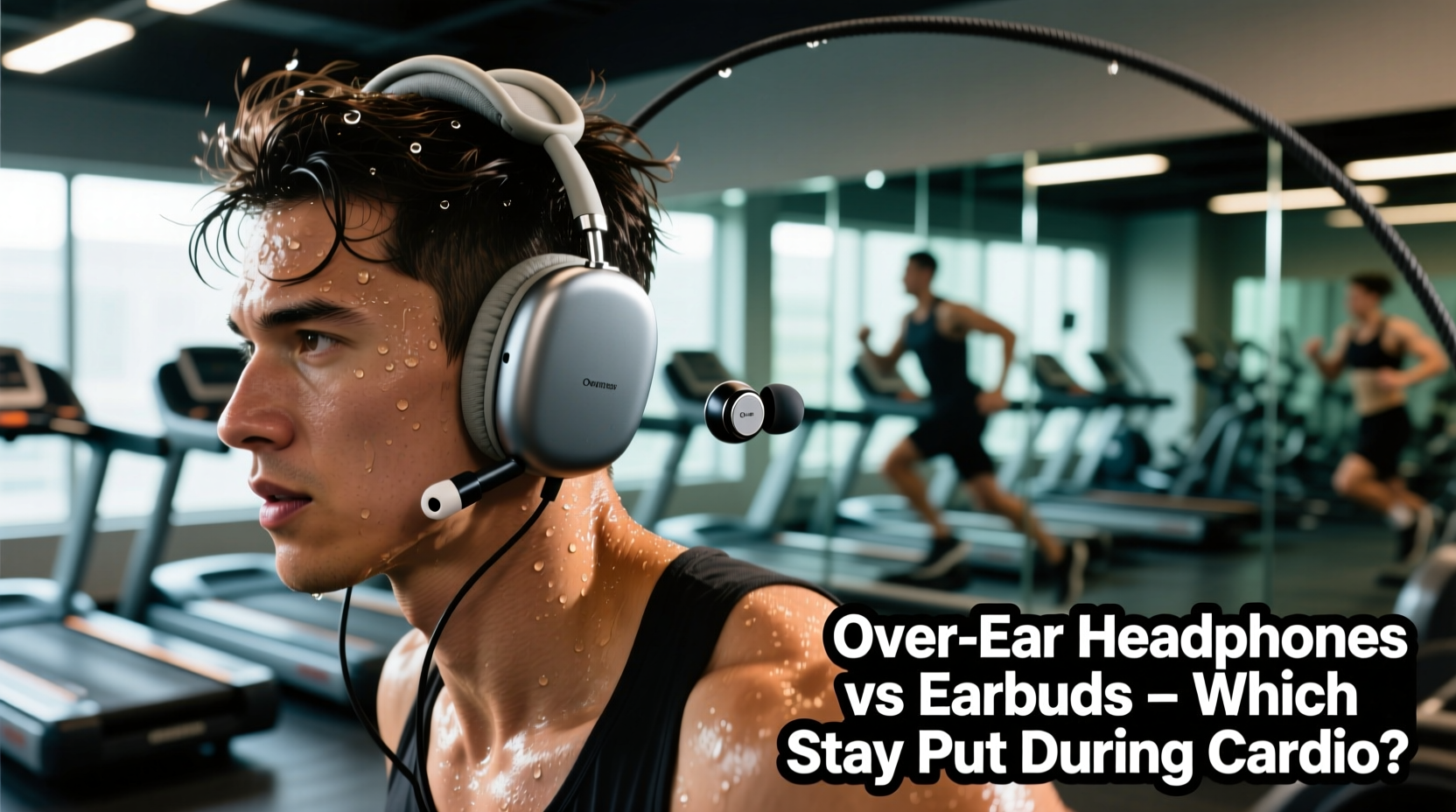
Cardio exercises like running, cycling, jumping rope, or stair climbing produce repetitive vertical and lateral head movements. These motions create forces that challenge headphone stability. Over-ear models rest on or around the ears, while earbuds sit inside the ear canal or concha bowl. Each design interacts differently with these physical demands.
Sweat adds another layer of complexity. Moisture reduces friction between earpieces and skin, increasing slippage risk. Additionally, temperature changes cause materials to expand or contract slightly, affecting fit tightness. A headphone that feels secure at the start of a workout may loosen as your body heats up.
“From a biomechanical standpoint, anything attached externally to the ear is vulnerable to displacement during rhythmic motion. In-ear solutions generally offer superior anchoring if properly fitted.” — Dr. Lena Patel, Sports Ergonomics Researcher, University of Colorado
Over-Ear Headphones: Pros and Cons for Gym Use
Over-ear (also called circumaural) headphones fully enclose the ear with padded cups connected by a headband. They are often praised for rich sound, noise isolation, and comfort during extended listening. But how do they hold up under gym stress?
Advantages
- Superior sound quality: Larger drivers allow for deeper bass and broader soundstage, ideal for motivational music.
- Better passive noise isolation: The seal around the ear blocks ambient gym noise without active cancellation.
- Less ear fatigue: No pressure inside the ear canal, making them comfortable for longer sessions.
- Easier to adjust mid-workout: Simple repositioning with one hand if they shift slightly.
Drawbacks
- Bulkier design: Can interfere with hats, helmets, or even certain machines.
- Heat buildup: Ears can get hot and sweaty quickly due to enclosed cups.
- Slippage during intense motion: Bouncing or turning fast can dislodge them, especially if not tightly clamped.
- Vulnerable to sweat damage: Sweat dripping down the temple can seep into earcup padding and electronics.
Earbuds: Stability, Fit, and Performance in Motion
Modern earbuds—especially true wireless models—are engineered specifically for active lifestyles. Many come with multiple ear tip sizes, wingtips, fins, or stabilizers designed to lock into the contours of the outer ear.
Fitness-focused brands like Powerbeats Pro, Jabra Elite Active 75t, and Shokz OpenRun prioritize secure fit above all else. Their designs leverage anatomical mapping to ensure grip during sprints, burpees, or boxing drills.
Key Advantages
- Compact and lightweight: Minimal mass means less inertia during head movement.
- Secure fit options: Silicone wings, ear hooks, and memory foam tips enhance retention.
- Sweat and water resistance: Most sport earbuds carry IPX4 or higher ratings, protecting against perspiration and rain.
- No interference with gear: Ideal for wearers of glasses, helmets, or VR headsets.
Likely Disadvantages
- Potential ear discomfort: Prolonged use may cause pressure or irritation for some users.
- Less noise isolation: Smaller drivers and looser seals reduce ambient blocking unless using active noise cancellation.
- Higher loss risk: Small size increases chance of dropping or misplacing them.
- Fit variability: Ear anatomy differs widely; what works for one person may not suit another.
Real-World Example: Marathon Training with Different Models
Jessica, a recreational runner training for her first half-marathon, tested three headphone types over six weeks. She started with her everyday over-ear Beats Studio headphones. By week two, she noticed constant readjustments during tempo runs. “Every time I turned my head or sprinted uphill, one side would slide off,” she said. Switching to standard AirPods brought improvement but still slipped after 30 minutes. Finally, she tried Jaybird Vista 2 earbuds with medium-sized ear fins. “They stayed put even during sprints and downhills. I forgot I was wearing them—which is exactly what I wanted.”
Comparison Table: Over-Ear vs. Earbuds for Cardio Workouts
| Feature | Over-Ear Headphones | Earbuds (Fitness-Oriented) |
|---|---|---|
| Stability During High-Intensity Cardio | Moderate – prone to slippage with heavy motion | High – especially with wingtips or ear hooks |
| Sweat Resistance (Average IP Rating) | IPX2 or none (rarely rated) | IPX4 to IPX7 (common in sport models) |
| Weight & Bulk | Heavier, more obtrusive | Lightweight, low-profile |
| Noise Isolation | Excellent (passive seal) | Fair to good (depends on tip seal and ANC) |
| Comfort Over 60+ Minutes | Good initially, but heat builds up | Varies by fit; some experience ear fatigue |
| Durability in Gym Environment | Lower – sensitive to sweat and impact | Higher – built for rugged use |
| Portability | Requires case or hanger; less travel-friendly | Fits in pocket; charging case easy to carry |
How to Maximize Retention: Tips for Both Types
No matter which style you choose, proper fit and usage habits determine success. Here’s how to keep either option in place:
Tip: Insert earbuds at a slight forward angle (toward your nose) to engage the ear canal properly and improve seal and stability.For Earbuds:
- Test all included ear tips: Try silicone, foam, and dual-density options to find the best seal.
- Use stabilizing fins or wings: Even if they feel odd at first, they dramatically improve grip.
- Twist into place: Rotate the bud slightly once inserted to lock it into the ridge of your concha.
- Check fit with a shake test: Gently shake your head side-to-side before starting your workout.
For Over-Ear Headphones:
- Adjust the headband precisely: Too loose = slippage; too tight = headaches. Find the sweet spot.
- Position earcups correctly: Ensure full contact with your ears—no gaps behind or below.
- Wear a headband or sweatband: A thin fabric band can help absorb sweat and add friction.
- Avoid low-clamping models: Look for \"closed-back\" or \"athletic\" over-ears with firmer grip.
Fitness-Focused Features That Make a Difference
Not all headphones are created equal—even within categories. When shopping for gym use, prioritize features proven to enhance stability:
- IP Rating: Minimum IPX4 (splash-resistant); IPX5 or higher preferred for heavy sweaters.
- Secure-fit accessories: Ear hooks, flip cables, or neckbands provide mechanical retention.
- Secure charging case: Magnetic closures and pocket clips prevent loss.
- On-ear detection: Pauses playback when removed—useful during transitions.
- Bone conduction technology: Alternative option that bypasses ears entirely (e.g., Shokz), ideal for situational awareness.
“In our lab tests, earbuds with angled nozzles and multi-point grips reduced displacement by up to 70% compared to standard in-ears during simulated running motion.” — Audio Fitness Lab, Consumer Tech Review Group
Step-by-Step: Choosing the Right Headphones for Your Cardio Routine
- Assess your workout intensity: High-impact routines demand maximum retention.
- Measure your typical sweat level: Heavy sweaters need waterproofing.
- Try multiple fit options: Visit a store or order from retailers with return policies.
- Test during actual movement: Don’t judge fit while sitting—jump, turn, and jog in place.
- Check warranty and durability claims: Look for brands offering sweat damage protection.
- Consider open-ear alternatives: Bone conduction or open-air earbuds offer safety and comfort for outdoor runners.
FAQ: Common Questions About Headphones for Cardio
Do over-ear headphones work for running?
Some do, especially athletic models with secure clamping force and sweat-resistant materials. However, most runners find them unstable compared to earbuds. For steady-state jogging on flat ground, they might suffice—but expect readjustments during sprints or uneven terrain.
Why do my earbuds keep falling out?
This usually indicates poor fit. Most people don’t use the correct ear tip size or type. Try memory foam tips or models with stabilizing fins. Also, insert them correctly: pull your ear upward to straighten the canal, then twist gently into place.
Are bone conduction headphones better for the gym?
They excel in outdoor cardio where situational awareness matters (e.g., trail running, cycling). Since they don’t block ears, you hear traffic and surroundings. However, they lack bass and aren’t ideal for loud gyms. Best as a niche alternative, not a universal solution.
Final Verdict: Which Stays On Better During Cardio?
While over-ear headphones deliver excellent audio and comfort for casual use, **earbuds—particularly fitness-specific models—consistently outperform them in retention during cardio workouts**. Their lightweight build, anatomical fit, and integrated stabilizers make them far less likely to slip, bounce, or fall out mid-exercise.
Top-tier sport earbuds combine secure ergonomics with sweat resistance and durable construction, addressing the exact challenges posed by intense gym environments. Unless you prioritize audiophile-grade sound over practicality, earbuds are the smarter choice for runners, HIIT enthusiasts, and anyone whose routine involves dynamic movement.
That said, individual anatomy plays a crucial role. Some people naturally have ears that hold standard earbuds poorly. In such cases, over-ear models with reinforced clamping or hybrid designs (like earbuds with neckbands) may be the compromise.
Conclusion: Secure Sound for Every Rep
Your headphones should enhance your workout—not hinder it. Whether you're powering through intervals, chasing a PR, or just trying to stay motivated, reliable audio is part of the rhythm. Based on stability, durability, and real-world performance, earbuds designed for fitness activities are the clear winner when it comes to staying put during cardio.
But the best choice is ultimately the one that fits *you*. Take the time to test different models, prioritize secure fit over brand loyalty, and invest in gear built for motion. When your music stays locked in, so does your focus.
💬 Have a favorite pair that never slips during workouts? Share your go-to model and why it works for you—your insight could help someone finally solve their headphone struggle!