When it comes to choosing a new smartphone, the decision often boils down to balancing raw performance with long-term value. The OnePlus 12 and Nothing Phone (2a) sit at opposite ends of this spectrum—one represents a flagship-tier powerhouse, while the other delivers an experience that feels premium on a mid-range budget. But does the leap in price from the ₹30,000-range Nothing Phone 2a to the ₹60,000+ OnePlus 12 truly justify the upgrade? For users weighing future-proofing against immediate affordability, this comparison cuts straight to the core of modern smartphone dilemmas.
The answer isn’t just about processor speed or camera megapixels—it’s about how each device performs over time, how software enhances usability, and whether subtle design choices translate into daily satisfaction. Let’s dissect both phones across key categories to determine if premium performance translates into a premium experience worth paying for.
Design and Build: Aesthetic Philosophy Meets Practicality
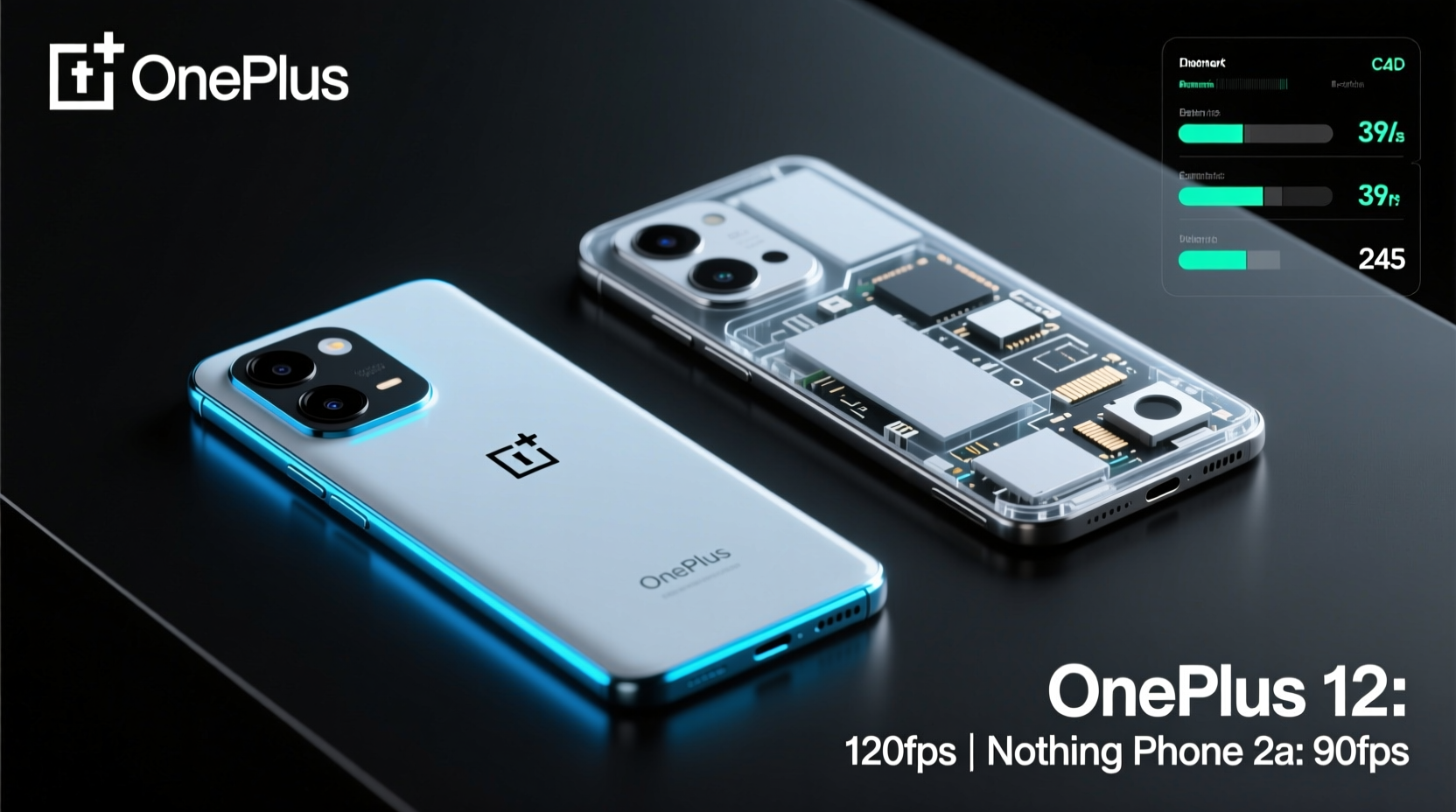
At first glance, both phones command attention—but for different reasons. The Nothing Phone (2a) doubles down on its signature transparent back with Glyph Interface lighting, offering a futuristic aesthetic that stands out in a sea of matte slabs. It's lightweight (197g), compact, and built with recycled aluminum and Gorilla Glass 5, giving it a surprisingly sturdy feel despite its playful look.
In contrast, the OnePlus 12 opts for understated elegance. Available in matte black, jade green, and titanium gray finishes, it features a curved glass body framed by brushed aluminum. At 220g, it’s noticeably heavier, but that weight conveys solidity—a hallmark of flagship construction. The curved display extends the sense of immersion, though it can make screen protectors trickier to apply.
Tip: If you prioritize pocketability and unique design, the Nothing Phone 2a wins. For those who prefer a more traditional, luxurious feel, the OnePlus 12 delivers.Both devices are IP65-rated—resistant to dust and low-pressure water jets—but neither offers full submersion protection. While the rating is identical, the OnePlus 12’s tighter seams and premium sealing inspire slightly more confidence during accidental spills or rain exposure.
Performance and Hardware: Raw Power vs Smart Efficiency
This is where the gap widens significantly. The OnePlus 12 is powered by the Qualcomm Snapdragon 8 Gen 3, currently one of the most powerful mobile chipsets available. Paired with up to 16GB of LPDDR5X RAM and UFS 4.0 storage, it handles multitasking, gaming, and AI workloads effortlessly. Whether editing 4K video or running multiple productivity apps side-by-side, the system remains fluid even under sustained load.
The Nothing Phone (2a), meanwhile, uses the MediaTek Dimensity 7200 Pro—a capable mid-range SoC. It handles everyday tasks like browsing, streaming, and social media without issue, and even manages moderate gaming well. However, when pushed with graphically intense titles like *Genshin Impact* at high settings, frame drops become noticeable after extended play. Thermal throttling kicks in faster, leading to reduced performance over time.
“Flagship silicon isn’t just about peak speed—it’s about consistency. High-end chips sustain performance longer, which matters for power users.” — Arjun Patel, Mobile Hardware Analyst at TechPulse India
Battery life tells a similar story. The OnePlus 12 packs a 5400mAh cell with 80W wired charging and 50W wireless—capable of going from 0% to full in under 35 minutes. The Nothing Phone 2a has a smaller 5000mAh battery and supports only 45W fast charging, requiring closer to 60 minutes for a full charge. Both last a full day under normal use, but the OnePlus 12 pulls ahead during heavy usage thanks to better power management and larger capacity.
Display Quality: Immersion vs Clarity
The displays reflect their respective price points clearly. The OnePlus 12 features a 6.82-inch LTPO AMOLED panel with QHD+ resolution (3168 x 1440), a 120Hz adaptive refresh rate, and peak brightness of 4500 nits. Colors are vibrant yet accurate, blacks are deep, and HDR content on platforms like Netflix or YouTube looks stunning. The curved edges enhance cinematic viewing, though some may find accidental touches annoying.
The Nothing Phone (2a) uses a 6.7-inch AMOLED flat display with FHD+ resolution (2412 x 1080) and a fixed 120Hz refresh rate. It’s bright enough for outdoor visibility and supports HDR10+, but lacks the pixel density and dynamic range of its pricier counterpart. There’s no LTPO tech, meaning the refresh rate doesn’t adapt dynamically to content, resulting in slightly higher battery drain over time.
| Feature | OnePlus 12 | Nothing Phone (2a) |
|---|---|---|
| Display Size | 6.82\" | 6.7\" |
| Resolution | QHD+ (3168x1440) | FHD+ (2412x1080) |
| Refresh Rate | 1-120Hz Adaptive (LTPO) | 120Hz Fixed |
| Brightness (Peak) | 4500 nits | 1300 nits |
| Panel Type | Curved AMOLED | Flat AMOLED |
If you consume a lot of video content or value crisp text rendering, the OnePlus 12’s display is objectively superior. But for general use, the Nothing Phone 2a’s screen remains sharp and enjoyable—just not quite as immersive.
Camera Capabilities: Versatility vs Simplicity
Photography is another area where investment pays off. The OnePlus 12 boasts a triple-camera setup co-engineered with Hasselblad: a 50MP main sensor (Sony LYT-808), a 64MP periscope telephoto with 3x optical and up to 120x digital zoom, and a 48MP ultra-wide lens. Low-light performance is excellent, with natural color tuning and minimal noise. The telephoto lens allows true optical zoom—something rare even among flagships—and enables detailed close-ups without cropping degradation.
The Nothing Phone (2a) sticks to a dual 50MP system: a primary Sony IMX890 sensor and a secondary ultra-wide. While daylight shots are clean and well-exposed, low-light photography suffers from smearing and loss of detail. There’s no optical zoom—only digital—which limits creative flexibility. Video recording maxes out at 4K@30fps on both rear and front cameras, compared to 8K@30fps on the OnePlus 12.
Tip: If you frequently shoot in dim environments or want professional-grade zoom, the OnePlus 12’s camera system offers tangible advantages.Front-facing cameras are closely matched. Both deliver solid selfie quality with good skin tone reproduction and decent dynamic range. However, the OnePlus 12 benefits from AI-enhanced stabilization and portrait mode depth detection, making vlogs and video calls smoother.
User Experience and Software: Clean UI vs Unique Identity
Both phones run near-stock Android interfaces—OnePlus with OxygenOS and Nothing with Nothing OS—but they approach user experience differently. OxygenOS 14 on the OnePlus 12 is refined, fast, and feature-rich. It includes granular customization options, dark mode scheduling, gesture navigation tweaks, and robust privacy controls. Updates are guaranteed for four years, aligning with Google’s Pixel-level support promise.
Nothing OS 2.5 on the Phone (2a) focuses on minimalism and personality. The Glyph Interface—those LED lights on the back—can be customized to pulse with music, flash for notifications, or act as a breathing light during charging. It’s fun and functional, adding a layer of interactivity absent from most smartphones. However, the software ecosystem is still maturing; some third-party app integrations remain inconsistent, and update cycles are shorter (two major OS updates).
“The best software doesn’t draw attention to itself. OxygenOS stays out of the way while delivering reliability. Nothing OS charms you first—but may wear thin over time.” — Riya Mehta, UX Researcher at MobileFlow Labs
Beyond aesthetics, OxygenOS integrates better with productivity tools, offers deeper automation via Zen Mode, and supports split-screen workflows more effectively. For professionals relying on their phone as a mini workstation, these nuances matter.
Real-World Example: A Week in the Life of Two Users
Consider two users: Priya, a freelance photographer, and Karan, a college student.
Priya uses her OnePlus 12 daily for client shoots, editing on-the-go with Lightroom, and uploading portfolios via 5G. She relies on the telephoto lens for architectural details and appreciates the large, color-accurate display for previewing edits. When traveling, she charges quickly between gigs using 80W charging. Over six months, the phone hasn’t slowed, even with hundreds of RAW files stored locally.
Karan chose the Nothing Phone (2a) because it fit his ₹30,000 budget. He streams lectures, edits group project videos, and plays casual games. He loves the Glyph lights syncing with his playlist during study breaks. While he notices occasional lag when switching between apps, it hasn’t disrupted his routine. After nine months, he’s still satisfied—though he admits he’d consider upgrading for better camera performance next time.
Their experiences highlight a truth: premium hardware shines brightest under demanding conditions. Casual users may never tap into the full potential of a flagship, making mid-tier devices compelling alternatives.
Value Proposition: Is the Jump Worth It?
To assess value, consider three factors: longevity, use case, and personal priorities.
- Longevity: The OnePlus 12 will likely remain performant for 4–5 years due to superior hardware headroom and longer software support. The Nothing Phone (2a) may show signs of aging by year three, especially as apps grow more resource-intensive.
- Use Case: Professionals, creatives, and power users benefit from the OnePlus 12’s capabilities. Students, casual users, and budget-conscious buyers get excellent value from the Nothing Phone 2a.
- Personal Priorities: Do you care about cutting-edge cameras, rapid charging, and seamless multitasking? Then the OnePlus 12 justifies its cost. Are you drawn to design flair and efficient basics? The Nothing Phone 2a satisfies.
- Who should choose the OnePlus 12?
- Users who demand top-tier performance, plan to keep their phone for years, or rely on mobile photography and productivity.
- Who should choose the Nothing Phone (2a)?
- Budget-focused buyers who want a stylish, capable phone without overspending, and appreciate unique design elements.
FAQ
Can the Nothing Phone (2a) compete with flagship phones?
It competes in specific areas—design, clean software, and mid-range efficiency—but falls short in sustained performance, zoom photography, and display refinement. It’s impressive within its class but not equivalent to true flagships.
Does the OnePlus 12 offer better battery life than the Nothing Phone (2a)?
Yes, especially under heavy use. The larger battery, more efficient chipset, and adaptive display give the OnePlus 12 a clear edge in endurance and charging speed.
Is the Glyph Interface useful or just gimmicky?
It’s both. While it adds personality and basic notification feedback, it doesn’t replace core functionality. Some users love it; others disable it entirely. Its usefulness depends on individual preference.
Step-by-Step Guide: Choosing Between Them
- Assess your daily usage: Do you edit photos, play graphics-heavy games, or multitask heavily? If yes, lean toward OnePlus 12.
- Set a realistic budget: Consider total cost of ownership. Can you stretch to ₹60,000+ for longer usability?
- Evaluate camera needs: Need optical zoom or exceptional night shots? OnePlus 12 wins.
- Test ergonomics: Try both in-hand. The OnePlus 12 is larger and heavier; ensure comfort.
- Review update policy: OnePlus promises 4 OS updates vs Nothing’s 2. This affects long-term security and feature access.
- Make your decision: Choose based on actual needs—not just specs or trends.
Conclusion: Performance Has a Price—But So Does Compromise
The OnePlus 12 and Nothing Phone (2a) represent two philosophies: one chasing technological excellence, the other redefining accessibility. The premium performance of the OnePlus 12 isn't just marketing—it's measurable in faster app launches, crisper images, longer lifespan, and a more polished overall experience. For users whose work or lifestyle demands reliability and headroom, the jump is absolutely worth it.
Yet, the Nothing Phone (2a) proves that compelling experiences don’t require flagship specs. With smart design, clean software, and strong core performance, it delivers joy at half the price. For many, that balance is more than sufficient.
Ultimately, the choice depends not on what the phones can do, but on what you need them to do. Invest in capability when it aligns with your life. Save when simplicity suffices. In either case, you’re not settling—you’re choosing wisely.
💬 Which phone fits your lifestyle better—the powerhouse OnePlus 12 or the stylish Nothing Phone (2a)? Share your thoughts and real-world experiences in the comments below.