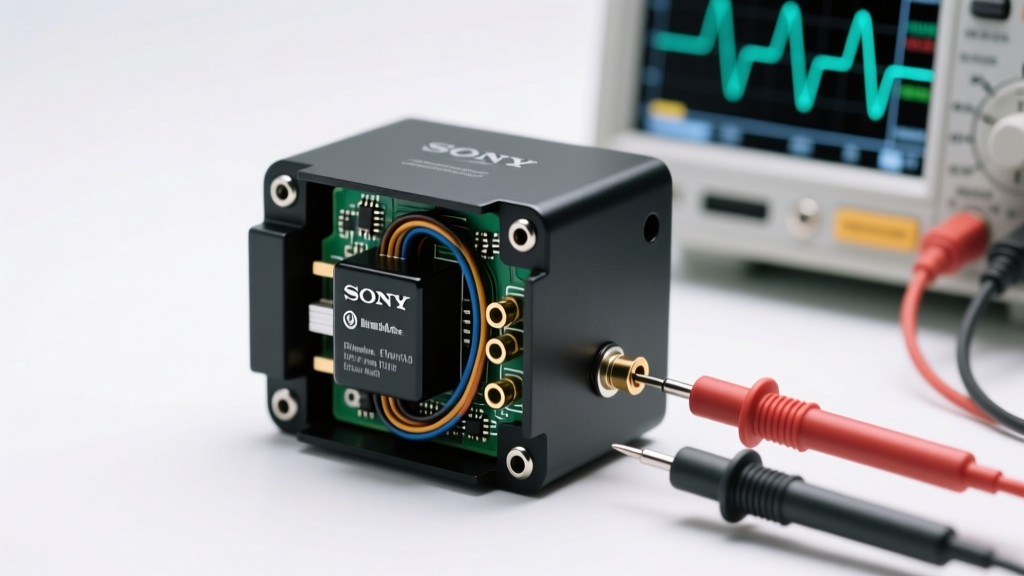
Types of Low-Frequency Amplifiers
A low-frequency amplifier is an electronic device designed to amplify signals in the lower frequency range, typically from near-DC (0 Hz) up to around 20 kHz—the audible spectrum for humans. These amplifiers are essential in audio systems, medical instrumentation, industrial controls, and signal processing applications where faithful reproduction of low-frequency signals is critical.
Unlike high-frequency amplifiers optimized for RF or communication signals, low-frequency amplifiers prioritize signal fidelity, linearity, and noise reduction. The two primary categories in consumer and industrial electronics are operational amplifiers and voltage amplifiers, each serving distinct but sometimes overlapping roles.
Operational Amplifiers (Op-Amps)
Operational amplifiers are highly versatile integrated circuits designed to perform a wide range of analog signal processing tasks, especially at low frequencies.
Advantages
- High gain and precision
- Wide bandwidth for low-frequency applications
- Configurable for multiple functions (amplification, filtering, integration)
- Excellent linearity and low distortion
- Available in low-noise variants for sensitive applications
Limitations
- Requires external components for stable operation
- Sensitive to power supply noise
- Can oscillate if not properly compensated
- May need heat dissipation in high-power configurations
Best for: Active filters, signal conditioning, integrators, differentiators, and precision analog circuits
Voltage Amplifiers
Voltage amplifiers are dedicated circuits or components designed specifically to increase the amplitude of a voltage signal while preserving its waveform and frequency characteristics.
Advantages
- Precise voltage gain control
- Minimal phase distortion
- High input impedance, low output impedance
- Ideal for weak signal amplification
- Used in cascade stages for multi-level amplification
Limitations
- Narrower functional scope compared to op-amps
- Less flexible in circuit design
- May require additional buffering stages
- Performance highly dependent on component quality
Best for: Audio preamplifiers, medical sensors (ECG, EEG), instrumentation amplifiers, and signal boosting in measurement systems
Detailed Overview: Operational Amplifiers
Operational amplifiers are among the most widely used components in analog electronics. They feature differential inputs and a single-ended output, offering extremely high open-loop gain (often exceeding 100,000). In low-frequency applications, op-amps are typically used with negative feedback to control gain and improve stability.
Key applications include:
- Audio Processing: Tone control, equalization, and active crossover networks
- Signal Conditioning: Amplifying transducer outputs (e.g., microphones, thermocouples)
- Mathematical Operations: Integration, differentiation, and summing in analog computers
- Filters: Low-pass, high-pass, and band-pass filters for noise reduction
Modern op-amps come in various types—general-purpose, low-noise, rail-to-rail, and instrumentation-grade—allowing engineers to select the optimal device based on bandwidth, power consumption, and precision requirements.
Detailed Overview: Voltage Amplifiers
Voltage amplifiers focus on increasing the voltage level of a signal without altering its essential characteristics. Unlike op-amps, which are building blocks for complex circuits, voltage amplifiers are often purpose-built for specific gain requirements.
They are commonly found in:
- Audio Equipment: Preamplifiers that boost microphone or instrument signals before power amplification
- Medical Devices: Amplifying bioelectric signals such as ECG, EMG, and EEG, which are inherently low-level and low-frequency
- Industrial Sensors: Boosting output from strain gauges, accelerometers, and other transducers
- Communication Systems: Intermediate stages in signal chains where voltage level adjustment is needed
These amplifiers are designed to maintain signal integrity, minimize added noise, and provide consistent gain across the operating frequency range.
| Type | Primary Function | Typical Gain | Key Applications | Frequency Range |
|---|---|---|---|---|
| Operational Amplifier | Signal processing & amplification | 10 to 100,000+ (configurable) | Filters, integrators, analog math | DC – 1 MHz (varies by model) |
| Voltage Amplifier | Voltage level boosting | Fixed or adjustable (1–100x) | Audio preamps, medical sensors | DC – 20 kHz (audio range) |
Expert Tip: When designing low-frequency amplifier circuits, always consider input impedance matching and noise performance. For medical or scientific applications, use instrumentation amplifiers—specialized voltage amplifiers with high common-mode rejection ratio (CMRR) to eliminate interference from external sources.
In summary, while both operational and voltage amplifiers serve the purpose of enhancing low-frequency signals, their design philosophies and applications differ significantly. Operational amplifiers offer flexibility and are foundational in analog circuit design, whereas voltage amplifiers excel in dedicated signal boosting tasks where waveform fidelity is paramount. Understanding these distinctions enables engineers and hobbyists to select the right amplifier type for optimal system performance.
Material & Durability of Low-Frequency Amplifiers
Low-frequency amplifiers are essential components in audio systems, communication devices, and industrial equipment, where faithful signal reproduction at lower frequencies (typically 20 Hz – 200 Hz) is critical. The performance, reliability, and lifespan of these amplifiers depend significantly on the materials used in their construction and the engineering principles applied to ensure long-term durability.
Key Materials Used in Low-Frequency Amplifiers
The selection of materials in low-frequency amplifiers is driven by electrical performance, thermal management, mechanical strength, and environmental resistance. Each component—from the chassis to internal circuitry—plays a vital role in the amplifier's overall functionality.
Chassis & Housing Materials
The external structure of an amplifier protects sensitive electronics and contributes to heat dissipation and electromagnetic shielding. Two primary metals dominate this application: aluminum and steel.
Aluminum is widely favored for its lightweight nature, excellent thermal conductivity, and corrosion resistance. It’s also easier to machine and shape, making it ideal for complex enclosures. While not as strong as steel, its ability to draw heat away from internal components makes it a top choice for heatsinks and ventilated housings.
Steel, particularly cold-rolled or galvanized variants, offers superior strength and rigidity. It provides excellent protection against physical impacts and electromagnetic interference (EMI), which is crucial in industrial environments. However, steel is heavier and less efficient at dissipating heat, often requiring additional cooling solutions.
Printed Circuit Board (PCB) Composition
The backbone of any modern amplifier is its printed circuit board, which integrates all electronic components into a functional unit. Most PCBs use a layered structure consisting of:
Fiberglass (FR-4) serves as the substrate, providing mechanical stability, high dielectric strength, and resistance to heat and moisture. This material ensures the board maintains its integrity under varying environmental conditions.
Copper is laminated onto the fiberglass to form conductive pathways. Its high electrical conductivity minimizes signal loss and power dissipation, which is especially important in low-frequency applications where current demands can be high. Multi-layer boards may use thicker copper traces to handle increased current loads without overheating.
Semiconductor Materials: Transistors & ICs
At the heart of every low-frequency amplifier are semiconductor devices—primarily bipolar junction transistors (BJTs) or field-effect transistors (FETs)—responsible for signal amplification. These are typically fabricated from:
Silicon remains the most prevalent semiconductor material due to its excellent balance of electrical properties, thermal stability, and cost-effectiveness. Silicon-based transistors offer high gain, low noise, and robust performance under normal operating conditions. They are also highly resistant to wear and degradation over time, contributing significantly to the amplifier’s longevity.
Gallium Arsenide (GaAs), while more expensive and less common in standard audio amplifiers, is used in specialized high-efficiency or high-frequency designs. Though not typical for pure low-frequency applications, GaAs offers superior electron mobility and is sometimes found in hybrid or wideband amplifiers.
Connectors & Surface Coatings
To ensure reliable electrical connections and prevent oxidation, critical contact points on PCBs—such as solder pads, connectors, and terminal strips—are often coated with protective metals.
Gold plating is used in high-reliability connectors due to its exceptional resistance to corrosion and stable conductivity, even in humid or corrosive environments. However, due to cost, it is usually applied in thin layers.
Tin plating is a more economical alternative commonly used for solder joints and component leads. Modern lead-free tin alloys meet environmental standards and provide good solderability and moderate corrosion resistance, though they may be prone to "tin whiskers" over very long periods.
| Component | Primary Material | Function & Benefits |
|---|---|---|
| Amplifier Chassis | Aluminum / Steel | Provides structural protection, EMI shielding, and heat dissipation. Aluminum offers lightweight thermal efficiency; steel delivers superior durability. |
| PCB Substrate | Fiberglass (FR-4) | Insulating base with high mechanical and thermal stability; resists moisture and electrical leakage. |
| Conductive Traces | Copper | High conductivity ensures minimal signal loss and efficient power transfer across the circuit. |
| Transistors | Silicon | Reliable semiconductor with excellent amplification characteristics and long-term durability. |
| Connector Coatings | Gold / Tin | Prevents oxidation, ensures consistent conductivity, and enhances solder joint reliability. |
Durability Factors in Low-Frequency Amplifiers
Beyond material selection, the long-term reliability of low-frequency amplifiers depends on design practices that mitigate common failure modes. Manufacturers incorporate several durability-enhancing features to ensure consistent performance over years of operation.
Important: To maximize the lifespan of a low-frequency amplifier, ensure proper ventilation, avoid overloading the output, and operate within specified temperature and humidity ranges. Regular inspection of connections and cooling systems can prevent premature failure. Using high-quality cables and matched impedance loads also contributes to sustained performance and reduced stress on internal components.
In summary, low-frequency amplifiers are engineered for longevity through the strategic use of durable, high-performance materials. From silicon-based semiconductors and copper-laden PCBs to aluminum or steel enclosures, each material is chosen to fulfill specific electrical, thermal, and mechanical roles. Combined with thoughtful design for heat management, physical protection, and environmental resilience, these amplifiers deliver reliable operation for many years—even under demanding conditions.
Commercial Use of Low-Frequency Amplifiers
Low-frequency amplifiers play a crucial role across a wide range of commercial and industrial applications by enhancing weak signals and enabling accurate data transmission, processing, and system control. These amplifiers specialize in boosting signals in the lower end of the frequency spectrum—typically below 20 kHz—where many critical physical and biological signals reside. Their ability to amplify subtle inputs with minimal distortion makes them indispensable in fields requiring high sensitivity and reliability.
Audio Equipment
Low-frequency amplifiers are fundamental components in professional and consumer audio systems. They are specifically designed to enhance bass and sub-bass frequencies, ensuring rich, full-bodied sound reproduction in various listening environments.
- Used in loudspeakers, subwoofers, home theater systems, and public address (PA) systems to deliver powerful low-end audio performance
- Enable accurate playback of music and voice signals by amplifying frequencies within the human hearing range (20 Hz – 20 kHz), especially enhancing the 20–200 Hz range for deeper bass
- Essential for live sound engineering, studio monitoring, and broadcast applications where clarity and dynamic range are critical
- High-fidelity amplifiers reduce harmonic distortion and phase shift, preserving the integrity of the original audio signal
Key benefit: Improved audio quality and listener experience, especially in entertainment venues, concerts, and home entertainment setups
Medical Devices
In healthcare, low-frequency amplifiers are vital for capturing and processing bioelectrical signals generated by the human body. These signals are extremely weak—often in the microvolt range—and require precise amplification for diagnostic accuracy.
- Integral to electrocardiograms (ECG/EKG), which measure heart activity by amplifying electrical impulses from cardiac muscle contractions
- Used in electroencephalograms (EEG) to detect and amplify brainwave patterns for diagnosing neurological conditions like epilepsy or sleep disorders
- Employed in electromyography (EMG) to assess muscle and nerve function by amplifying signals from motor neurons
- Designed with high common-mode rejection ratios (CMRR) to eliminate noise from external sources such as power lines
Critical function: Ensures signal fidelity and patient safety by enabling accurate, non-invasive diagnostics and real-time monitoring
Radio Communication Systems
Low-frequency amplifiers support long-range communication technologies by processing and boosting signals in the LF (30–300 kHz) and VLF (3–30 kHz) bands, which can travel long distances and penetrate water and soil.
- Used in maritime and aviation navigation systems (e.g., LORAN-C, submarine communication) where signal penetration and reliability are essential
- Amplify modulated signals before transmission and after reception to maintain clarity over extended distances
- Enable signal filtering to reduce interference from ambient electromagnetic noise
- Support emergency communication systems and military applications due to their resilience in adverse conditions
Operational advantage: Facilitates reliable, long-distance communication even in remote or underground environments
Industrial Sensors and Monitoring Systems
In industrial automation and predictive maintenance, low-frequency amplifiers are used to condition signals from sensors that monitor mechanical and environmental parameters.
- Amplify low-level outputs from vibration sensors, strain gauges, thermocouples, and pressure transducers
- Enable real-time monitoring of machinery health by detecting subtle changes in operational behavior
- Help prevent equipment failure by identifying early signs of wear, misalignment, or imbalance
- Integrated into SCADA systems and IoT-enabled industrial networks for centralized data analysis
Business impact: Reduces downtime, extends equipment lifespan, and improves operational efficiency in manufacturing, energy, and transportation sectors
Scientific Research Equipment
Low-frequency amplifiers are essential tools in advanced scientific research, particularly in experiments involving extremely weak signals that must be isolated and amplified without introducing noise.
- Used in radio astronomy to capture faint cosmic signals from distant stars and galaxies in the very low frequency range
- Support quantum physics experiments by amplifying signals from superconducting quantum interference devices (SQUIDs)
- Enable geophysical studies, such as seismic monitoring and underground imaging, by processing ground motion signals
- Feature ultra-low noise designs and cryogenic compatibility for use in high-precision laboratory environments
Research value: Empowers discovery by making imperceptible phenomena measurable and analyzable
Emerging and Niche Applications
Beyond traditional uses, low-frequency amplifiers are finding new roles in innovative technologies and specialized systems.
- Used in environmental monitoring stations to process data from acoustic sensors detecting animal calls or natural events
- Integrated into smart building systems for structural health monitoring via vibration analysis
- Support biomedical wearables and implantable devices that require energy-efficient, miniaturized amplification circuits
- Applied in underwater acoustics and sonar systems for marine exploration and defense
Future potential: As sensor technology advances, demand for high-performance, low-noise amplifiers will continue to grow across diverse sectors
Expert Insight: When selecting low-frequency amplifiers for commercial applications, prioritize specifications such as gain accuracy, bandwidth, signal-to-noise ratio (SNR), input impedance, and thermal stability. For mission-critical systems—especially in medical or industrial settings—opt for amplifiers with built-in diagnostics, shielding, and compliance with industry standards (e.g., ISO, IEC, FDA). Partnering with reputable manufacturers ensures reliability, technical support, and long-term serviceability.
| Application Sector | Typical Frequency Range | Key Amplifier Features | Common Output Devices |
|---|---|---|---|
| Audio Equipment | 20 Hz – 200 Hz | High power output, low distortion, thermal protection | Subwoofers, PA speakers, headphones |
| Medical Diagnostics | 0.1 Hz – 100 Hz | Ultra-low noise, high CMRR, galvanic isolation | ECG/EEG displays, patient monitors |
| Radio Communications | 3 kHz – 300 kHz | Stable gain, EMI resistance, modulation support | Antennas, transceivers, navigation systems |
| Industrial Sensing | DC – 1 kHz | Precision gain, temperature compensation, rugged design | PLCs, HMIs, alarm systems |
| Scientific Research | 0.001 Hz – 1 kHz | Ultra-low noise, cryogenic operation, high stability | Data loggers, spectrum analyzers, telescopes |
Additional Considerations for Commercial Deployment
- Signal Integrity: Proper shielding and grounding are essential to prevent interference and ensure clean amplification
- Power Efficiency: In battery-powered or portable systems, low-power amplifier designs extend operational life
- Scalability: Modular amplifier systems allow integration into larger networks for enterprise or industrial use
- Compliance: Adherence to regulatory standards (e.g., FCC, CE, RoHS) ensures legal and safe operation
- Maintenance: Regular calibration and diagnostics help maintain performance over time, especially in critical applications
How to Choose a Low-Frequency Amplifier: A Comprehensive Guide for Commercial Applications
Selecting the right low-frequency amplifier is critical for ensuring optimal signal integrity, system efficiency, and long-term reliability in commercial and industrial environments. Whether you're designing an audio system, setting up scientific instrumentation, or deploying communication equipment, understanding key amplifier specifications will help you make an informed decision. This guide explores the most important factors to consider when choosing a low-frequency amplifier, with practical insights and application-specific recommendations.
Important Note: Always match the amplifier's specifications to your system's operational requirements. Over-specifying can lead to unnecessary costs, while under-specifying may compromise performance and safety.
Key Factors in Selecting a Low-Frequency Amplifier
- Gain (Amplification Factor): Gain refers to the ratio of output signal magnitude to input signal magnitude, typically expressed in terms of voltage, current, or power gain. It determines how much the input signal is amplified. For commercial applications, it’s essential to calculate the required gain based on the source signal strength and the desired output level.
Example: In a public address system, if the microphone outputs a weak 10 mV signal and the speaker requires 1 V to operate effectively, you’ll need an amplifier with a voltage gain of at least 100 (40 dB). Too much gain can cause distortion or clipping, while insufficient gain results in poor signal quality and weak output.
Pro Tip: Look for amplifiers with adjustable gain controls to allow fine-tuning based on varying input levels and system configurations. - Bandwidth (Frequency Response): Bandwidth defines the range of frequencies an amplifier can effectively amplify, usually measured between the lower and upper -3 dB points. For low-frequency applications, ensure the amplifier supports the full spectrum of your signal.
Example: In audio systems used for live music or broadcasting, a bandwidth of at least 20 Hz to 20 kHz is ideal to preserve the full range of human hearing. For sub-bass applications (e.g., theaters or dance clubs), amplifiers with extended low-frequency response down to 10 Hz or lower are preferred.
Application Insight: In industrial control systems or seismic monitoring, where signals may be below 10 Hz, choose amplifiers specifically designed for ultra-low-frequency operation to avoid phase shifts and signal attenuation. - Impedance Matching: Impedance is the AC resistance of a circuit, measured in ohms (Ω). Proper matching between the amplifier’s input/output impedance and the connected devices (e.g., sensors, speakers, or transmission lines) is crucial for maximum power transfer and minimal signal reflection.
Example: A microphone with an output impedance of 150 Ω should be connected to an amplifier with an input impedance of at least 1,500 Ω (10:1 rule) to prevent loading effects. Similarly, speaker impedance (commonly 4Ω, 8Ω, or 16Ω) must align with the amplifier’s rated output impedance.
Warning: Mismatched impedance can lead to signal loss, overheating, reduced efficiency, and even permanent damage to components. Always verify compatibility before integration. - Noise Level (Signal-to-Noise Ratio - SNR): All amplifiers introduce some level of electronic noise, which can degrade signal clarity. Low-noise amplifiers (LNAs) are essential in applications where signal fidelity is paramount.
Example: In medical devices like ECG or EEG machines, even microvolt-level signals must be amplified without introducing interference. Similarly, in scientific research or radio astronomy, low noise ensures accurate data acquisition.
Key Metric: Look for amplifiers with high Signal-to-Noise Ratio (SNR), typically above 90 dB for precision applications. Also check the Equivalent Input Noise (EIN) value—lower is better.
| Parameter | Recommended Range for Low-Frequency Use | Measurement Unit | Common Applications |
|---|---|---|---|
| Gain | 20 dB – 60 dB (adjustable preferred) | dB or linear ratio | Audio systems, sensor signal conditioning |
| Bandwidth | DC – 1 kHz (extended to 20 kHz for audio) | Hz | Subwoofers, geophysical instruments, biomedical devices |
| Input Impedance | ≥ 10x source impedance | Ω (ohms) | All signal sources (microphones, sensors) |
| Output Impedance | ≤ 1/10th load impedance | Ω (ohms) | Speaker drivers, transmission lines |
| Noise Figure / EIN | < 5 dB / < -120 dBV | dB or dBV | Medical, scientific, and high-fidelity audio |
Expert Tip: When integrating amplifiers into a larger system, consider using shielded cables and proper grounding techniques to minimize electromagnetic interference (EMI), especially in environments with high electrical noise (e.g., industrial facilities or near RF transmitters).
Additional Selection Criteria
- Power Supply Requirements: Ensure the amplifier is compatible with available power sources (e.g., 12V DC, 24V AC, or line voltage). Some low-frequency amplifiers require dual power supplies for optimal performance.
- Thermal Management: High-gain amplifiers can generate significant heat. Check for built-in heat sinks or cooling systems, especially for continuous-duty applications.
- Form Factor & Mounting: Consider rack-mountable, DIN rail, or compact PCB-mounted designs depending on your installation space and scalability needs.
- Protection Features: Look for amplifiers with short-circuit, over-temperature, and over-voltage protection to enhance reliability and reduce downtime.
- Compliance & Certification: Verify that the amplifier meets relevant industry standards (e.g., CE, FCC, RoHS) for safety and electromagnetic compatibility.
Choosing the right low-frequency amplifier involves balancing technical specifications with real-world application demands. By carefully evaluating gain, bandwidth, impedance, and noise performance—and considering additional factors like power, durability, and compliance—you can select an amplifier that delivers reliable, high-quality signal amplification for your commercial system. When in doubt, consult the manufacturer’s datasheet or seek advice from an audio or electronics engineer to ensure optimal integration.
Frequently Asked Questions About Audio Amplifiers
Q1: Will an amplifier greatly affect sound quality?Yes, an amplifier plays a crucial role in determining the overall sound quality of an audio system. While its primary function is to increase the power of an audio signal, the way it does so has a direct impact on clarity, detail, and fidelity.
- High-Quality Amplifiers: Deliver clean power with minimal distortion (low THD – Total Harmonic Distortion), wide frequency response (typically 20Hz–20kHz for full-range audio), and excellent dynamic range. This ensures that the amplified sound remains true to the original recording, preserving subtle nuances and delivering crisp highs and deep, controlled bass.
- Low-Quality Amplifiers: Often introduce noise, clipping, or coloration due to poor circuit design, inadequate power supply, or overheating. These issues result in distorted sound, muffled details, and even potential damage to speakers over time.
- Impedance Matching: A well-matched amplifier-speaker combination ensures optimal power transfer and prevents strain on components, further enhancing sound quality and system longevity.
In short, a good amplifier doesn’t just make sound louder—it makes it better. It acts as the backbone of any high-fidelity audio setup, ensuring that every note is delivered with precision and power.
Q2: How does temperature affect amplifier performance?Temperature significantly influences amplifier performance and long-term reliability. As amplifiers operate, they generate heat due to electrical resistance and power conversion inefficiencies. If not properly managed, elevated temperatures can lead to several issues:
- Component Degradation: Transistors, capacitors, and resistors are sensitive to heat. Prolonged exposure to high temperatures can reduce their efficiency, alter electrical properties, and shorten lifespan.
- Thermal Runaway: In some designs, especially Class AB amplifiers, increased temperature can cause transistors to draw more current, which in turn generates more heat—a dangerous feedback loop that may lead to catastrophic failure.
- Protection Mechanisms: Many modern amplifiers include thermal shutdown features that automatically power down the unit when unsafe temperatures are reached. While this protects hardware, it interrupts playback and indicates inadequate ventilation.
- Performance Drift: Heat can cause small shifts in bias points and gain settings, leading to inconsistent sound output or increased distortion during extended use.
To maintain optimal performance, ensure amplifiers are installed in well-ventilated areas, away from direct sunlight or heat sources, and never covered during operation. Proper cooling extends life and preserves audio fidelity.
Q3: How do low-frequency amplifiers work?Low-frequency amplifiers—often used in subwoofers or bass management systems—are designed specifically to boost audio signals in the lower end of the audible spectrum (typically 20Hz to 200Hz). Their operation follows the same fundamental principles as general audio amplifiers but with specialized optimization:
- Signal Input: The amplifier receives a weak low-frequency signal from a preamp or receiver, often filtered through a crossover network to isolate bass content.
- Amplification Stage: Using transistor-based circuits (such as MOSFETs or bipolar junction transistors), the amplifier increases the voltage and current of the input signal while maintaining its waveform integrity.
- Power Supply Design: Low-frequency signals require substantial current to drive large speaker cones. These amplifiers typically feature robust power supplies with high-capacity transformers and capacitors to deliver sustained energy without sagging under load.
- Feedback and Stability: Negative feedback circuits help minimize distortion and ensure the output accurately mirrors the input, even at high power levels.
- Thermal and Current Management: Due to the high power demands of bass reproduction, these amplifiers often include advanced heat dissipation (via heatsinks or fans) and protection against overcurrent or short circuits.
The goal is to produce deep, punchy, and accurate bass without muddiness or distortion—critical for home theaters, live sound, and music production environments.
Q4: Do power and quality of sound produced by an amplifier relate?While power output (measured in watts) and sound quality are both important, they are not directly proportional. A more powerful amplifier does not automatically mean better sound quality. Here’s why:
| Factor | High-Power Amplifier | High-Quality Amplifier |
|---|---|---|
| Sound Clarity | Can be poor if design is compromised for power | Prioritizes clean signal reproduction regardless of output level |
| Distortion Levels | May increase at high volumes due to thermal stress or poor regulation | Maintains low THD even near maximum output |
| Design Focus | Raw output capability | Signal accuracy, component quality, and circuit refinement |
| Real-World Performance | Might overpower speakers or cause clipping | Delivers balanced, detailed sound across volume ranges |
For example, a 500-watt amplifier with poor regulation and cheap components may produce harsh, distorted sound at moderate volumes. In contrast, a well-engineered 100-watt amplifier can deliver richer, more accurate audio by focusing on clean power delivery, superior filtering, and precise control over the speaker.
The key takeaway: prioritize build quality, circuit design, and measured performance metrics (like SNR, damping factor, and frequency response) over raw wattage when selecting an amplifier for the best sound experience.