In 2024, flagship smartphones from even just four years ago face stiff competition—not from new models alone, but from budget options, refurbished devices, and shifting user expectations. The Samsung Galaxy S20 Ultra launched in early 2020 as a powerhouse: 108MP camera, 120Hz display, 5G, and a massive 5,000mAh battery. Today, that same device can be found secondhand at bargain prices. Meanwhile, the Galaxy S9, released in 2018, remains one of Samsung’s most beloved phones—praised for its compact design, headphone jack, and clean software experience. So if you're considering a cost-effective upgrade, is the S20 Ultra still a viable option, or would a used S9 serve you better?
Performance and Hardware: A Generational Divide
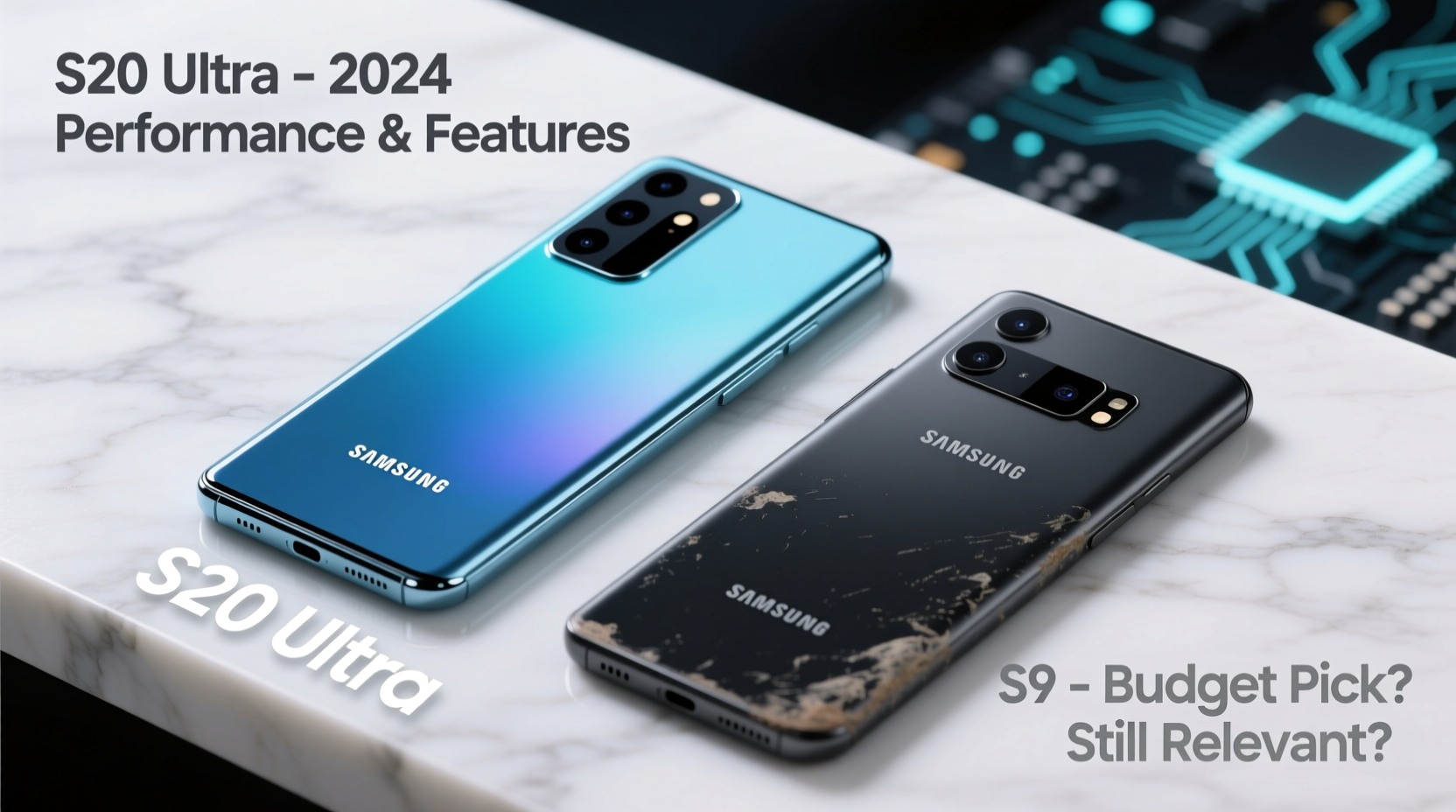
The S20 Ultra runs on either the Snapdragon 865 or Exynos 990 (depending on region), both high-end chips for their time. Even now, this processor handles multitasking, gaming, and media consumption with relative ease. With up to 16GB of RAM and 512GB of storage, it was built for longevity. In contrast, the S9 uses the older Snapdragon 845 or Exynos 9810, paired with only 4GB of RAM and a maximum of 64GB internal storage (expandable via microSD).
Real-world usage tells a clear story: the S20 Ultra opens apps faster, sustains higher frame rates in games like Genshin Impact, and manages background tasks more efficiently. However, Android’s increasing bloat means even 4GB of RAM on the S9 can feel sluggish by 2024 standards—especially when switching between social media, navigation, and messaging apps.
Tip: If buying used, always verify the model number and region to avoid Exynos variants, which underperformed compared to Snapdragon versions.Software Support and Security Updates
This is where the decision becomes complicated. Samsung promised four years of major Android updates and five years of security patches for the S20 series. That means the S20 Ultra will receive updates until at least 2024—but likely not beyond. As of mid-2024, it may no longer be eligible for new OS upgrades or monthly security patches.
The S9, despite being praised for its software cleanliness, reached end-of-life long ago. It never received Android 12, and official security updates ceased in 2021. While custom ROMs exist (like LineageOS), they require technical know-how and void warranties.
“Flagship phones from 2020 are at the edge of usability in 2024. Their hardware holds up, but software abandonment is the real killer.” — Lena Park, Mobile Analyst at TechWatch Asia
Camera Comparison: Resolution vs. Realism
The S20 Ultra’s camera system was revolutionary: a 108MP main sensor, 48MP periscope telephoto with 100x Space Zoom, and dual front cameras. In good lighting, it captures stunning detail and dynamic range. Low-light performance is strong, though aggressive processing can make images look artificial.
The S9, while limited to a 12MP single rear camera (dual on S9+), delivers natural-looking photos with excellent color accuracy and fast autofocus. Its smaller sensor struggles in dim environments, but its consistency and simplicity appeal to purists.
| Feature | Samsung S20 Ultra | Samsung Galaxy S9 |
|---|---|---|
| Main Camera | 108MP f/1.8 | 12MP f/1.5–f/2.4 variable aperture |
| Zoom | 10x hybrid, 100x digital | No optical zoom |
| Front Camera | 40MP + depth sensor | 8MP |
| Video Recording | 8K@24fps, 4K@60fps | 4K@30fps |
| Low-Light Performance | Strong with Night Mode | Moderate; noisy above ISO 800 |
If you prioritize photography—especially zoom, video quality, or versatility—the S20 Ultra wins decisively. But if you prefer authentic, unprocessed images and don’t need 8K video, the S9’s camera remains competent for casual use.
Battery Life and Charging: Staying Powered Through the Day
The S20 Ultra packs a 5,000mAh battery, among the largest in any flagship of its era. With moderate use, it easily lasts two full days. It supports 45W wired charging, 15W wireless, and reverse wireless charging. Even after years of degradation, a well-maintained unit can retain 75–80% capacity.
The S9’s 3,000mAh battery feels limiting by today’s standards. Heavy users often need to recharge by late afternoon. It only supports 15W fast charging (with compatible charger) and lacks reverse charging. After six years, most replacement batteries have diminished significantly unless recently swapped.
Tip: When buying used, check battery health using code *#*#4636#*#* or third-party apps like AccuBattery. Avoid devices with less than 80% capacity.Display and Build Quality
The S20 Ultra features a 6.9-inch Dynamic AMOLED 2X display with QHD+ resolution and a 120Hz refresh rate. Scrolling is buttery smooth, and colors are vibrant and accurate. The curved edges reduce bezels but increase accidental touches. The phone is large and heavy (220g), making one-handed use difficult.
The S9 has a 5.8-inch Super AMOLED panel with Full HD+ resolution and a 60Hz refresh rate. While technically inferior, it remains sharp and bright. Its flat screen and compact size make it easier to handle. Both phones are IP68-rated for dust and water resistance, though seals degrade over time.
Mini Case Study: Sarah’s Upgrade Dilemma
Sarah, a freelance photographer, needed a reliable secondary phone for client communication and quick social media uploads. She considered the S9 for its headphone jack and small form factor but worried about performance. She eventually bought a used S20 Ultra for $220 from a reputable refurbisher. Despite its size, she appreciated the large screen for editing previews, the long battery life during shoots, and the ability to shoot 8K video for portfolio clips. After enabling “Adaptive” refresh rate (60–120Hz), she balanced smoothness and battery efficiency. Two years later, her device still performs well, though she had to replace the battery after 18 months.
Should You Buy Used? A Practical Checklist
Before purchasing any used Samsung phone, follow this checklist to ensure reliability:
- Verify IMEI status: Ensure the device isn’t blacklisted or reported stolen.
- Test all sensors: Fingerprint scanner, face unlock, accelerometer, and proximity sensor.
- Check screen for burn-in: Common on older OLEDs; display solid colors to inspect.
- Inspect camera modules: Look for dust inside lenses or focus issues.
- Confirm software version: Must be on Android 12 or higher for basic app compatibility.
- Evaluate battery health: Below 80% indicates potential need for replacement.
- Avoid carrier-locked units: Unless you’re certain of network compatibility.
FAQ: Common Questions Answered
Can the S20 Ultra run modern apps smoothly in 2024?
Yes, most apps—including Instagram, WhatsApp, Chrome, and even demanding games—run well. Some newer AR or AI-heavy apps may lag, but day-to-day performance remains solid.
Is the S9 still usable for basic tasks?
For calls, texts, light browsing, and music playback, yes. But many apps now require Android 8.0+, and some (like banking or ride-sharing) may drop support soon. Google Play Services already limits functionality on outdated OS versions.
Does the S20 Ultra support modern accessories?
It works with current Galaxy Buds, smartwatches, and DeX. However, it lacks Wi-Fi 6E and Bluetooth 5.2, so pairing with latest peripherals may result in reduced bandwidth or latency.
Final Verdict: S20 Ultra Wins—With Caveats
The Galaxy S20 Ultra remains the better choice in 2024—if you can find a well-maintained unit. Its superior performance, larger battery, advanced camera, and extended software lifecycle give it lasting value. The S9, while charming and compact, simply cannot keep up with modern demands. Its outdated chipset, lack of updates, and limited RAM make it risky even as a backup device.
That said, buying used comes with risks. Always purchase from trusted sellers who provide return policies and battery diagnostics. Consider spending slightly more for a refurbished S21 or S22, which offer better update paths and improved efficiency.
💬 Have experience with either phone in 2024? Share your thoughts below—your insights could help others decide whether to hold on, upgrade, or go retro.