In an era where smartphone cameras capture high-resolution images with computational precision, and AI enhances every photo before it’s even saved, the idea of buying a film-based instant camera might seem outdated. Yet, the Fujifilm Instax Mini 11 continues to appear on gift lists, social media feeds, and holiday wishlists. It’s compact, colorful, and promises physical prints in seconds. But is it still worth purchasing in 2024? The answer isn’t just about megapixels or processing power—it’s about experience, intentionality, and the emotional value of tangible memories.
The Instax Mini 11 launched in 2019 as a simplified upgrade to the Mini 9, featuring automatic exposure control and a slightly brighter lens. While not revolutionary in tech terms, it struck a chord with casual photographers, teens, and nostalgic adults alike. Years later, amid rapid digital evolution, its appeal persists. To understand whether it still holds value, we need to examine its strengths, limitations, and the unique niche it occupies in modern photography culture.
Why Instant Film Still Matters
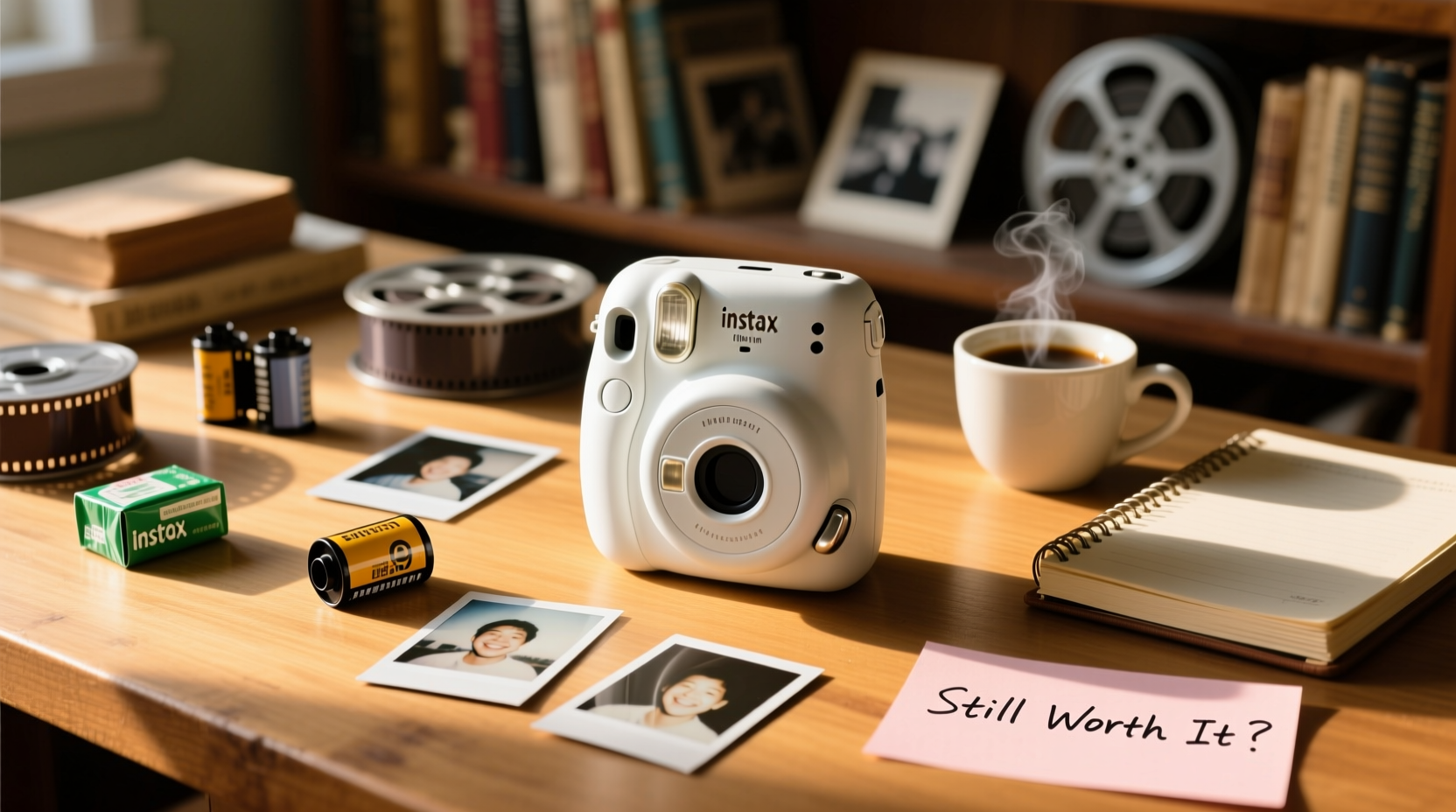
Digital photography offers convenience, but it often lacks permanence. Thousands of photos live buried in cloud folders, rarely revisited. In contrast, instant film forces you to slow down. Each shot costs money—not just in the upfront price of the camera, but in ongoing film expenses. This scarcity encourages mindfulness. You frame carefully, wait for the right moment, and accept imperfections as part of the process.
Physical prints also create shared experiences. Passing around a stack of Instax photos at a party fosters connection in a way scrolling through a phone gallery simply doesn’t. As photographer and educator Lila Chen notes:
“Film teaches patience and presence. With digital, we shoot 50 versions of the same scene. With Instax, one click is all you get—and that limitation can be creatively liberating.” — Lila Chen, Analog Photography Instructor
The tactile nature of holding a warm, freshly printed photo adds emotional weight. It’s a souvenir, not just a file. In a world saturated with digital noise, this simplicity has become a form of rebellion.
What the Instax Mini 11 Does Well
The Instax Mini 11 shines in accessibility and ease of use. Unlike earlier models requiring manual brightness adjustments, the Mini 11 features automatic exposure detection. Point the camera, press the button, and it decides the best flash and shutter settings. This makes it ideal for beginners—especially younger users—who want results without technical hassle.
- Built-in flash with auto-triggering: Ensures well-lit indoor shots without user input.
- Simple operation: One-button shooting and integrated viewfinder lower the learning curve.
- Compact and lightweight: Fits easily in a bag or large pocket, making it travel-friendly.
- Vibrant color options: Available in pastel pink, mint, lilac, coral, and charcoal, appealing to personal style.
- Affordable entry point: Typically priced under $70, it’s one of the most budget-friendly instant cameras.
It uses the widely available Instax Mini film, which remains in production and accessible globally. Each pack of 10 sheets costs between $12 and $16, depending on brand and retailer. Third-party films like Polaroid Originals and Kodak offer alternatives, though Fujifilm’s own film delivers the most consistent results.
Where It Falls Short in Today’s Market
Despite its charm, the Instax Mini 11 has notable limitations—especially when compared to modern digital tools. Understanding these drawbacks helps determine if it fits your needs.
First, image quality is modest. The fixed-focus lens (70mm equivalent, f/12) produces soft edges and limited depth control. Close-ups under 2 feet aren’t possible, and distant subjects lack detail. There’s no zoom, no manual mode, and no way to review or delete shots. If you miss focus or overexpose, you’re stuck with the print.
Second, the camera offers no creative customization. No double exposures, no long exposures, no self-timer (without workarounds), and no rechargeable battery. It runs on two AA batteries, which drain quickly with frequent flash use. Replacing them every few dozen shots becomes costly and inconvenient.
Finally, environmental concerns are growing. Each print uses plastic, dyes, and chemicals. While not inherently wasteful when used intentionally, casual or excessive shooting contributes to single-use culture—an irony given the eco-conscious trends in other areas of consumer tech.
Instax Mini 11 vs. Digital Alternatives: A Practical Comparison
| Feature | Instax Mini 11 | Smartphone Camera | Digital Compact (e.g., Sony RX100) |
|---|---|---|---|
| Image Quality | Low resolution, soft focus | High resolution, sharp detail | Excellent, RAW support |
| Instant Print | Yes, built-in | No (requires portable printer) | No |
| Cost per Shot | $1.20–$1.60 (film + development) | Nearly free | Nearly free |
| Battery Life | ~40 shots (with flash) | All-day use | 200–300 shots |
| Creative Control | None | High (apps, editing) | Full manual modes |
| Tactile Output | Yes, magnetic-backed prints | Only with add-on printer | No |
This comparison shows that the Instax Mini 11 doesn’t compete on performance. Its value lies elsewhere—in ritual, tangibility, and emotional resonance.
A Real-World Test: A Weekend with the Mini 11
To assess its real-world relevance, I carried the Instax Mini 11 on a weekend trip with friends. We visited a local farmers market, hiked a wooded trail, and ended with coffee at a retro diner. Over two days, I took 30 shots—aiming for meaningful moments rather than snapshots.
The first surprise was how much conversation the camera sparked. Strangers asked about it, kids wanted to watch the print eject, and my friends gathered around each developing image like it was a magic trick. The imperfections—slight blur, uneven lighting—became part of the story. One photo of a friend laughing mid-bite into a peach smear became a favorite, despite poor composition, because it captured genuine joy.
I ran out of film by Sunday afternoon. That limitation felt refreshing. Without the option to “just take another,” each shot carried weight. When I dropped the camera (gently) into a lake-side puddle, the plastic body survived, though I had to dry it thoroughly before continuing. Durability, while not advertised, proved decent for light use.
Back home, I taped the prints into a small notebook. Flipping through them weeks later evoked stronger memories than any digital album from the same period. The physicality made them more memorable.
When the Instax Mini 11 Makes Sense Today
The Mini 11 isn’t for everyone. It won’t replace your smartphone or DSLR. But it fills specific roles exceptionally well. Consider buying one if:
- You want a low-pressure creative outlet.
- You enjoy giving physical gifts—like handing someone their portrait on the spot.
- You’re introducing a child or teen to photography fundamentals.
- You host events and want interactive guest memorabilia.
- You crave a digital detox from endless scrolling and editing.
For artists and educators, the Mini 11 serves as a teaching tool. Its constraints encourage composition skills and intentionality. Some teachers use it in classrooms to help students reflect on identity, environment, and storytelling—one frame at a time.
Step-by-Step: Getting the Most from Your Instax Mini 11
- Charge or install fresh batteries: Use alkaline or lithium AA batteries for longer life. Avoid rechargeables unless they output 1.5V consistently.
- Load film in low light: Open the back in dim conditions to prevent accidental exposure. Align the film cartridge with the guide and close securely.
- Let the film acclimate: After loading, wait 5–10 minutes before shooting to stabilize chemical layers.
- Compose with light in mind: Indoors? Flash will fire automatically. Outdoors? Keep subjects out of harsh shadows.
- Hold steady and press gently: Avoid shaking the camera during exposure. Let the print fully eject before touching.
- Protect developing prints: Shield them from direct sunlight and pressure for the first 30 seconds.
- Store prints flat and cool: Keep them away from heat and humidity to prevent fading or warping.
Frequently Asked Questions
Can I reuse Instax film packs?
No. Each pack contains ten pre-loaded film units designed for single use. Once ejected, the chemical process begins and cannot be reversed. Attempting to reinsert a used pack will damage the camera.
Are there better instant cameras than the Mini 11?
Yes, depending on your needs. The Instax Mini Evo offers manual controls, 10 filters, and hybrid digital-analog functionality. The Square series provides larger prints and better lenses. However, these come at nearly double the price. For pure simplicity and affordability, the Mini 11 remains competitive.
How long do Instax prints last?
Fujifilm estimates 25+ years of stable color retention when stored in albums away from UV light, heat, and moisture. However, early fading can occur if exposed to sunlight or humid environments. Treat them like photographs—they are delicate.
Final Verdict: A Thoughtful Tool, Not a Tech Upgrade
The Instax Mini 11 is not a technological marvel. It doesn’t boast AI autofocus, 4K video, or wireless sharing. And that’s precisely why it still matters. In a world optimized for speed and efficiency, it offers slowness, surprise, and sincerity.
It’s worth buying not because it’s the best camera, but because it changes how you engage with photography. It turns image-making into an event, not a habit. It creates keepsakes, not files. And in doing so, it reconnects us with the emotional core of why we take pictures in the first place—to remember, to share, to feel.
If you approach it with realistic expectations—understanding its flaws and embracing its quirks—the Instax Mini 11 remains a meaningful purchase in 2024. It’s not for documenting every moment, but for celebrating the ones worth printing.
🚀 Ready to try analog magic? Pick up an Instax Mini 11, grab a pack of film, and take one intentional photo today. Share your first print with someone who matters—you might just start a new tradition.