In 2024, comparing the HTC One A9s and the Samsung Galaxy S4 may seem like a throwback to an earlier era of smartphones. Both devices were once flagship contenders in their time—HTC with its sleek metal design and Samsung with its groundbreaking display technology. But nearly a decade has passed since the Galaxy S4 launched, and even the A9s is several years old. So, is either device still viable for daily use today? More importantly, if you're holding onto one of these phones, should you upgrade?
The answer isn’t just about nostalgia or brand loyalty. It’s about real-world usability: app compatibility, security updates, battery life, camera quality, and connectivity. This article breaks down both phones’ current capabilities, compares them head-to-head, and delivers a clear verdict on whether they’re still worth using—or if it’s time to move on.
Performance and Hardware: A Reality Check
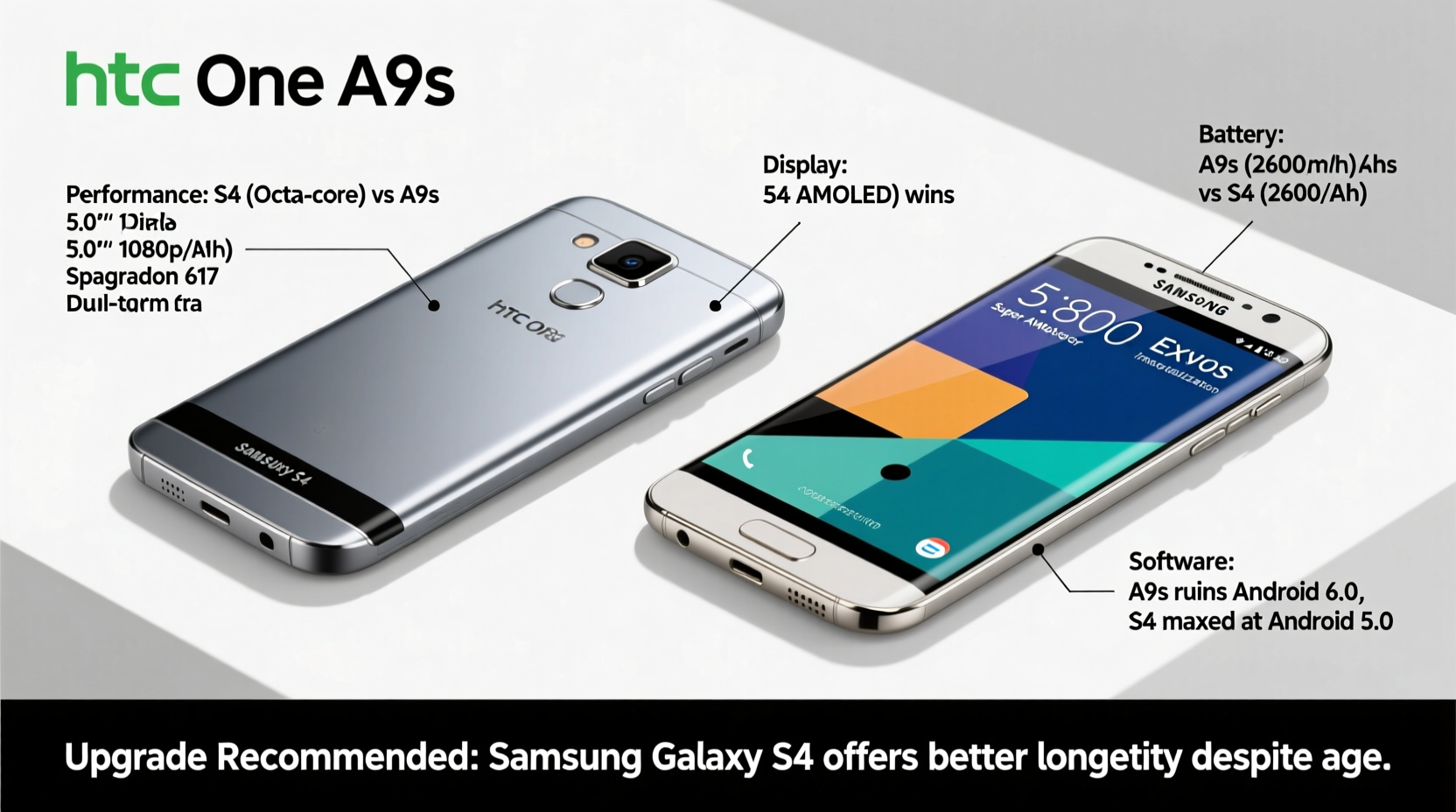
The Galaxy S4 launched in 2013 with a 1.9 GHz quad-core processor (or 1.6 GHz octa-core variant), 2GB of RAM, and Android 4.2. The HTC One A9s arrived in 2016 with a more modern Snapdragon 430 chipset, 3GB of RAM, and Android 6.0. On paper, the A9s already had a generational advantage when it was released.
Today, neither phone can run modern apps smoothly. Google Play Services now requires at least Android 7.0, which both phones maxed out beyond. Most major apps—including Instagram, WhatsApp, and banking apps—have dropped support for older APIs. Even if you sideload newer versions, performance stutters, crashes, and timeouts are common.
Tip: If you're still using either device as your primary phone, consider switching to a secondary role like a media player or smart home controller.Display and Design Comparison
The Galaxy S4 featured a 5-inch Full HD Super AMOLED display with vibrant colors and excellent outdoor visibility for its time. The HTC One A9s came with a slightly larger 5.0-inch HD (720p) AMOLED screen. While the resolution is lower than the S4’s, the A9s benefits from better panel calibration and software enhancements.
Design-wise, the A9s wins with its unibody aluminum frame and iPhone-like aesthetic. The S4, though iconic, used a plastic body with a glossy finish that attracts fingerprints and feels dated by modern standards. However, the S4 did introduce innovative features like Air View and eye-tracking, which were quickly abandoned due to limited utility.
“Hardware longevity isn’t just about durability—it’s about ongoing software relevance. A phone without updates becomes a liability.” — David Lin, Mobile Security Analyst
Detailed Feature Comparison
| Feature | HTC One A9s | Samsung Galaxy S4 |
|---|---|---|
| Release Year | 2016 | 2013 |
| Operating System | Android 6.0 (upgradable to 7.0) | Android 4.4.2 (final update) |
| Processor | Qualcomm Snapdragon 430 | Samsung Exynos 5 Octa / Qualcomm Snapdragon 600 |
| RAM | 3GB | 2GB |
| Storage | 32GB (expandable via microSD) | 16/32/64GB (expandable) |
| Display | 5.0\", HD AMOLED | 5.0\", FHD Super AMOLED |
| Rear Camera | 13 MP, f/2.0 | 13 MP, f/2.2 |
| Front Camera | 5 MP, f/2.0 | 2 MP |
| Battery | 2300 mAh | 2600 mAh |
| Security Updates | Ended 2018 | Ended 2015 |
Real-World Use Case: Can Either Phone Survive in 2024?
Consider Maria, a freelance writer who held onto her Galaxy S4 for sentimental reasons. She used it for note-taking and offline reading until early 2023, when she tried installing a new voice transcription app. The app failed to launch, citing “incompatible OS.” Later, her mobile banking app stopped working after an automatic update. With no access to customer support due to outdated firmware, she switched to a budget Android Go phone—and immediately noticed faster response times, better battery management, and full app compatibility.
This scenario reflects a broader trend: legacy devices lose functionality not because they suddenly break, but because the digital ecosystem evolves around them. Cloud services, encryption standards, and app requirements advance rapidly. Even basic tasks like scanning QR codes or using contactless payments become impossible without NFC or up-to-date authentication protocols.
Should You Upgrade? A Step-by-Step Decision Guide
If you're still relying on either the HTC One A9s or Galaxy S4, follow this practical timeline to determine your next move:
- Assess Daily Functionality: Try opening essential apps (email, maps, messaging, banking). Do they load reliably? Are there frequent crashes?
- Check Security Status: Visit the manufacturer’s website or use third-party tools like “Security Master” to verify if your device receives updates.
- Test Battery Health: Does the phone die within 4–5 hours of light use? Swollen or degraded batteries are fire hazards and hard to replace.
- Evaluate Connectivity Needs: Do you need Wi-Fi 5/6, Bluetooth 5.0, or LTE Advanced? Older phones lack modern wireless standards.
- Compare Replacement Costs: A refurbished modern smartphone starts at $80–$120. Weigh that against repair costs or productivity loss.
- Back Up Data: Transfer contacts, photos, and documents to Google Drive or a computer before retiring the device.
- Upgrade Strategically: Choose a phone with at least three years of guaranteed updates (e.g., Google Pixel, Samsung Galaxy A series).
Frequently Asked Questions
Can I still use the HTC One A9s as a daily driver?
Technically yes, but practically no. While it runs Android 7.0 (Nougat), most modern apps either won’t install or will perform poorly. Messaging and basic browsing may work, but expect frequent lags, security warnings, and compatibility issues with two-factor authentication systems.
Is the Galaxy S4 completely obsolete?
Yes. Released in 2013, it hasn’t received any security patches since 2015. Using it online exposes you to known vulnerabilities. It also lacks support for modern web standards, making many websites unusable. Its only safe uses today are offline tasks or as a retro collector’s item.
Are there any advantages to keeping these older phones?
Limited ones. They consume less data, have simpler interfaces, and are less distracting. Some users prefer them for digital detox. However, these benefits are outweighed by security risks and functional limitations unless strictly used in airplane mode.
Final Verdict: Time to Move On
The HTC One A9s was a modest step forward for HTC, blending decent hardware with clean software. The Galaxy S4 was a cultural milestone that pushed smartphone innovation into mainstream consciousness. But admiration for past achievements shouldn’t cloud judgment about present needs.
In 2024, neither phone meets the baseline requirements for secure, reliable smartphone use. App stores are phasing out support, developers are optimizing for newer chipsets, and carriers are sunsetting older network bands. Holding onto these devices risks personal data exposure, communication breakdowns, and missed opportunities in an increasingly mobile-first world.
Upgrading doesn’t mean abandoning reliability for gimmicks. Modern budget phones offer far superior performance, camera quality, battery life, and security. For under $150, you can get a device with 3+ years of updates, facial recognition, high-definition displays, and dual SIM support—features neither the A9s nor S4 ever offered.
Checklist: When to Retire Your Old Phone
- ❌ No recent security updates in over two years
- ❌ Apps crash or fail to install
- ❌ Battery drains in under half a day
- ❌ Missing critical features (NFC, GPS accuracy, modern Wi-Fi)
- ❌ Manufacturer no longer provides support or parts
- ✅ Backup complete and migration plan ready
“The lifespan of a smartphone isn’t measured in years—it’s measured in usefulness. Once it stops serving you securely and efficiently, it’s time to let go.” — Lena Patel, Tech Lifestyle Coach
Conclusion
The HTC One A9s holds a slight edge over the Galaxy S4 in terms of recency and software support, but both are firmly obsolete in today’s mobile landscape. Sentimental value aside, continuing to rely on either device compromises functionality, security, and peace of mind.
Upgrade not because you must keep up with trends, but because your phone should empower—not hinder—you. Whether you choose a budget-friendly Android Go edition or a mid-tier model with long-term support, the investment pays off in reliability, safety, and daily convenience.
🚀 Ready to make the switch? Research certified refurbished models or carrier trade-in deals today—your future self will thank you for a faster, safer, and smarter mobile experience.