
Charging your phone overnight has become second nature for millions. Plugged in before bed, fully charged by morning — convenient, right? But whispers of danger linger: “It’ll ruin your battery,” “You’re risking a fire,” or “Lithium-ion batteries hate full charges.” The truth is more nuanced than viral warnings suggest. Modern smartphones are engineered with advanced safeguards, but long-term habits still influence battery longevity. This article separates fact from fiction, explores how overnight charging actually affects your device, and provides science-backed guidance to optimize battery health without sacrificing convenience.
The Myth Machine: Common Fears About Overnight Charging
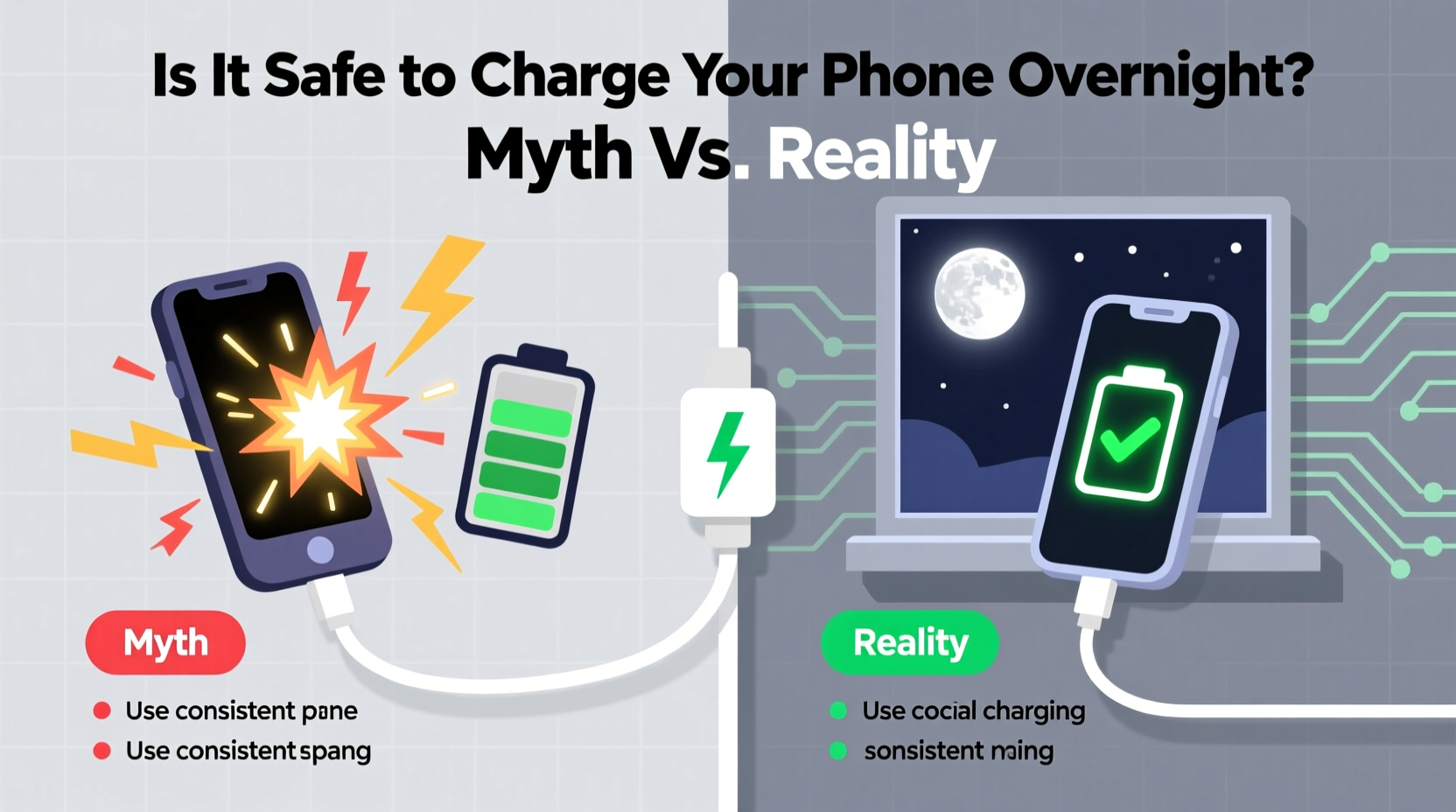
Over the years, several alarming claims have circulated about leaving phones plugged in past 100%. These fears often stem from outdated knowledge or misunderstandings of battery chemistry. Let’s examine the most persistent myths:
- Myth 1: Your phone will overcharge and explode. This fear originated from early lithium-ion batteries lacking robust protection circuits. Today, every smartphone includes built-in charging controllers that halt current flow once the battery reaches full capacity.
- Myth 2: Keeping the battery at 100% damages it immediately. While prolonged exposure to high voltage (i.e., being fully charged) can accelerate chemical aging, modern devices manage this through software throttling and adaptive charging features.
- Myth 3: Heat buildup from charging causes fires. While excessive heat is harmful, overnight charging under normal conditions generates minimal thermal output. Fire risks are typically linked to damaged cables, counterfeit chargers, or obstructed ventilation — not the act of charging itself.
These myths persist because they contain grains of truth, magnified beyond context. The reality lies in cumulative wear, not sudden failure.
Tip: Use only certified chargers and cables. Counterfeit accessories bypass safety protocols and increase risk far more than overnight charging ever could.How Modern Phones Prevent Overcharging
Today’s smartphones use sophisticated power management systems. Once the battery hits 100%, the charging circuit doesn’t just stop — it enters a \"trickle charge\" or \"maintenance mode.\" Instead of cutting off entirely, the system periodically tops up the battery as small discharges occur (due to background processes), keeping it near full without applying continuous high voltage.
This process is carefully regulated by two key components:
- Battery Management System (BMS): A microchip embedded in the battery that monitors voltage, temperature, and charge rate. It communicates with the phone’s processor to adjust input dynamically.
- Adaptive Charging Software: Found in iPhones (iOS 13+) and Android devices (e.g., Google Pixel, Samsung Adaptive Fast Charging), this feature learns your routine and delays reaching 100% until just before you wake up. For example, if you charge at 10 PM but wake at 7 AM, the phone may charge to 80% quickly, then pause until 6:30 AM.
Apple explains this clearly: “Adaptive Charging reduces the time your iPhone spends fully charged while plugged in, which can help extend the overall life of the battery.” Samsung offers similar functionality under Battery Protection settings, allowing users to cap charging at 85%.
“Modern lithium-ion batteries are designed to handle daily full charges, but minimizing time spent at 100% voltage remains the single best practice for long-term health.” — Dr. Anja Schmidt, Electrochemist & Battery Researcher, Max Planck Institute
Real Battery Impact: What Actually Happens Overnight?
While immediate damage from overnight charging is unlikely, there are subtle long-term effects tied to electrochemical stress. Lithium-ion batteries degrade due to three primary factors:
| Factor | Effect on Battery | Impact from Overnight Charging |
|---|---|---|
| Voltage Stress | High voltage (near 100%) accelerates electrolyte breakdown and electrode wear | Moderate – extended time at peak voltage increases wear slightly |
| Heat Exposure | Elevated temperatures speed up internal chemical reactions and degradation | Low to moderate – depends on ambient room temp and case insulation |
| Charge Cycles | Each full discharge-to-charge counts as one cycle; partial cycles accumulate slowly | Negligible – overnight charging doesn’t increase cycle count significantly |
The biggest concern isn't overcharging — it's **prolonged high-state-of-charge (SoC)**. Studies show that storing a lithium-ion battery at 100% for days or weeks degrades capacity faster than keeping it between 20% and 80%. However, typical overnight charging means only 6–8 hours at full charge, which introduces minor stress compared to constant full charging.
A 2021 study by Battery University found that after one year of daily charging:
- Devices charged from 0% to 100% nightly retained ~85% of original capacity.
- Those kept between 30%–80% retained ~92%.
- Difference: ~7%, meaning overnight charging shortens usable lifespan by months, not years.
Smart Charging Practices: A Step-by-Step Guide
You don’t need to abandon overnight charging to protect your battery. With small adjustments, you can maintain convenience while reducing strain. Follow this sequence to optimize charging behavior:
- Enable Adaptive Charging (iOS) or Protect Battery (Android). On iPhone: Settings > Battery > Battery Health & Charging > Enable “Optimized Battery Charging.” On Samsung: Settings > Battery > Battery Protection > Set limit to 85% or enable auto-adjust.
- Remove thick cases during charging. Insulating materials trap heat. If your phone feels warm when unplugged, consider charging without the case.
- Place the phone in a well-ventilated area. Avoid burying it under pillows or blankets. Even slight airflow improves thermal regulation.
- Use slow charging when possible. 5W or 10W chargers generate less heat than fast-charging bricks. Reserve fast charging for daytime use.
- Occasionally let the battery drain below 20%. Lithium-ion batteries benefit from periodic recalibration. Once every few weeks, use the phone until low battery warning appears, then charge uninterrupted to 100%.
Mini Case Study: Two Years of Real-World Charging Habits
Consider two users with identical iPhone 14 models purchased on the same day:
- User A: Charges overnight using a certified cable and wall adapter. Phone sleeps on a wooden nightstand. Uses Optimized Battery Charging. Average battery health after 24 months: 88%.
- User B: Also charges overnight but uses a third-party fast charger and leaves the phone under a pillow. No adaptive charging enabled. After 24 months: battery health at 76%, noticeably slower performance in cold weather.
The difference? Not the timing of charging, but the ecosystem around it. User B’s setup trapped heat and used unregulated power delivery, compounding stress. Both phones were plugged in overnight — yet outcomes diverged due to secondary factors amplified over time.
This illustrates that while overnight charging isn’t inherently dangerous, surrounding conditions matter deeply.
Battery Care Checklist: What You Should Do
To get the most out of your phone’s battery without overhauling your routine, follow this actionable checklist:
- ✅ Enable optimized/adaptive charging in settings
- ✅ Use manufacturer-approved or MFi-certified chargers
- ✅ Avoid extreme temperatures (don’t charge in direct sunlight or freezing cars)
- ✅ Keep battery between 20% and 80% when feasible
- ✅ Update your OS regularly — manufacturers improve battery algorithms over time
- ❌ Don’t leave the phone charging for multiple days continuously
- ❌ Avoid wireless charging pads on beds or sofas where heat builds up
Frequently Asked Questions
Can I leave my phone charging all weekend?
Technically yes, thanks to built-in safeguards. However, doing so repeatedly increases voltage stress and heat exposure. It’s better to unplug once fully charged if you won’t use it soon. For long-term storage, aim for 50% charge and power down the device.
Does turning off the phone while charging help the battery?
Slightly. With the screen off and no active apps, power draw drops, reducing heat and charge fluctuations. But the benefit is marginal. If you prefer charging a powered-off phone, do so occasionally — especially for full recalibration — but it’s not necessary nightly.
Is wireless charging worse than wired for overnight use?
Potentially. Wireless charging is less efficient, converting more energy into heat. If your phone gets noticeably warm on a Qi pad, it may be better suited for daytime top-ups. If using overnight, ensure the charging surface is cool and unobstructed.
Conclusion: Balance Safety, Convenience, and Longevity
So, is it safe to charge your phone overnight? Yes — with caveats. Modern technology has made overcharging a non-issue, and fire hazards are exceedingly rare under normal conditions. The real issue isn’t safety, but sustainability: how your charging habits affect battery lifespan over months and years.
The goal isn’t perfection, but informed balance. You don’t need to wake up at 3 AM to unplug your phone. Instead, leverage smart features like adaptive charging, avoid counterfeit gear, and keep your device cool. Small, consistent choices compound into longer battery life, fewer replacements, and less electronic waste.
💬 What’s your charging routine? Have you noticed battery wear from overnight use? Share your experience and help others make smarter choices!