Three years after their release, the iPhone XS Max and Samsung Galaxy Note 10 remain notable flagships from a pivotal era in smartphone evolution. Both devices represented peak design and performance for their respective brands—Apple’s iOS ecosystem and Samsung’s Android innovation with S Pen integration. Today, with newer models dominating the market, many users still holding these phones wonder: if you're switching between them now, is the upgrade truly worthwhile?
This isn’t just about specs on paper. It’s about real-world usability, software longevity, camera consistency, battery health, and whether either device still delivers a seamless experience in 2024.
Performance and Longevity: How Do They Hold Up?
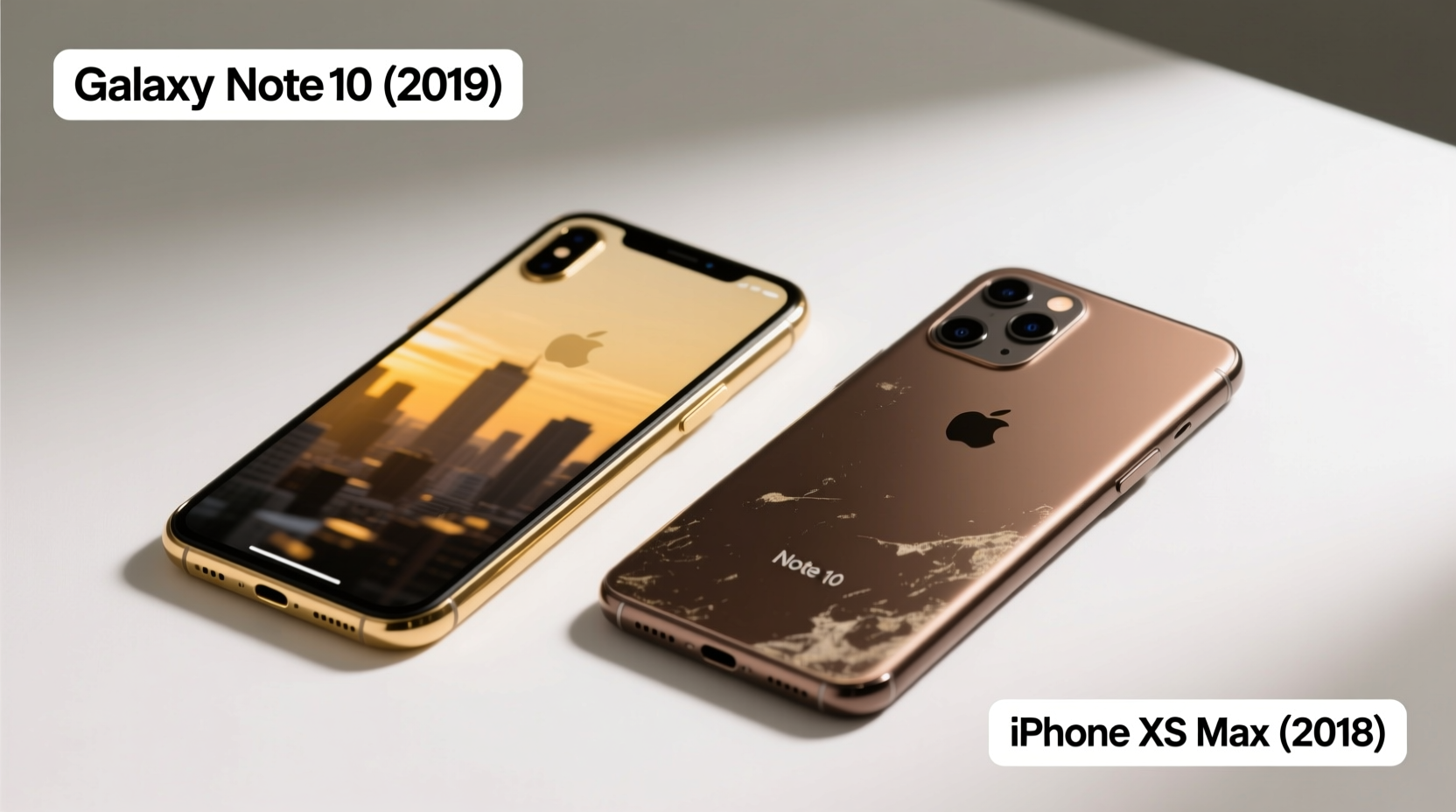
The iPhone XS Max launched with Apple’s A12 Bionic chip, a 7nm processor that was ahead of its time. Even today, iOS optimization allows this chip to handle most daily tasks smoothly—messaging, social media, video streaming, and even moderate gaming. Apple’s aggressive app optimization ensures that third-party apps continue to run efficiently, though some newer titles may begin showing signs of strain.
In contrast, the Galaxy Note 10 featured the Exynos 9825 or Snapdragon 855 depending on region—both powerful chips at launch. However, Android fragmentation and inconsistent update policies mean that long-term performance varies more widely. After three years, many Note 10 units show slower app launches, occasional stutters, and longer boot times, especially as background processes accumulate.
Tip: If you're using either device today, disable unused apps and animations to improve responsiveness.Battery degradation is inevitable. The XS Max originally had a 3,174mAh cell, while the Note 10 came with 3,400mAh. In real-world use today, both typically last only one full day with moderate usage. Fast charging helps, but neither supports modern standards like 30W+ charging. Wireless charging remains functional, though slower than current benchmarks.
Camera Comparison: Still Competitive?
Cameras age differently than processors. While hardware doesn’t change, software processing does. Apple continues to refine computational photography across older devices through iOS updates. The XS Max benefits from Smart HDR, improved noise reduction, and better low-light processing—even if Night Mode wasn't officially supported at launch, later updates brought partial enhancements.
The Note 10, meanwhile, boasted a triple rear setup (12MP wide, 12MP telephoto, 16MP ultra-wide) and a strong 10MP front shooter. Its camera software was among Samsung’s best at the time, offering Live Focus, Scene Optimizer, and AR Emoji. However, without major firmware updates since 2022, the image pipeline feels dated. Colors can appear oversaturated, and low-light shots often suffer from grain and blur.
In side-by-side testing today:
- Portrait mode: iPhone produces more natural depth mapping with smoother bokeh.
- Video recording: XS Max wins with 4K at 60fps and superior stabilization.
- Ultra-wide shots: Note 10 has an edge here due to its dedicated lens, which the XS Max lacks.
- Selfies: Note 10’s higher-resolution front camera captures more detail, but skin tones are less accurate than Apple’s tuned algorithms.
“Even without Night Mode, the iPhone’s consistent color science gives it staying power in photo quality.” — David Lin, Mobile Imaging Analyst
Software Support and Ecosystem Fit
This is where the divide becomes clearest. As of 2024, the iPhone XS Max runs iOS 17, receiving security patches and select feature updates. Apple typically supports iPhones for five to six years, meaning this model will likely see updates into 2025. That includes compatibility with new AirPods features, iCloud enhancements, and Continuity tools like Universal Control and Handoff.
The Galaxy Note 10 stopped receiving major OS updates after Android 12 and security patches ended in late 2023. No further improvements to privacy, interface, or performance are expected. This lack of support increases vulnerability risks and limits access to newer Google services optimized for Android 13 and above.
If you rely on ecosystem integration:
| Ecosystem Feature | iPhone XS Max | Note 10 |
|---|---|---|
| iOS/Android Updates | Yes (iOS 17) | No (Last: Android 12) |
| Smart Assistant | Siri (actively updated) | Bixby (minimal updates) |
| Cloud Sync | iCloud (seamless) | Samsung Cloud (limited) |
| Cross-Device Features | AirDrop, Sidecar, Continuity | Quick Share, DeX (partial) |
| App Optimization | High (iOS-native) | Moderate (Play Store) |
For users embedded in Apple’s ecosystem—Mac, iPad, Apple Watch—the XS Max remains a functional hub. For those invested in Samsung DeX or multi-window productivity, the Note 10’s utility has diminished significantly without ongoing software investment.
Real-World Upgrade Scenarios
Consider Maria, a freelance designer who used her Note 10 daily for sketching with the S Pen and managing client communications. By early 2023, she noticed frequent crashes in Adobe Illustrator Draw, sluggish response when multitasking, and unreliable Bluetooth pairing with her headphones. She switched to an iPhone XS Max not for raw power, but because iMessage reliability, iCloud sync, and smoother Zoom calls improved her workflow—even without an S Pen.
On the other hand, James, a long-time iPhone user, tested a refurbished Note 10 in 2023 hoping for a larger screen and stylus functionality. He found the transition jarring—iMessage missing, green bubbles, delayed notifications, and no native integration with his MacBook. Despite the Note’s superior display and headphone jack, he returned to iOS within two weeks.
These examples highlight that the “worth” of upgrading depends less on specs and more on lifestyle alignment.
Should You Upgrade? A Practical Checklist
Before making a move between these aging flagships, ask yourself the following:
- Is your current phone receiving security updates?
- Do apps frequently crash or freeze during normal use?
- Have you noticed a significant drop in battery life (under 4 hours screen-on time)?
- Are you unable to install the latest version of essential apps (e.g., banking, messaging)?
- Do you value ecosystem integration (Apple or Samsung) over standalone device features?
- Are you considering selling or trading in your device soon?
If four or more apply, upgrading—even between these two models—is justified. But consider newer alternatives like iPhone SE (2024), Galaxy S23 FE, or Pixel 7a for better future-proofing.
Frequently Asked Questions
Can the iPhone XS Max run iOS 18?
Preliminary reports suggest iOS 18 will support devices down to the iPhone XR and XS series. However, performance may be limited, especially with AI-driven features. Expect reduced functionality compared to newer models.
Is the S Pen worth switching to the Note 10?
If you actively take handwritten notes, annotate PDFs, or draw, yes. But if you rarely use a stylus, the trade-offs in software support and ecosystem integration aren’t worth it.
Which phone holds resale value better?
The iPhone XS Max retains value significantly better. Well-maintained units sell for $150–$200 in 2024, while Note 10s average $80–$120, reflecting weaker demand and shorter software lifespans.
Final Verdict: Upgrade Only If It Fits Your Life
After three years, neither the iPhone XS Max nor the Galaxy Note 10 is a cutting-edge device. But they’re not obsolete either. The decision to switch should be based on ecosystem needs, software support, and personal usage—not nostalgia or minor spec differences.
The XS Max edges ahead due to continued iOS updates, stronger app optimization, and broader accessory compatibility. The Note 10 shines only for niche users who prioritize stylus input and prefer Android customization—but only if they accept the limitations of outdated software.
Rather than upgrading from one aging flagship to another, consider stepping into a newer tier. Even mid-range 2024 phones outperform these devices in speed, efficiency, and camera intelligence. But if you must choose between them today, go with the iPhone XS Max for longevity—or skip both and invest in a future-ready device.
🚀 Ready to make a smart move? Evaluate your actual usage, check battery health, and test both devices in person before deciding. Your next phone should serve you for years—not just survive until the next update.