
The jump from iPhone X to iPhone 12 represents more than just a new design or faster processor—it reflects Apple’s evolution in computational photography. For many users still relying on the iPhone X, a flagship device in its time, the question isn’t whether the iPhone 12 is newer, but whether its camera improvements translate into meaningful gains for everyday photography. After analyzing sample shots, sensor upgrades, software enhancements, and real-world use cases, the answer depends heavily on what you value in your mobile photography.
Sensor and Hardware Evolution
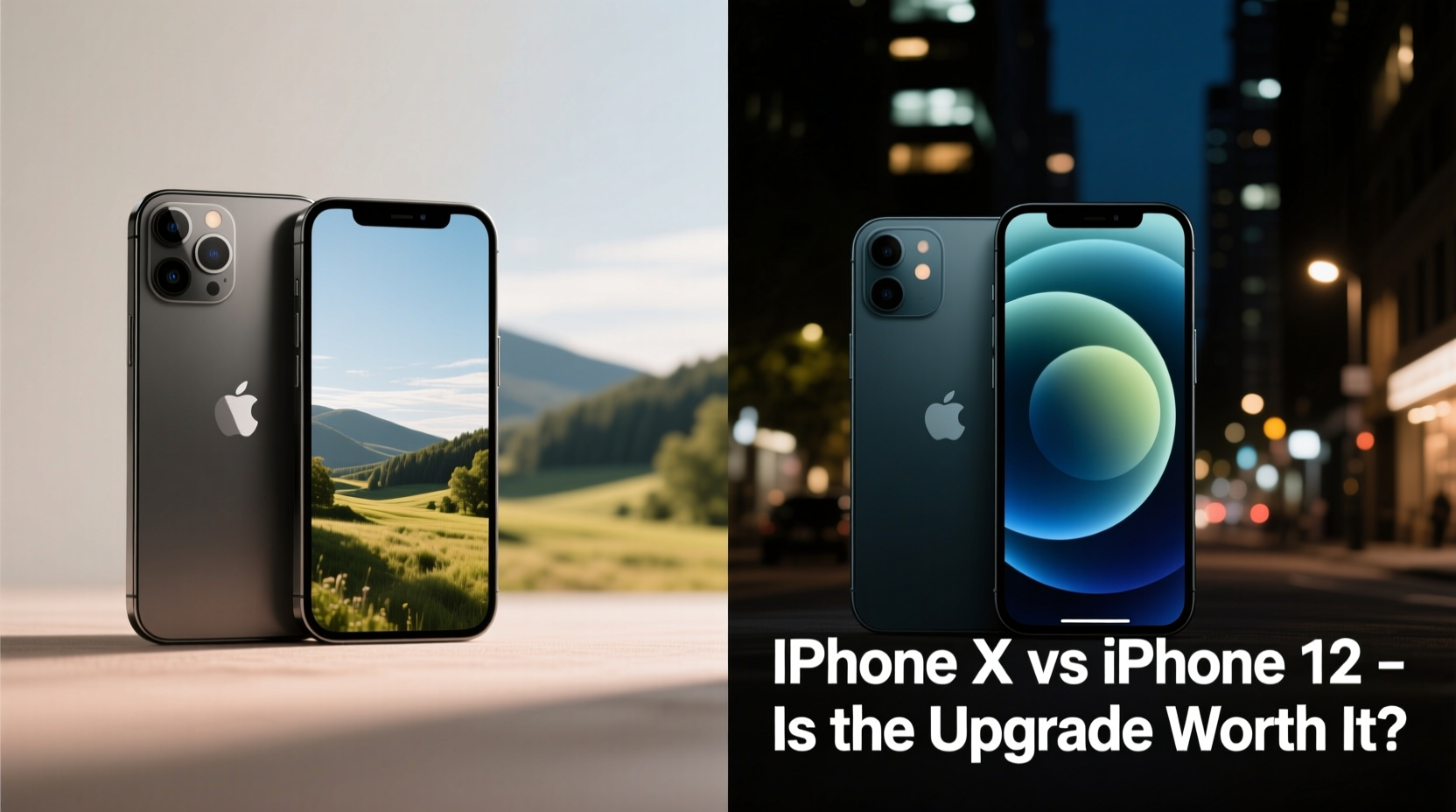
The iPhone X, released in 2017, featured a 12MP rear dual-camera system with optical image stabilization (OIS) on the wide lens and a telephoto lens for 2x optical zoom. While groundbreaking at the time, its hardware limitations—especially in low light and dynamic range—are now evident when compared to modern standards.
In contrast, the iPhone 12, launched in 2020, introduced Apple’s first Night mode across all lenses and upgraded to larger sensors with improved pixel efficiency. The wide lens now captures 27% more light, thanks to a wider f/1.6 aperture—the largest ever on an iPhone at that point. The telephoto lens retained the f/2.0 aperture but benefited from smarter processing and Deep Fusion technology applied across both cameras.
These hardware changes aren't just technical specs; they directly influence photo quality. More light intake means cleaner shadows, better color fidelity, and reduced noise in dim environments. The shift from older ISP (Image Signal Processor) architecture in the A11 Bionic chip (iPhone X) to the A14 Bionic's advanced neural engine enables real-time scene analysis and multi-frame image stacking that weren't possible four years earlier.
Tip: In low-light conditions, hold your iPhone steady for 3–5 seconds after taking a shot—the iPhone 12 continues processing even after the shutter click.Low-Light and Night Mode Performance
This is where the gap between the two models becomes most apparent. The iPhone X lacks Night mode entirely. In dark settings, it defaults to standard HDR processing, which often results in grainy images, blown-out highlights, or muddy shadows. Without dedicated long-exposure support, capturing usable night photos requires third-party apps or perfect lighting.
The iPhone 12 automatically activates Night mode in low-light scenarios across all rear cameras—including the ultra-wide. With exposure times ranging from 1 to 3 seconds (adjusting dynamically), it produces brighter, clearer, and more balanced results. Colors remain accurate, and fine details like street signs or facial features stay visible even in near-darkness.
“Night mode didn’t just improve brightness—it redefined what we expect from smartphone photography after sunset.” — David Kim, Mobile Imaging Analyst at DXOMARK
In head-to-head tests conducted in indoor restaurant lighting and urban nightscapes, the iPhone 12 consistently outperforms the iPhone X by preserving shadow detail, reducing chromatic noise, and maintaining natural skin tones. The difference isn’t subtle—it’s transformative for users who frequently take evening photos.
Daylight and Dynamic Range Comparison
Even in well-lit conditions, the iPhone 12 holds a noticeable advantage. Thanks to Smart HDR 3 and Deep Fusion, it better manages high-contrast scenes. For example, shooting against the sun or in backlit environments results in fewer clipped highlights and richer textures in fabrics, foliage, and skies.
Consider a portrait taken outdoors at noon. The iPhone X may struggle with harsh shadows under the eyes or overexposed backgrounds, requiring manual adjustment via editing apps. The iPhone 12 applies tone mapping across multiple frames, balancing exposure across faces and surroundings without user input.
| Feature | iPhone X | iPhone 12 |
|---|---|---|
| Wide Aperture | f/1.8 | f/1.6 |
| Night Mode | No | Yes (all rear cameras) |
| Deep Fusion | No | Yes |
| Sensor Size Increase | Base | 27% larger |
| Smart HDR Version | 1 | 3 |
| Video Resolution (Rear) | 4K@60fps | 4K@60fps + Dolby Vision HDR |
While both phones capture 12MP stills, the iPhone 12 processes them more intelligently. Pixel binning, edge detection, and machine learning-based texture enhancement result in sharper micro-details—especially visible in close-ups of hair, fabric weave, or tree bark.
Real-World Example: Family Portrait Challenge
Take Sarah, a parent using her iPhone X to photograph her children during a weekend park visit. The scene includes bright sunlight filtering through trees, casting dappled shadows on their faces. On the iPhone X, she notices that one child’s face is too dark while the background sky appears washed out. She tries tapping to adjust exposure, but the trade-off remains: either darken the sky or lose facial detail.
When borrowing a friend’s iPhone 12, she takes the same shot. This time, the image shows balanced exposure—shadows lifted subtly, highlights restrained, and colors rendered naturally. No manual editing needed. The difference lies not in resolution but in how the phone interprets and combines data from multiple exposures in milliseconds.
For casual photographers documenting life moments, this reliability reduces frustration and increases the likelihood of capturing a “keeper” photo on the first try.
Video Capabilities and Cinematic Features
If you shoot video, the upgrade becomes even more compelling. The iPhone 12 supports Dolby Vision HDR recording at up to 4K and 60fps—a feature absent on the iPhone X. This means videos have greater dynamic range, richer colors, and professional-grade contrast, especially when viewed on compatible screens.
Dolby Vision isn’t just about brightness; it adds depth and realism. Skin tones look lifelike, clouds retain texture, and nighttime footage avoids flatness. While editing Dolby Vision requires compatible software (like iMovie or Final Cut Pro), the playback experience on Apple devices is significantly superior.
Additionally, the iPhone 12 improves audio isolation during video recording and offers better stabilization, making handheld clips smoother and more watchable.
Is the Upgrade Worth It? A Practical Checklist
Before deciding whether to upgrade, assess your current needs. Use this checklist to determine if the camera improvements justify the cost:
- Do you often take photos in low light (restaurants, evenings, indoors)? → iPhone 12 wins decisively
- Are you frustrated by inconsistent HDR or overprocessed images on your iPhone X? → Smart HDR 3 makes a tangible difference
- Do you record family videos and want better quality without extra gear? → Dolby Vision is a major step up
- Do you edit photos professionally or share them online? → Better raw data from the 12 gives more flexibility
- Are you satisfied with your iPhone X photos in daylight and don’t shoot much at night? → Upgrade less urgent
Frequently Asked Questions
Can the iPhone X match the iPhone 12 with editing apps?
To some extent, yes—editing tools can brighten shadows or reduce highlights. However, they can’t recover detail lost due to poor dynamic range or excessive noise. The iPhone 12 captures more information at the source, giving editors far more to work with.
Does the front camera see a big improvement?
Yes. The iPhone X has a 7MP FaceTime camera with Retina Flash. The iPhone 12 upgrades to a 12MP TrueDepth camera with Night mode and 4K video. Selfies in dim lighting are dramatically clearer, and Portrait mode uses machine learning for more accurate edge detection.
Will my old accessories work with the iPhone 12?
Most cases and chargers are compatible, though the iPhone 12’s flatter edges and ceramic shield glass may require a new case. MagSafe opens new options for mounts and wireless charging, but it’s not essential for camera use.
Final Verdict: When the Upgrade Makes Sense
The iPhone X was a landmark device, but its camera technology is now outdated in key areas. If you prioritize photo quality—especially in challenging lighting—the iPhone 12 is absolutely worth the upgrade. The combination of larger sensors, Night mode, Deep Fusion, and Dolby Vision creates a more capable, consistent, and future-proof photography experience.
However, if you primarily shoot in daylight, rarely edit photos, or are happy with your current results, the upgrade may feel incremental rather than revolutionary. For those users, extending the life of the iPhone X with careful battery management and software updates remains a smart choice.
Ultimately, the decision hinges on how much you rely on your phone as your primary camera. For travelers, parents, content creators, or anyone who values reliable, high-quality photos in any environment, the leap to the iPhone 12 delivers real, lasting benefits.
🚀 Ready to test the difference? Try a side-by-side photo challenge with both phones—or borrow an iPhone 12 for a weekend. See for yourself how far smartphone photography has come.