
If you’ve been holding onto your iPhone 7 since its 2016 release, chances are you've gotten exceptional mileage from a device that helped define modern smartphone design. But with Apple’s shift toward 5G, advanced computational photography, and increasingly powerful processors, the question looms: is it finally time to make the leap to something newer—like the iPhone 12 mini? The answer depends on your usage, expectations, and how much technology has evolved in just five years.
The iPhone 7 was a landmark device—water resistance, a refined camera, and the last model with a headphone jack. Fast forward to 2020, and the iPhone 12 mini arrived as a compact powerhouse with 5G, an OLED display, and A14 Bionic performance. Bridging that gap isn’t just about new features—it’s about whether those upgrades translate into meaningful improvements in daily life.
Performance: From A10 Fusion to A14 Bionic
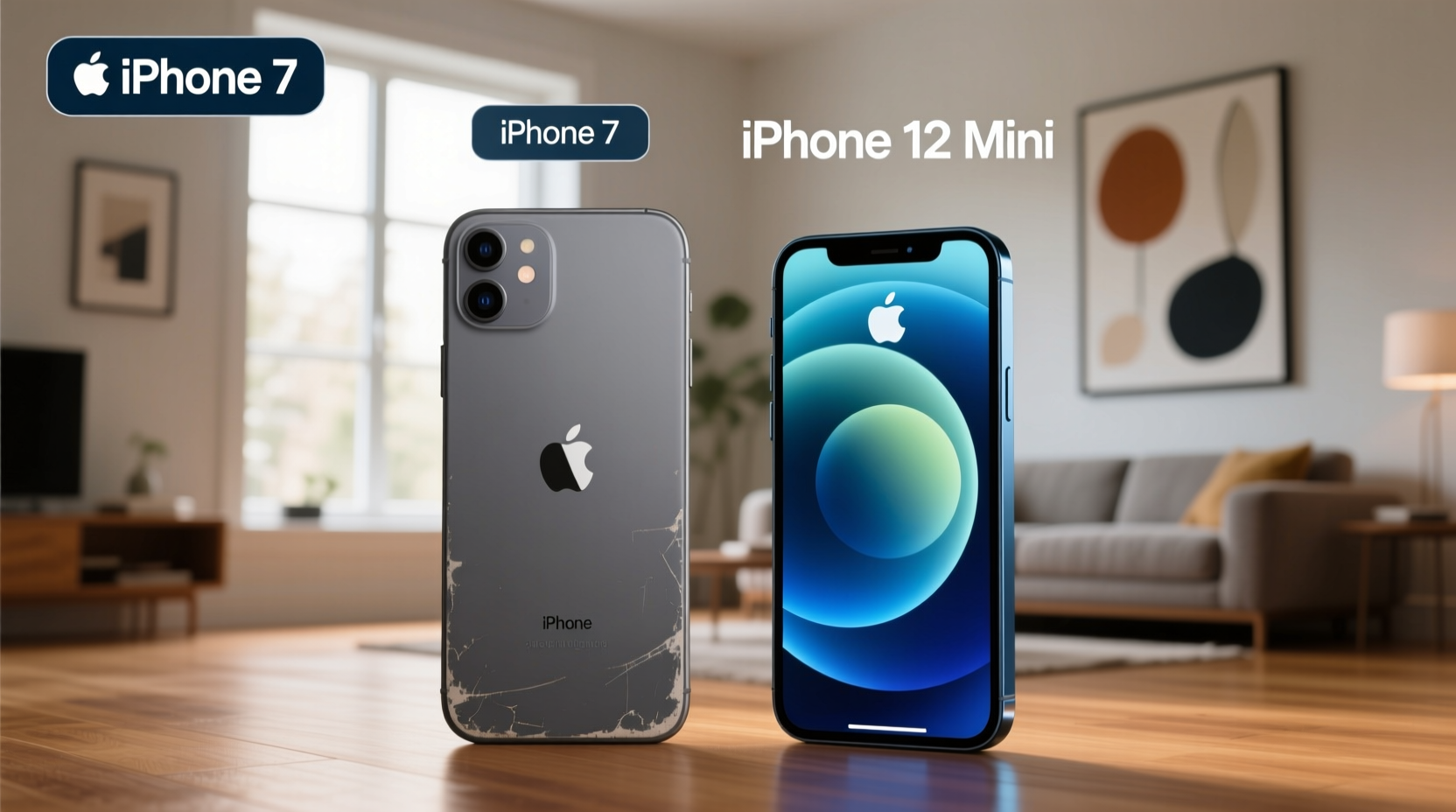
The most dramatic difference between the iPhone 7 and the 12 mini lies under the hood. The iPhone 7 runs on Apple’s A10 Fusion chip—a solid performer in its day, capable of handling iOS 14 at its peak. However, by today’s standards, it struggles with demanding apps, multitasking, and even some newer versions of iOS. Many users report sluggishness when switching between apps or loading high-resolution media.
In contrast, the iPhone 12 mini is powered by the A14 Bionic chip, the first 5-nanometer processor in any smartphone. It delivers nearly **three times** the CPU performance and **four times** the GPU power of the A10. This isn't just theoretical; real-world benefits include faster app launches, seamless AR experiences, smoother gaming at higher frame rates, and better responsiveness in photo and video editing workflows.
Tip: If you frequently use navigation, streaming, or productivity apps, the speed and efficiency of the A14 will noticeably reduce wait times and lag.Display and Design: Glass vs Aluminum, LCD vs OLED
Design philosophy separates these two models significantly. The iPhone 7 features an aluminum body with a 4.7-inch Retina HD LCD display. While durable and comfortable in hand, it lacks the visual depth and contrast of modern screens. Its resolution (1334x750) feels dated next to today’s standards, especially for video consumption.
The iPhone 12 mini, meanwhile, adopts a flat-edge aerospace-grade aluminum design with a ceramic shield front cover—Apple’s toughest glass yet. Its 5.4-inch Super Retina XDR OLED display offers deeper blacks, brighter highlights (up to 1200 nits HDR), and superior color accuracy. For anyone who watches videos, reads articles, or uses dark mode, the jump in visual quality is immediately apparent.
“OLED displays have redefined user experience—they’re not just sharper, they’re more energy-efficient and easier on the eyes during long sessions.” — David Lin, Mobile Display Analyst at TechInsight Group
Camera Comparison: Computational Photography Comes of Age
The iPhone 7 introduced a 12MP rear camera with optical image stabilization (on the Plus model only), but the base model lacks OIS, leading to blurrier low-light shots. Its single-lens system limits flexibility—no portrait mode without software tricks, no ultra-wide framing.
The iPhone 12 mini changes the game with a dual-camera setup: 12MP wide and 12MP ultra-wide lenses. More importantly, it leverages Apple’s Neural Engine and Deep Fusion technology to process images pixel-by-pixel, enhancing texture, detail, and noise reduction—even in dim lighting. Night mode, absent on the iPhone 7, now automatically activates on both rear and front cameras.
Video recording sees perhaps the biggest leap. The iPhone 7 tops out at 4K at 30fps with no extended dynamic range. The 12 mini supports Dolby Vision HDR recording at 4K/60fps—the first smartphone ever to do so. If you create content or simply want richer home videos, this is transformative.
| Feature | iPhone 7 | iPhone 12 mini |
|---|---|---|
| Display Type | LCD | OLED (Super Retina XDR) |
| Processor | A10 Fusion | A14 Bionic |
| Rear Cameras | 12MP (wide only) | 12MP wide + 12MP ultra-wide |
| Front Camera | 7MP | 12MP with Night Mode |
| Video Recording | 4K @ 30fps | Dolby Vision HDR @ 4K/60fps |
| Battery Life (video playback) | Up to 14 hours | Up to 15 hours |
| Charging | Lightning (non-PD) | Lightning with MagSafe support |
| Network | 4G LTE | 5G (mmWave and sub-6GHz) |
| Water Resistance | IP67 (1m for 30 min) | IP68 (6m for 30 min) |
| Storage Options | 32GB, 128GB, 256GB | 64GB, 128GB, 256GB |
Battery and Charging: Efficiency Gains Over Raw Capacity
Despite having a smaller physical battery, the iPhone 12 mini often matches or exceeds the iPhone 7 in real-world endurance thanks to the A14’s power efficiency and iOS 14+ optimizations. However, actual user experience varies. Longtime iPhone 7 owners may notice degraded battery health—common after 5+ years—leading to frequent charging needs.
The 12 mini supports faster charging (with a 20W adapter, sold separately) and introduces MagSafe wireless charging. While the iPhone 7 only supports basic Qi charging via third-party cases, the 12 mini enables magnetic alignment and up to 15W wireless charging. For users embracing cable-free lifestyles, this is a significant convenience upgrade.
Mini Case Study: Sarah’s Upgrade Journey
Sarah, a freelance photographer based in Portland, used her iPhone 7 for six years—mainly for emails, light social media, and occasional snapshots. By 2022, she found herself restarting her phone daily due to app crashes and struggling to edit photos smoothly. After switching to the iPhone 12 mini, she reported immediate improvements: Lightroom edits were 60% faster, her video exports completed without overheating, and she began using the ultra-wide lens creatively for architectural shots. “It felt like going from dial-up to broadband,” she said. “I didn’t realize how much I was limiting myself.”
Should You Upgrade? A Practical Checklist
Before making the move, consider the following checklist to determine if upgrading makes sense for you:
- ✅ Does your iPhone 7 take over 30 seconds to open heavy apps like Maps or Instagram?
- ✅ Have you noticed frequent app crashes or frozen screens?
- ✅ Is your battery dying before midday, even after a top-up?
- ✅ Do you record videos or take photos you wish looked sharper or clearer?
- ✅ Are you unable to install the latest iOS updates?
- ✅ Do you stream music or video on cellular data regularly?
- ✅ Would 5G connectivity improve your work or entertainment experience?
If three or more apply, upgrading is likely overdue. The iPhone 12 mini addresses nearly all pain points of aging hardware while delivering future-proof features.
Step-by-Step: How to Make the Switch Smoothly
- Back Up Your iPhone 7: Use iCloud or iTunes to ensure all data is secure.
- Check Storage Needs: The base 12 mini starts at 64GB—consider 128GB if you store lots of media.
- Transfer Data: During setup, choose “Restore from iCloud Backup” or use Quick Start to transfer directly via Wi-Fi.
- Update Apps: Re-download or update apps to their latest versions optimized for iOS 14+.
- Recycle Responsibly: Trade in your iPhone 7 through Apple or a certified recycler to offset costs and reduce e-waste.
Frequently Asked Questions
Can the iPhone 7 still run current apps?
Some apps still support iOS 15, which the iPhone 7 can run, but many newer apps (especially games and AR tools) require A11 or later chips. Over time, compatibility will continue to shrink.
Is the iPhone 12 mini worth it for its size alone?
Yes, if you prefer one-handed use. The 12 mini is one of the few flagship phones under 5.5 inches with full performance—ideal for users tired of oversized devices.
Will my accessories work with the 12 mini?
Lightning cables and headphones are compatible, but older cases won’t fit due to redesigned dimensions and the flat-edge frame.
Conclusion: Time to Move Forward
The iPhone 7 was a pioneer in durability, simplicity, and performance for its era. But technology doesn’t stand still. After nearly seven years, even the most loyal users face diminishing returns—slower performance, limited camera capabilities, and lack of 5G or modern security updates.
The iPhone 12 mini isn’t just an incremental upgrade; it’s a gateway to the current generation of mobile computing. Whether it’s capturing memories in HDR, working remotely with faster connectivity, or simply enjoying a responsive interface every day, the benefits are tangible.
💬 Ready to upgrade? Share your experience—whether you’re holding onto your iPhone 7 or recently switched to the 12 mini, your story could help others decide their next move.