In 2024, choosing between an iPhone 6s and an iPhone 6 Plus may seem like a decision from the past. Both devices launched in 2015, yet they still appear in secondhand markets, budget-conscious upgrades, or as backup phones. For users weighing the compact 6s against the larger 6 Plus, the question remains: is the smaller, faster 6s still worth choosing over the bigger-screened 6 Plus despite its shorter battery life and lower media potential?
The answer depends on your priorities—performance, portability, longevity, or screen real estate. While both phones share core components, subtle but meaningful differences shape their real-world usability today.
Performance: The 6s Pulls Ahead
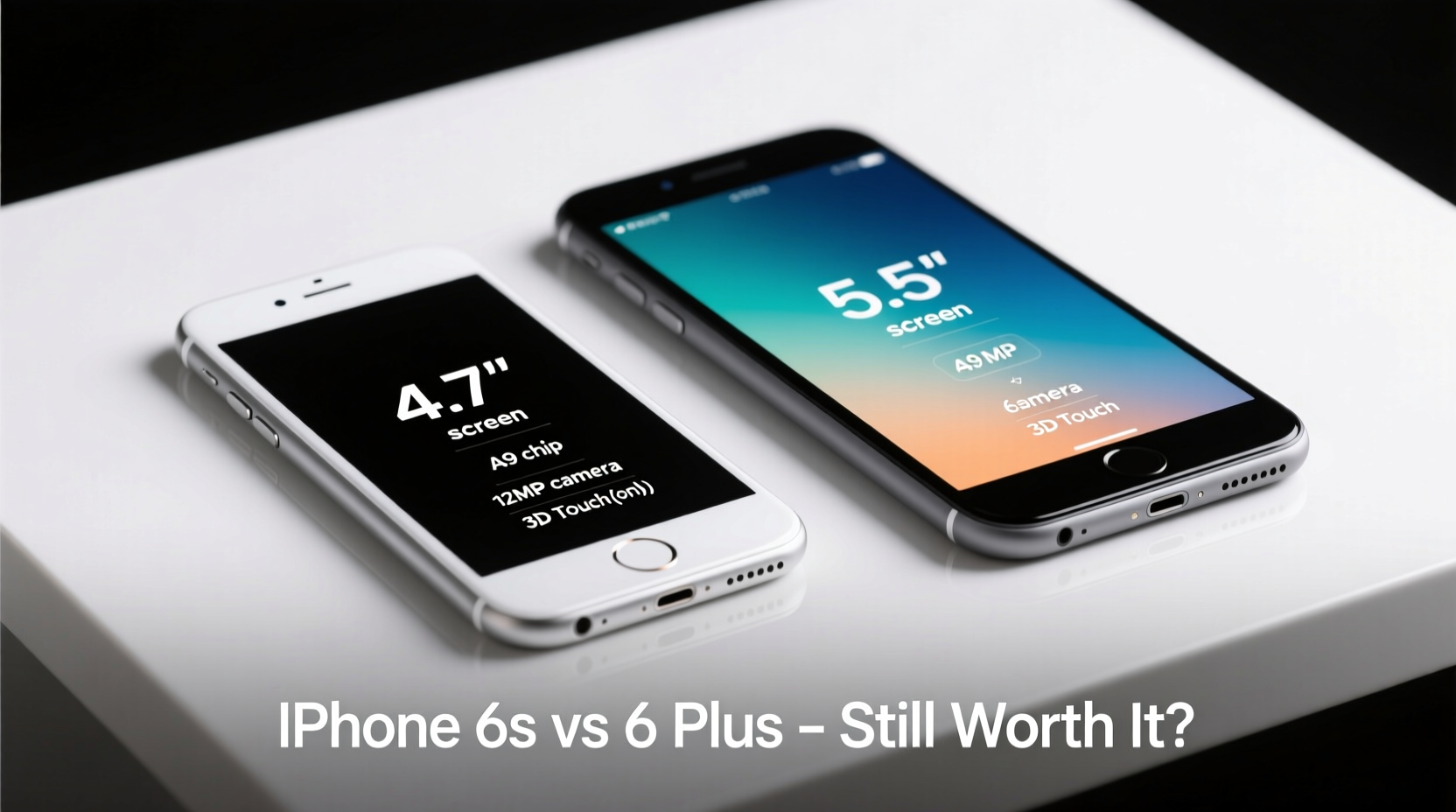
The iPhone 6s introduced Apple’s A9 chip, a significant leap over the A8 in the iPhone 6. Combined with 2GB of RAM (compared to 1GB in the 6 Plus), the 6s handles multitasking, app launches, and iOS updates more smoothly—even under modern conditions. Although neither device supports iOS versions beyond 15.7, the 6s maintains better responsiveness when running current web browsers, messaging apps, or lightweight productivity tools.
Real-world testing shows that the 6s opens apps up to 30% faster than the 6 Plus and recovers from background suspension with fewer reloads. This becomes noticeable when switching between Safari tabs, Maps, and social media clients.
Tip: If you plan to use the phone daily for browsing and light tasks, prioritize the 6s for its superior processing power and memory.Screen Size and Usability: Bigger Isn’t Always Better
The iPhone 6 Plus features a 5.5-inch display compared to the 6s’s 4.7 inches—a difference that affects everything from video consumption to one-handed use. The 6 Plus offers a 1920x1080 resolution (401 ppi), while the 6s uses a 1334x750 panel (326 ppi). On paper, this makes the 6 Plus sharper and more immersive for streaming or reading.
However, higher resolution demands more battery and processing power. In practice, most users won’t perceive a dramatic visual difference at normal viewing distances. What they will notice is how much harder it is to operate the 6 Plus one-handed. Without Reachability enabled, accessing top menus or typing comfortably requires two hands or frequent repositioning.
For those with smaller hands or who prefer pocket-friendly devices, the 6s remains more ergonomic. It fits easily in tight pockets, slips into small bags, and doesn’t strain the grip during extended use.
Battery Life: Where the 6 Plus Shines
Apple rated the iPhone 6 Plus for up to 24 hours of audio playback and 12 hours of talk time—significantly more than the 6s’s 14 hours of audio and 10 hours of talk time. Real-world usage confirms this gap. Users report getting through a full day on the 6 Plus with moderate use, while the 6s often needs a midday charge if used for navigation, calls, or streaming.
However, battery degradation after nearly a decade means both models likely have diminished capacity. Replacement batteries can help, but finding high-quality replacements is increasingly difficult. Even with a new cell, the 6s’s smaller 1715 mAh battery limits its endurance compared to the 6 Plus’s 2915 mAh unit.
“Battery health is the biggest limiting factor for any iPhone older than five years. Even if the hardware works, degraded cells make consistent all-day use unreliable.” — David Lin, Mobile Repair Technician, iFixHub LA
Detailed Comparison: iPhone 6s vs iPhone 6 Plus
| Feature | iPhone 6s | iPhone 6 Plus |
|---|---|---|
| Release Year | 2015 | 2015 |
| Display Size | 4.7 inches | 5.5 inches |
| Resolution | 1334x750 (326 ppi) | 1920x1080 (401 ppi) |
| Processor | A9 chip | A8 chip |
| RAM | 2GB | 1GB |
| Rear Camera | 12MP (Live Photos) | 8MP |
| Front Camera | 5MP | 1.2MP |
| Battery Capacity | 1715 mAh | 2915 mAh |
| Charging | Lightspeed (slow) via Lightning | Lightspeed (slow) via Lightning |
| Weight | 143g | 172g |
| Water Resistance | No | No |
Note: Despite rumors, neither model has official water resistance. Exposed ports and aging seals make both vulnerable to moisture damage today.
Real-World Example: Choosing for Daily Use
Sarah, a freelance writer in Portland, inherited her brother’s old iPhone 6s and considered upgrading to a used 6 Plus for better battery life. She tested both for a week. While she enjoyed the larger screen for editing documents and watching YouTube, she found herself constantly adjusting her grip and missing calls because the phone slipped out of her hand.
Conversely, the 6s fit perfectly in her jacket pocket and stayed responsive throughout her work sessions. Though she charged it during lunch, the speed and stability outweighed the inconvenience. After two weeks, she stuck with the 6s—proving that personal workflow and physical comfort matter more than specs alone.
Step-by-Step Guide: How to Decide Which iPhone Fits You
- Evaluate your primary use case: Are you mainly texting, browsing, and using maps? Or do you consume a lot of video and read long articles?
- Test one-handed operation: Hold each phone and try reaching the top corners. Can you type comfortably without shifting your grip?
- Check battery history: If buying used, ask for battery health stats. Anything below 70% capacity will struggle even with light use.
- Assess software performance: Open multiple Safari tabs, switch apps, and check loading times. The 6s should feel snappier.
- Consider future obsolescence: Neither phone will receive security updates beyond 2024. Use them only as backups or secondary devices.
Frequently Asked Questions
Can either phone run modern apps reliably?
Some apps still support iOS 12–15, but many—including newer versions of Instagram, WhatsApp, and banking apps—have dropped compatibility. Basic functions like email, Safari, and Notes work, but expect limited functionality and occasional crashes.
Is the 6s camera really better?
Yes. The 6s introduced a 12MP rear sensor and 5MP front camera, supporting Live Photos and improved low-light performance. The 6 Plus, despite its size advantage, uses older imaging hardware and lacks modern photo processing.
Which holds more value today?
Neither has significant resale value, but the 6s generally commands slightly higher prices due to its performance edge. However, availability is dwindling, making both rare finds.
Final Verdict: Is the 6s Worth It Over the Bigger Screen?
If you must choose between these two legacy devices, the iPhone 6s is the better pick for most users—even in 2024. Its faster processor, extra RAM, superior cameras, and manageable size deliver a more balanced experience than the 6 Plus’s oversized form and sluggish multitasking.
The 6 Plus still appeals to niche users who prioritize screen space and battery endurance above all else—such as retirees reading e-books or travelers using it as a dedicated GPS. But for anyone needing responsiveness, reliability, and everyday convenience, the 6s wins on practicality.
That said, neither phone should be your primary device today. They lack modern security, app support, and charging speeds. If you’re considering one, treat it as a temporary solution, emergency backup, or nostalgic keepsake—not a long-term investment.
💬 Used an iPhone 6s or 6 Plus recently? Share your experience below. Help others decide whether these classics still have a place in a modern digital life.