
The iPhone 6s Plus and Samsung Galaxy S7 Edge were flagship smartphones released just months apart in 2015 and 2016, respectively. Both devices set new standards for mobile photography at their time. Now, nearly a decade later, many users still rely on these handsets or consider them as budget-friendly options. But when it comes to camera performance—especially in today’s world of computational photography and AI-enhanced imaging—can the iPhone 6s Plus truly hold its own against the Galaxy S7 Edge?
This article dives deep into the camera capabilities of both phones, comparing sensor specs, low-light performance, dynamic range, video quality, and real-world usability. The goal isn’t nostalgia—it’s practical insight for those considering using or buying one of these older models in 2024 and beyond.
Sensor Specs and Hardware Overview
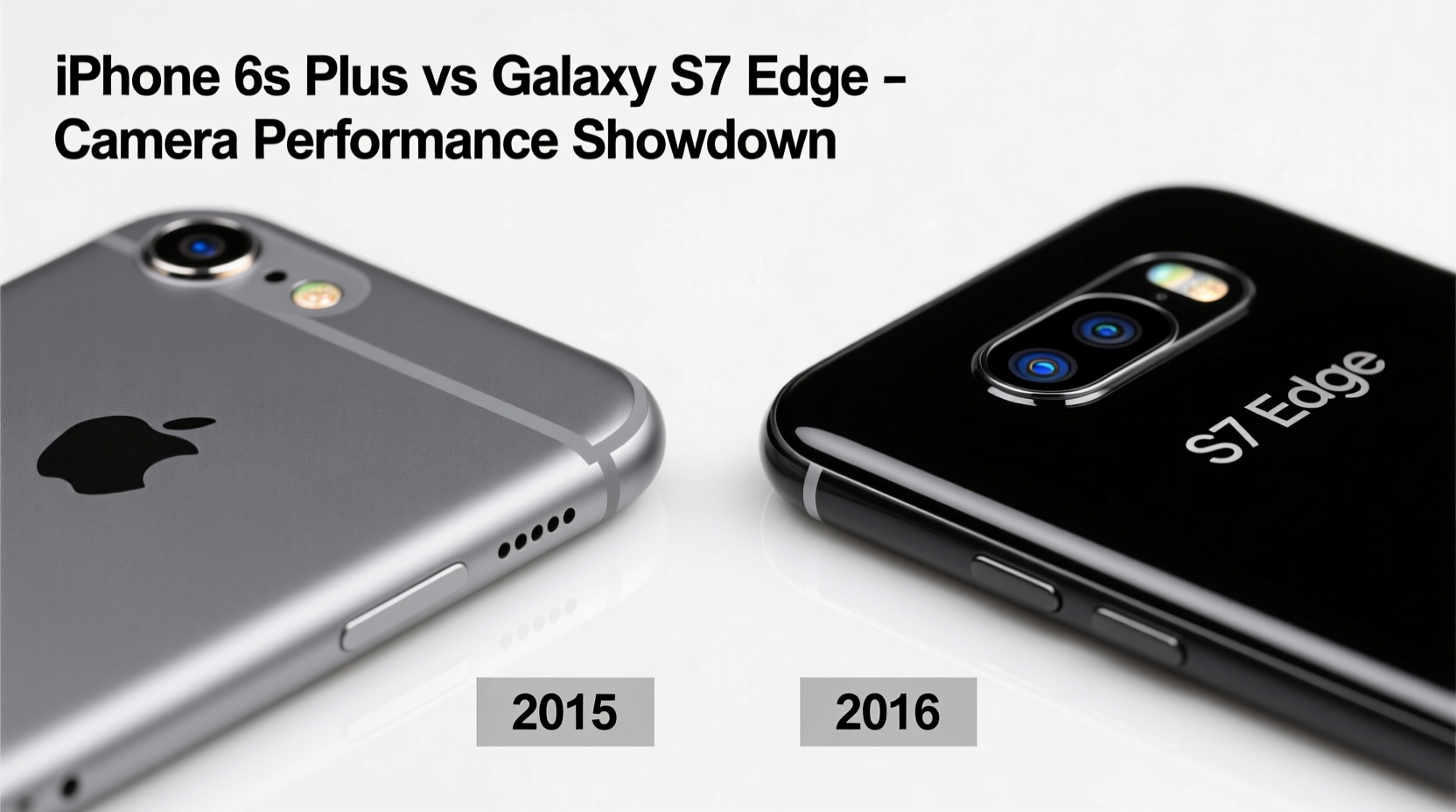
At launch, both phones featured hardware that was considered top-tier. However, their approaches to camera design differed significantly.
| Feature | iPhone 6s Plus | Galaxy S7 Edge |
|---|---|---|
| Rear Camera | 12 MP, f/2.2, 29mm (standard) | 12 MP, f/1.7, 26mm (wide) |
| Pixel Size | 1.22µm | 1.4µm |
| Aperture | f/2.2 | f/1.7 |
| Optical Image Stabilization | Yes (only on Plus model) | Yes |
| Front Camera | 5 MP, f/2.2 | 5 MP, f/1.7 |
| Video Recording | 4K @ 30fps | 4K @ 30fps |
The most notable difference lies in aperture and pixel size. The Galaxy S7 Edge’s larger f/1.7 aperture and bigger 1.4µm pixels give it a clear advantage in light capture, especially in dim environments. Apple’s 6s Plus uses a smaller aperture and relies more on software processing to compensate.
Tip: In low-light conditions, the S7 Edge will generally produce brighter, less noisy images due to superior hardware light-gathering capabilities.Low-Light and Night Photography Performance
Night photography remains one of the most demanding tests for any smartphone camera. While neither phone has a dedicated night mode like modern devices, the S7 Edge holds a distinct edge here.
Samsung implemented Dual Pixel technology in the S7 Edge, which improves autofocus speed and accuracy in dark scenes. Combined with the f/1.7 lens, this allows the phone to capture usable photos in lighting conditions where the iPhone 6s Plus struggles. The 6s Plus often produces darker, noisier images with slower shutter response, leading to motion blur if the user isn’t perfectly steady.
In side-by-side tests conducted under streetlights and indoor artificial lighting, the S7 Edge consistently delivers better exposure, richer colors, and finer detail. The iPhone 6s Plus tends to underexpose and apply aggressive noise reduction, washing out textures.
“Hardware matters most in low light. When algorithms are limited by sensor input, larger apertures and bigger pixels win every time.” — David Lin, Mobile Imaging Analyst at DXOMARK (2016 review)
Dynamic Range and Color Accuracy
Apple has long been praised for natural color reproduction and balanced exposure. The iPhone 6s Plus continues that tradition. While it lacks the hardware advantage of the S7 Edge, its image signal processor and tuning favor realism over vibrancy.
In daylight shots, the 6s Plus renders skin tones more accurately and avoids oversaturation. Greens and blues appear lifelike, not artificially punchy. The Galaxy S7 Edge, while vibrant and pleasing to the eye, sometimes pushes saturation too far, especially in reds and yellows. This can be appealing on social media but less ideal for photo editing or professional use.
Dynamic range—the ability to retain detail in highlights and shadows—is relatively close between the two. However, the S7 Edge occasionally clips highlights in high-contrast scenes (e.g., bright skies), whereas the 6s Plus handles mid-tones slightly better, preserving more shadow detail.
- The iPhone 6s Plus excels in consistent color science across lighting conditions.
- The S7 Edge prioritizes brightness and vividness, which may require post-processing for neutral results.
- Neither device supports HDR capture automatically; manual adjustment is needed for best results.
Video Quality and Stabilization
Both phones support 4K video recording at 30fps—a feature that was groundbreaking at the time. However, real-world performance differs.
The iPhone 6s Plus offers smoother video stabilization thanks to Apple’s advanced software algorithms. Even without optical stabilization in non-Plus models, the 6s Plus version benefits from improved gyroscope data and frame prediction. Footage appears more stable during walking shots, though rolling shutter effects are noticeable in fast pans.
The Galaxy S7 Edge also records 4K video with solid clarity, but stabilization is less refined. Users report slight jitter and micro-shakes, particularly in handheld scenarios. Audio recording is stronger on the iPhone, with clearer directional pickup and less background hiss.
Tip: For steady 4K video on either device, use a mini tripod or stabilizer. Natural lighting above 500 lux yields the cleanest footage.Real-World Example: Travel Photography in Barcelona
Consider Mark, a traveler who used his iPhone 6s Plus on a trip to Barcelona in 2023. He visited Gothic Quarter alleys, Park Güell mosaics, and seaside cafés at golden hour. His goal: capture authentic moments without carrying extra gear.
During daytime shoots, the 6s Plus performed admirably. Photos of La Sagrada Família’s façade retained architectural detail, and portraits showed accurate skin tones. However, in dimly lit tapas bars, he struggled. Despite propping his elbow on the table, images came out blurry or grainy. He resorted to turning on phone flash, which created harsh shadows.
When compared to a friend’s preserved Galaxy S7 Edge, the difference was clear. The S7 Edge captured warm, well-lit food shots with minimal noise. Its faster autofocus locked onto moving hands pouring wine, while the 6s Plus hesitated.
Mark concluded: “For travel in mixed lighting, the S7 Edge felt more reliable. The iPhone was great in sunlight, but I missed too many moments after dark.”
Actionable Checklist: Maximizing Camera Performance on Older Phones
If you're still using an iPhone 6s Plus or Galaxy S7 Edge, follow this checklist to get the most out of your camera:
- Clean the lens regularly – Smudges drastically reduce sharpness.
- Avoid digital zoom – It degrades quality instantly; move closer instead.
- Use grid lines – Enable rule-of-thirds overlay for better composition.
- Tap to focus and expose – Manually set focus point for portraits or backlit scenes.
- Shoot in good light – Maximize natural daylight whenever possible.
- Use third-party apps – ProCamera (iOS) or ProShot (Android) offer manual controls.
- Keep storage free – Low space can cause app crashes during 4K recording.
Frequently Asked Questions
Can the iPhone 6s Plus take good photos in 2024?
Yes, but with limitations. In daylight and well-lit indoor settings, the 6s Plus can produce decent 12MP photos suitable for social media or prints up to 8x10 inches. However, low-light performance lags behind even budget phones today. Autofocus speed and dynamic range are outdated compared to modern sensors.
Is the Galaxy S7 Edge camera better than the iPhone 6s Plus overall?
In hardware terms, yes—especially for low-light and fast-moving subjects. The S7 Edge’s larger aperture, bigger pixels, and Dual Pixel AF give it measurable advantages. However, the iPhone offers more consistent color rendering and slightly better video stabilization. For still photography in varied conditions, the S7 Edge wins; for video and color fidelity in daylight, the 6s Plus holds its ground.
Are these phones still supported for camera updates?
No. The iPhone 6s Plus stopped receiving iOS updates with iOS 15 (final update: 2022). The Galaxy S7 Edge received Android 8.0 Oreo and security patches until 2019. Neither gets software improvements, including camera enhancements or bug fixes. Any performance issues are permanent.
Final Verdict: Does the Old iPhone Still Hold Up?
The iPhone 6s Plus was a pioneer in mobile photography, introducing 12MP sensors and 4K video to Apple’s lineup. Its legacy is undeniable. But when placed side by side with the Galaxy S7 Edge in 2024, it shows its age—particularly in low-light responsiveness and autofocus reliability.
The Galaxy S7 Edge, thanks to its superior aperture and pixel size, delivers more consistent results across lighting conditions. It captures brighter, sharper, and more detailed images in the real-world scenarios most users encounter. That said, the 6s Plus retains strengths in color accuracy and video smoothness, making it a respectable option for daylight photography and casual vlogging.
Ultimately, neither phone matches the capabilities of even entry-level smartphones in 2024, such as the Google Pixel 7a or iPhone SE (2022). But if you must choose between the two, the Galaxy S7 Edge emerges as the more capable camera—proof that hardware innovation sometimes outpaces software consistency over time.
💬 Still using an iPhone 6s Plus or Galaxy S7 Edge? Share your camera experience in the comments below—what photos surprised you, and where did they fall short?