In an era dominated by edge-to-edge displays and phablet-sized smartphones, the compact form factor of the iPhone 5s and its spiritual successor, the iPhone SE, stands out as a nostalgic anomaly. Both devices share nearly identical physical dimensions, yet they were released nearly six years apart. The iPhone 5s launched in 2013; the first-generation iPhone SE followed in 2016, reviving the classic 4-inch design with modern internals. With screen sizes now averaging 6.1 inches or more, it's worth asking: in a world that’s gone big, does the smaller footprint of these iPhones still hold value?
This isn’t just about nostalgia—it’s about ergonomics, pocketability, single-handed use, and how user priorities have evolved. By comparing the iPhone 5s and iPhone SE dimensions and evaluating their real-world usability, we can better understand whether size still matters in today’s mobile landscape.
Physical Dimensions: Nearly Identical, But Not Exactly
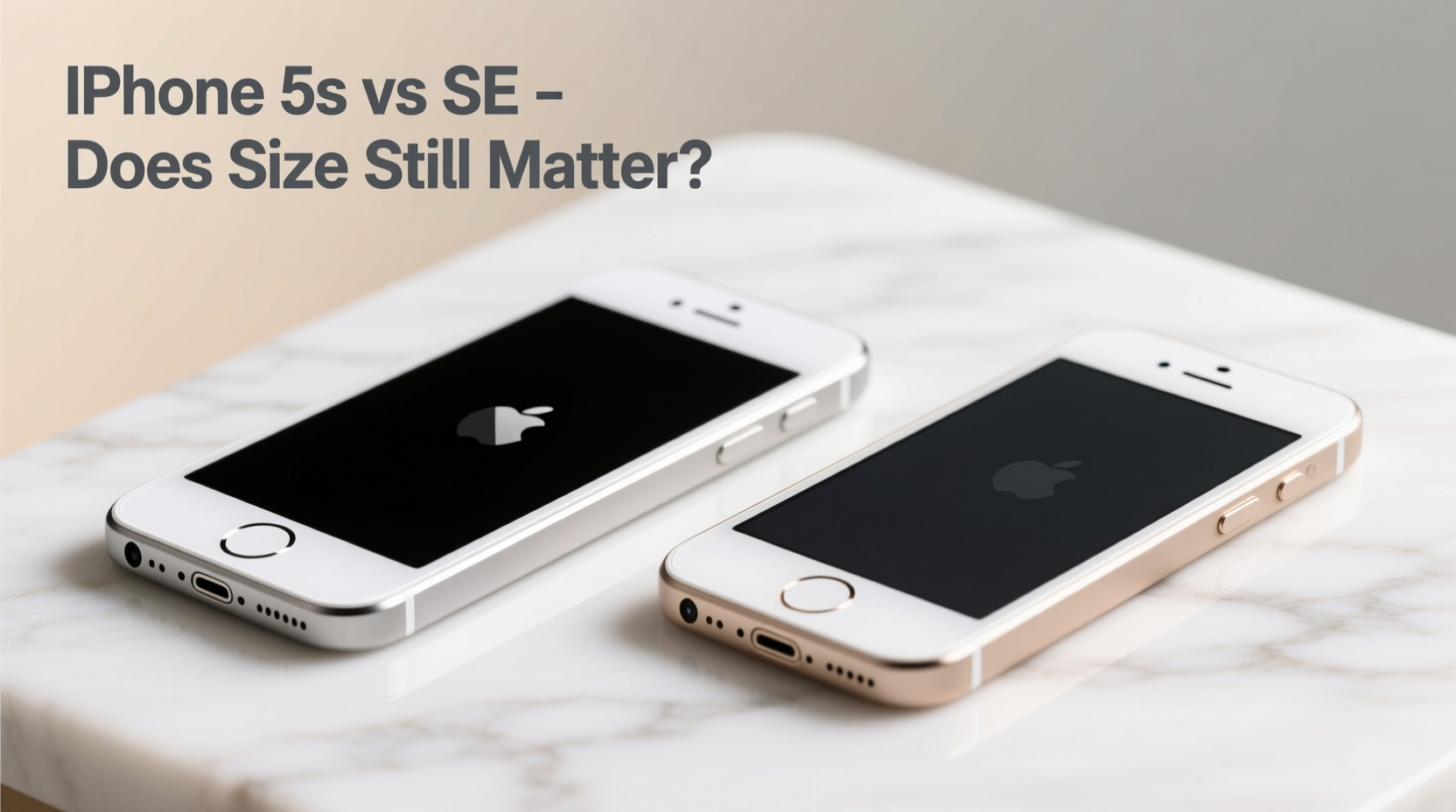
At first glance, the iPhone 5s and the original iPhone SE look almost indistinguishable. They both feature a 4-inch Retina display with a resolution of 1136x640 pixels and follow the same industrial design language introduced with the iPhone 5. However, there are subtle differences in weight and internal construction.
| Feature | iPhone 5s | iPhone SE (1st Gen) |
|---|---|---|
| Height | 123.8 mm (4.87 in) | 123.8 mm (4.87 in) |
| Width | 58.6 mm (2.31 in) | 58.6 mm (2.31 in) |
| Thickness | 7.6 mm (0.30 in) | 7.6 mm (0.30 in) |
| Weight | 112 grams (3.95 oz) | 113 grams (3.99 oz) |
| Display Size | 4.0 inches | 4.0 inches |
| Material | Aluminum & Glass | Aluminum & Glass (reinforced) |
The specs reveal that Apple preserved the exact external footprint, likely to reuse tooling and appeal to users attached to the compact format. The slight increase in weight on the SE is due to internal reinforcements and a slightly denser battery pack. Otherwise, the two phones are twins—so much so that many cases designed for the 5s fit the SE perfectly.
Tip: If you're still using a 5s or SE, consider upgrading to a used SE (2nd gen) for similar one-handed comfort but with modern performance and battery life.Ergonomics and Usability in a One-Handed World
The iPhone 5s and SE shine in situations where dexterity and convenience trump screen real estate. Their width—just under 2.3 inches—makes them uniquely suited for single-handed operation. You can reach every corner of the screen without shifting your grip, a feat increasingly rare on modern smartphones.
In contrast, today’s average iPhone (like the iPhone 15 at 71.6 mm wide) requires constant hand adjustments, thumb stretching, or the use of Reachability features. For users with smaller hands, commuters, or those who frequently operate their phone while walking, the compact size remains a functional advantage.
“Small phones aren’t outdated—they’re optimized. In urban environments, where space and attention are limited, a device you can actually control with one hand has enduring utility.” — David Lin, Mobile Ergonomics Researcher, UX Institute
Moreover, the lightweight nature of both devices reduces hand fatigue during extended use. While larger phones offer immersive video and gaming experiences, they often sacrifice comfort over time. The 5s and SE avoid this trade-off entirely.
A Real-World Example: The Commuter’s Dilemma
Take Sarah, a transit rider in downtown Chicago. She uses her phone daily during crowded train rides where space is tight. Her previous phone—a 6.7-inch Android flagship—was constantly bumping into fellow passengers, slipping from her grip, and difficult to stow quickly. After switching to a refurbished iPhone SE, she noticed immediate improvements: easier access from tight pockets, smoother navigation during jostling commutes, and less strain when checking messages standing up.
For Sarah, screen size wasn’t the priority—control and reliability were. The SE’s compactness didn’t limit her productivity; instead, it enhanced her ability to use the device efficiently in constrained environments. This scenario reflects a broader truth: context defines what “ideal size” means.
Modern Relevance: Is Small Still Viable?
While Apple discontinued the 4-inch form after the first SE, they reintroduced compact design with the iPhone SE (2nd and 3rd generations), which use the iPhone 8 chassis—slightly larger at 4.7 inches but still significantly smaller than Pro models. These newer SEs prove that demand for manageable phones persists.
However, true 4-inch enthusiasts face limitations. App developers increasingly optimize for larger screens. Some streaming services and games either don’t support 4-inch displays or deliver cramped interfaces. iOS updates have also reduced functionality on older hardware—iOS 16 dropped support for the first-gen SE, limiting long-term viability.
Yet, for basic tasks—calls, messaging, email, light browsing, and photography—the 5s and SE remain capable. The SE, in particular, packed an A9 chip comparable to the iPhone 6s, making it faster than many mid-range Android phones of its time.
Checklist: Is a Compact iPhone Right for You?
- ✅ Do you prioritize one-handed use?
- ✅ Do you carry your phone in tight pockets or small bags?
- ✅ Are you frustrated by large phones slipping or being hard to control?
- ✅ Do you mainly use core apps (Messages, Mail, Maps, Camera)?
- ✅ Are you comfortable with potential app compatibility limits on older iOS versions?
If most answers are yes, a compact iPhone—either vintage or newer SE model—might be ideal.
Size vs. Functionality: The Trade-Offs
Smaller phones come with inherent compromises. Battery capacity is limited by volume. The iPhone SE (1st gen) holds 1,642 mAh, compared to 3,279 mAh in the iPhone 15. That translates to noticeably shorter screen-on time. Similarly, camera systems are constrained. While the SE matches the 5s in sensor size, it benefits from improved image signal processing—but still lacks Night mode, Portrait mode (without software tricks), and multi-lens flexibility.
On the other hand, compact devices heat up less under load and age more gracefully in terms of physical wear. Fewer drops occur because they’re easier to grip. Cases and screen protectors last longer due to reduced leverage during impacts.
Tip: If you own a 5s or SE, disable background app refresh and reduce motion effects to extend battery life and maintain snappy performance.Frequently Asked Questions
Can the iPhone SE run modern apps smoothly?
The first-gen SE performs well with most lightweight apps, but newer or graphics-intensive apps (like high-end games or AR tools) may lag or not be supported. Later SE models (2020 and 2022) handle modern iOS demands far better thanks to A13 and A15 chips.
Is the 4-inch screen too small for streaming or reading?
It depends on usage. For casual YouTube clips or audiobook interfaces, it’s sufficient. For extended reading or movie watching, the small screen becomes tiring. Consider pairing with Bluetooth headphones and using audio-based content to offset visual limitations.
Why did Apple stop making 4-inch iPhones?
Market research showed growing preference for larger screens, especially for media consumption and multitasking. Profit margins also favor larger devices with premium pricing. However, Apple acknowledged lingering demand by continuing the SE line in slightly larger, but still compact, form factors.
Conclusion: Size Still Matters—Just Differently
Does size matter anymore? Not in the way it once did. It’s no longer about fitting more pixels into a palm-sized device. Instead, size matters in terms of fit—how well a phone integrates into your lifestyle, how comfortably it rests in your hand, and how effortlessly you can use it throughout the day.
The iPhone 5s and SE represent a philosophy of intentional design: powerful technology doesn’t need to be oversized. While they may not dominate spec sheets, they excel in usability, portability, and longevity for the right user. In a market obsessed with bigness, their legacy reminds us that sometimes, less really is more.
💬 Still rocking a 5s or SE? Share your experience! How has the compact size shaped your daily use? Join the conversation and help redefine what smartphone convenience means today.