In 2013, the smartphone market was at a pivotal crossroads. Apple had just launched the iPhone 5s, a refined evolution of its iconic design with a groundbreaking Touch ID sensor and the first 64-bit mobile processor. Meanwhile, Samsung responded with the Galaxy Note 3—a phablet powerhouse boasting a massive 5.7-inch display, an S Pen stylus, and Android’s most customizable interface. On paper, they couldn’t have been more different. One prioritized elegance, ecosystem cohesion, and minimalist control. The other embraced productivity, screen real estate, and hardware versatility. But beneath the specs and marketing hype, a real question remains: did anyone genuinely prefer the Note 3 over the iPhone 5s back then?
The answer isn’t just yes—it’s nuanced. While Apple dominated mindshare among mainstream consumers and brand loyalists, a significant cohort of users actively chose the Galaxy Note 3 for reasons that went far beyond screen size.
Design Philosophy: Compact Elegance vs. Functional Boldness
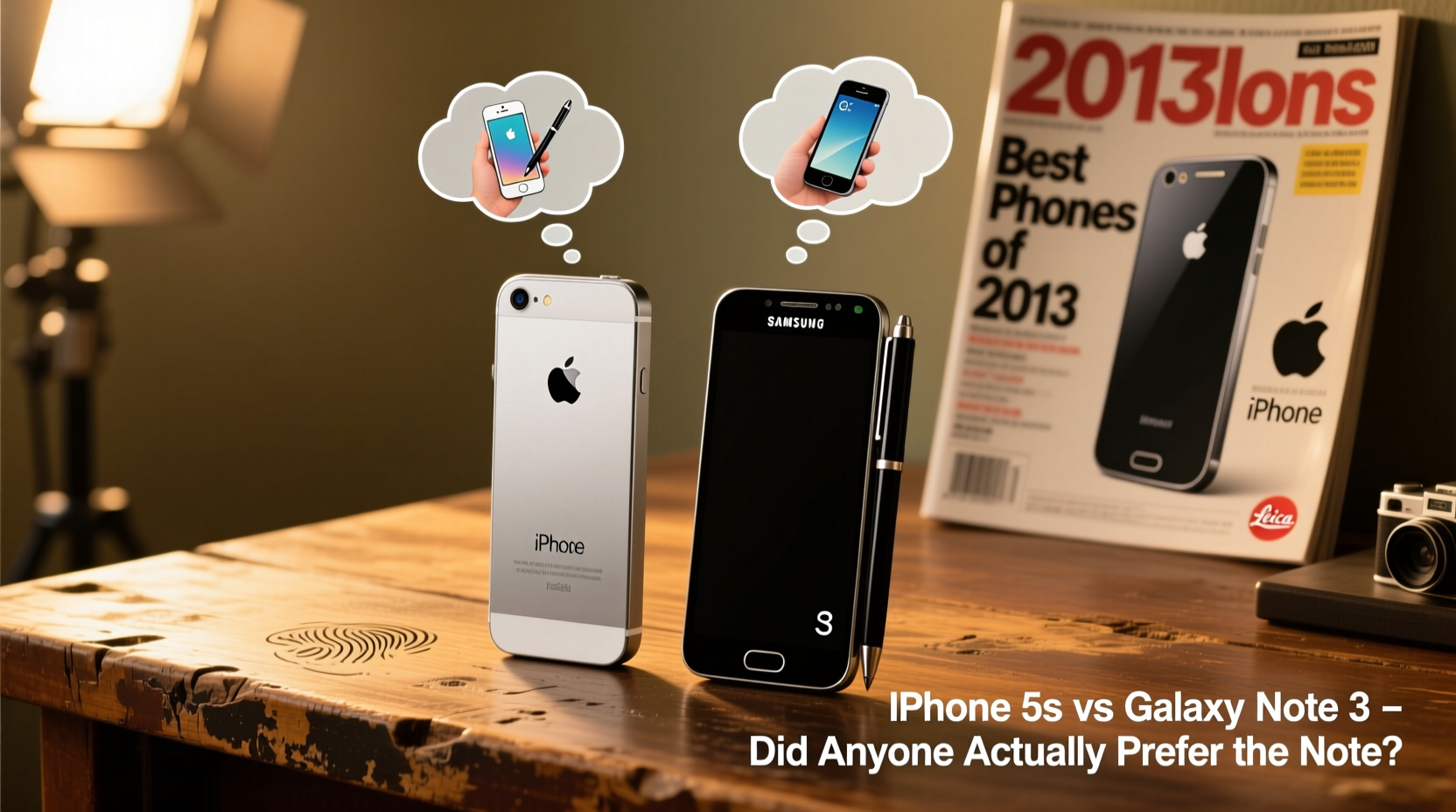
The iPhone 5s represented the peak of Apple’s minimalist ethos. Its aluminum unibody, chamfered edges, and compact 4-inch display made it one of the last truly pocketable high-end smartphones. It felt premium, balanced, and familiar—especially to existing iOS users.
The Galaxy Note 3, by contrast, leaned into boldness. With its faux-leather textured back, metallic frame, and large display, it was unmistakably a statement device. Critics mocked its size, but enthusiasts praised its utility. For users who typed long emails, read PDFs, or sketched ideas, the extra screen space wasn’t indulgent—it was essential.
Tip: Screen size preference often correlates with use case, not just personal taste. Power users favored larger displays for multitasking.“The Note 3 didn’t try to be sleek for the sake of it,” recalls tech journalist Marcus Lin, who reviewed both devices in 2013. “It was built for people who needed more from their phone than just calls and apps. It was a mobile workstation.”
Performance and Software: iOS Refinement vs. Android Flexibility
The iPhone 5s introduced the A7 chip—the first 64-bit processor in a smartphone. This gave iOS 7 a fluid, future-proof foundation. Animations were snappy, app launches near-instant, and battery efficiency was excellent for its time. iOS offered a curated, consistent experience with tight app optimization and seamless integration across Apple devices.
Samsung’s Galaxy Note 3 ran on Android 4.3 (upgradable to 4.4), powered by either a Snapdragon 800 or Exynos 5 Octa, depending on region. While benchmarks showed slight CPU advantages for the A7, the Note 3’s 3GB of RAM allowed for superior multitasking. Users could run multiple full-screen apps, use split-screen mode, and keep dozens of tabs open without reloading.
“Android’s flexibility let power users tailor their phones in ways iOS simply wouldn’t allow. The Note 3 was the ultimate expression of that freedom.” — Lena Park, Mobile UX Researcher
For many professionals, students, and creatives, this flexibility mattered. Features like Air Command, pop-up windows, and S Note turned the phone into a tool rather than just a communication device.
Feature Comparison: iPhone 5s vs Galaxy Note 3
| Feature | iPhone 5s | Galaxy Note 3 |
|---|---|---|
| Display | 4.0” Retina (1136x640) | 5.7” Full HD Super AMOLED (1920x1080) |
| Processor | Apple A7 (64-bit) | Snapdragon 800 / Exynos 5420 |
| RAM | 1GB | 3GB |
| Rear Camera | 8MP, f/2.2 | 13MP, f/2.2, OIS |
| Battery | 1440 mAh | 3200 mAh |
| Stylus | No | Yes (S Pen with pressure sensitivity) |
| Expandable Storage | No | Yes (microSD up to 64GB) |
| OS | iOS 7 | Android 4.3 (TouchWiz) |
The table highlights a fundamental divide: the iPhone 5s excelled in processing efficiency and software polish, while the Note 3 offered tangible hardware advantages for productivity and media consumption.
A Real-World Example: The Student Who Chose the Note
Jamal Carter was a graduate student in architecture in 2013 when he bought his Galaxy Note 3. “I needed to annotate blueprints, take handwritten notes during lectures, and view detailed renders,” he explains. “The iPhone 5s screen was too small, and there was no stylus support. I tried it for a week and returned it.”
With the Note 3, Jamal used S Note to sketch design ideas directly on PDFs, snapped reference photos with the higher-resolution camera, and used split-screen to compare materials databases side-by-side with messaging apps. “It wasn’t about being trendy,” he says. “It was about getting work done. My classmates with iPhones were constantly squinting or using laptops. I had everything in my hand.”
This kind of user—professionals, students, creatives—was exactly who Samsung targeted. And for them, the Note 3 wasn’t just preferred; it was indispensable.
Why Some Users Made the Switch—and Stuck With It
Despite Apple’s dominance in brand loyalty, a quiet migration occurred in late 2013. Tech forums like XDA Developers and Reddit’s r/Android saw threads titled “Why I switched from iPhone 5s to Note 3” gaining traction. Common reasons included:
- Need for a larger screen for reading and multitasking
- Frustration with iOS limitations (no file system access, no custom launchers)
- Desire for expandable storage and replaceable battery
- Productivity features like Air View, multi-window, and S Pen functionality
- Better camera hardware (13MP vs 8MP) and flash options
For users coming from desktop computing backgrounds, the Note 3 felt more like a computer in their pocket. The ability to connect to a monitor via HDMI (with appropriate adapter), use mouse input, and run desktop-style workflows appealed to early adopters of mobile productivity.
Tip: If your workflow involves document editing, note-taking, or media creation, screen size and input precision matter more than brand prestige.Frequently Asked Questions
Was the Galaxy Note 3 better than the iPhone 5s overall?
“Better” depends on priorities. For ecosystem integration, app quality, and long-term software support, the iPhone 5s had the edge. For customization, multitasking, screen size, and productivity tools, the Note 3 was superior. Neither was objectively better—they served different needs.
Did the S Pen make a real difference?
Absolutely—for certain users. Students, designers, and professionals who took handwritten notes or annotated documents found the S Pen invaluable. It wasn’t a gimmick; it was a precision tool that enabled workflows impossible on touch-only devices.
Why did Apple stick with a 4-inch screen so long?
Apple prioritized one-handed usability and design consistency. They believed most users valued compactness over screen size. It wasn’t until the iPhone 6 Plus in 2014 that Apple conceded to the phablet trend—a shift influenced, in part, by the Note series’ success.
Conclusion: Preference Was Never Just About Specs
The debate between the iPhone 5s and Galaxy Note 3 wasn’t merely technical—it was cultural. Apple represented simplicity, status, and seamless integration. Samsung’s Note 3 stood for capability, customization, and utility. And yes, plenty of people preferred the Note back then—not because it was cooler, but because it worked better for their lives.
Today, with nearly every flagship phone featuring large screens and advanced multitasking, it’s easy to forget how radical the Note 3 seemed in 2013. But its legacy lives on. It proved that a segment of users wanted more from their phones than elegance and ease—they wanted power, precision, and control.
💬 Were you team iPhone 5s or Galaxy Note 3 back in 2013? Share your experience and what swayed your decision—we’d love to hear your story.