In September 2013, Apple introduced two new smartphones: the iPhone 5c and the iPhone 5s. Positioned as sibling devices, they shared the same screen size and overall footprint but diverged in materials, performance, and target audience. While both models inherited the 4-inch display of the iPhone 5, their internal and external differences sparked debate—especially regarding whether subtle variations in weight, build, and feel were enough to influence buyer decisions. For many consumers, the question wasn’t just about specs—it was about comfort, usability, and long-term satisfaction. Was the slight physical distinction between the 5c and 5s enough to be a deal breaker?
Design and Build: Plastic vs Precision Aluminum
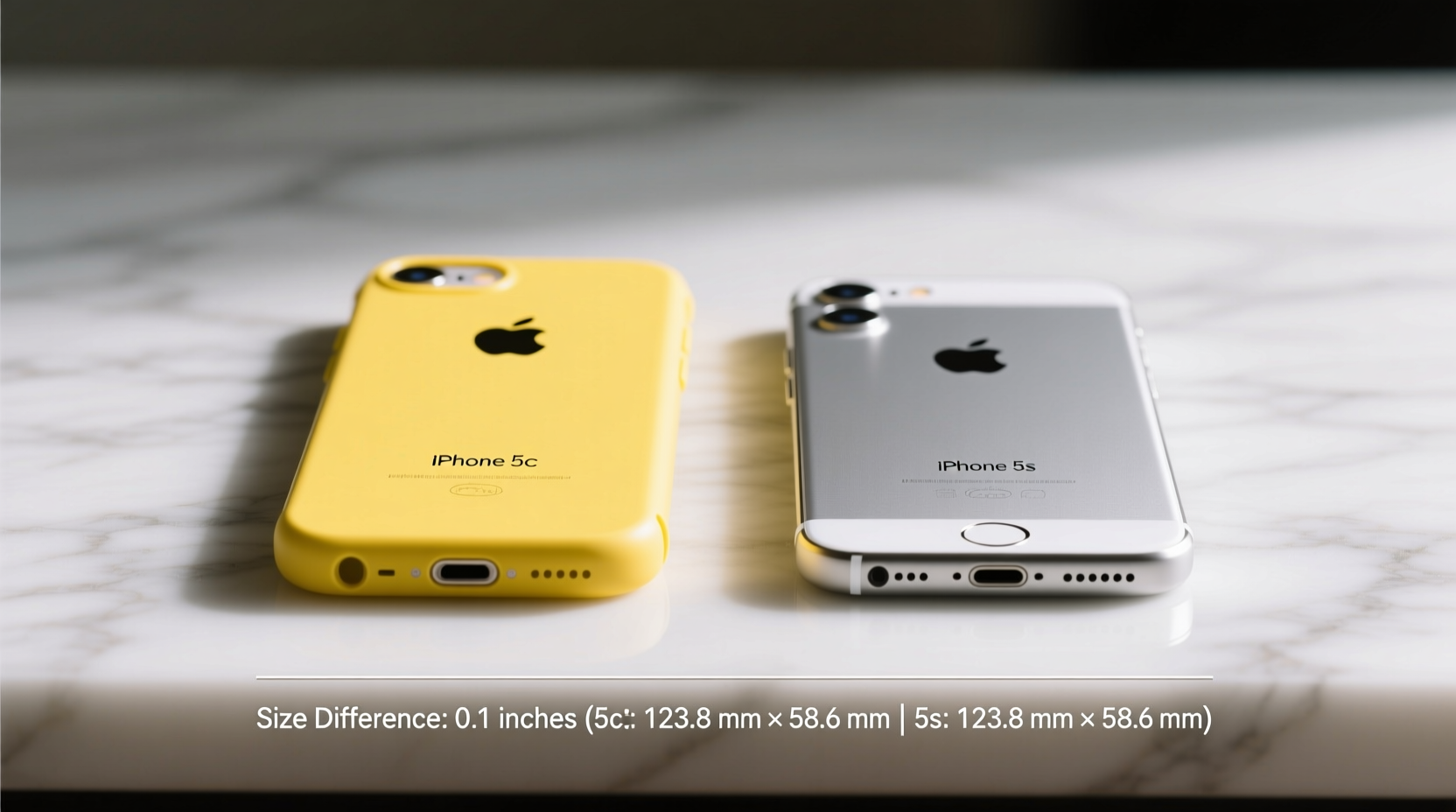
The most immediate visual and tactile difference between the iPhone 5c and 5s lies in their construction. The iPhone 5c featured a polycarbonate (plastic) shell with a colorful, consumer-friendly aesthetic. Available in bright hues like blue, green, pink, yellow, and white, it was marketed as an accessible, fun alternative to Apple’s premium lineup. Despite its plastic body, the 5c was not flimsy; Apple reinforced it with a steel frame and sealed it well, giving it a solid feel.
In contrast, the iPhone 5s retained the sleek aluminum unibody design of the iPhone 5, offering a more refined, professional appearance. Its matte finish and chamfered edges conveyed a sense of premium craftsmanship. Though both phones measured 4.9 x 2.3 x 0.35 inches, the 5c was slightly thicker and heavier at 4.65 oz (132 grams), compared to the 5s’s 3.95 oz (112 grams).
Tip: If you prioritize pocketability and lightness, the 5s offers a noticeably sleeker profile despite nearly identical dimensions.Size Comparison: Are the Differences Noticeable?
On paper, the size difference between the two models is minimal. Both feature the same 4-inch Retina display with 1136x640 resolution, maintaining consistency in usability for one-handed operation. However, real-world handling reveals nuances. The added thickness and weight of the 5c give it a more substantial grip, which some users appreciated. Others found it bulkier, especially when switching from the lighter 5s.
The curvature of the 5c’s back also affects how it sits in the hand. Its rounded edges distribute weight differently than the flatter, sharper 5s. For users with smaller hands or those who frequently use their phone one-handed, this could influence comfort over extended periods.
“Apple designed the 5c to feel durable and vibrant, but it traded some elegance for that durability.” — David Kim, Mobile Device Analyst at TechInsight Weekly
Performance Gap: Where the Real Difference Lies
While size and design played a role, the true differentiator between the 5c and 5s was under the hood. The iPhone 5s introduced the A7 chip—the first 64-bit processor in any smartphone at the time—alongside an M7 motion coprocessor. This gave the 5s significantly better performance, future-proofing it for newer iOS versions and demanding apps.
The iPhone 5c, on the other hand, used the same A6 chip as the iPhone 5. While still capable, it lacked the processing power and efficiency of the A7. Over time, this translated into slower app launches, reduced multitasking fluidity, and earlier obsolescence. iOS updates continued to support the 5s longer than the 5c, reinforcing the idea that hardware longevity mattered more than marginal size differences.
| Feature | iPhone 5c | iPhone 5s |
|---|---|---|
| Processor | A6 chip | A7 + M7 coprocessor |
| RAM | 1GB | 1GB |
| Touch ID | No | Yes (first-time inclusion) |
| Camera | 8MP rear, f/2.4 | 8MP rear, f/2.2 with True Tone flash |
| Weight | 132g (4.65 oz) | 112g (3.95 oz) |
| Dimensions | 124.4 x 59.2 x 8.97 mm | 123.8 x 58.6 x 7.6 mm |
User Experience: A Case Study in Daily Use
Consider Sarah, a college student in 2013 who chose the iPhone 5c for its vibrant yellow color and lower price point. She appreciated the sturdier feel and didn’t mind the extra ounce. But within a year, she noticed her apps loading slower than her friends’ 5s devices. By 2015, iOS 9 introduced performance hiccups on her 5c, while the 5s handled it smoothly. When iOS 10 dropped, her phone struggled with basic navigation.
Meanwhile, Mark, a freelance photographer, opted for the 5s. He valued the improved camera sensor, faster shutter response, and Touch ID for secure access to client files. Though he initially thought the size difference negligible, he later realized the lighter weight made it easier to carry during shoots. After three years, his 5s remained functional, while Sarah upgraded sooner than expected.
This illustrates a broader trend: while aesthetics and ergonomics influenced initial purchase decisions, long-term usability hinged on performance—not size.
Checklist: Choosing Between iPhone 5c and 5s (Retrospective Guide)
- Evaluate your need for speed: If you plan to keep the phone beyond two years, the A7 chip in the 5s is essential.
- Consider security features: The 5s introduced Touch ID—absent on the 5c—which enhanced convenience and protection.
- Assess build preference: Do you prefer colorful, durable plastic or minimalist metal?
- Think about resale value: The 5s maintained higher resale value due to superior specs.
- Test the weight: Hold both if possible; even small differences can affect daily comfort.
Was the Size Difference a Deal Breaker?
For most users, no. The slight increase in thickness and weight of the iPhone 5c did not fundamentally alter usability. Both phones fit comfortably in pockets and were manageable with one hand. The real deal breakers were elsewhere: performance, biometric security, camera quality, and software support lifespan.
That said, for users sensitive to texture and weight—such as those with arthritis or those who carry phones in tight pockets—the 5c’s added heft could be a minor inconvenience. But these cases were exceptions rather than the rule. Ultimately, the decision came down to whether buyers prioritized form over function. Those who focused on longevity and responsiveness overwhelmingly favored the 5s, regardless of its slimmer profile.
Frequently Asked Questions
Did the iPhone 5c and 5s have the same battery life?
They had similar battery capacities, but the 5s’s more efficient A7 chip and optimized iOS integration gave it slightly better real-world battery performance, especially under heavy use.
Can the iPhone 5c run modern apps today?
No. The last supported iOS version for the 5c was iOS 10. Most current apps require iOS 13 or later, making the 5c incompatible with modern software and app stores.
Why did Apple discontinue the 5c so quickly?
The 5c failed to gain traction as a “budget” iPhone because its pricing was too close to the 5s. Consumers saw the performance gap and opted for the superior model, rendering the 5c redundant within a year.
Final Thoughts: Beyond Dimensions
The iPhone 5c vs. 5s debate underscores a timeless truth in tech: specifications and long-term usability often outweigh superficial differences. While the 5c brought color and personality to Apple’s lineup, it couldn’t compete with the 5s’s technological leap. The size variation, though present, was never the deciding factor. What mattered more was the presence of 64-bit architecture, Touch ID, and a camera system tuned for low-light performance.
In hindsight, the 5s wasn’t just a marginally better phone—it was a generational step forward. The 5c, despite its charm, became a footnote in Apple’s evolution. For buyers today reviewing older models or drawing lessons for future purchases, the takeaway is clear: don’t let minor physical differences distract from core functionality. Performance, security, and software support will always matter more than a fraction of an inch or a few grams.
🚀 Looking back, what would you choose: the colorful 5c or the powerful 5s? Share your thoughts and experiences with others considering classic iPhones!