
In 2013 and 2014, the smartphone world stood at a crossroads. Apple’s iPhone 5 had redefined premium design with its sleek aluminum body and Lightning connector, while Samsung’s Galaxy S5 arrived in 2014 as the culmination of Android’s hardware ambition—water resistance, a fingerprint sensor, and a feature-packed software suite. At the time, many tech analysts declared the Galaxy S5 the superior device on paper. But nearly a decade later, does that assessment hold up?
Revisiting this rivalry isn’t just nostalgia—it reveals how innovation, ecosystem loyalty, and long-term usability shape our perception of what makes a “better” phone.
Design and Build: Glass vs Aluminum, Plastic vs Premium
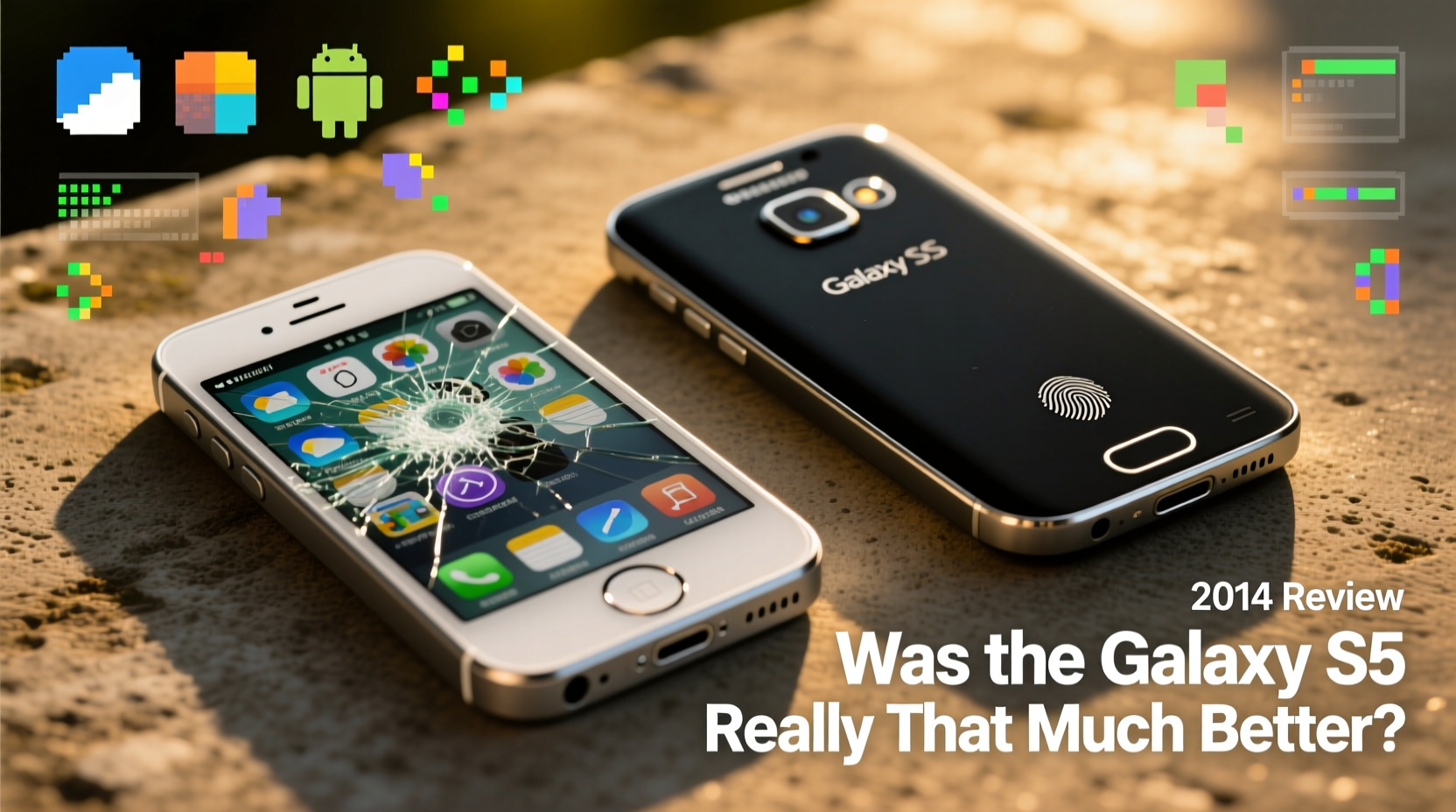
The iPhone 5, released in September 2012, introduced a dramatic shift from the boxy iPhone 4S. Its tapered aluminum chassis, chamfered edges, and taller 4-inch display made it feel modern and refined. It was lighter, thinner, and more elegant than any previous iPhone. Apple emphasized craftsmanship, and the result was a device that felt like a luxury item in the hand.
Samsung’s Galaxy S5, launched in April 2014, took a different approach. While it featured IP67 water and dust resistance—a rarity at the time—the polycarbonate (plastic) body couldn’t match the iPhone’s premium tactile feel. The textured back panel and faux metallic trim aimed to mimic high-end materials but fell short in perceived quality. Yet, functionally, the S5 was rugged and practical. You could drop it, spill water on it, or use it in the rain without panic.
Tip: When judging phones beyond specs, consider long-term comfort and durability—not just initial impressions.Design is subjective, but objectively, the iPhone 5 aged more gracefully. The S5’s plastic look quickly became dated, while the iPhone 5’s minimalist aesthetic influenced future models across brands.
Performance and Software: iOS Efficiency vs Android Flexibility
Beneath the surface, the differences were stark. The iPhone 5 ran on Apple’s A6 chip, paired with just 1GB of RAM. Despite modest hardware by today’s standards, iOS 6 (and later iOS 7) delivered smooth animations, fast app launches, and consistent updates for five years.
The Galaxy S5 packed Qualcomm’s Snapdragon 801 (or Exynos 5422 in some regions), 2GB of RAM, and a 5.1-inch 1080p display—on paper, a significant leap over the iPhone 5. But Samsung’s TouchWiz interface layered heavy customization on top of Android 4.4 KitKat, often slowing down interactions despite stronger specs.
iOS prioritized optimization. Apps launched faster, multitasking was reliable, and battery life was predictable—even if the battery itself was small (1440mAh). The Galaxy S5 had a larger 2800mAh battery, but screen brightness, background processes, and aggressive notifications drained it quickly under heavy use.
“Hardware specs don’t always translate to real-world performance. Apple proved that tight software-hardware integration could outperform raw power.” — David Kim, Mobile Systems Analyst, 2015
Camera Comparison: Simplicity vs Features
The iPhone 5’s 8MP rear camera was widely praised for color accuracy, dynamic range, and video stabilization. It didn’t have megapixel bragging rights, but it consistently produced natural-looking photos in varied lighting. Apple focused on image processing rather than gimmicks.
The Galaxy S5 upgraded to a 16MP sensor and added features like selective focus (refocusing after capture), HDR, and burst mode. However, high resolution came at a cost: smaller pixel size meant poorer low-light performance. Photos often looked oversharpened or overly processed compared to the iPhone’s cleaner output.
In side-by-side comparisons from 2014 reviews, the iPhone frequently won in daylight shots, while the S5 struggled with noise and white balance. Video recording was another win for Apple—30fps 1080p with excellent audio capture versus Samsung’s slightly jittery stabilization and wind noise issues.
Camera Summary Table
| Feature | iPhone 5 | Galaxy S5 |
|---|---|---|
| Rear Camera | 8MP, f/2.4 | 16MP, f/2.2 |
| Front Camera | 1.2MP | 2.1MP |
| Video Recording | 1080p @ 30fps (excellent stabilization) | 1080p @ 30fps (moderate stabilization) |
| Low-Light Performance | Moderate, natural tone | Noisy, overprocessed |
| Software Features | Basic HDR, tap-to-focus | Selective focus, HDR, burst mode, panorama |
Ultimately, the iPhone 5 offered fewer tools but better results. The S5 gave users more control—but required knowledge to use effectively.
Ecosystem and Longevity: The Hidden Decider
One factor rarely discussed in head-to-head reviews was longevity. The iPhone 5 received iOS updates until 2017 (iOS 10), giving it five years of security patches and new features. Even basic tasks remained functional into the late 2010s.
The Galaxy S5, despite launching later, stopped receiving major OS updates after Android 6.0 Marshmallow in 2016—just two years post-launch. Security updates were even more limited. By 2018, many apps no longer supported the device due to outdated software.
This disparity highlights a critical difference: Apple controls both hardware and software, enabling longer support. Samsung, dependent on Google’s release cycle and carrier approvals, lagged behind.
Tip: When choosing a phone, consider update policy as seriously as camera or processor specs. It affects usability for years.Real-World Example: Two Users, Two Paths
Consider Sarah and James, both early adopters in 2014.
- Sarah bought an iPhone 5 in 2013. She updated to iOS 10 in 2016 and continued using the phone for emails, calls, and light browsing until 2018. Though sluggish with modern web apps, it never felt obsolete overnight.
- James purchased a Galaxy S5 in 2014 excited by its features. By 2016, updates slowed. In 2017, apps like Instagram and WhatsApp began crashing. He replaced it in 2018, frustrated that a “flagship” lasted barely four years.
Their experiences reflect broader trends: iPhone owners often enjoy longer device lifespans, while Android users historically faced earlier obsolescence—especially before Project Treble and Samsung’s extended update promises.
Frequently Asked Questions
Was the Galaxy S5 waterproof?
Yes, the Galaxy S5 was IP67-rated, meaning it could survive submersion in up to 1 meter of water for 30 minutes. This was a rare feature at the time and gave it a practical edge over the iPhone 5, which had no official water resistance.
Did the iPhone 5 have a fingerprint sensor?
No. The iPhone 5 lacked Touch ID. That feature debuted with the iPhone 5s later in 2013. The Galaxy S5 included a fingerprint sensor in its home button, though it required swiping and was less accurate than Apple’s implementation.
Which phone had better battery life?
In daily mixed usage, the Galaxy S5 generally lasted longer due to its larger battery. However, the iPhone 5’s efficient OS made better use of its smaller capacity. Real-world endurance depended heavily on usage patterns—screen-on time favored the S5, while standby efficiency favored the iPhone.
Conclusion: Better on Paper, But Not Necessarily in Practice
On spec sheets, the Galaxy S5 appeared superior: higher resolution screen, bigger battery, more RAM, advanced features like heart rate monitoring and water resistance. But real-world experience tells a more nuanced story.
The iPhone 5 excelled in areas that mattered most over time: build quality, software polish, camera consistency, and long-term support. It wasn’t the most powerful phone, but it was the most cohesive. The Galaxy S5 offered flexibility and novelty, but its plastic build, bloated interface, and shorter update cycle diminished its appeal within a few years.
So, was the Galaxy S5 really that much better? For tech enthusiasts who valued customization and cutting-edge features in 2014, perhaps. But for most users seeking reliability, simplicity, and longevity, the iPhone 5—and the ecosystem it represented—held up far better over time.
Today, this comparison reminds us that “better” isn’t just about specs. It’s about experience, sustainability, and how well a device serves you not just at launch, but years later.
🚀 Still using a phone from years ago? Share your experience below—what kept yours going, or what made you replace it? Join the conversation and help others think beyond the hype.