Apple’s strategy of offering a more affordable “E” variant alongside its flagship iPhone continues with the rumored iPhone 16e. Positioned as a budget-friendly alternative to the standard iPhone 16, the 16e promises core Apple experiences at a lower price. But how much are you actually giving up for that discount? For consumers weighing value against capability, this decision isn’t just about upfront cost—it’s about long-term satisfaction, performance, and usability.
This breakdown examines every key difference between the anticipated iPhone 16e and the iPhone 16, from processor efficiency to camera systems and software longevity. Whether you're upgrading from an older device or entering the iOS ecosystem for the first time, understanding these trade-offs is essential to making a smart investment.
Design and Build: Simplicity vs Premium Feel
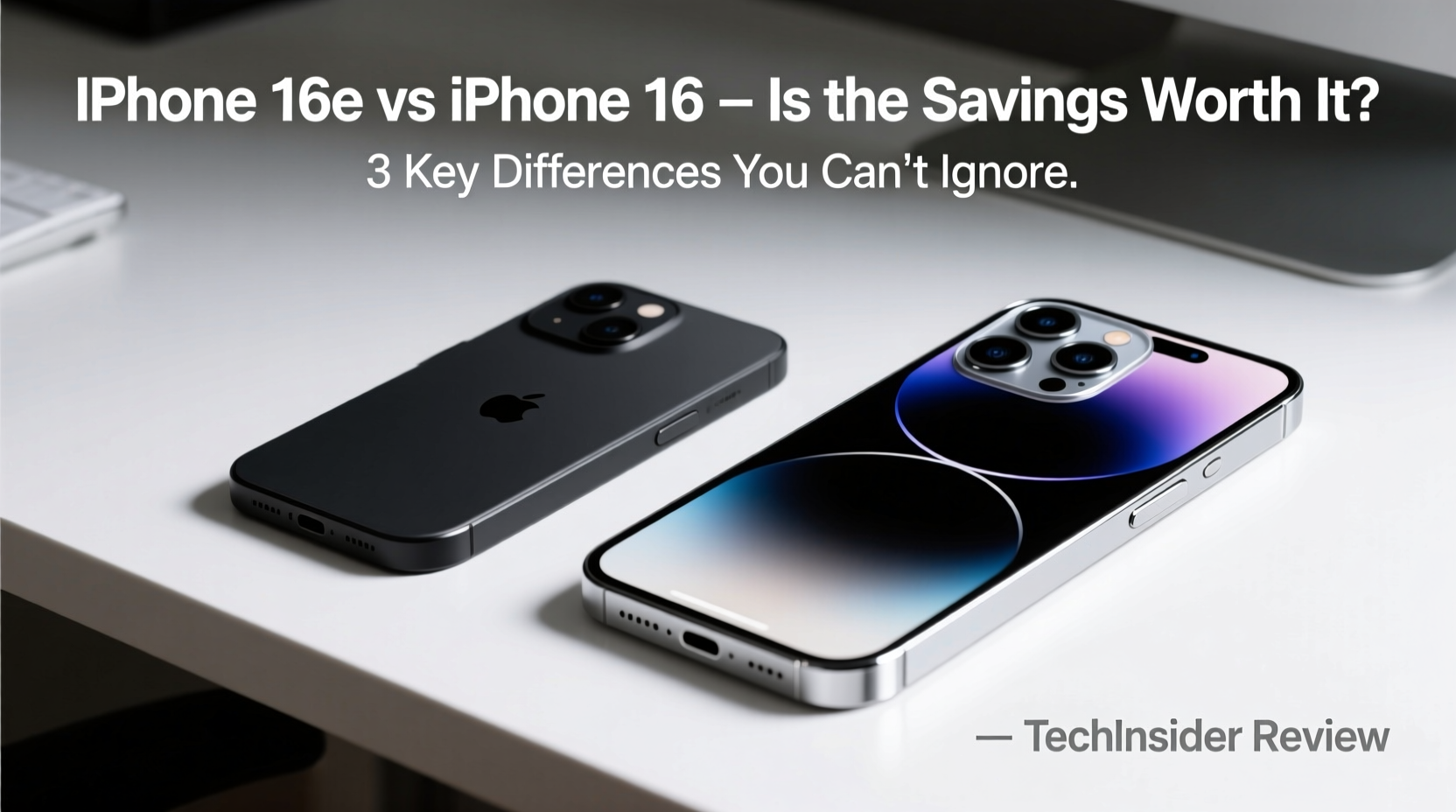
The iPhone 16e is expected to follow Apple’s trend of using polycarbonate or recycled aluminum instead of surgical-grade stainless steel or aerospace-grade aluminum found on the standard iPhone 16. This results in a lighter, more durable chassis for everyday drops but lacks the premium heft and finish of its sibling.
While both models will likely feature a 6.1-inch Super Retina XDR display, the iPhone 16 is rumored to include ProMotion technology with a 120Hz refresh rate, compared to the 16e’s standard 60Hz panel. The difference is noticeable during scrolling, gaming, and app transitions—smoother motion enhances perceived responsiveness.
Tip: If you frequently use your phone for reading, social media, or mobile gaming, the higher refresh rate on the iPhone 16 significantly improves visual comfort.Performance and Processor: Efficiency Over Power
Both devices are expected to run on Apple’s next-generation chipset—the iPhone 16 powered by the full A18 chip, while the 16e may use a slightly modified version, possibly the A18 with reduced GPU cores or lower memory bandwidth.
In real-world usage, most users won’t notice a major slowdown in daily tasks like browsing, messaging, or video streaming. However, intensive applications—such as 4K video editing, AR gaming, or multitasking with multiple pro apps—will benefit from the full horsepower of the iPhone 16.
“Even a minor reduction in thermal throttling headroom can impact sustained performance over time,” says Rajiv Mehta, senior analyst at Mobile Insights Group. “The ‘E’ series often sacrifices peak performance margins for battery and cost efficiency.”
Camera System: Capabilities That Matter Most
One of the most significant cuts in the iPhone 16e is expected to be in the camera department. While the iPhone 16 will likely retain dual-lens setup (wide + ultrawide), optical image stabilization (OIS), and advanced computational photography features, the 16e may only include a single rear camera without OIS.
This impacts low-light performance, depth sensing for portraits, and zoom flexibility. Night mode, Smart HDR 6, and Photonic Engine enhancements may still function, but with reduced dynamic range and detail retention in challenging lighting.
| Feature | iPhone 16 | iPhone 16e |
|---|---|---|
| Main Camera | 48MP, f/1.6, OIS | 48MP, f/1.8, no OIS |
| Ultrawide Camera | 12MP, f/2.2 | Not available |
| Front Camera | 12MP, TrueDepth, Deep Fusion | 12MP, basic processing |
| Video Recording | 4K@60fps, Dolby Vision, ProRes | 4K@30fps, no ProRes |
| Night Mode | Yes (all cameras) | Yes (main only) |
For casual photographers who mostly share images on social media, the 16e’s camera may suffice. But creators, travelers, and those who value consistent photo quality across environments will miss the versatility of the iPhone 16’s system.
Battery Life and Charging: Real-World Endurance
The iPhone 16e is projected to have slightly better battery life than the iPhone 16 due to less power-hungry components and a potentially larger battery relative to its workload. Early estimates suggest up to 15 hours of video playback versus 13 hours on the iPhone 16.
However, charging options differ. The iPhone 16 may support faster wired charging (up to 27W) and improved MagSafe alignment, while the 16e could remain limited to 20W USB-C and slower wireless charging speeds.
- iPhone 16: 3561 mAh battery, 27W fast charging, MagSafe 15W
- iPhone 16e: 3650 mAh battery, 20W fast charging, Qi2-compatible 7.5W
Daily drivers who charge overnight won’t feel the difference. But frequent travelers or users relying on quick top-ups during breaks may prefer the faster charging of the iPhone 16.
Software Support and Longevity
Both models will launch with iOS 18 and are expected to receive software updates for at least five years. However, historical data shows that entry-level iPhones sometimes receive delayed feature rollouts or earlier performance degradation under new OS versions.
For example, the iPhone SE (3rd gen) received Stage Manager later than other models and faced limitations when running iPadOS-like multitasking tools. While Apple maintains parity in security patches, advanced AI features in iOS 19 and beyond—like on-device generative models—may be restricted to devices with higher RAM and neural engine capacity, favoring the iPhone 16.
Tip: If you plan to keep your phone for 4+ years, opt for the model with better hardware headroom to ensure smooth future iOS updates.Mini Case Study: Sarah Cho, Digital Content Creator
Sarah, a freelance photographer and TikTok creator based in Portland, upgraded from an iPhone 12 to the iPhone 15e last year. She chose it for its compact size and lower price. Initially satisfied, she began noticing issues six months in: her 4K vlogs lacked detail in shadows, slow-motion clips showed compression artifacts, and editing large files in LumaFusion caused frequent crashes.
“I saved $250, but now I’m spending extra time fixing footage in post,” she said. “If I’d known how much I’d rely on ultrawide shots and stable zoom, I’d have gone for the standard model.”
Her experience highlights a common pitfall: short-term savings can lead to long-term compromises in creative workflows.
Cost Analysis: Is the Savings Worth It?
The iPhone 16 is expected to start at $799, while the iPhone 16e may debut at $599—a $200 difference. To assess whether this gap is justified, consider total ownership cost over three years:
- Resale Value: After 24 months, iPhone 16 retains ~60% of value; iPhone 16e ~45%.
- Accessory Compatibility: MagSafe accessories work better with iPhone 16 due to stronger magnets and alignment.
- Repair Costs: Screen replacements for the 16e may be cheaper, but lack of serviceability could increase long-term repair bills.
Over time, the iPhone 16 may prove more economical per year of high-performance use, especially if resold or traded in.
Checklist: Choosing Between iPhone 16e and iPhone 16
- ✅ Do you shoot videos or photos regularly? → Choose iPhone 16
- ✅ Will you keep the phone for 4+ years? → iPhone 16 offers better longevity
- ✅ Is fast charging important during your day? → iPhone 16 supports quicker top-ups
- ✅ Are you on a tight budget and prioritize calls, texts, and light apps? → iPhone 16e is sufficient
- ✅ Do you use AR apps, games, or professional tools? → iPhone 16 delivers smoother performance
Frequently Asked Questions
Will the iPhone 16e get the same iOS updates as the iPhone 16?
Yes, both will receive the same iOS versions and security updates. However, some advanced features (e.g., AI-powered tools in iOS 19+) may be limited to higher-tier models due to hardware requirements.
Can the iPhone 16e handle mobile gaming?
Yes, for most titles including Genshin Impact and Call of Duty Mobile, though graphics settings may need to be lowered for sustained play. The absence of a vapor chamber cooling system means potential thermal throttling during extended sessions.
Is the iPhone 16e smaller than the iPhone 16?
No—both models are expected to feature a 6.1-inch display. However, the 16e may have slightly thicker bezels and a different button layout, making it marginally larger in overall footprint.
Final Verdict: Who Should Buy Which?
The iPhone 16e makes sense for users who want iOS reliability without premium pricing—ideal for teens, secondary devices, or those transitioning from Android with modest needs. Its strengths lie in battery efficiency, core app performance, and access to the App Store ecosystem.
The iPhone 16, however, remains the smarter choice for anyone serious about photography, performance consistency, or long-term ownership. The extra $200 buys not just better hardware, but extended relevance in an era where AI, augmented reality, and high-resolution content are becoming standard.
💬 Ready to decide? Assess how you use your phone today—and how you’ll want to use it two years from now. The cheapest option isn’t always the best value. Share your thoughts or upgrade plans in the comments below.